You will get here English Flamingo Prose Class 12 CBSE notes Chapter 5: Indigo. You can connect with us for every important update related to class 12.
English is a very important subject for you because it will help you increase your percentage. You can score high marks in this subject by studying notes and practicing MCQs. In this post, we will cover Chapter 5: Indigo Prose English Flamingo Book.
Also Read- Class 12 Physical Education Notes (Chapter Wise) – CBSE Guide
Key Content Of Chapter 5 Indigo
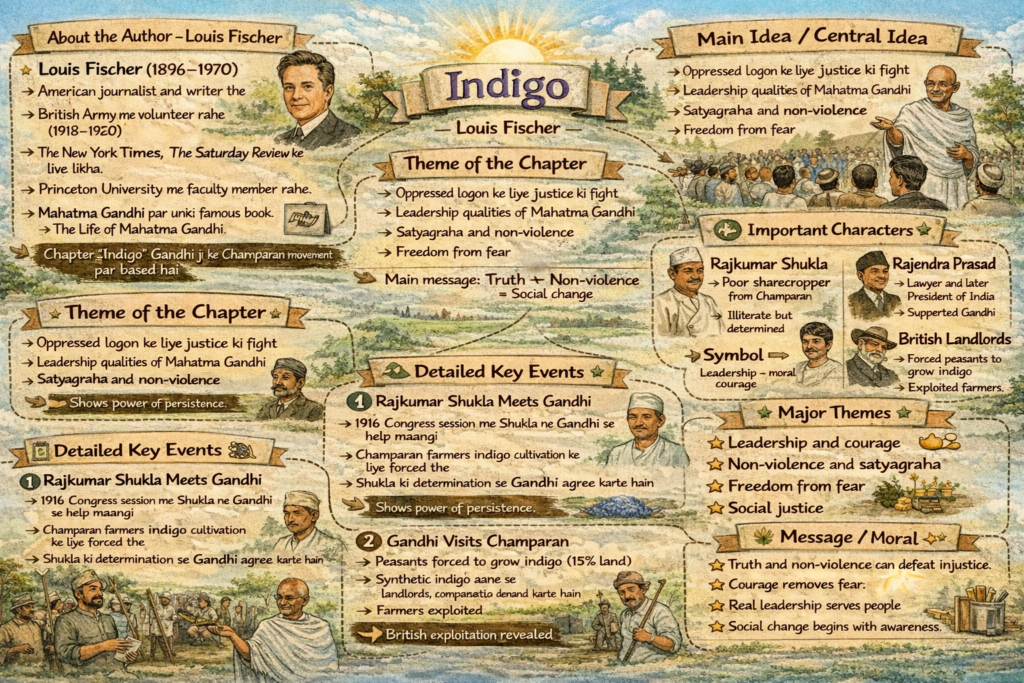
⭐ About the Author — Louis Fischer
- Louis Fischer (1896–1970) American journalist aur writer the.
- British Army me volunteer rahe (1918–1920).
- The New York Times, The Saturday Review ke liye likha.
- Princeton University me faculty member rahe.
- Mahatma Gandhi par unki famous book → The Life of Mahatma Gandhi.
- Unki writing factual aur historical narration par based hoti hai.
👉 Chapter Indigo Gandhi ji ke Champaran movement par based hai.
⭐ Theme of the Chapter
- Oppressed logon ke liye justice ki fight.
- Leadership qualities of Mahatma Gandhi.
- Satyagraha and non-violence.
- Freedom from fear.
- Self-reliance and social reform.
⭐ Sub-theme
👉 Gandhi ne negotiation aur peaceful protest se peasants ko justice dilaya.
⭐ Main Idea / Central Idea
- Gandhi ne Champaran me indigo farmers ke exploitation ke khilaf movement start kiya.
- Unhone satyagraha aur non-violence se British authority ko challenge kiya.
- Peasants ko fear se free karke self-confidence diya.
👉 Main message: Truth + Non-violence = Social change
⭐ Important Characters
👨 Mahatma Gandhi
- Leader of Indian freedom movement.
- Followed truth and non-violence.
- Helped Champaran peasants.
- Believed in self-reliance and justice.
👉 Symbol → Leadership + moral courage.
👨 Rajkumar Shukla
- Poor sharecropper from Champaran.
- Illiterate but determined.
- Requested Gandhi to visit Champaran.
- His persistence started the movement.
👉 Symbol → Determination of common people.
👨 Rajendra Prasad
- Lawyer and later President of India.
- Supported Gandhi.
- Helped peasants.
👨 British Landlords
- Forced peasants to grow indigo.
- Exploited farmers.
👉 Symbol → Colonial oppression.
⭐ Important Terms / Vocabulary
- sharecroppers → farmers who give part of crop as rent
- satyagraha → truth-force or peaceful resistance
- civil disobedience → disobeying unjust laws peacefully
- harbour → give shelter
- conflict of duties → moral dilemma
- seek a prop → depend on support
📖 Detailed Key Events
1. Rajkumar Shukla Meets Gandhi
- 1916 Congress session me Shukla ne Gandhi se help maangi.
- Champaran farmers indigo cultivation ke liye forced the.
- Shukla ki determination se Gandhi agree karte hain.
👉 Shows power of persistence.
2. Gandhi Visits Champaran
- Peasants forced to grow indigo (15% land).
- Synthetic indigo aane se landlords compensation demand karte hain.
- Farmers exploited.
👉 British exploitation revealed.
3. Gandhi’s Investigation
- Gandhi facts collect karte hain.
- Officials unhe district leave karne ko bolte hain.
- Gandhi refuse karte hain → civil disobedience.
👉 Beginning of satyagraha.
4. Court Incident
- Gandhi court me guilty plead karte hain.
- Reason → moral duty towards peasants.
- Thousands of peasants support him.
👉 Fear of British authority breaks.
5. Champaran Movement Success
- Government inquiry committee formed.
- Landlords forced to refund money.
- Indigo system abolished.
👉 First victory of civil disobedience.
6. Social Reforms by Gandhi
- Schools opened.
- Cleanliness awareness.
- Health services provided.
- Women welfare.
👉 Gandhi = social reformer.
⭐ Importance of Champaran Episode
- Turning point in Gandhi’s life.
- First successful satyagraha in India.
- Peasants gained courage and rights.
- Indians learned self-reliance.
🎯 Major Themes
⭐ Leadership and courage
⭐ Non-violence and satyagraha
⭐ Freedom from fear
⭐ Social justice
⭐ Self-reliance
⭐ Fight against exploitation
💡 Message / Moral
- Truth and non-violence can defeat injustice.
- Courage removes fear.
- Real leadership serves people.
- Social change begins with awareness.
✨ Literary Features
- Historical narrative style.
- Real-life incidents.
- Use of dialogue.
- Factual description.
- Symbolism of freedom struggle.
Also Read- Rashmika Mandanna Marriage: Traditional Kodava Wedding Ceremony with Vijay Deverakonda Begins
Class 12 English Flamingo Prose Chapter 5: Indigo Notes
“`htmlEnglish Flamingo Prose Chapter 5 Indigo MCQs
Also Read- Class 12 Chemistry Notes + MCQs (Chapter Wise) – CBSE Guide
FAQs About Indigo
| Chapter Name | View Chapter |
|---|---|
| 1️⃣ The Last Lesson | View Chapter |
| 2️⃣ Lost Spring | View Chapter |
| 3️⃣ Deep Water | View Chapter |
| 4️⃣ The Rattrap | View Chapter |
| 5️⃣ Indigo | View Chapter |
| 6️⃣ Poets and Pancakes | View Chapter |
| 7️⃣ The Interview | View Chapter |
| 8️⃣ Going Places | View Chapter |
1 thought on “English Flamingo Prose Notes | Class 12 – Chapter 5: Indigo”