Radhe Radhe, D.Pharm students! In this post, you will find the notes for your 1st year Pharmaceutical Chemistry subject . Here you will find notes, books, previous year questions (PYQs), and important question-answers related to your pharmacy course Syllabus. You will also find GPAT updates here and exam tips. Here You will find pharmacy-related vacancies, so stay calm and connected with Pulse by Anubhav. Join Our Telegram Channel As Well As Bookmark Our Site For The Latest Update.
You see, the field of pharmacy constitutes a significant part of the medical healthcare sector. The Diploma in Pharmacy—commonly referred to as D.Pharm—is a two-year course; however, completing it allows you to gain quick entry into the job market. The syllabus for the first year of this program is structured around five subjects.
The pharmacy field is a very important medical field. Here, pharmacists not only dispense medication to patients but also educate them about the medicines. In the pharmaceutical industry, these same pharmacists manufacture the medicines and conduct research on them.
The link to download notes for all units is given below. If you want to download the PDF without reading the post, you can download the PDF by clicking on the link given below. You can also join our Telegram channel for future updates.
Also Read- B.Pharm 8th Semester Cosmetic Science Notes
The Subjects in the 1st year of D.Pharm are:
- Pharmaceutics
- Pharmaceutical Chemistry
- Pharmacognosy
- Human Anatomy and Physiology
- Social Pharmacy
In pharmaceutical Chemistry , you will be taught how the dose of a drug is made and how the drug is made, which chemical is mixed in it, when and how much, all this will be taught to you.
D.Pharm 1st Year Pharmaceutical Chemistry Syllabus
Before downloading the notes, please take a look at the Pharmaceutical Chemistry syllabus to understand what topics are covered.
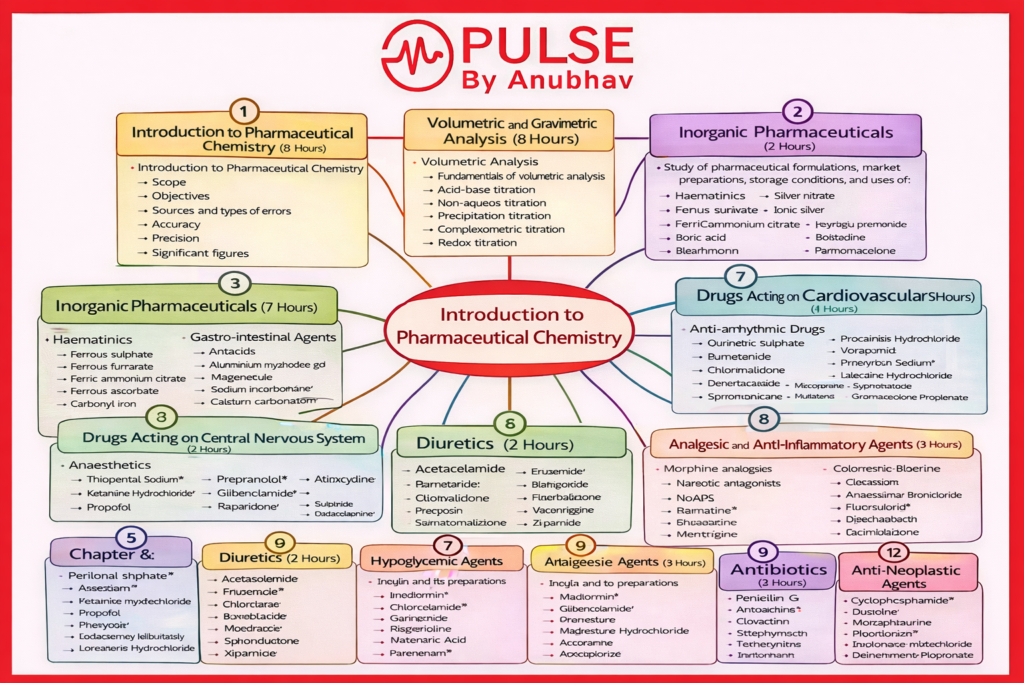
Chapter 1: Introduction to Pharmaceutical Chemistry
- Introduction to Pharmaceutical Chemistry
- Scope
- Objectives
- Sources and types of errors
- Accuracy
- Precision
- Significant figures
- Impurities in Pharmaceuticals
- Sources of impurities in pharmacopoeial substances
- Effects of impurities
- Importance of limit test
- Principle and procedure of limit tests for:
- Chlorides
- Sulphates
- Iron
- Heavy metals
- Arsenic
Chapter 2: Volumetric and Gravimetric Analysis
- Volumetric Analysis
- Fundamentals of volumetric analysis
- Acid-base titration
- Non-aqueous titration
- Precipitation titration
- Complexometric titration
- Redox titration
- Gravimetric Analysis
- Principle
- Method
Chapter 3: Inorganic Pharmaceuticals
Study of pharmaceutical formulations, market preparations, storage conditions, and uses of:
- Haematinics
- Ferrous sulphate
- Ferrous fumarate
- Ferric ammonium citrate
- Ferrous ascorbate
- Carbonyl iron
- Gastro-intestinal Agents
- Antacids
- Aluminium hydroxide gel
- Magnesium hydroxide
- Magaldrate
- Sodium bicarbonate
- Calcium carbonate
- Acidifying agents
- Adsorbents
- Protectives
- Cathartics
- Antacids
- Topical Agents
- Silver nitrate
- Ionic silver
- Chlorhexidine gluconate
- Hydrogen peroxide
- Boric acid
- Bleaching powder
- Potassium permanganate
- Dental Products
- Calcium carbonate
- Sodium fluoride
- Denture cleaners
- Denture adhesives
- Mouth washes
- Medicinal Gases
- Carbon dioxide
- Nitrous oxide
- Oxygen
Chapter 4: Nomenclature of Organic Compounds
- Introduction to nomenclature of organic chemical systems
- Special reference to heterocyclic compounds containing up to three rings
Chapter 5: Drugs Acting on Central Nervous System
Study with respect to classification, chemical name, chemical structure (marked compounds), uses, stability, storage conditions, formulations, and popular brand names.
- Anaesthetics
- Thiopental Sodium*
- Ketamine Hydrochloride*
- Propofol
- Sedatives and Hypnotics
- Diazepam*
- Alprazolam*
- Nitrazepam
- Phenobarbital*
- Antipsychotics
- Chlorpromazine Hydrochloride*
- Haloperidol*
- Risperidone*
- Sulpiride*
- Olanzapine
- Quetiapine
- Lurasidone
- Anticonvulsants
- Phenytoin*
- Carbamazepine*
- Clonazepam
- Valproic Acid*
- Gabapentin*
- Topiramate
- Vigabatrin
- Lamotrigine
- Antidepressants
- Amitriptyline Hydrochloride*
- Imipramine Hydrochloride*
- Fluoxetine*
- Venlafaxine
- Duloxetine
- Sertraline
- Citalopram
- Escitalopram
- Fluvoxamine
- Paroxetine
Chapter 6: Drugs Acting on Autonomic Nervous System
- Sympathomimetic Agents
- Direct Acting
- Norepinephrine*
- Epinephrine
- Phenylephrine
- Dopamine*
- Terbutaline
- Salbutamol (Albuterol)
- Naphazoline*
- Tetrahydrozoline
- Indirect Acting
- Hydroxyamphetamine
- Pseudoephedrine
- Mixed Mechanism
- Ephedrine
- Metaraminol
- Direct Acting
- Adrenergic Antagonists
- Alpha Adrenergic Blockers
- Tolazoline
- Phentolamine
- Phenoxybenzamine
- Prazosin
- Beta Adrenergic Blockers
- Propranolol*
- Atenolol*
- Carvedilol
- Alpha Adrenergic Blockers
- Cholinergic Drugs and Related Agents
- Direct Acting
- Acetylcholine*
- Carbachol
- Pilocarpine
- Cholinesterase Inhibitors
- Neostigmine*
- Edrophonium Chloride
- Tacrine Hydrochloride
- Pralidoxime Chloride
- Echothiopate Iodide
- Direct Acting
- Cholinergic Blocking Agents
- Atropine Sulphate*
- Ipratropium Bromide
- Synthetic Cholinergic Blocking Agents
- Tropicamide
- Cyclopentolate Hydrochloride
- Clidinium Bromide
- Dicyclomine Hydrochloride*
Chapter 7: Drugs Acting on Cardiovascular System
- Anti-arrhythmic Drugs
- Quinidine Sulphate
- Procainamide Hydrochloride
- Verapamil
- Phenytoin Sodium*
- Lidocaine Hydrochloride
- Lorcainide Hydrochloride
- Amiodarone
- Sotalol
- Anti-hypertensive Agents
- Propranolol*
- Captopril*
- Ramipril
- Methyldopate Hydrochloride
- Clonidine Hydrochloride
- Hydralazine Hydrochloride
- Nifedipine
- Antianginal Agents
- Isosorbide Dinitrate
Chapter 8: Diuretics
- Acetazolamide
- Frusemide*
- Bumetanide
- Chlorthalidone
- Benzthiazide
- Metolazone
- Xipamide
- Spironolactone
Chapter 9: Hypoglycemic Agents
- Insulin and its preparations
- Metformin*
- Glibenclamide*
- Glimepiride
- Pioglitazone
- Repaglinide
- Gliflozins
- Gliptins
Chapter 10: Analgesic and Anti-Inflammatory Agents
- Morphine analogues
- Narcotic antagonists
- NSAIDs
- Aspirin*
- Diclofenac
- Ibuprofen*
- Piroxicam
- Celecoxib
- Mefenamic Acid
- Paracetamol*
- Aceclofenac
Chapter 11: Anti-Infective Agents
- Antifungal Agents
- Amphotericin-B
- Griseofulvin
- Miconazole
- Ketoconazole*
- Itraconazole
- Fluconazole*
- Naftifine Hydrochloride
- Urinary Tract Anti-Infective Agents
- Norfloxacin
- Ciprofloxacin
- Ofloxacin*
- Moxifloxacin
- Anti-Tubercular Agents
- INH*
- Ethambutol
- Para Amino Salicylic Acid
- Pyrazinamide
- Rifampicin
- Bedaquiline
- Delamanid
- Pretomanid*
- Antiviral Agents
- Amantadine Hydrochloride
- Idoxuridine
- Acyclovir*
- Foscarnet
- Zidovudine
- Ribavirin
- Remdesivir
- Favipiravir
- Antimalarials
- Quinine Sulphate
- Chloroquine Phosphate*
- Primaquine Phosphate
- Mefloquine*
- Cycloguanil
- Pyrimethamine
- Artemisinin
- Sulfonamides
- Sulfanilamide
- Sulfadiazine
- Sulfamethoxazole
- Sulfacetamide*
- Mafenide Acetate
- Cotrimoxazole
- Dapsone*
Chapter 12: Antibiotics
- Penicillin G
- Amoxicillin*
- Cloxacillin
- Streptomycin
- Tetracyclines
- Doxycycline
- Minocycline
- Macrolides
- Erythromycin
- Azithromycin
- Miscellaneous
- Chloramphenicol*
- Clindamycin
Chapter 13: Anti-Neoplastic Agents
- Cyclophosphamide*
- Busulfan
- Mercaptopurine
- Fluorouracil*
- Methotrexate
- Dactinomycin
- Doxorubicin Hydrochloride
- Vinblastine Sulphate
- Cisplatin*
- Dromostanolone Propionate
Also Read- Oscars 2026: Best Dressed Stars & Most Unforgettable Red Carpet Looks
D.Pharm 1st Year Pharmaceutical Chemistry Notes PDF
💊 Download D.Pharm – Pharmaceutical Chemistry Notes (PCI Syllabus | Chapter-wise | Flowchart PDF)
⚡ Pharmaceutical Chemistry notes are prepared in simple exam-oriented flowchart format specially for D.Pharm students – quick revision & better scoring.
🚀 Join Pulse Pharma Notes Telegram Channel 📘 Download Complete Pharmaceutical Chemistry Flowchart Notes (PDF)B.Pharm 1st year Pharmaceutical Chemistry Book PDF
Books are very important; you should definitely check out the books according to your syllabus. During your pharmacy studies, books from Nirali Prakashan and PV Sindhu are very helpful. You can download the PDFs from the link below.
- Pharmaceutical Chemistry Nirali Prakashan Full Book PDF:- PDF
- Pharmaceutical Chemistry PV Sindhu Full Book PDF:- PDF
- Pharmaceutical Chemistry Thakur Publication Full Book PDF:- PDF
- Pharmaceutical Chemistry The Point Publication Full Book PDF: PDF
Also Read- D.Pharm 1st Year Pharmaceutics Notes
❓ Pharmaceutical Chemistry FAQs (D.Pharm 1st Year)
❓ Frequently Asked Questions (FAQs)
D.Pharm 1st Year Notes
| Subject Name | Notes Link |
|---|---|
| 💊 Pharmaceutics | View Notes |
| 🧪 Pharmaceutical Chemistry | View Notes |
| 🌿 Pharmacognosy | View Notes |
| 🫀 Human Anatomy and Physiology | View Notes |
| 🌍 Social Pharmacy | View Notes |
3 thoughts on “D.Pharm 1st Year Pharmaceutical Chemistry Notes”