We know nosebleeds by the medical term epistaxis. Nosebleeds are not considered a severe health condition. Learn about the causes of nosebleeds and their treatment.
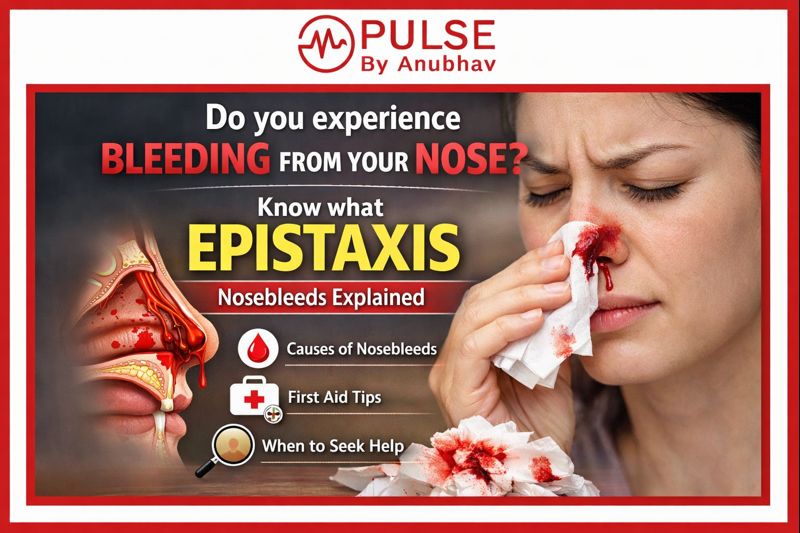
You see, nosebleeds are caused by irritation in the nose. You might have an allergy to something, or something might be blocking your nostrils. When the nose becomes dry due to dry air, the chances of bleeding from the nose increase.
Disclaimer: This content is for educational purposes only, not for medical purposes.
What is epistaxis?
Epistaxis is a medical term that refers to bleeding from the nose. It occurs when blood starts to flow from the tissue lining inside your nose. This bleeding can occur from both nostrils or just one.
Your nose has many tiny blood vessels present. These vessels help warm and moisten the air you breathe. But they lie close to the inner surface of your nose. When air moves through your nose, it can dry and irritate your blood vessels. This makes them very easy to rupture or break, causing a nosebleed.
Also Read- How to get admission in D.Pharm? Know everything about Diploma in Pharmacy.
What Cause Nose Bleeding ?
The most common reason for a nosebleed is a dry nose. You should protect your nose because the tissues in the nostrils are very delicate. You should also avoid frequently cleaning your nose.
🌬 Most Common Cause (Sabse common reason)
- Dry air (Sukhi hawa) is the most common cause of nosebleeds. Air zyada dry hota hai in:
- 🔥 Hot, low-humidity climates (Garam + dry jagah)
- ⛰ High altitudes (Unchi pahadi areas)
- 🏠 Heated indoor spaces (Room heater wali rooms)
- Dry air se nasal membrane (naak ke andar ka soft tissue) dry ho jata hai aur cracks / crust ban jate hain.
- Isliye rubbing, picking ya nose blowing se bleeding aasani se ho jata hai.
🤕 Other Common Causes (Aur common reasons)
- Nose me koi object insert karna (Naak me kuch daalna)
- Nose ya face injury lagna (Chot lagna)
- Deviated septum (Naak ki haddi tedhi hona)
- 🤧 URTI / sinus infection (Sardi-zukam + sinus) jisme sneezing, coughing aur nose blowing zyada hota hai
- 🤒 Rhinitis (Naak ki lining me swelling / inflammation)
- 💊 Antihistamine ya nasal sprays frequent use (Zyada use karna) → membrane ko dry kar deta hai
- 🩸 Blood-thinning medicines lena like: Aspirin, NSAIDs, Warfarin
- 🧪 Strong chemicals ya fumes inhale karna from cleaning supplies or workplace
- 🚬 Recreational drugs inhale karna like cocaine (naak se lene wale drugs)
⚠ Less Common Causes (Kam dekhe jane wale reasons)
- 🍺 Alcohol use (Sharab ka sevan)
- 🧬 Bleeding disorders like: Hemophilia, von Willebrand disease
- 📈 High BP (High blood pressure)
- 🫀 Atherosclerosis (Blood vessels me blockage)
- 🩺 Facial/Nasal surgery
- 🧫 Nasal tumors or nose cancer
- 🌿 Nasal polyps
- 🩸 Immune thrombocytopenia
- 🧪 Leukemia
- 🧬 Hereditary hemorrhagic telangiectasia
- 🤰 Pregnancy (Garbhavastha)
😴 Nosebleed while Sleeping (Sote time naak se khoon kyu?)
- Dry air, allergies aur URTI day + night same damage karti hain naak ki lining ko.
- Side me head karke sona → nasal cavity par direct pressure dalta hai, jisse night me epistaxis ho sakta hai.
Also Read- What is an expectorant? Learn when to take which type expectorant.
Treatments for Epistaxis?
Nosebleed treatment depends on the cause of the bleeding. If you are experiencing significant problems, you should consult a doctor. Occasional nosebleeds are normal and there’s no need to worry.
Treatment Options (इलाज ke methods)
- Nasal packing: The provider inserts gauze, nasal sponges, foam, or an inflatable latex balloon into the nose to create pressure at the bleeding site. This may stay in place for 24 to 48 hours (kabhi-kabhi 2 din tak).
- Cauterization: A chemical (silver nitrate) or heat (electrocautery) is applied to seal the bleeding blood vessel. A local anesthetic spray is used first to numb the inside of the nose (pehle naak andar se सुन्न kiya jata hai).
- Medication adjustments: Reducing or stopping blood-thinning medicines can help. Medicines to control blood pressure may also be required (BP control wali meds bhi zaroori ho sakti hain).
- Tranexamic (Lysteda®): A clot-supporting medicine that helps blood to clot faster.
- Foreign body removal: If a foreign object caused the nosebleed, the provider removes it (agar naak me kuch atak gaya ho to nikal diya jata hai).
- Surgery: Includes septoplasty to correct a deviated septum, or repair for a broken nose (to fix tedhi haddi or टूटी hui naak).
- Ligation: The provider ties off the culprit blood vessel to stop bleeding (blood vessel ko बांध diya jata hai).
How to Stop a Nosebleed at Home (Ghar par naak se khoon kaise roke?)
- Stay calm and breathe through your mouth (muh se saans lo, tension mat lo).
- Sit up straight with your head slightly forward (head aage halka jhuka kar baitho).
- Pinch the soft sides of your nose with thumb and index finger, just above the nostrils.
- Hold for 10 to 15 minutes without checking repeatedly (bar-bar mat chhodo).
- Use a tissue or a damp washcloth to catch the blood (blood absorb karne ke liye tissue rakho).
- Apply a cold compress or ice across the nose bridge if available (naak ke upar thanda laga sakte ho).
- Do NOT pack the inside of your nose with gauze at first.
Go to Hospital Immediately (Hospital kab jana zaroori hai?)
- You can’t stop bleeding after 15–20 minutes of pinching your nose (20 min se zyada ho jaye).
- Blood loss is large (more than 1 cup / 1 cup se zyada khoon gir jaye).
- You take blood-thinning medicines or have a clotting disorder and the bleeding won’t stop.
- Difficulty breathing or you swallowed blood and keep vomiting (vomiting ruk na rahi ho).
- The nosebleed followed a head injury, fall, car accident or serious trauma to face/nose.
Nosebleeds While Sleeping (Sote time nosebleed kyu hota hai?)
- Dry air, allergies, or URTI damage the nasal membrane day and night (din aur raat same असर).
- Sleeping with your head on the side can put pressure on the nasal cavity, triggering night epistaxis (side me face dabake sone se).
- Lying flat is not recommended during a nosebleed.
- A decongestant spray like Afrin or Neo-Synephrine can sometimes help small vessels to close (kabhi-kabhi doctor ki सलाह se).
Prevention Tips (Nosebleed se bachav ke tips)
- Keep the home cool (ghar thoda cool rakho).
- Use a vaporizer or humidifier to add moisture in the air (hawa me moisture badhao).
- Use nasal saline spray and water-soluble jelly (like Ayr gel) to avoid dryness in winter (winter me dryness kam karo).
- Avoid frequent nose sniffing or blowing right after a nosebleed (khoon rukne ke baad turant mat blow karo).
Note:- It’s very important to know that you can combat nosebleeds by using liquid paraffin. Using paraffin will prevent your nose from drying out, and this will stop the nosebleed (Epistaxis).
Can sinusitis cause nosebleeds?
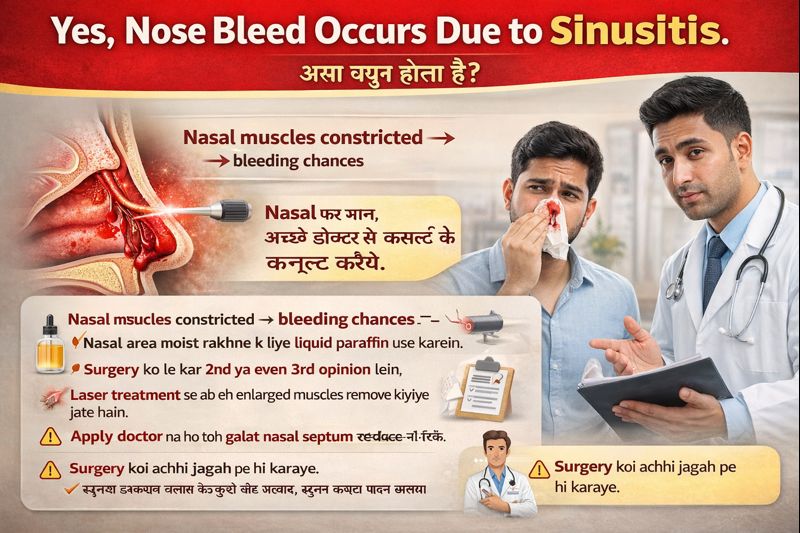
Yes, nose bleed occurs due to sinusitis. What happens in this is that the muscles inside your nose get constricted due to which there are chances of nose bleeding. You shouldn’t panic; you should consult a good doctor. You should try to keep the nasal area moist by using liquid paraffin. If the doctor recommends surgery, get a second or even a third opinion before proceeding. Nowadays, the enlarged muscles are often removed using laser treatment. If the doctor is inexperienced, they might mistakenly reduce the nasal septum instead of the muscles. Therefore, get the surgery done at a reputable place.
Also Read- Taking antibiotics without prescription? Read This
FAQs About Epistaxis
1. Can sinusitis cause nosebleeds? (Kya sinus se nose bleed hota hai?)
Yes, sinusitis can trigger nosebleeds. Inflammation and muscle constriction inside the nose can put pressure on small blood vessels (naak ke chhote vessels par pressure badh jata hai), increasing the chance of bleeding.
2. What should I do if my nose starts bleeding suddenly? (Achanak khoon aane lage to?)
Don’t panic (ghabrao mat). Sit upright with your head slightly forward and pinch your nose for 10–15 minutes. If bleeding doesn’t stop after 20 minutes or blood loss is heavy, see a doctor immediately (jaldi doctor ko dikhao).
3. Which medicines or sprays can help stop nosebleeds? (Kaunsi medicine/spray help karti hai?)
If the bleed is mild, a doctor may recommend clot-supporting medicine like Tranexamic (Lysteda®). For small vessel constriction, some people use nasal decongestant sprays like Afrin or Oxymetazoline but only after doctor advice (doctor ki salah ke baad hi). Never self-medicate if bleeding is heavy or frequent.
4. How to keep the nasal area moist to prevent bleeding? (Naak moist kaise rakhe?)
Use saline nasal spray 2–3 times a day and apply water-soluble jelly or liquid paraffin to avoid dryness. Paraffin helps form a protective layer so the membrane doesn’t crack (membrane dry ho kar phatte nahi).
5. How much liquid paraffin should be used and where to buy it? (Paraffin kitna use kare aur kaha milega?)
Liquid paraffin nasal application (naak ke andar lagane) ke liye use hota hai, drink karne ke liye nahi. A very small amount (ek chhoti drop jaisa) ko cotton bud ya clean finger se just inside the nostril apply kare, once or twice daily, especially at night. You can buy it from a medical store (medical dukaan se le sakte ho). Ask for “liquid paraffin for skin/nasal use”. Godrej/ electronics wali sales off-season ho sakti hai, par yeh easily offline medical shops me mil jata hai.
4 thoughts on “Do you experience bleeding from your nose? Know what epistaxis is.”