Radhe Radhe, B.Pharm students! In this post, you will find the notes for your 4th semester Pharmaceutical Medicinal Chemistry 1 subject . Here you will find notes, books, previous year questions (PYQs), and important question-answers related to your pharmacy course Syllabus. You will also find GPAT updates here. Here You will find pharmacy-related vacancies, so stay calm and connected with Pulse by Anubhav. Join Our Telegram Channel As Well As Bookmark Our Site For Latest Stuff.
As you may have realized, pursuing a B.Pharm degree is not easy. Many people initially choose it as just one option, but later they discover how much studying is involved. Your B.Pharm course is divided into 8 semesters. In the fourth semester, you have to study a total number of 5 subjects, of which all are compulsory. You won’t have to study any additional subjects in this semester.
The pharmacy field is a very important medical field. Here, pharmacists not only dispense medication to patients but also educate them about the medicines. In the pharmaceutical industry, these same pharmacists manufacture the medicines and conduct research on them.
The link to download notes for all units is given below. If you want to download the PDF without reading the post, you can download the PDF by clicking on the link given below. You can also join our Telegram channel for future updates.
Also Read- From Taskaree’s ‘Priya’ to Bollywood: Zoya Afroz’s bold avatar is surprising everyone.
The Subjects in the 4th semester of B.Pharm are:
- Pharmaceutical Organic Chemistry – 3
- Physical Pharmaceutics – 2
- Medicinal Chemistry – 1
- Pharmacology – 1
- Pharmacognosy and Phytochemistry – 1
Pharmaceutical Medicinal Chemistry 1 is a subject you’ll study in your second year, and it’s divided into three parts. In this subject, you’ll learn about the mechanisms of action of various drugs. You’ll have a lot to learn, and you’ll also need to memorize many things.
B.Pharm 4th Semester Pharmaceutical Medicinal Chemistry 1 Syllabus
Before downloading the notes, please take a look at the Pharmaceutical Medicinal Chemistry 1 syllabus to understand what topics are covered.
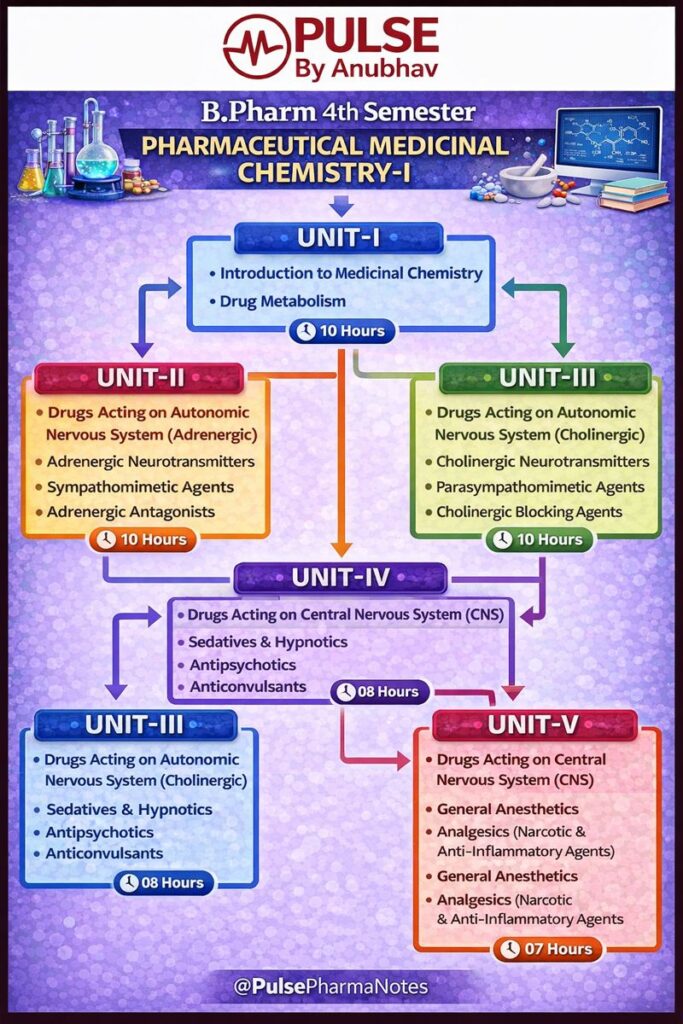
UNIT – I
Introduction to Medicinal Chemistry
- History and development of medicinal chemistry
- Physicochemical properties in relation to biological action:
- Ionization
- Solubility
- Partition coefficient
- Hydrogen bonding
- Protein binding
- Chelation
- Bioisosterism
- Optical & geometrical isomerism
Drug Metabolism
- Principles of drug metabolism
- Phase I reactions
- Phase II reactions
- Factors affecting drug metabolism
- Including stereochemical aspects
UNIT – II
Drugs Acting on Autonomic Nervous System – Adrenergic System
Adrenergic Neurotransmitters
- Biosynthesis and catabolism of catecholamines
- Adrenergic receptors (α & β) and their distribution
Sympathomimetic Agents
- SAR of sympathomimetic agents
Direct Acting Agents:
- Nor-epinephrine
- Epinephrine
- Phenylephrine*
- Dopamine
- Methyldopa
- Clonidine
- Dobutamine
- Isoproterenol
- Terbutaline
- Salbutamol*
- Bitolterol
- Naphazoline
- Oxymetazoline
- Xylometazoline
Indirect Acting Agents:
- Hydroxyamphetamine
- Pseudoephedrine
- Propylhexedrine
Mixed Acting Agents:
- Ephedrine
- Metaraminol
Adrenergic Antagonists
Alpha Blockers:
- Tolazoline*
- Phentolamine
- Phenoxybenzamine
- Prazosin
- Dihydroergotamine
- Methysergide
Beta Blockers (SAR included):
- Propranolol*
- Metibranolol
- Atenolol
- Betazolol
- Bisoprolol
- Esmolol
- Metoprolol
- Labetalol
- Carvedilol
UNIT – III
Drugs Acting on Autonomic Nervous System – Cholinergic System
Cholinergic Neurotransmitters
- Biosynthesis and catabolism of acetylcholine
- Cholinergic receptors (Muscarinic & Nicotinic) and distribution
Parasympathomimetic Agents
- SAR of parasympathomimetic agents
Direct Acting:
- Acetylcholine
- Carbachol*
- Bethanechol
- Methacholine
- Pilocarpine
Indirect Acting (Cholinesterase Inhibitors):
- Reversible:
- Physostigmine
- Neostigmine*
- Pyridostigmine
- Edrophonium chloride
- Tacrine hydrochloride
- Ambenonium chloride
- Irreversible:
- Isofluorphate
- Echothiophate iodide
- Parathion
- Malathion
Cholinesterase Reactivator:
- Pralidoxime chloride
Cholinergic Blocking Agents
- SAR of cholinolytic agents
Solanaceous Alkaloids & Analogues:
- Atropine sulphate
- Hyoscyamine sulphate
- Scopolamine hydrobromide
- Homatropine hydrobromide
- Ipratropium bromide*
Synthetic Cholinergic Blockers:
- Tropicamide
- Cyclopentolate hydrochloride
- Clidinium bromide
- Dicyclomine hydrochloride*
- Glycopyrrolate
- Methantheline bromide
- Propantheline bromide
- Benztropine mesylate
- Orphenadrine citrate
- Biperiden hydrochloride
- Procyclidine hydrochloride*
- Tridihexethyl chloride
- Isopropamide iodide
- Ethopropazine hydrochloride
UNIT – IV
Drugs Acting on Central Nervous System
A. Sedatives & Hypnotics
Benzodiazepines (SAR):
- Chlordiazepoxide
- Diazepam*
- Oxazepam
- Chlorazepate
- Lorazepam
- Alprazolam
- Zolpidem
Barbiturates (SAR):
- Barbital*
- Phenobarbital
- Mephobarbital
- Amobarbital
- Butabarbital
- Pentobarbital
- Secobarbital
Miscellaneous:
- Glutethimide
- Meprobamate
- Ethchlorvynol
- Triclofos sodium
- Paraldehyde
B. Antipsychotics
Phenothiazines (SAR):
- Promazine hydrochloride
- Chlorpromazine hydrochloride*
- Triflupromazine
- Thioridazine hydrochloride
- Piperacetazine hydrochloride
- Prochlorperazine maleate
- Trifluoperazine hydrochloride
Ring Analogues:
- Chlorprothixene
- Thiothixene
- Loxapine succinate
- Clozapine
Butyrophenones:
- Haloperidol
- Droperidol
- Risperidone
Others:
- Molindone hydrochloride
- Sulpiride
C. Anticonvulsants
- SAR & mechanism of action
Drugs:
- Phenobarbitone
- Metharbital
- Phenytoin*
- Mephenytoin
- Ethotoin
- Trimethadione
- Paramethadione
- Phensuximide
- Methsuximide
- Ethosuximide*
- Phenacemide
- Carbamazepine*
- Clonazepam
- Primidone
- Valproic acid
- Gabapentin
- Felbamate
UNIT – V
Drugs Acting on Central Nervous System
General Anesthetics
Inhalational:
- Halothane*
- Methoxyflurane
- Enflurane
- Sevoflurane
- Isoflurane
- Desflurane
Ultra Short Acting Barbiturates:
- Methohexital sodium*
- Thiamylal sodium
- Thiopental sodium
Dissociative Anesthetic:
- Ketamine hydrochloride*
Analgesics
Narcotic Analgesics (SAR of Morphine):
- Morphine sulphate
- Codeine
- Meperidine hydrochloride
- Anileridine hydrochloride
- Diphenoxylate hydrochloride
- Loperamide hydrochloride
- Fentanyl citrate*
- Methadone hydrochloride*
- Propoxyphene hydrochloride
- Pentazocine
- Levorphanol tartrate
Narcotic Antagonists:
- Nalorphine hydrochloride
- Levallorphan tartrate
- Naloxone hydrochloride
Anti-Inflammatory Agents
- Sodium salicylate
- Aspirin
- Mefenamic acid*
- Meclofenamate
- Indomethacin
- Sulindac
- Tolmetin
- Zomepirac
- Diclofenac
- Ketorolac
- Ibuprofen*
- Naproxen
- Piroxicam
- Phenacetin
- Acetaminophen
- Antipyrine
- Phenylbutazone
Also Read- Understanding Virginity and Its Connection to Rape Cases
B.Pharm 4th Semester Pharmaceutical Medicinal Chemistry 1 Notes PDF
🧠 Download B.Pharm 4th Semester – Pharmaceutical Medicinal Chemistry-I Notes (Unit-wise | Flowchart PDF)
⚡ Pharmaceutical Medicinal Chemistry-I notes are prepared in simple flowchart format for quick revision, strong concepts & university exams.
🚀 Join Pulse Pharma Notes Telegram Channel 📘 Download Complete Medicinal Chemistry-I Flowchart NotesAlso Read:- B.Pharm 4th Semester Pharmaceutical Organic Chemistry – 3 Notes
B.Pharm 4th Semester Pharmaceutical Medicinal Chemistry 1 Book PDF
Books are very important; you should definitely check out the books according to your syllabus. During your pharmacy studies, books from Nirali Prakashan and PV Sindhu are very helpful. You can download the PDFs from the link below.
- Pharmaceutical Medicinal Chemistry 1 Nirali Prakashan Full Book PDF:- PDF
- Pharmaceutical Medicinal Chemistry 1 Chemistry PV Sindhu Full Book PDF:- PDF
- Pharmaceutical Medicinal Chemistry 1 Chemistry Thakur Publication Full Book PDF:- PDF
- Pharmaceutical Medicinal Chemistry 1 Chemistry The Point Publication Full Book PDF: PDF
❓ Pharmaceutical Medicinal Chemistry-I – FAQs (B.Pharm 4th Semester)
What is Pharmaceutical Medicinal Chemistry-I?
Pharmaceutical Medicinal Chemistry-I deals with the relationship between chemical structure and biological activity of drugs. It focuses on physicochemical properties, drug metabolism and drugs acting on autonomic and central nervous systems.
Why are physicochemical properties important in drug action?
Properties like ionization, solubility, partition coefficient, hydrogen bonding and protein binding directly influence drug absorption, distribution, potency and therapeutic effect.
What is drug metabolism and why is it important?
Drug metabolism is the biochemical modification of drugs in the body. It helps in detoxification, elimination and sometimes activation of drugs. Phase I and Phase II reactions are core topics in exams.
Which topics are covered under Adrenergic system?
Adrenergic neurotransmitters, α & β receptors, sympathomimetic drugs, adrenergic agonists and antagonists along with their SAR are covered under the adrenergic system.
Why is SAR important in Medicinal Chemistry?
Structure–Activity Relationship (SAR) explains how chemical structure affects biological activity. It helps in drug design, optimization and predicting pharmacological effects.
What is included in Cholinergic system?
Cholinergic neurotransmitters, muscarinic and nicotinic receptors, parasympathomimetic drugs, cholinesterase inhibitors, reactivators and cholinergic blocking agents are included.
Why are CNS drugs important in Medicinal Chemistry-I?
CNS drugs like sedatives, hypnotics, antipsychotics and anticonvulsants are clinically important and frequently asked in university exams due to their complex mechanisms and SAR.
Which CNS drug classes are most exam-oriented?
Benzodiazepines, barbiturates, antipsychotics and anticonvulsants are highly exam-oriented topics, especially SAR and therapeutic uses.
What is covered under anesthetics and analgesics?
General anesthetics, narcotic and non-narcotic analgesics, opioid antagonists and NSAIDs are covered with emphasis on SAR and clinical significance.
How to score well in Medicinal Chemistry-I exams?
Focus on flowcharts, SAR diagrams, receptor mechanisms, classification tables and important starred drugs to score high in university examinations.
B.Pharm 4th Semester Notes
| Subject Name | Notes Link |
|---|---|
| Pharmaceutical Organic Chemistry – III Notes | View Notes |
| Pharmaceutical Physical Pharmaceutics – II Notes | View Notes |
| Pharmaceutical Medicinal Chemistry – I Notes | View Notes |
| Pharmaceutical Pharmacology – I Notes | View Notes |
| Pharmacognosy and Phytochemistry – I Notes | View Notes |
1 thought on “B.Pharm 4th Semester Pharmaceutical Medicinal Chemistry 1 Notes”