English Flamingo Prose Notes | Class 12 – Chapter 2: Lost Spring (Stories of Stolen Childhood) - Pulse By Anubhav

English Flamingo Prose Notes | Class 12 – Chapter 2: Lost Spring (Stories of Stolen Childhood)

You will get here English Flamingo Prose Class 12 CBSE notes Chapter 2: Lost Spring (Stories of Stolen Childhood). You can connect with us for every important update related to class 12.
Class 12 English Chapter 2 Lost Spring question answers
Class 12 English chapter 2 Lost Spring Summary
Lost Spring Class 12 Notes PDF
Class 12 english chapter 2 lost spring introduction
Class 12 English chapter 2 summary Flamingo
Summary of Lost Spring in 150 Words
English Class 12 Chapter 2 question answers
Theme of chapter Lost Spring Class 12
Lost spring stories of stolen childhood summary
Lost spring stories of stolen childhood notes
Lost spring stories of stolen childhood mcq
Lost spring stories of stolen childhood answers
Lost Spring stories of stolen childhood themes
Lost Spring Class 12 question answers
Summary of Lost Spring in 150 words
Summary of Lost Spring in 100 words

English is a very important subject for you because it will help you increase your percentage. You can score high marks in this subject by studying notes and practicing MCQs. In this post, we will cover Chapter 2: Lost Spring (Stories of Stolen Childhood) Prose English Flamingo Book.

Also Read- Class 12 Physical Education Notes (Chapter Wise) – CBSE Guide

Key Content Of Chapter 2 Lost Spring (Stories of Stolen Childhood)

Stories of Stolen Childhood — Anees Jung
Class 12 English Chapter 2 Lost Spring question answers
Class 12 English chapter 2 Lost Spring Summary
Lost Spring Class 12 Notes PDF
Class 12 english chapter 2 lost spring introduction
Class 12 English chapter 2 summary Flamingo
Summary of Lost Spring in 150 Words
English Class 12 Chapter 2 question answers
Theme of chapter Lost Spring Class 12
Lost spring stories of stolen childhood summary
Lost spring stories of stolen childhood notes
Lost spring stories of stolen childhood mcq
Lost spring stories of stolen childhood answers
Lost Spring stories of stolen childhood themes
Lost Spring Class 12 question answers
Summary of Lost Spring in 150 words
Summary of Lost Spring in 100 words

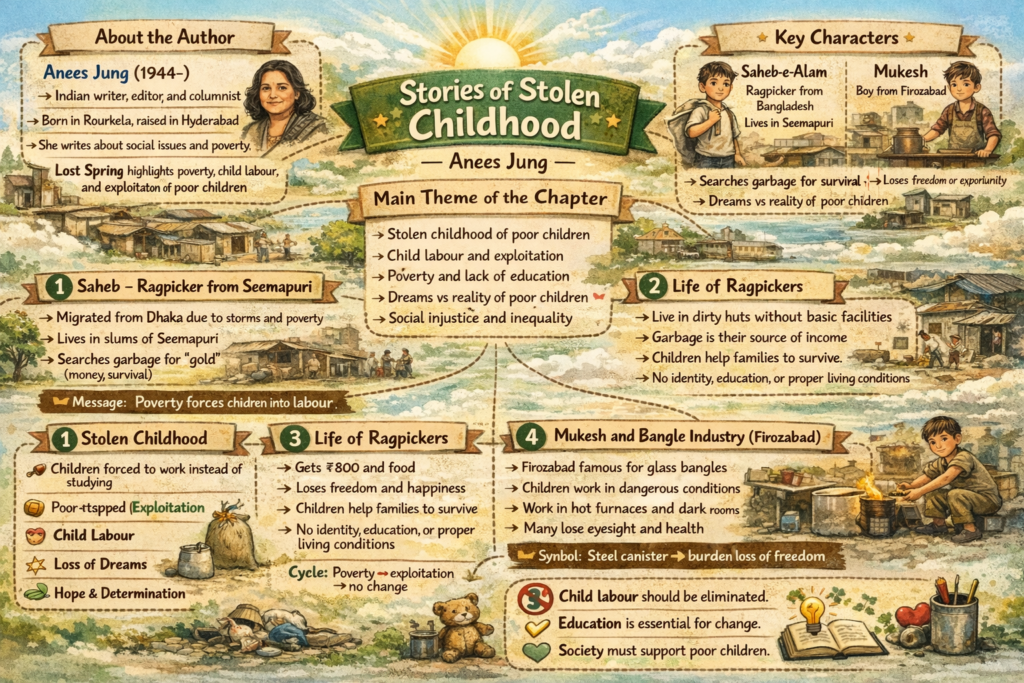
⭐ About the Author

  • Anees Jung (1944) — Indian writer, editor, and columnist.
  • Born in Rourkela, raised in Hyderabad.
  • She writes about social issues and poverty.
  • Lost Spring highlights poverty, child labour, and exploitation of poor children.

Main Theme of the Chapter

  • Stolen childhood of poor children.
  • Child labour and exploitation.
  • Poverty and lack of education.
  • Dreams vs reality of poor children.
  • Social injustice and inequality.

Key Characters

Saheb-e-Alam

  • Ragpicker from Bangladesh.
  • Lives in Seemapuri.
  • Searches garbage for survival.
  • Loses freedom after working in tea stall.

Mukesh

  • Boy from Firozabad.
  • Works in bangle industry.
  • Dreams of becoming motor mechanic.
  • Symbol of hope and determination.

📖 Key Content / Main Parts of the Chapter


1️⃣ Saheb – Ragpicker from Seemapuri

  • Migrated from Dhaka due to storms and poverty.
  • Lives in slums of Seemapuri.
  • Searches garbage for “gold” (money, survival).
  • Does not go to school due to lack of facilities.
  • Finds joy in small things like shoes or coins.

👉 Message: Poverty forces children into labour.


2️⃣ Life of Ragpickers

  • Live in dirty huts without basic facilities.
  • Garbage is their source of income.
  • Children help families to survive.
  • No identity, education, or proper living conditions.
  • Garbage means:
    • survival for parents
    • wonder and hope for children.

3️⃣ Saheb Working at Tea Stall

  • Gets ₹800 and food.
  • Loses freedom and happiness.
  • No longer carefree.
  • Shows loss of childhood due to work.

👉 Symbol: Steel canister → burden and loss of freedom.


4️⃣ Mukesh and Bangle Industry (Firozabad)

  • Firozabad famous for glass bangles.
  • Children work in dangerous conditions.
  • Work in hot furnaces and dark rooms.
  • Many lose eyesight and health.

👉 Hazards:

  • High temperature
  • Toxic fumes
  • Eye damage
  • Poor working conditions

5️⃣ Poverty and Social System

  • Families trapped in caste and tradition.
  • Generations forced into same work.
  • Middlemen, police, and politicians exploit workers.
  • No education or opportunity.

👉 Cycle: Poverty → exploitation → no change.


6️⃣ Mukesh’s Dream (Hope)

  • Wants to become motor mechanic.
  • Refuses family tradition.
  • Shows courage to break cycle of poverty.

👉 Symbol: Mukesh = hope for change.


🎯 Major Themes

1. Stolen Childhood

  • Children forced to work instead of studying.

2. Poverty and Exploitation

  • Poor trapped in cycle of poverty.

3. Child Labour

  • Dangerous working conditions.

4. Loss of Dreams

  • Poverty kills ambition.

5. Hope and Determination

  • Mukesh represents change.

💡 Message / Moral

  • Child labour should be eliminated.
  • Education is essential for change.
  • Society must support poor children.
  • Poverty destroys childhood.

Also Read- Rashmika Mandanna Marriage: Traditional Kodava Wedding Ceremony with Vijay Deverakonda Begins

Class 12 English Flamingo Prose Chapter 2: Lost Spring (Stories of Stolen Childhood) Notes

CBSE Class 12 English – Flamingo (Chapter 2)
Lost Spring – Complete Study Material
Complete Class 12 English Flamingo Chapter 2 “Lost Spring (Stories of Stolen Childhood)” ke notes, NCERT book PDF, updated syllabus aur official Telegram channel ka direct access yahan se milega.

English Flamingo Prose Chapter 2 Lost Spring (Stories of Stolen Childhood) MCQs

Q1. Who is the author of “Lost Spring”?
A. Anees Jung
B. Alphonse Daudet
C. R.K. Narayan
D. Mulk Raj Anand
✅ Correct Answer: Anees Jung
Q2. Where does Saheb live?
A. Seemapuri
B. Mumbai
C. Kolkata
D. Chennai
✅ Correct Answer: Seemapuri
Q3. What does Saheb do for survival?
A. Rag picking
B. Farming
C. Teaching
D. Driving
✅ Correct Answer: Rag picking
Q4. Where did Saheb come from?
A. Dhaka, Bangladesh
B. Nepal
C. Pakistan
D. Sri Lanka
✅ Correct Answer: Dhaka, Bangladesh
Q5. What does “Garbage is gold” mean in the chapter?
A. Garbage is a source of survival for ragpickers
B. Garbage contains real gold
C. Garbage is beautiful
D. Garbage is useless
✅ Correct Answer: Garbage is a source of survival for ragpickers
Q6. What job does Saheb take later?
A. Working at a tea stall
B. Mechanic
C. Shopkeeper
D. Driver
✅ Correct Answer: Working at a tea stall
Q7. Firozabad is famous for:
A. Glass bangles
B. Silk industry
C. Cotton industry
D. Tea gardens
✅ Correct Answer: Glass bangles
Q8. What is Mukesh’s dream?
A. To become a motor mechanic
B. To become a teacher
C. To become a doctor
D. To become a businessman
✅ Correct Answer: To become a motor mechanic
Q9. What does the title “Lost Spring” symbolize?
A. Loss of childhood
B. Change of seasons
C. Growth of nature
D. Beauty of spring
✅ Correct Answer: Loss of childhood
Q10. What theme is highlighted in “Lost Spring”?
A. Child labour and poverty
B. Adventure and travel
C. War and peace
D. Science and technology
✅ Correct Answer: Child labour and poverty

Also Read- Class 12 Chemistry Notes + MCQs (Chapter Wise) – CBSE Guide

FAQs About Lost Spring (Stories of Stolen Childhood)

FAQs – Lost Spring (Stories of Stolen Childhood)
1. What is Saheb looking for in the garbage dumps?
Saheb looks for useful items and money in garbage dumps. He lives in Seemapuri and came from Dhaka, Bangladesh after storms destroyed his family’s fields and home.
2. Why do ragpicker children not wear footwear?
Some people say it is tradition to remain barefoot, but the author believes it is due to extreme poverty. The children cannot afford shoes.
3. Is Saheb happy working at the tea stall?
No, Saheb is not happy. Earlier he was carefree while ragpicking, but after working at the tea stall he loses his freedom and looks burdened.
4. What makes Firozabad famous?
Firozabad is famous for its glass bangle industry where families have worked for generations making bangles.
5. What are the hazards of working in the bangle industry?
Children work in high temperature furnaces, dark rooms and polluted conditions. They often suffer eye problems and may lose eyesight.
6. What is Mukesh’s dream?
Mukesh dreams of becoming a motor mechanic and wants to break free from his family’s traditional bangle-making occupation.
7. What does the title “Lost Spring” mean?
The title represents the loss of childhood of poor children who are forced to work instead of enjoying education and happiness.
8. What is the main theme of Lost Spring?
The main theme is child labour, poverty, social injustice and loss of childhood due to exploitation.
📘 Class 12 English Flamingo – All Chapters
Chapter NameView Chapter
1️⃣ The Last LessonView Chapter
2️⃣ Lost SpringView Chapter
3️⃣ Deep WaterView Chapter
4️⃣ The RattrapView Chapter
5️⃣ IndigoView Chapter
6️⃣ Poets and PancakesView Chapter
7️⃣ The InterviewView Chapter
8️⃣ Going PlacesView Chapter

1 thought on “English Flamingo Prose Notes | Class 12 – Chapter 2: Lost Spring (Stories of Stolen Childhood)”

Leave a Comment