
Telegram banned temporarily in India ahead of the NEET-UG 2026 re-exam after concerns over paper leak scams and cheating networks. Here’s why the restriction sparked debate.
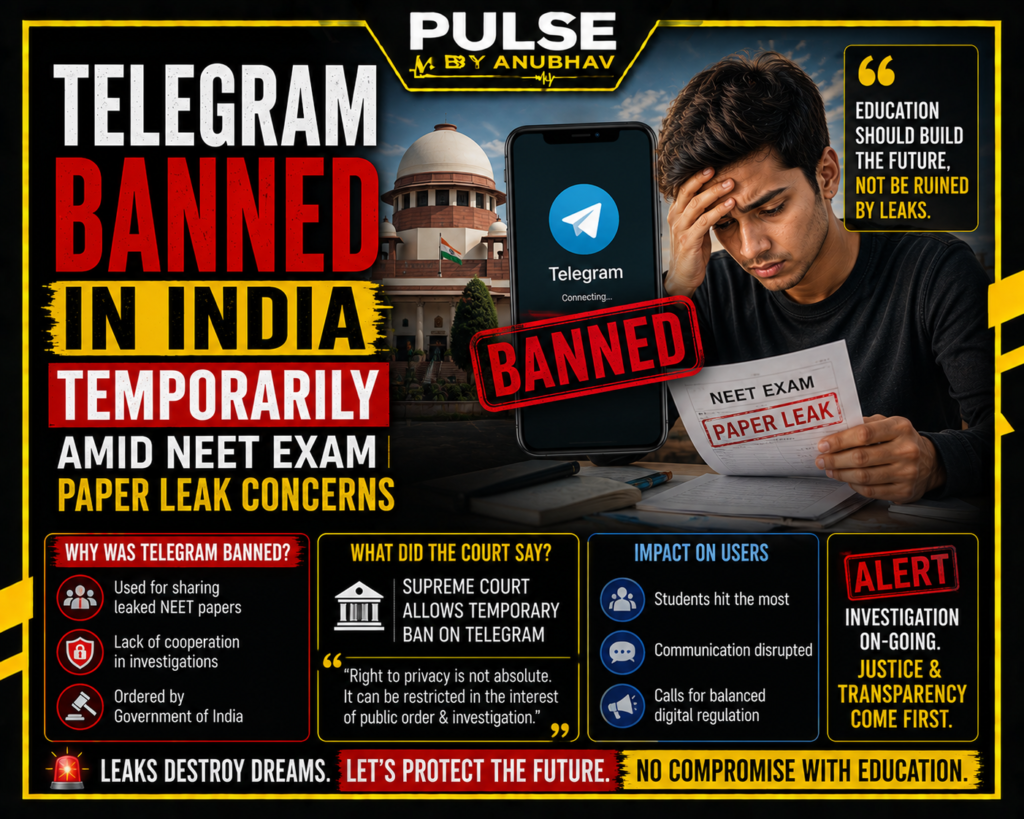
India has temporarily restricted Telegram following concerns that cheating networks were using the platform to spread fake NEET-UG paper leak claims and defraud students before the 21 June re-examination. The National Testing Agency (NTA) said the action was necessary to protect exam integrity and curb misinformation. Alongside limiting access, authorities also ordered restrictions on message editing. However, critics argue the move affects genuine users and fails to address deeper issues behind recurring exam leaks.
Also read- Why Are Kidney Stones Becoming So Common? Hidden Causes & Prevention Tips
Telegram Banned in India Temporarily Ahead of NEET Re-Exam: Here’s What’s Happening

Just days before one of India’s biggest entrance exams returns, the government has taken an unusual step — Telegram has been temporarily restricted in India over allegations that organised cheating networks were using the platform to spread fake paper leak claims and target students ahead of NEET-UG 2026.
The move came after a recommendation from the National Testing Agency (NTA), which said Telegram channels, groups, and automated bots were being used to mislead candidates and collect money in exchange for supposed access to examination papers.
With millions of students preparing for the re-exam, the decision has triggered a wider debate: is blocking an entire platform the right solution, or does it ignore the deeper issues behind recurring exam leaks?
Why India Temporarily Restricted Telegram Before NEET-UG 2026
According to the NTA, the restriction was introduced as an emergency measure after authorities noticed what they described as an organised misuse of Telegram by cheating groups.
The agency claimed that several channels were openly advertising leaked exam access, collecting large payments from students and parents, and spreading misinformation around the upcoming NEET-UG re-examination scheduled for 21 June 2026.
Authorities also instructed Telegram to temporarily disable its message editing feature in India until 30 June, arguing that edited messages had allegedly been used to create misleading evidence around paper leaks.
Officials described the restriction as a short-term preventive action rather than a permanent ban.
Also read- Migraine Headache: Symptoms, Causes & Treatment
What Triggered the Government’s Action
The decision comes after the original NEET exam held in May was cancelled following allegations of a paper leak.
The controversy quickly turned national.
Nearly 2.28 million candidates appeared for the exam across thousands of centres, but protests erupted after questions were raised about exam integrity, unfair advantages, and alleged irregularities.
The matter is currently under investigation, and authorities have already made multiple arrests connected to the case.
NTA Says Students Were Being Targeted
The testing agency said fraud operators used Telegram to exploit student anxiety.
According to officials, many channels claimed they could provide re-exam papers in advance while demanding significant payments from candidates and their families.
NTA maintained that no legitimate exam paper existed outside the secured examination system and warned students against believing such offers.
The agency also said law enforcement and cybercrime teams had already removed a large number of Telegram groups, bots, and channels linked to suspicious activity.
Critics Call the Telegram Restriction a Temporary Fix
Not everyone agrees with the government’s approach.
Digital rights groups and internet activists questioned whether restricting an entire communication platform would actually solve the root cause of exam fraud.
Critics argued that exam leaks generally originate much earlier in the chain — from internal processes, logistics, or insider access — and blocking a messaging app may only shift activity elsewhere.
Others pointed out that many students actively rely on Telegram for preparation materials, study communities, notes, and discussion groups, especially in the final days before major exams.
Telegram Yet to Fully Clarify Its Position
At the time of reporting, Telegram had not released a detailed public response regarding the restriction.
Reports suggested access remained inconsistent across users shortly after the announcement, raising questions about how enforcement would work across telecom operators and app distribution channels.
India remains one of Telegram’s largest markets globally, making the development especially significant for both students and the platform itself.
The Bigger Question Beyond Telegram
The discussion now goes far beyond one app.
The bigger concern remains whether India can build an examination system that students trust — one that prevents leaks before they happen instead of reacting after controversy begins.
For lakhs of NEET aspirants preparing for another attempt, the priority remains unchanged: fair exams, transparent processes, and equal opportunity.
Pulse by Anubhav — breaking down the stories that actually impact students, tech, and digital India.
Also read- Vitamin D Deficiency in India: Why Millions Still Suffer Despite Plenty of Sunlight
Frequently Asked Questions
Why was Telegram temporarily banned in India?
Telegram was temporarily restricted in India after authorities raised concerns that organised cheating networks were using the platform to spread fake NEET-UG paper leak claims and target students before the re-examination.
Is Telegram permanently banned in India?
No. The restriction was announced as a temporary measure linked to examination security concerns and was not introduced as a permanent nationwide ban.
Why is Telegram connected to the NEET-UG 2026 controversy?
According to the National Testing Agency (NTA), certain Telegram channels and groups allegedly promoted fake exam paper access and attempted to collect money from candidates.
Will Telegram’s message editing feature be affected?
Authorities directed temporary restrictions on Telegram’s message editing feature in India, claiming it could be misused to circulate misleading information related to paper leaks.
How does the Telegram restriction impact students?
Many students depend on Telegram for study discussions, notes sharing and exam preparation. Critics argue that restrictions may affect legitimate educational use.
When is the NEET-UG 2026 re-examination?
The NEET-UG 2026 re-exam is scheduled for 21 June following the cancellation of the earlier exam amid paper leak allegations.
1 thought on “Telegram Banned in India Temporarily Amid NEET Exam Paper Leak Concerns”