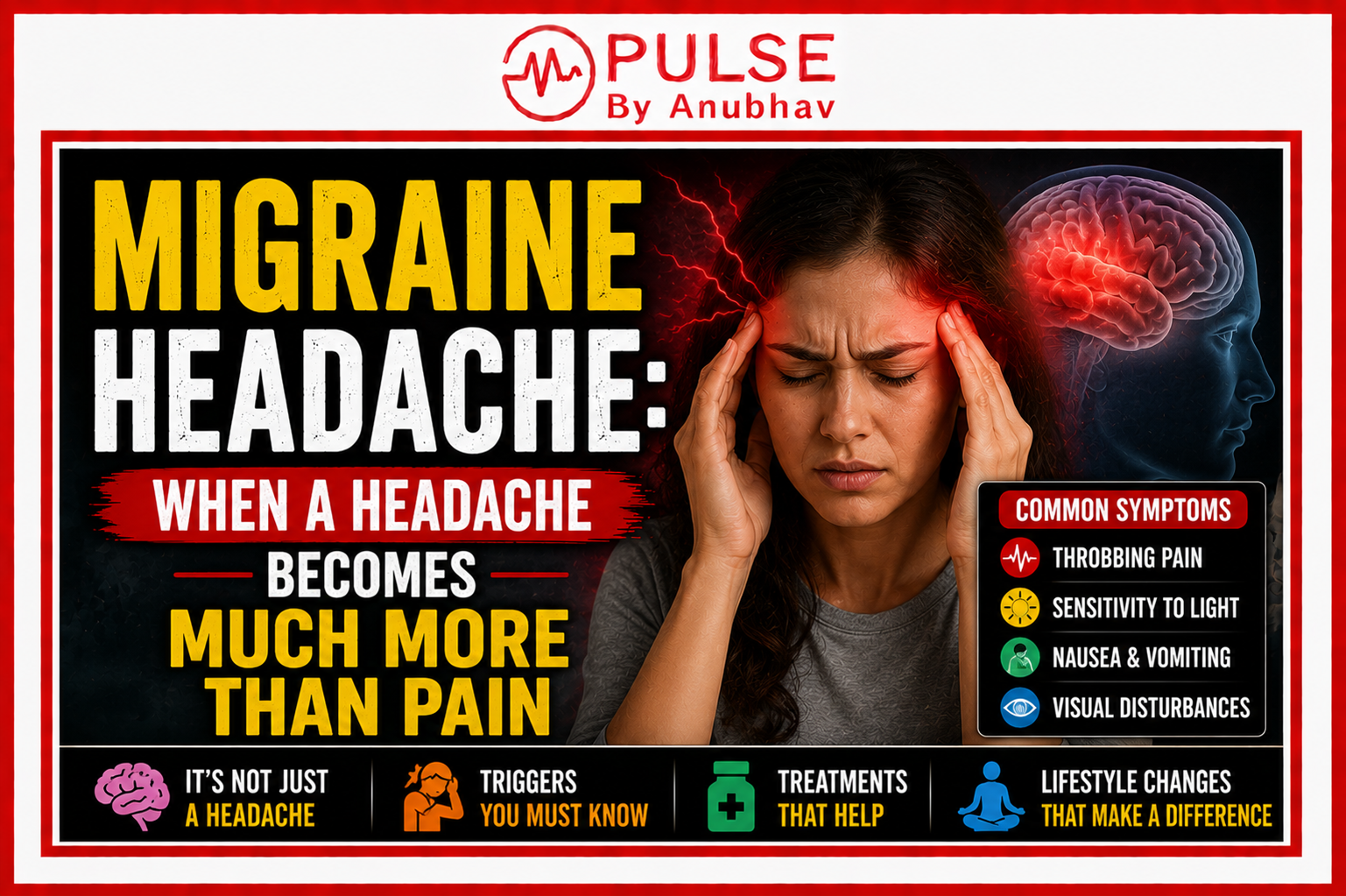
Discover the best Migraine Headache medicine options including Naxdom, tablets, symptoms, treatment and relief methods. Learn how migraine medicines work and choose better care.
Finding the right Migraine Headache medicine depends on symptoms, attack severity, nausea and overall medical history. Options such as Naxdom (Naproxen + Domperidone) are commonly discussed for migraine with nausea, while medicines like Sumatriptan, Paracetamol and Ibuprofen may suit different situations. Understanding causes, triggers and treatment approaches can help improve migraine management. Always avoid frequent self-medication and seek medical advice for recurring or severe headaches.
Also read- Think It’s Stress? Low Vitamin B12 Could Be Secretly Draining Your Energy
Note: This entire blog content is for educational purposes only and is not medical advice.
Migraine Headache: When a Headache Becomes Much More Than Pain
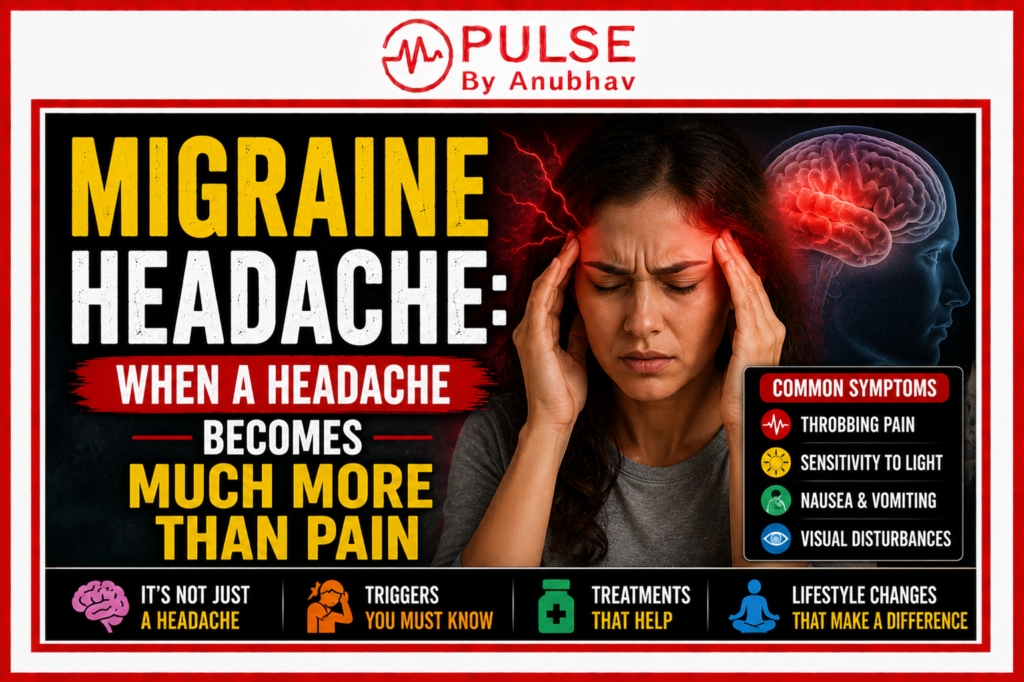
Headaches are common, but a Migraine Headache is very different. If you have ever felt a headache so intense that light, sound, movement, or even normal daily activities became difficult, you may have experienced a migraine.
Migraine is not simply head pain—it is a neurological condition that can affect work, study, sleep, focus, and overall quality of life. Millions of people experience migraines worldwide, yet many do not realize that proper understanding and management can make a major difference.
At Pulse by Anubhav, we believe simple health awareness can help people take better care of themselves.
What Is a Migraine Headache?
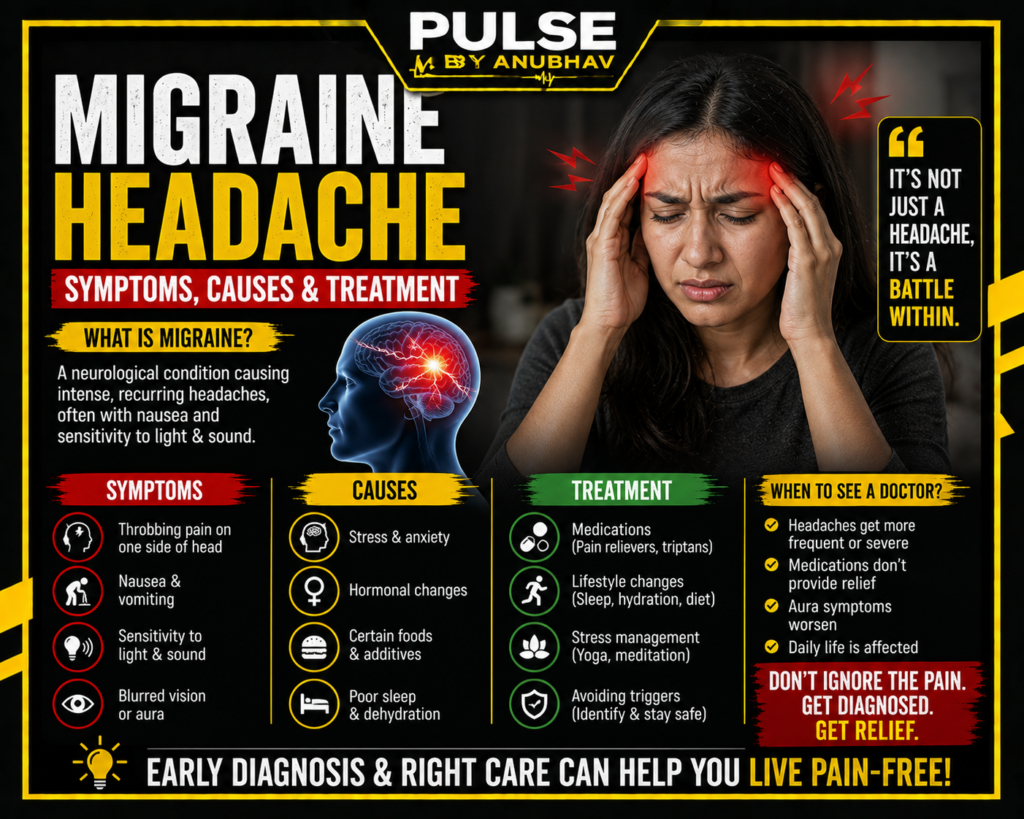
A Migraine Headache is a neurological condition that commonly causes throbbing or pulsating pain, often affecting one side of the head, although both sides can be involved.
Migraine attacks may last for several hours or even continue for days. Along with headache pain, many people experience additional symptoms that make daily activities difficult.
Common symptoms include:
✔️ Moderate to severe head pain
✔️ Pulsating or throbbing sensation
✔️ Pain on one side of the head
✔️ Nausea or vomiting
✔️ Sensitivity to light (photophobia)
✔️ Sensitivity to sound (phonophobia)
✔️ Blurred vision
✔️ Dizziness
✔️ Fatigue and weakness
Some individuals also notice warning signs before an attack begins.
Migraine Aura: Early Warning Signs
A migraine aura is a group of symptoms that may appear before the headache starts.
Common aura symptoms include:
🔹 Flashing lights
🔹 Blind spots in vision
🔹 Zigzag visual patterns
🔹 Tingling sensation in hands or face
🔹 Temporary difficulty speaking
Aura episodes typically last between 5 and 60 minutes before the headache phase begins.
Common Migraine Headache Triggers
Every person may have different triggers, but some patterns appear frequently.
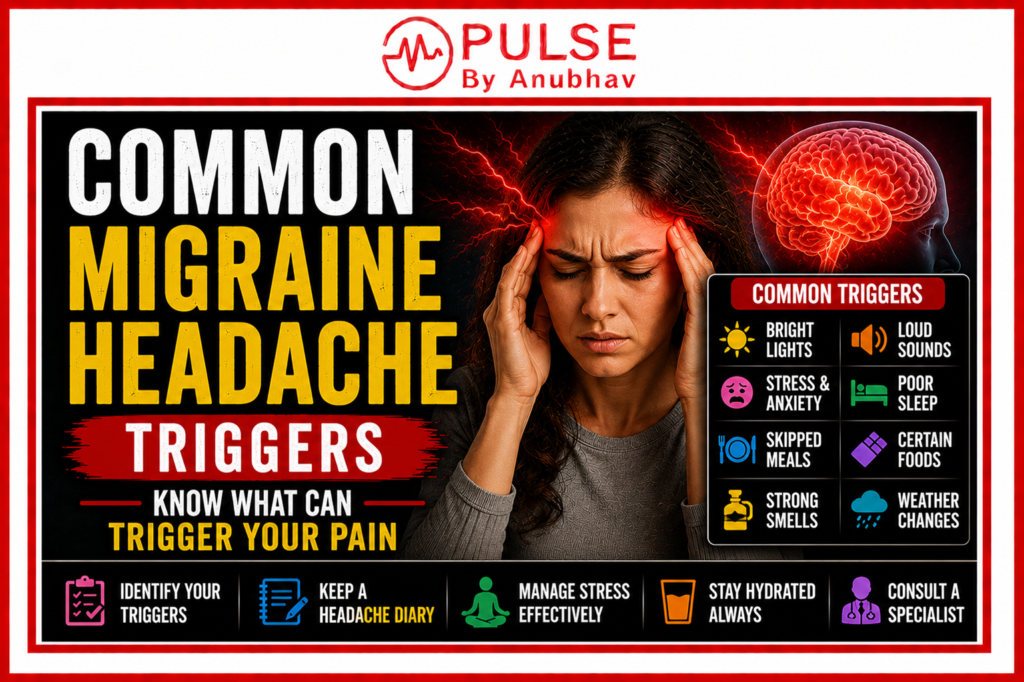
Common triggers include:
🧠 Stress and anxiety
😴 Lack of sleep
🍫 Certain foods and processed items
☕ Excess caffeine or caffeine withdrawal
💧 Dehydration
📱 Long screen exposure
🌤️ Bright lights
🍽️ Skipping meals
🩸 Hormonal fluctuations
🍷 Alcohol consumption
Tracking triggers over time may help reduce future migraine attacks.
Also read- Heart Palpitations: Causes, Symptoms, Treatment & When to Worry
What Causes Migraine Headaches?
The exact cause of a Migraine Headache is still being studied, but experts believe migraines involve changes in brain activity that affect nerves, blood vessels, and chemical signaling.
Factors that may increase risk:
- Family history
- Hormonal changes
- Sleep problems
- Chronic stress
- Certain medications
- Anxiety and emotional stress
Types of Migraine Headache
1. Migraine Without Aura
This is the most common form and occurs without warning symptoms.
2. Migraine With Aura
Headache episodes that include visual or sensory disturbances beforehand.
3. Chronic Migraine
Headaches occurring 15 or more days per month for at least three months.
4. Menstrual Migraine
Linked to hormonal changes during menstrual cycles.
5. Vestibular Migraine
Usually associated with dizziness, vertigo, and balance issues.
How Doctors Diagnose Migraine
There is no single test that confirms migraine in most cases.
Doctors usually evaluate:
✔️ Medical history
✔️ Symptom patterns
✔️ Physical examination
✔️ Neurological assessment
Sometimes additional tests such as MRI or CT scans may be suggested to exclude other medical conditions.
Also Read- Ebola Virus: The Deadly Disease That Shocked the World and How Scientists Fought Back
Migraine Headache Treatment Options
Treatment depends on severity, frequency, and individual symptoms.
During a Migraine Attack
- Rest in a quiet and dark room
- Stay hydrated
- Use a cold compress
- Follow doctor-recommended medications
Preventive Approaches
For frequent migraines, doctors may suggest preventive plans.
Helpful lifestyle habits:
✅ Maintain regular sleep
✅ Follow a balanced diet
✅ Reduce stress
✅ Exercise regularly
✅ Limit unnecessary screen exposure
Natural Ways to Reduce Migraine Frequency
Daily habits often support better migraine management.
🥗 Eat meals on time
💧 Drink enough water
🧘 Practice relaxation techniques
🚶 Stay physically active
😴 Aim for 7–9 hours of sleep
📔 Maintain a migraine diary
Small improvements can create long-term benefits.
Migraine Headache: Symptoms, Treatment, Causes & Best Relief Guide
A Migraine Headache is more than normal head pain. It can affect focus, sleep, work and daily life. Here is a simple guide covering symptoms, causes, treatment options, medicines and home remedies.
💊 Migraine Headache Medicine
Migraine medicines are usually selected based on pain intensity, nausea and attack frequency.
- Paracetamol → Mild migraine
- Ibuprofen → Pain & inflammation
- Naxdom → Migraine + nausea support
- Triptans → Often used in moderate–severe migraine
⚡ Migraine Headache Symptoms
- Throbbing head pain
- Sensitivity to light
- Sensitivity to sound
- Nausea or vomiting
- Blurred vision
- Dizziness
- Weakness and fatigue
🩺 Migraine Headache Treatment
- Early treatment improves relief
- Proper hydration
- Sleep management
- Medical guidance for recurring attacks
- Preventive treatment if frequent
🧠 Migraine Headache Causes
- Stress
- Lack of sleep
- Hormonal changes
- Dehydration
- Skipping meals
- Long screen exposure
👩 What Causes Migraines in Females?
Migraines in females are commonly linked with hormone changes.
- Menstrual cycle changes
- Stress
- Sleep disturbance
- Pregnancy-related changes
- Lifestyle patterns
💊 Migraine Headache Tablets
- Pain relief options
- Migraine-specific tablets
- Anti-nausea support options
🏠 Migraine Headache Remedy at Home
- Drink enough water
- Sleep in a quiet room
- Reduce screen brightness
- Cold compress on forehead
- Eat meals on time
- Practice breathing exercises
🚨 Is Migraine Headache Dangerous?
Usually, migraines are not life-threatening, but severe or unusual symptoms should never be ignored.Seek medical attention if:- Headache appears suddenly and severely
- Speech becomes difficult
- Vision changes unexpectedly
- Weakness appears
- Headaches become more frequent
Best Migraine Headache Medicine: Naxdom, Tablets & Relief Options
💊 Migraine Headache Medicine Guide: Naxdom, Tablets & Best Options
There is no single best medicine for every Migraine Headache. The right option depends on pain severity, nausea, attack frequency and medical history. Below is a simple comparison to understand commonly discussed options.
⭐ Featured Option: Naxdom 500
- Composition: Naproxen 500 mg + Domperidone 10 mg
- How it works: Naproxen helps reduce pain and inflammation while Domperidone helps manage nausea often seen during migraine.
- Generally used: Commonly discussed when migraine pain comes with stomach discomfort or nausea.
- Availability: Available through pharmacies depending on local requirements.
- Approx Price: ₹140–₹190 (can vary)
⚡ Sumatriptan
- Often discussed for moderate to severe migraine
- Targets migraine pathways more directly
- Selection depends on individual symptoms
- Approx range: ₹80–₹400+
🩹 Paracetamol
- Common option for mild attacks
- Focused on basic pain relief
- Simple and widely available
- Approx range: ₹10–₹60
🔥 Ibuprofen
- Used for pain and inflammation
- May help selected migraine cases
- Not suitable for everyone
- Approx range: ₹20–₹100
| Option | Usually Considered For | Main Focus | Composition |
|---|---|---|---|
| Naxdom | Migraine + nausea | Pain + stomach symptom support | Naproxen + Domperidone |
| Sumatriptan | Moderate–severe migraine | Migraine-focused action | Sumatriptan |
| Paracetamol | Mild migraine | Pain relief | Paracetamol |
| Ibuprofen | Pain support | Inflammation control | Ibuprofen |
When Should You See a Doctor?
Seek medical advice if:
⚠️ Headaches become suddenly severe
⚠️ Symptoms change unexpectedly
⚠️ You notice weakness or confusion
⚠️ Headaches become more frequent
⚠️ Pain relief medicines stop working
Early medical evaluation may help improve long-term management.
Final Thoughts
A Migraine Headache is more than an ordinary headache. It can affect productivity, relationships, concentration, and daily comfort. Learning your triggers, improving lifestyle habits, and seeking medical guidance when needed can help reduce both frequency and intensity.
If severe headaches are regularly accompanied by nausea, light sensitivity, or vision changes, do not ignore them. With proper care and awareness, managing migraine becomes much more achievable.
Also read- UP CNET 2026 Result OUT Live: Download ABVMU Scorecard Link
Frequently Asked Questions
Common questions people search before choosing migraine relief methods, medicines and treatment approaches.
Can Naxdom help during migraine attacks?
Naxdom is commonly discussed for migraine episodes that occur with nausea or stomach discomfort. Suitability depends on symptoms, frequency and medical guidance.
Which tablet is commonly used for severe headache episodes?
Different medicines may be considered depending on intensity. Options can include migraine-focused medicines, pain relief tablets or supportive treatment approaches.
What usually triggers migraine attacks?
Common triggers include stress, irregular sleep, dehydration, skipped meals, hormonal changes and long periods of screen exposure.
Can headaches become worse because of frequent medicine use?
Using pain-relief medicines too often may contribute to recurring headache patterns in some people. Long-term management should be discussed with a healthcare professional.
Are home remedies useful for migraine relief?
Resting in a quiet environment, hydration, proper sleep and avoiding personal triggers may support overall comfort for some people.
When should someone seek medical advice?
Seek evaluation if headaches become unusually severe, change suddenly, happen more often or affect normal daily activities.
1 thought on “Migraine Headache: Symptoms, Causes & Treatment”