
White Discharge (Leukorrhea) can be normal or may indicate infection depending on symptoms. Learn causes, treatment, pregnancy changes, warning signs, and when medical advice is needed.
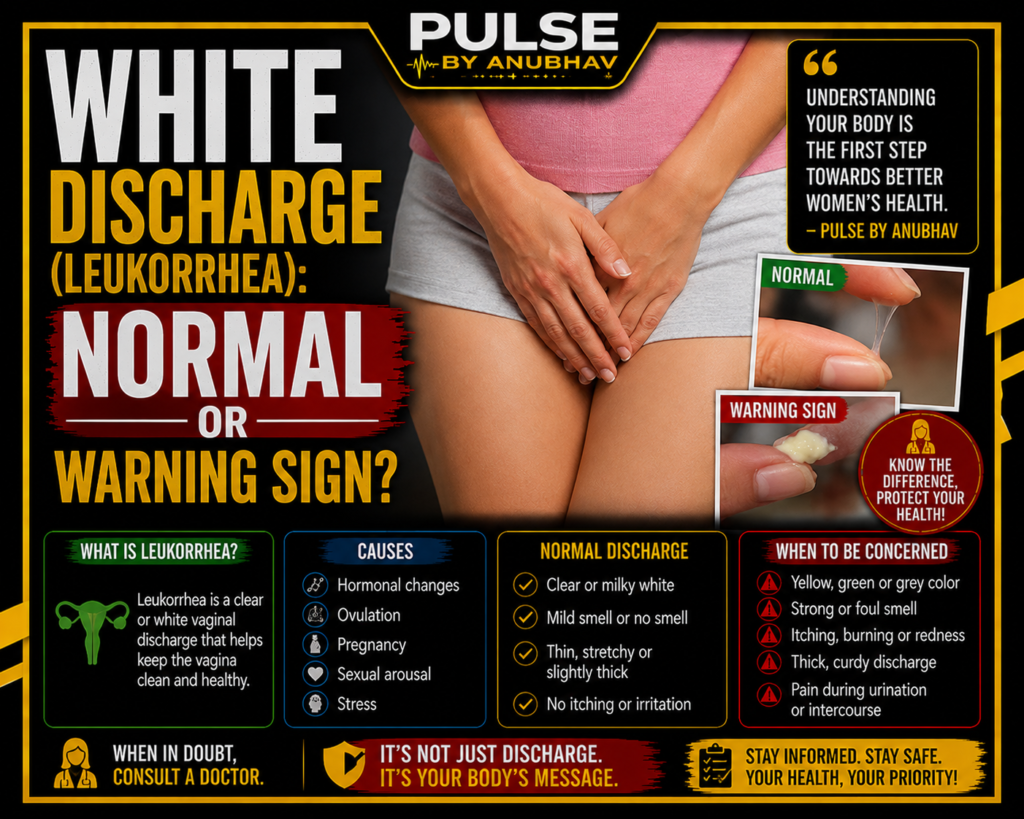
White discharge, medically called Leukorrhea, is a common condition in females and is often a normal part of reproductive health. It may naturally occur during ovulation, pregnancy, puberty, or hormonal changes. However, if discharge becomes excessive, foul-smelling, itchy, painful, or changes to yellow, green, gray, or blood-stained color, it may indicate infection or another condition. Proper hygiene, balanced lifestyle habits, and timely medical evaluation can help maintain vaginal health and prevent complications.
Note: This entire blog content is for educational purposes only and is not medical advice.
WHITE DISCHARGE (LEUKORRHEA): Normal Body Function or a Warning Sign?

White discharge, medically known as Leukorrhea, is one of the most common concerns women notice at different stages of life. The moment people see white discharge, many immediately think something is wrong—but that is not always true.
In many cases, white vaginal discharge is completely normal and actually helps maintain vaginal health by naturally removing dead cells and supporting a balanced environment. However, certain changes in color, smell, texture, or associated symptoms may sometimes signal an infection or another condition that should not be ignored.
Understanding the difference between normal discharge and warning signs can help you make better decisions for your reproductive health.
Health awareness update by Pulse by Anubhav.
What is Leukorrhea?
Leukorrhea is the medical term used to describe white or clear vaginal discharge. It may appear daily or vary depending on age, hormones, menstrual cycle, pregnancy, and overall health.
A healthy amount of discharge is part of the body’s natural defense system and usually does not need treatment.
Its role includes:
- Supporting natural vaginal cleansing
- Removing dead cells
- Maintaining healthy vaginal balance
- Protecting against irritation and harmful microorganisms
Also Read- Why Was Bharat Tiwari Shot After Surrender? Mother’s Allegations Spark Major Bhojpur Encounter Row
Types of Leukorrhea
1. Physiological (Normal) Leukorrhea
This is the natural and healthy form of white discharge and usually does not indicate disease.
Common causes include:
- Ovulation
- Pregnancy
- Puberty
- Sexual arousal
- Hormonal changes
- Emotional stress
Characteristics of normal discharge:
- Clear or milky white color
- No foul smell
- No itching or burning
- Thin or mildly thick consistency
Normal leukorrhea may increase during certain hormonal phases and often settles naturally.
2. Pathological (Abnormal) Leukorrhea
Abnormal leukorrhea usually occurs due to infections or underlying medical conditions.
Warning signs may include:
- Bad or fishy smell
- Itching or burning sensation
- Yellow, green, gray, or blood-stained discharge
- Pain during urination
- Pelvic discomfort
- Excessive or persistent discharge
If these symptoms appear together, medical evaluation may be needed.
Causes of Abnormal White Discharge

1. Fungal Infection (Yeast Infection)
A yeast infection commonly develops due to excessive growth of Candida fungus.
Symptoms:
- Thick cottage cheese-like discharge
- Severe itching
- Redness and irritation
2. Bacterial Vaginosis
This condition develops when the normal bacterial balance of the vagina changes.
Symptoms:
- Fishy odor
- Thin grayish-white discharge
- Mild irritation
3. Sexually Transmitted Infections (STIs)
Some sexually transmitted infections may cause abnormal vaginal discharge.
Examples include:
- Chlamydia
- Gonorrhea
- Trichomoniasis
Possible symptoms:
- Yellow or green discharge
- Burning sensation
- Pelvic pain
- Unusual bleeding
4. Poor Genital Hygiene
Poor intimate hygiene may encourage bacterial growth and increase the risk of infections.
5. Hormonal Imbalances
Hormonal fluctuations can affect vaginal secretions.
Common during:
- Pregnancy
- Birth control use
- Puberty
- Menstrual cycle changes
6. Diabetes
High blood sugar levels may increase susceptibility to recurrent fungal infections.
7. Cervical or Vaginal Infections
Inflammation or infection of the cervix or vagina may lead to increased or abnormal discharge.
Diagnosis of Leukorrhea
If symptoms become persistent, a healthcare professional may recommend evaluation.
Common diagnostic methods include:
Medical History
Questions may include:
- Menstrual cycle pattern
- Pregnancy status
- Current medications
- Relevant sexual history
Physical Examination
A clinical examination may be performed to assess vaginal and cervical health.
Vaginal Swab Test
A discharge sample may be collected to detect:
- Bacteria
- Fungi
- Parasites
Microscopy
Helps identify infection-related changes.
pH Testing
Normal vaginal pH generally ranges between 3.8–4.5.
Culture Test
Useful in repeated or difficult-to-treat infections.
Treatment of Leukorrhea
Leukorrhea (white discharge) treatment depends on the actual cause because not every white discharge needs medicine. If discharge is normal, clear or milky white, without smell, itching, or pain, treatment may not be required. But if symptoms appear due to fungal infection, bacterial imbalance, hormonal changes, or other conditions, doctors may recommend appropriate treatment. Maintaining proper intimate hygiene, staying hydrated, wearing breathable cotton underwear, and avoiding excessive scented products may also help support vaginal health. Persistent, foul-smelling, itchy, painful, yellow, green, or unusual discharge should not be ignored and may need medical evaluation for proper diagnosis and treatment.
Best Medicines for White Discharge (Leukorrhea)
Medicine selection depends on the actual cause — fungal, bacterial, hormonal, pregnancy-related, or mixed infection.
White discharge itself is not a disease. The correct medicine changes depending on symptoms such as smell, itching, pain, pregnancy, color changes, or infection signs. Avoid random tablets without diagnosis.
1. For Yeast Infection (Fungal White Discharge)
Composition:
Clotrimazole
How It Works:
Stops growth of Candida fungus and helps reduce itching, irritation, and abnormal discharge.
Common Forms:
- Vaginal cream
- Vaginal tablet
- External cream
Approx Price (India):
₹40–₹180 depending on brand and pack.
Where Available:
Local pharmacies and online medicine platforms.
Popular Brands:
- Candid
- Clocip
- Generic Clotrimazole
2. For Bacterial Vaginal Infection
Composition:
Metronidazole
How It Works:
Targets harmful bacteria responsible for abnormal odor and discharge.
Usually Used When:
- Fishy smell
- Gray discharge
- Bacterial imbalance
Approx Price:
Varies by formulation and prescription.
Important:
Doctor guidance recommended.
3. For Mixed Vaginal Infection
Combination:
Clindamycin + Metronidazole + Clotrimazole
How It Works:
- Targets bacteria
- Targets fungus
- Helps reduce discharge and irritation
Common Brand Examples:
- Clingen Plus
- Vagi CL
- Other equivalent brands
Approx Price:
₹70–₹180
| Condition | Usually Considered Medicine Type | Main Goal |
|---|---|---|
| Thick white + itching | Antifungal | Reduce fungal growth |
| Fishy smell discharge | Antibacterial | Restore bacterial balance |
| Mixed infection | Combination treatment | Target multiple causes |
| Pregnancy discharge | Medical evaluation | Safety first |
How to Take Medicines Safely
- Use only according to package instructions or clinician advice
- Complete the full course if prescribed
- Avoid self-mixing medicines
- If pregnant, seek medical guidance before use
- Seek review if symptoms continue or worsen
Also read- Vitamin D Deficiency in India: Why Millions Still Suffer Despite Plenty of Sunlight
Lifestyle and Prevention Tips
Simple habits can help support vaginal health:
- Maintain good genital hygiene
- Wear breathable cotton underwear
- Drink enough water
- Avoid excessive use of scented products
- Practice safer sexual habits
- Control blood sugar levels
- Eat a balanced diet
White Discharge (Leukorrhea): Complete Female Health Guide
Understand causes, symptoms, pregnancy changes, foods, treatment options, tablets, and when discharge may need medical attention.
Treatment of White Discharge in Female
Treatment depends on the actual cause and should not be the same for everyone.
- Fungal infection → Antifungal treatment
- Bacterial infection → Medical antibiotics
- Hormonal causes → Medical guidance
- Lifestyle related → Hygiene improvements
- Pregnancy related → Clinical monitoring
Is It Normal to Have White Discharge Everyday?
Yes. Small amounts of white or clear discharge daily can be completely normal if:
- No bad smell
- No itching
- No burning
- No unusual color
Natural discharge helps keep the vagina clean.
White Milky Discharge With No Odor
White milky discharge without smell is commonly linked with:
- Ovulation
- Hormonal changes
- Pregnancy
- Normal reproductive function
Why Do I Have a Lot of White Discharge?
- Ovulation
- Pregnancy
- Hormonal fluctuations
- Stress
- Birth control use
- Infection
Types of Vaginal Discharge
- Clear → Usually normal
- White → Often healthy
- Yellow → May suggest infection
- Green → Needs medical review
- Gray → Common in bacterial imbalance
- Brown or bloody → Evaluation recommended
White Discharge Before Period
Many women notice increased discharge before periods because hormone levels change naturally.
White Discharge After Period
This may happen due to remaining cervical mucus and hormonal adjustment after menstruation.
White Discharge in Pregnancy (Leukorrhea Pregnancy)
Pregnancy commonly increases vaginal discharge due to hormonal and blood flow changes.
- Usually thin
- Mild smell or no smell
- White appearance
Seek evaluation if accompanied by pain, bleeding, fever, or unusual color.
Leukorrhea in Unmarried Girl
Leukorrhea can occur even in unmarried girls and does not automatically indicate infection.
Puberty and hormonal activity are common reasons.
Leukorrhea Symptoms
- Persistent discharge
- Odor
- Itching
- Burning sensation
- Pelvic discomfort
- Irritation
Leukorrhea Causes
- Hormonal changes
- Fungal infection
- Bacterial imbalance
- Pregnancy
- Diabetes
- Poor hygiene
Best Food to Support Vaginal Health Naturally
Food does not directly stop white discharge, but balanced nutrition may support overall reproductive health.
- Curd and probiotic foods
- Leafy vegetables
- Fruits rich in Vitamin C
- Adequate water intake
- Protein-rich diet
- Low added sugar intake
| Topic | Quick Understanding |
|---|---|
| Leukorrhea in Female | Common and often normal |
| White Discharge Reason | Hormones, ovulation, pregnancy, infections |
| Leukorrhea Treatment | Depends on diagnosis |
| Leukorrhea Medicine | Should be doctor-guided |
| White Discharge Tablet | Medicine differs by cause |
| Leukorrhea Tablet | Not one tablet works for everyone |
Important Medical Note
Do not self-medicate using random tablets for white discharge. Medicines vary depending on whether the cause is fungal, bacterial, hormonal, pregnancy-related, or another condition.
Quick Takeaway
White discharge is often normal and healthy. But if it becomes excessive, foul-smelling, painful, itchy, green, yellow, or blood stained, professional medical advice is recommended.
When Should You See a Doctor?
Seek medical advice if you experience:
- Foul-smelling discharge
- Green, yellow, or bloody discharge
- Severe itching or burning
- Pelvic pain
- Fever
- Pain during intercourse
- Frequent recurring infections
Myth vs Fact
Myth: Every white discharge means infection.
Fact: Many women experience normal white discharge during ovulation and hormonal changes.
Myth: White discharge always needs medicine.
Fact: Physiological discharge often does not require treatment.
Final Thoughts
White discharge is often a normal and healthy part of reproductive health. But when discharge changes in color, develops an unpleasant smell, or appears with itching, pain, or irritation, it may indicate an underlying condition.
Pay attention to your body, avoid self-diagnosis, and seek professional advice when symptoms persist.
Stay informed. Stay aware. — Pulse by Anubhav 💚
Also read- Heart Palpitations: Causes, Symptoms, Treatment & When to Worry