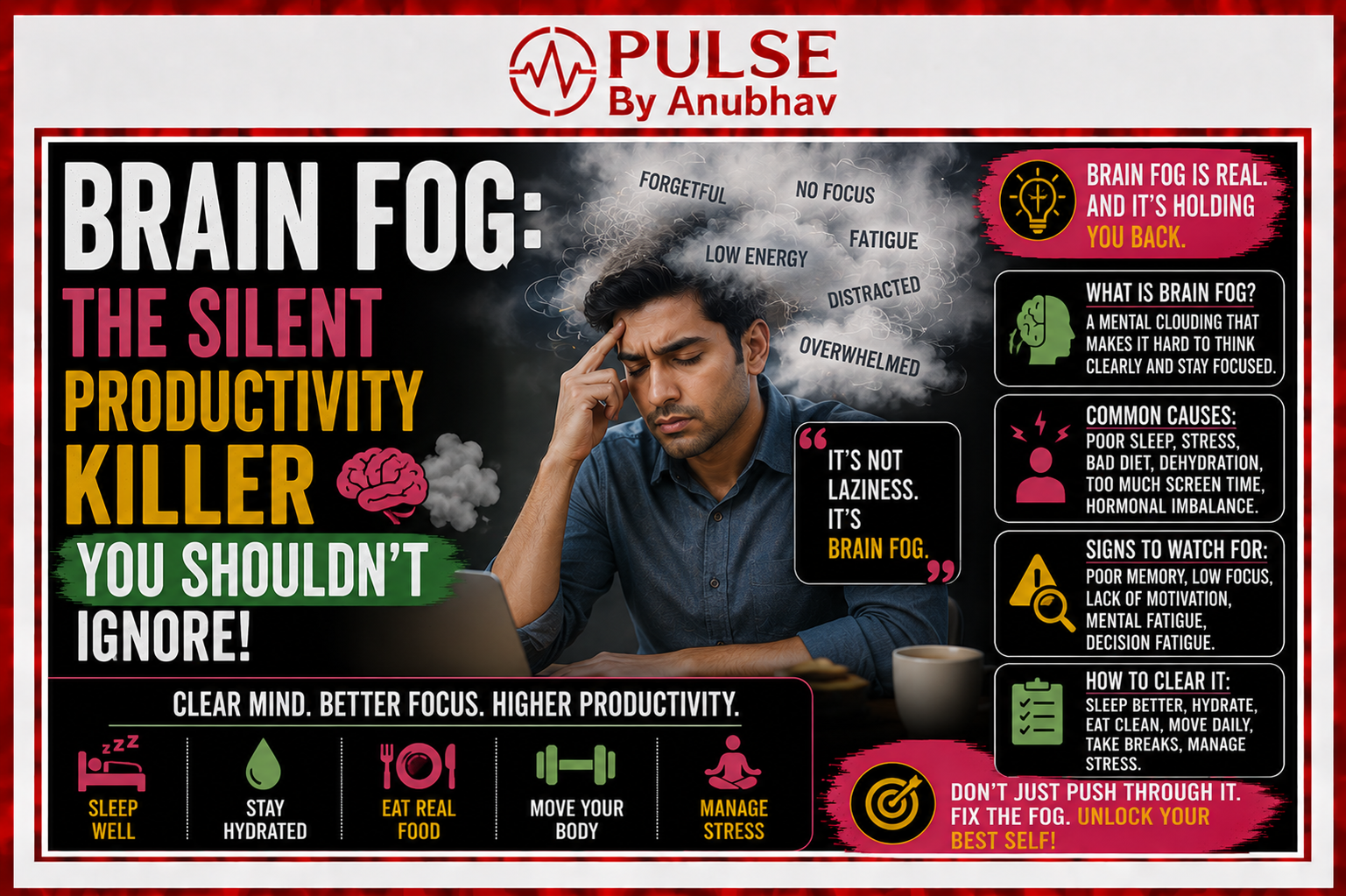
Struggling with Brain Fog? Discover hidden causes, common symptoms, effective home treatments, supplements, and practical ways to improve focus, memory, and mental clarity naturally.
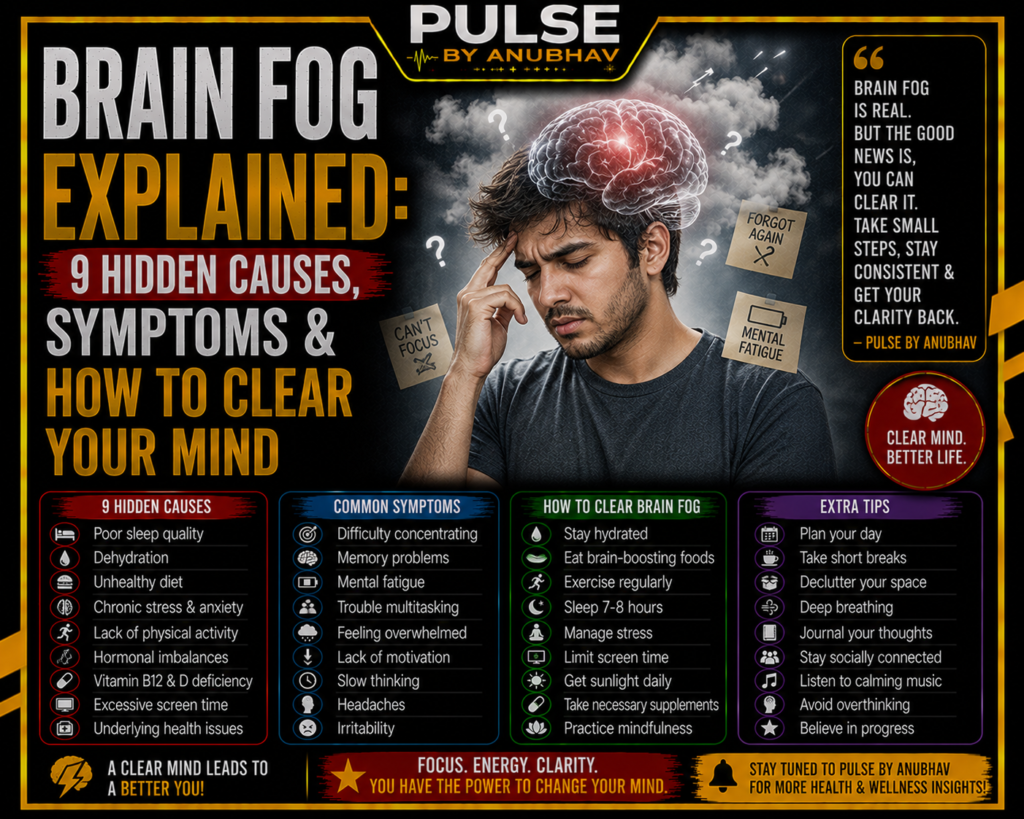
Brain Fog is a common experience that can make you feel mentally tired, distracted, forgetful, and unable to think clearly. While it isn’t a medical condition itself, it may be linked to poor sleep, stress, dehydration, vitamin deficiencies, hormonal changes, or underlying health issues. This guide explains what Brain Fog feels like, why it happens, whether it can be dangerous, and practical ways to improve mental clarity through lifestyle changes and identifying the root cause.
Note: This entire blog content is for educational purposes only and is not medical advice.
Also read- Vaishak Found Dead at Krishi Thapanda’s Bengaluru Apartment
Brain Fog: The Silent Productivity Killer You Shouldn’t Ignore 🧠🌫️
“I know what I want to say, but the words just won’t come out.” 😵💫
“I read the same paragraph three times and still can’t focus.” 📖
“Why do I keep forgetting simple things?” 🤯
If this feels familiar, you may be dealing with Brain Fog—a frustrating experience that can affect focus, memory, productivity, studies, work performance, and everyday life.
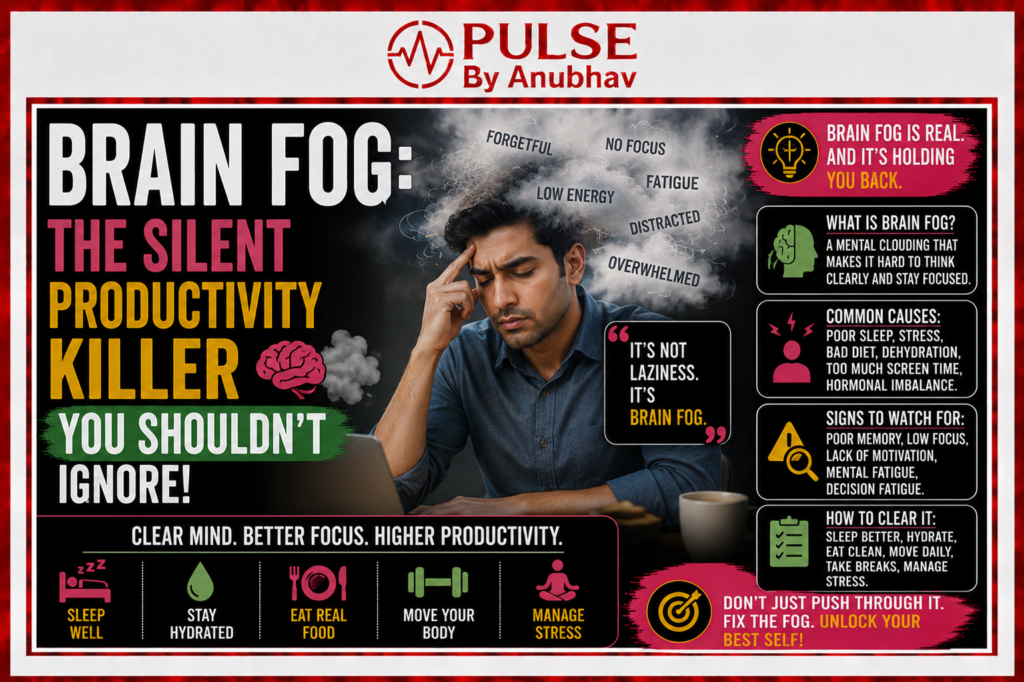
What Is Brain Fog?
Brain fog is not a medical diagnosis—it is a symptom that describes a state of mental cloudiness, reduced clarity, slower thinking, and difficulty processing information.
Think of it like driving through heavy fog. 🚗🌫️
The road still exists, but everything becomes harder to see.
Your brain still works—but thinking, focusing, remembering, and making decisions can suddenly feel more difficult than usual.
Signs You May Be Experiencing Brain Fog 🚨
🤔 Memory Problems
- Forgetting names, appointments, or tasks
- Misplacing everyday items
- Difficulty recalling recently learned information
🎯 Poor Concentration
- Getting distracted easily
- Difficulty staying focused on one task
- Reduced attention span
🧩 Cognitive Slowness
- Taking longer to process information
- Difficulty solving problems
- Trouble making decisions
😴 Mental Fatigue
- Feeling mentally exhausted after minimal work
- Lack of motivation
- Feeling overwhelmed by simple tasks
🗣️ Word-Finding Difficulties
- Knowing what you want to say but struggling to express it
- Losing track during conversations
Also Read- White Discharge (Leukorrhea): Normal or Warning Sign?
Common Causes of Brain Fog ⚠️

😴 Poor Sleep Quality
Sleep allows the brain to restore itself, organize memories, and clear waste.
Even sleeping 7–8 hours may not help if sleep quality is poor.
Possible signs:
- Waking up tired
- Daytime sleepiness
- Difficulty concentrating
😰 Chronic Stress & Anxiety
Long-term stress increases cortisol levels, which may affect:
- Memory
- Concentration
- Learning ability
- Emotional balance
Your brain stays in survival mode instead of performance mode.
🩸 Iron Deficiency
Iron helps carry oxygen throughout the body.
Low iron may contribute to:
- Fatigue
- Dizziness
- Poor concentration
- Mental sluggishness
Women with heavy menstrual bleeding may have a higher risk.
💊 Vitamin Deficiencies
Vitamin B12 Deficiency
Can impact nerve function and cognition.
Common symptoms:
- Memory issues
- Confusion
- Fatigue
- Tingling sensations
Vitamin D Deficiency
Low levels may be linked with:
- Low energy
- Low mood
- Reduced mental clarity
🦋 Thyroid Disorders
Your thyroid plays a major role in metabolism and energy.
Possible symptoms:
- Brain fog
- Weight changes
- Fatigue
- Mood changes
- Hair fall
🍭 Blood Sugar Fluctuations
Too much sugar may create:
⬆️ Temporary energy boost
⬇️ Sudden crash afterward
Result:
- Tiredness
- Poor focus
- Mental exhaustion
💧 Dehydration
The brain contains a high percentage of water.
Even mild dehydration may lead to:
- Poor concentration
- Headaches
- Irritability
- Memory difficulties
🔄 Hormonal Changes
Hormones strongly influence brain performance.
Brain fog is commonly reported during:
- PMS
- Pregnancy
- Perimenopause
- Menopause
🦠 Certain Medical Conditions
Brain fog may also appear alongside:
- Depression
- Anxiety disorders
- Migraine
- Chronic fatigue syndrome
- Autoimmune conditions
- Long COVID
How To Improve Brain Fog Naturally 🌟
💤 Prioritize Better Sleep
Aim for 7–9 hours nightly.
Helpful habits:
- Maintain a consistent schedule
- Reduce screen exposure before bed
- Avoid late caffeine
🏃 Move Your Body
Regular physical activity supports blood flow to the brain.
Benefits:
- Better memory
- Improved concentration
- Enhanced mood
🥗 Feed Your Brain
Include foods rich in:
- Omega-3 fatty acids 🐟
- Nuts and seeds 🥜
- Leafy greens 🥬
- Berries 🫐
- Eggs 🥚
🧘 Manage Stress
Try activities like:
- Meditation
- Deep breathing
- Yoga
- Journaling
- Spending time outdoors
Also Read- Vitamin D Deficiency in India: Why Millions Still Suffer Despite Plenty of Sunlight
💧 Stay Hydrated
Drink enough water consistently instead of waiting until thirst appears.
🔬 Check for Underlying Deficiencies
If symptoms continue, speak with a healthcare professional about evaluating:
- Iron levels
- Vitamin B12
- Vitamin D
- Thyroid function
- Blood sugar levels
🧠 Best Medicine For Brain Fog — What Actually Works?
Complete medicine guide • Composition • MOA • Brand • Price • Should You Take It? • Pulse by Anubhav
There is NO single best medicine for Brain Fog.
Brain fog is usually caused by something else—like poor sleep, Vitamin B12 deficiency, iron deficiency, thyroid issues, stress, dehydration, or hormonal changes.Treating the cause works better than taking random “brain boosters”.
💊 Option 1 — Vitamin B12 Support
Common Choice🩸 Option 2 — Iron Support
Only If Low Iron🌙 Option 3 — Sleep Related Brain Fog
Lifestyle First- Sleep 7–9 hours
- Reduce late-night screen use
- Daily movement
- Hydration
- Balanced meals
- Manage stress
If Brain Fog lasts for weeks or comes with memory loss, speech difficulty, severe headaches, weakness, or confusion—don’t self-medicate. Get evaluated and find the root cause.
🧠 Brain Fog Questions Everyone Searches — Finally Explained
Simple answers • Real expectations • No fake brain hacks • Pulse by Anubhav
⚡ How To Clear Brain Fog Instantly?
People search for an instant fix—but the truth is that brain fog usually doesn’t disappear in 5 minutes. Still, some people notice temporary improvement by removing common triggers.
- 💧 Drink water if dehydrated
- 🥗 Eat a balanced meal if you skipped food
- 🚶 Walk for 10–15 minutes
- 🌬️ Take slow deep breaths
- 📱 Reduce screen overload for a while
- ☀️ Get daylight exposure
- 😴 Rest if sleep deprived
Sometimes what feels like “brain fog” is actually exhaustion, stress, poor sleep, dehydration, or information overload.
💊 Brain Fog Supplements — Do They Actually Work?
Supplements are not magic memory boosters. They only help when there is an actual deficiency or nutritional gap.
- Vitamin B12 → supports nerve function
- Iron → supports oxygen delivery
- Vitamin D → supports overall wellbeing
- Omega-3 → supports brain health
- Magnesium → may help relaxation
Taking supplements without knowing the cause may lead to disappointment because the problem may not be nutritional.
🚨 Is Brain Fog Dangerous?
Brain fog itself is usually not considered a disease, but it can sometimes be a signal that something else needs attention.
Occasional brain fog can happen after poor sleep or stress.But frequent or severe brain fog deserves evaluation.
Seek medical help if brain fog appears with:
- Sudden confusion
- Speech problems
- Weakness
- Severe headache
- Vision changes
- Rapid memory decline
🏠 Brain Fog Treatment At Home
Most long-term improvement comes from daily habits rather than shortcuts.
- Sleep consistently
- Stay hydrated
- Move your body
- Reduce ultra-processed food
- Manage stress
- Avoid endless multitasking
- Create screen breaks
✅ Can Brain Fog Be Cured?
In many cases—yes, brain fog can improve significantly or even disappear once the underlying cause is identified and managed.
If brain fog is linked to:
- Sleep → improvement may happen quickly
- Stress → gradual improvement
- Vitamin deficiency → depends on correction
- Hormones → varies by person
- Medical conditions → treatment dependent
The goal is to understand why your brain feels overloaded.
Red Flags: When You Should Seek Medical Attention 🚩
Seek prompt medical care if brain fog appears with:
- Sudden confusion
- Significant memory loss
- Difficulty speaking
- Weakness or numbness
- Severe headaches
- Vision changes
These symptoms should not be ignored.
Final Thoughts ❤️
Brain fog is often your body’s way of signaling that something needs attention—not something to simply push through.
Whether the cause is poor sleep, stress, nutrient deficiencies, hormonal shifts, dehydration, or an underlying health condition, understanding the reason behind it can help restore focus and mental clarity.
✨ A clear mind often starts with healthy daily habits.
Stay informed. Stay aware. Keep your brain healthy — Pulse by Anubhav 🧠💚
Also read- Migraine Headache: Symptoms, Causes & Treatment
🧠 Brain Fog FAQs — Everything People Want To Know
Quick answers • Easy to understand • Pulse by Anubhav
Great awesome things here. I’m very satisfied to look your article. Thanks a lot and i am taking a look ahead to touch you. Will you kindly drop me a mail?