You will get here Physical Education class 12 CBSE notes Chapter 9: Psychology and Sports. You can connect with us for every important update related to class 12.
Physical Education is a very important subject for you because it will help you increase your percentage. You can score high marks in this subject by studying notes and practicing MCQs. In this post, we will cover Chapter 9: Psychology and Sports.
Also Read- Physical Education Notes | Class 12 – Chapter 1: Management of Sporting Events
Key Content Of Chapter 9 Psychology and Sports
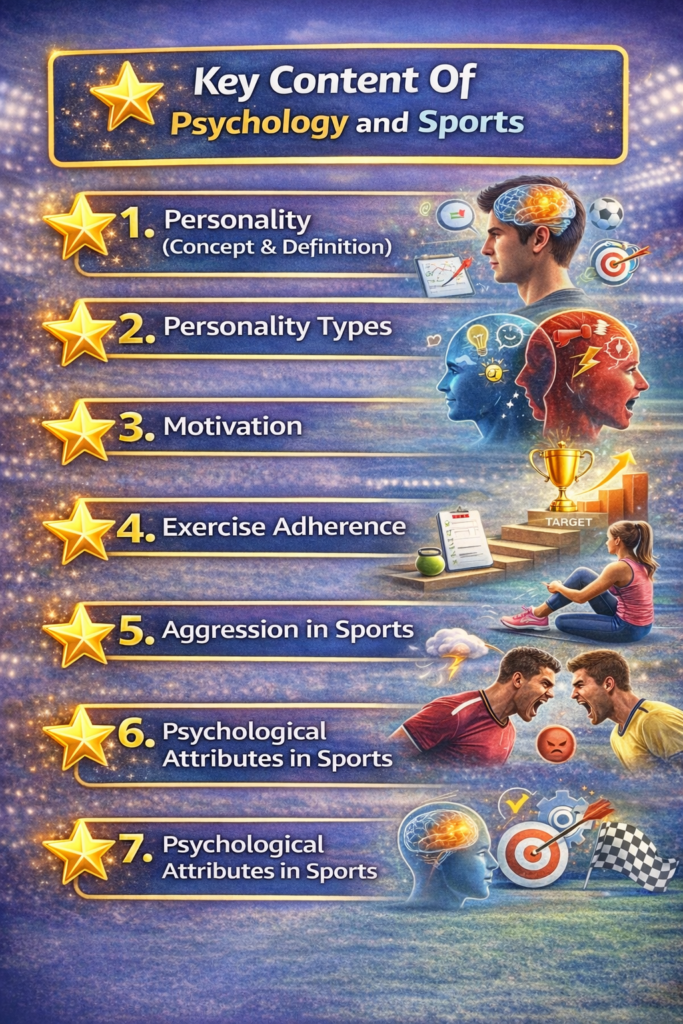
⭐ 1. Personality (Concept & Definition)
✅ Meaning
- Personality = individual ka unique behaviour, thoughts, feelings pattern.
- Latin word Persona → Mask se derived.
- Relatively stable characteristics of person.
✅ Importance in Sports
- Athlete behaviour samajhne mein help.
- Performance predict karta hai.
- Training response different hota hai.
⭐ 2. Personality Types
✅ Jung Classification
🔹 Introvert
- Reserved, shy, self-focused.
- Social interaction kam.
- Think before acting.
🔹 Extrovert
- Social, outgoing, confident.
- Action oriented.
- Risk taking nature.
🔹 Ambivert
- Introvert + Extrovert traits mix.
✅ Big Five Theory (OCEAN Model)
O → Openness
- Creative, imaginative, curious.
C → Conscientiousness
- Organized, responsible, disciplined.
E → Extraversion
- Social, energetic, talkative.
A → Agreeableness
- Friendly, cooperative, helpful.
N → Neuroticism
- Emotional instability, anxiety.
👉 Sports performance personality traits se influenced hota hai.
⭐ 3. Motivation
✅ Meaning
- Behaviour ko initiate, guide aur maintain karne wali force.
- Latin word Movere = to move.
✅ Types of Motivation
🔹 Intrinsic Motivation
- Internal satisfaction.
- Enjoyment, interest, passion.
👉 Long term motivation.
🔹 Extrinsic Motivation
- External rewards.
- Prize, money, praise, punishment.
✅ Motivation Techniques
- Goal setting
- Feedback
- Rewards
- Fun-based training
- Social support
- Individualized training
⭐ 4. Exercise Adherence
✅ Meaning
- Regular exercise continue karne ki ability.
- “Stickability” to exercise routine.
✅ Reasons for Exercise
- Fitness & health
- Mental relaxation
- Socialization
- Recreation
- Disease prevention
- Body image improvement
✅ Benefits of Exercise
- Strong heart & muscles
- Weight control
- Stress reduction
- Better mental health
- Self-confidence increase
- Social bonding
- Memory improvement
✅ Strategies to Enhance Exercise Adherence
- Goal setting
- Variety in exercise
- Social support
- Feedback
- Rewards
- Health education
- Problem solving
⭐ 5. Aggression in Sports
✅ Meaning
- Behaviour intended to harm others physically or mentally.
✅ Types of Aggression
🔹 Hostile Aggression
- Main aim → harm opponent.
- Emotional, angry behaviour.
🔹 Instrumental Aggression
- Aim → win or gain advantage.
- Not based on anger.
✅ Assertiveness (Important)
- Positive behaviour.
- Firm but non-harmful action.
- Allowed in sports.
⭐ 6. Psychological Attributes in Sports
✅ (1) Self-Esteem
- Self confidence and self-worth.
- High self-esteem → better performance.
✅ (2) Mental Imagery
- Mind mein performance visualize karna.
- Skill learning improve karta hai.
- Anxiety reduce karta hai.
✅ (3) Self Talk
- Internal dialogue.
- Positive thoughts → better performance.
- Focus aur confidence increase.
✅ (4) Goal Setting
- Specific performance target set karna.
Types of Goals:
- Outcome Goal → final result (winning)
- Performance Goal → personal performance
- Process Goal → technique improvement
SMART Goal:
- Specific
- Measurable
- Achievable
- Realistic
- Time bound
Class 12 Physical Education Chapter 9: Psychology and Sports Notes
CBSE Class 12 Physical Education – Unit 9
Psychology and Sports
Complete Class 12 Physical Education Unit 9 notes, syllabus,
book PDF aur official Telegram channel ka direct access yahan se milega.
Physical Education Chapter 9 Psychology and Sports MCQs
Q1. Personality is derived from which Latin word?
Q2. According to Jung, personality types are:
Q3. OCEAN model represents which theory?
Q4. Motivation derived from inner satisfaction is called:
Q5. Motivation through reward or praise is:
Q6. Maintaining regular participation in exercise is called:
Q7. Behaviour intended to harm another person is called:
Q8. Aggression aimed to harm opponent due to anger is:
Q9. Mental rehearsal of performance in mind is:
Q10. Setting specific targets to improve performance is:
Also Read:- Physical Education Notes | Class 12 – Chapter 8: Biomechanics and Sports
FAQs About Psychology and Sports
Q1. What is personality?
Personality refers to an individual’s unique and relatively stable pattern of behaviour, thoughts and feelings. It determines how a person reacts to different situations and environments.
Q2. What are personality types according to Jung?
According to Carl Jung, personality is of two types: Introvert and Extrovert. Introverts are reserved, self-focused and prefer solitude, while extroverts are social, outgoing and action-oriented.
Q3. What is Big Five Theory of personality?
The Big Five Theory explains personality through five traits known as OCEAN: Openness, Conscientiousness, Extraversion, Agreeableness and Neuroticism. These traits describe behaviour and performance of individuals.
Q4. What is motivation?
Motivation is the driving force that initiates, guides and maintains behaviour. It directs an individual’s effort towards achieving a goal.
Q5. What are types of motivation?
Motivation is of two types: Intrinsic motivation (internal satisfaction like enjoyment and interest) and Extrinsic motivation (external rewards like money, praise or trophies).
Q6. What is exercise adherence?
Exercise adherence refers to maintaining regular participation in exercise or physical activity over a long period of time according to a planned routine.
Q7. What are benefits of exercise?
Benefits of exercise include improved physical health, reduced risk of disease, stress relief, improved mental health, better social interaction and increased self-confidence.
Q8. What are strategies to enhance exercise adherence?
Strategies include goal setting, adding variety in exercise, social support, feedback, rewards, health education and solving barriers to exercise.
Q9. What is aggression in sports?
Aggression is behaviour intended to harm another person physically or psychologically. It includes actions like hitting, abusing or injuring an opponent intentionally.
Q10. What are types of aggression in sports?
Aggression is of two types: Hostile aggression (intent to harm opponent due to anger) and Instrumental aggression (aggressive behaviour to achieve a goal like winning).
Q11. What is self-esteem in sports?
Self-esteem refers to a person’s self-respect, confidence and self-worth. High self-esteem improves performance and motivation in sports.
Q12. What is mental imagery?
Mental imagery is the practice of creating or recreating experiences in the mind. Athletes visualize performance to improve skills and confidence.
Q13. What is self-talk?
Self-talk is internal dialogue used by athletes to control thoughts, improve focus, boost confidence and enhance performance.
Q14. What is goal setting in sports?
Goal setting is a mental training technique in which athletes set specific targets to improve performance. It increases motivation, focus and persistence.
Class 12 Physical Education Notes
Chapter I
3 thoughts on “Physical Education Notes | Class 12 – Chapter 9: Psychology and Sports”