What is papillomavirus, how does the HPV vaccine work, and how dangerous can human papillomavirus be — learn about the risks, symptoms, and prevention.
Human papillomavirus (HPV) is a common infection that can increase the risk of serious health problems such as cancer and genital warts. The HPV vaccine trains the body’s immune system to defend against the virus and prevents future infections. In this article, we explain the risks of HPV, how the vaccine works, available vaccine types, and treatment options for high-risk HPV in simple terms. Proper prevention and timely medical consultation are essential to avoid HPV.
Note: This entire blog content is for educational purposes only and is not medical advice.
Also Read- What are antihistamines? How it works, best medicine and precautions
What Is the Human Papillomavirus Vaccine?
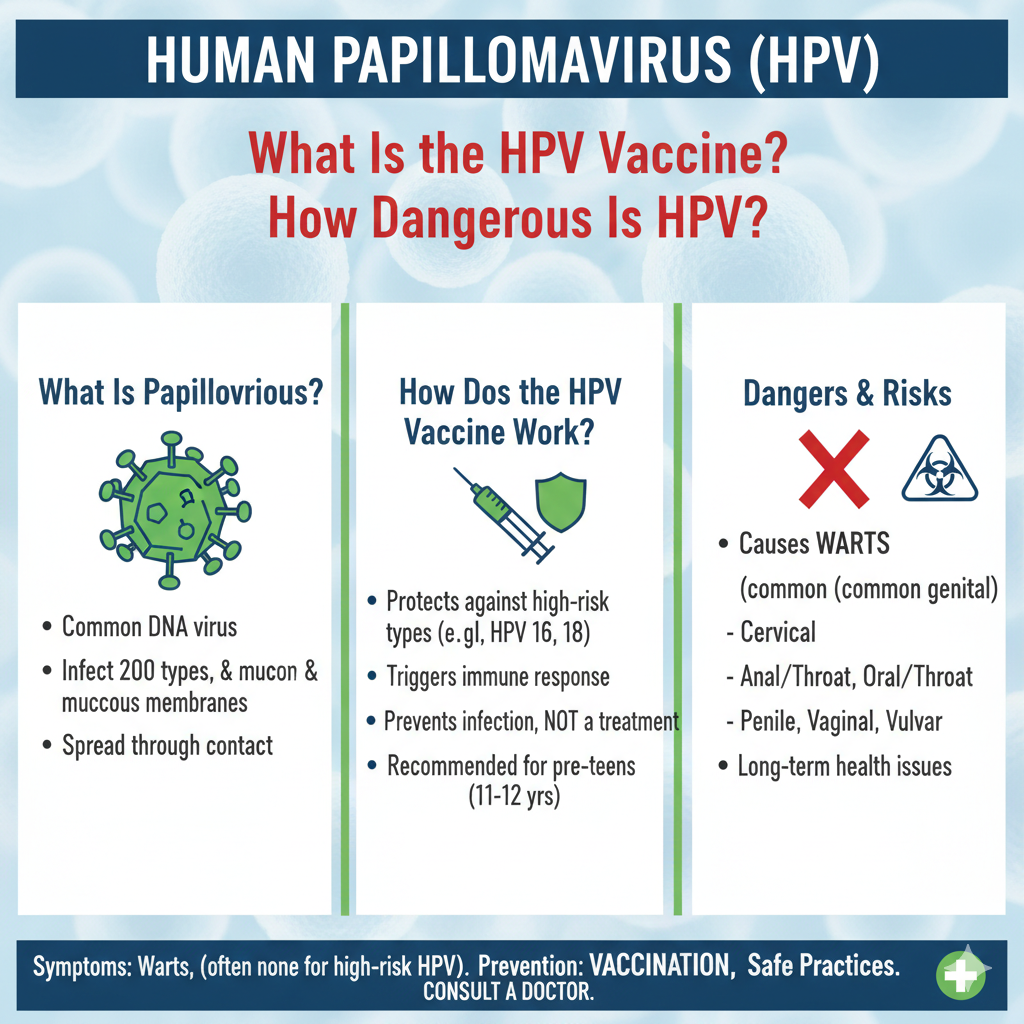
The HPV vaccine is a protective vaccine that protects against human papillomavirus infection. HPV is a common sexually transmitted infection (STI) that spreads through skin-to-skin contact. This virus can cause cervical cancer, as well as cancers of the vagina, vulva, penis, anus, and throat. HPV also causes genital warts.
HPV is so common that approximately 80% of sexually active people experience an HPV infection at some point in their lives. A healthy immune system often clears the virus, but in some cases, the infection remains in the body, increasing the risk of cancer.
This is why getting the HPV vaccine is considered crucial. It’s a safe and effective way to prevent future HPV infections. The vaccine is generally recommended for people between the ages of 9 and 45 and is given in a series of shots.
Why is the HPV vaccine given?
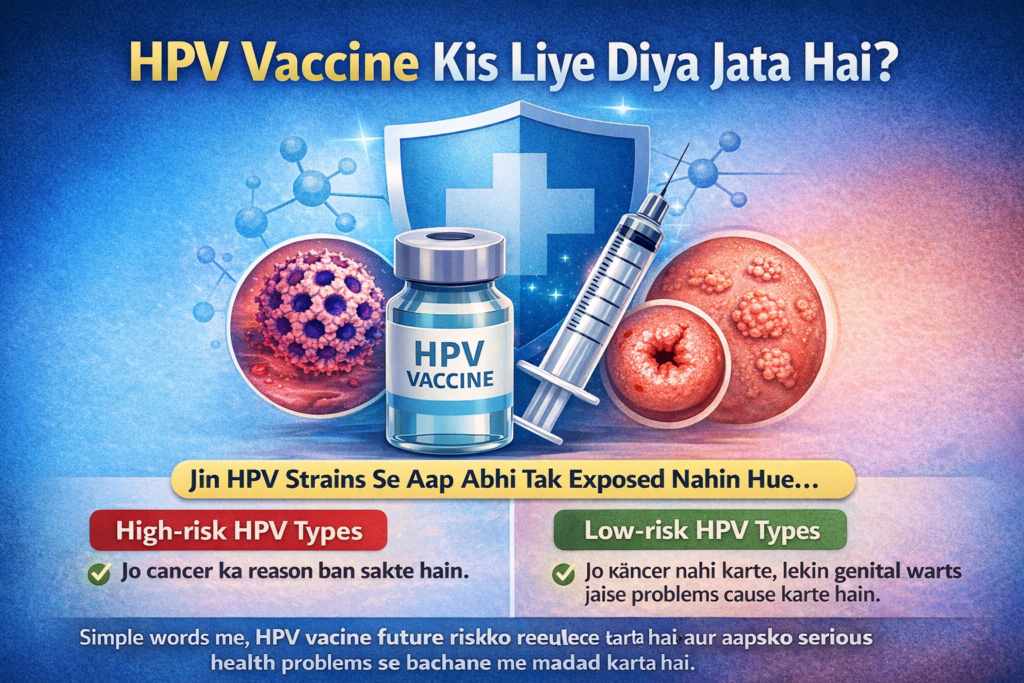
The primary function of the HPV vaccine is to prevent HPV infections that can later develop into cancer or genital warts. It’s important to understand—this vaccine is not a treatment. If you’re already infected with a certain HPV strain, the vaccine won’t cure that infection.
But the vaccine does protect you against HPV strains you haven’t yet been exposed to. It provides protection against both types.
Also Read- Jemimah Rodrigues: Why She’s Trending, Biography, Net Worth, Age, Lifestyle & Career 2026
Types Of Human Papillomavirus Vaccine?
There are currently six licensed HPV vaccines available worldwide. These vaccines provide protection against different types of Human Papillomavirus (Papillomavirus) strains. They are broadly divided into three categories:
✅ Bivalent Vaccines (2 types ke HPV se protection)
✅ Quadrivalent Vaccines (4 types ke HPV se protection)
✅ Nonavalent Vaccine (9 types ke HPV se protection)
What is the treatment for high-risk human papillomavirus?
Cost (India): ₹1500 – ₹5000 approximately (depending on city/hospital).
Cost (India): ₹2000 – ₹8000 approx.
Cost (India): ₹5000 – ₹20000 approx.
• Imiquimod Cream (Aldara) — for genital warts treatment.
• Isoprinosine Tablets — may be prescribed for immune support.
Where to find: Medical store or online pharmacy (doctor prescription required).
Price (India): ₹500 – ₹3000 approx depending on brand.
Also Read- Sophie Shine Wedding, Biography, Career & Personal Life
9 thoughts on “What Is the HPV Vaccine? How Dangerous Is the Human Papillomavirus”