English Flamingo Poetry Notes | Class 12 – Chapter 1: My Mother at Sixty-six - Pulse By Anubhav

English Flamingo Poetry Notes | Class 12 – Chapter 1: My Mother at Sixty-six

You will get here English Flamingo Poetry Class 12 CBSE notes Chapter 1: My Mother at Sixty-six. You can connect with us for every important update related to class 12.
My Mother at Sixty Six central idea PDF
My mother at Sixty six central idea 100 words
My mother at Sixty six poem
My mother at Sixty six question answers
My Mother at Sixty-six notes
My mother at sixty six reference to context explanation stanza
My mother at Sixty-Six Stanza Wise explanation PDF
Central idea of My mother at Sixty six class 12 up board
Chapter 1 my mother at sixty six summary
Chapter 1 my mother at sixty six pdf
My mother at Sixty six question answers
My mother at sixty six central idea
Chapter 1 my mother at sixty six analysis
My Mother at Sixty-six notes
My Mother at Sixty-Six PDF
Class 12 Chapter 1 my mother at Sixty-six

English is a very important subject for you because it will help you increase your percentage. You can score high marks in this subject by studying notes and practicing MCQs. In this post, we will cover Chapter 1: My Mother at Sixty-six Poetry English Flamingo Book.

Also Read- Class 12 Physical Education Notes (Chapter Wise) – CBSE Guide

Key Content Of Chapter 1 My Mother at Sixty-six
My Mother at Sixty Six central idea PDF
My mother at Sixty six central idea 100 words
My mother at Sixty six poem
My mother at Sixty six question answers
My Mother at Sixty-six notes
My mother at sixty six reference to context explanation stanza
My mother at Sixty-Six Stanza Wise explanation PDF
Central idea of My mother at Sixty six class 12 up board
Chapter 1 my mother at sixty six summary
Chapter 1 my mother at sixty six pdf
My mother at Sixty six question answers
My mother at sixty six central idea
Chapter 1 my mother at sixty six analysis
My Mother at Sixty-six notes
My Mother at Sixty-Six PDF
Class 12 Chapter 1 my mother at Sixty-six

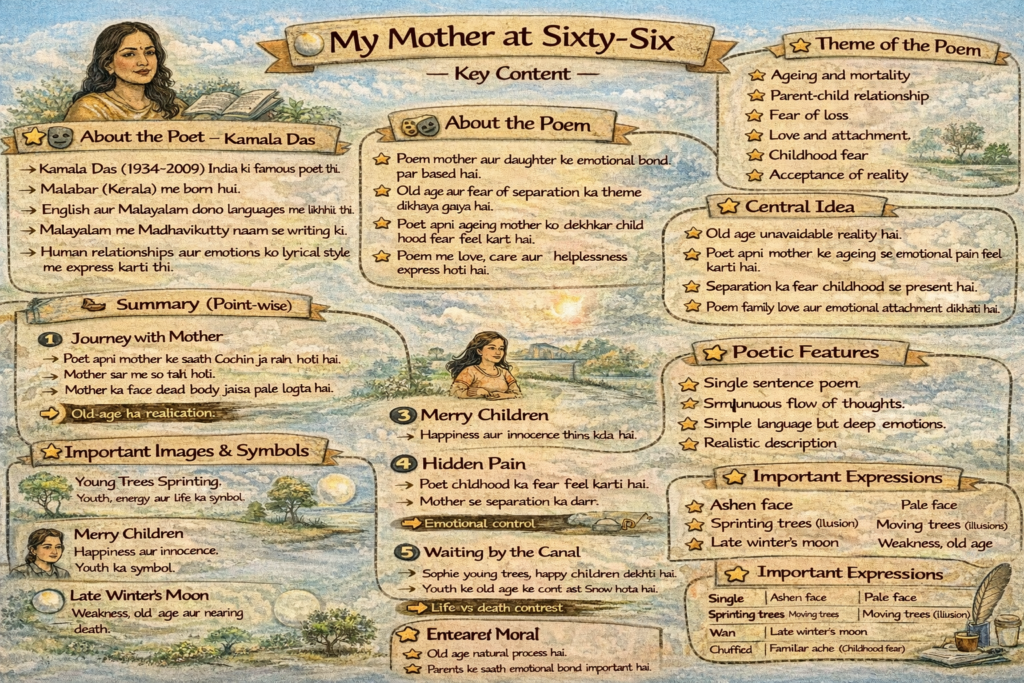
⭐ About the Poet — Kamala Das

  • Kamala Das (1934–2009) India ki famous poet thi.
  • Malabar (Kerala) me born hui.
  • English aur Malayalam dono languages me likhti thi.
  • Malayalam me Madhavikutty naam se writing ki.
  • Human relationships aur emotions ko lyrical style me express karti thi.
  • Unki poetry realistic aur emotional hoti hai.

⭐ About the Poem

  • Poem mother aur daughter ke emotional bond par based hai.
  • Old age aur fear of separation ka theme dikhaya gaya hai.
  • Poet apni ageing mother ko dekhkar childhood fear feel karti hai.
  • Poem me love, care aur helplessness express hoti hai.

🎯 Theme of the Poem

Ageing and mortality
Parent-child relationship
Fear of loss
Love and attachment
Childhood fear
Acceptance of reality


💡 Central Idea

  • Old age unavoidable reality hai.
  • Poet apni mother ke ageing se emotional pain feel karti hai.
  • Separation ka fear childhood se present hai.
  • Smile ke through poet apna pain hide karti hai.
  • Poem family love aur emotional attachment dikhati hai.

📝 Summary (Point-wise)

 1. Journey with Mother

  • Poet apni mother ke saath Cochin ja rahi hoti hai.
  • Mother car me so rahi hoti hai.
  • Mother ka face dead body jaisa pale lagta hai.
    👉 Old age ka realisation.

 2. Fear of Ageing

  • Poet realise karti hai mother bohot old ho gayi hai.
  • Ye thought usse pain deta hai.
  • Wo attention divert karne ke liye bahar dekhti hai.

 3. Contrast of Life

  • Poet young trees aur happy children dekhti hai.
  • Youth vs old age ka contrast show hota hai.
    👉 Life vs death contrast.

 4. Mother Compared to Moon

  • Airport par mother ko late winter’s moon se compare kiya.
  • Pale, weak aur lifeless appearance show karta hai.

 5. Hidden Pain

  • Poet childhood ka fear feel karti hai.
  • Mother se separation ka darr.
  • Par wo sirf smile karti hai aur “see you soon” bolti hai.

👉 Emotional control.


⭐ Important Images & Symbols

🌳 Young Trees Sprinting

  • Youth, energy aur life ka symbol.
  • Moving car ke effect se running jaisa feel.

👧 Merry Children

  • Happiness aur innocence.
  • Youth ka symbol.

🌙 Late Winter’s Moon

  • Weakness, old age aur nearing death.

 Literary Devices

  • Simile → “face ashen like a corpse”
  • Simile → “pale as a late winter’s moon”
  • Imagery → visual description of mother, trees, children
  • Contrast → youth vs old age
  • Repetition → “smile and smile and smile”
  • Symbolism → moon, trees, children

 Poetic Features

  • Single sentence poem.
  • Continuous flow of thoughts.
  • Simple language but deep emotions.
  • Realistic description.

⭐ Message / Moral

  • Old age natural process hai.
  • Parents ke saath emotional bond important hai.
  • Love express karna zaroori hai.
  • Life me separation unavoidable hai.
  • Pain ko strength ke saath accept karna chahiye.

 Important Expressions

ExpressionMeaning
Ashen facePale face
Sprinting treesMoving trees (illusion)
WanPale / colourless
Late winter’s moonWeakness, old age
Familiar acheChildhood fear

 Exam Keywords (Must Learn)

  • Ageing and mortality
  • Fear of separation
  • Parent-child relationship
  • Contrast of youth and old age
  • Late winter’s moon
  • Childhood fear

Also Read- Rashmika Mandanna Marriage: Traditional Kodava Wedding Ceremony with Vijay Deverakonda Begins

Class 12 English Flamingo Poetry Chapter 1: My Mother at Sixty-six Notes

CBSE Class 12 English – Flamingo Poetry (Chapter 1)
My Mother at Sixty-six – Complete Study Material
Complete Class 12 English Flamingo Poetry Chapter 1 “My Mother at Sixty-six” ke notes, NCERT book PDF, updated syllabus aur official Telegram channel ka direct access yahan se milega.

English Flamingo Poetry Chapter 1 My Mother at Sixty-six MCQs

Q1. Who is the poet of “My Mother at Sixty-Six”?
A. Kamala Das
B. Sarojini Naidu
C. Sylvia Plath
D. Robert Frost
✅ Correct Answer: Kamala Das
Q2. Where was the poet driving to?
A. Cochin
B. Delhi
C. Mumbai
D. Chennai
✅ Correct Answer: Cochin
Q3. How did the poet describe her mother’s face?
A. Ashen like a corpse
B. Bright and cheerful
C. Glowing and fresh
D. Strong and healthy
✅ Correct Answer: Ashen like a corpse
Q4. What do the young trees symbolise?
A. Youth and energy
B. Sadness
C. Death
D. Fear
✅ Correct Answer: Youth and energy
Q5. Why did the poet look at the young trees and children?
A. To distract herself from painful thoughts
B. To admire nature
C. To stop the car
D. To talk to them
✅ Correct Answer: To distract herself from painful thoughts
Q6. The mother is compared to which object?
A. Late winter’s moon
B. Sun
C. Star
D. Flower
✅ Correct Answer: Late winter’s moon
Q7. What does the late winter’s moon symbolise?
A. Old age and weakness
B. Happiness
C. Success
D. Energy
✅ Correct Answer: Old age and weakness
Q8. What childhood fear does the poet feel again?
A. Fear of losing her mother
B. Fear of darkness
C. Fear of failure
D. Fear of loneliness
✅ Correct Answer: Fear of losing her mother
Q9. What do the repeated words “smile and smile and smile” show?
A. Hidden pain and controlled emotions
B. True happiness
C. Anger
D. Excitement
✅ Correct Answer: Hidden pain and controlled emotions
Q10. What is the central theme of the poem?
A. Ageing and fear of separation
B. War and peace
C. Friendship
D. Nature beauty
✅ Correct Answer: Ageing and fear of separation

Also Read- Class 12 Chemistry Notes + MCQs (Chapter Wise) – CBSE Guide

Most Common About My Mother at Sixty-six

FAQs About My Mother at Sixty-six
1. What is the kind of pain and ache that the poet feels?
The poet feels emotional pain on seeing her mother growing old and weak. She fears losing her mother due to old age, which reminds her of her childhood fear of separation.
2. Why are the young trees described as ‘sprinting’?
The young trees symbolise youth, energy, and vitality. They create a contrast with the poet’s ageing mother and represent the lively world outside.
3. Why has the poet brought in the image of the merry children spilling out of their homes?
The merry children represent happiness, innocence, and youth. This image contrasts with the mother’s old age and helps the poet distract herself from painful thoughts.
4. Why has the mother been compared to the late winter’s moon?
The late winter’s moon symbolises weakness, paleness, and decline. It reflects the mother’s fragile condition and the poet’s fear of losing her.
5. What do the poet’s parting words and smile signify?
The poet hides her pain and fear by smiling. Her words “see you soon, Amma” show hope and her attempt to remain strong despite emotional suffering.
CBSE Class 12 English – Flamingo Poetry Chapters
1️⃣ My Mother at Sixty-six – (Kamala Das) View Chapter
2️⃣ Keeping Quiet – (Pablo Neruda) View Chapter
3️⃣ A Thing of Beauty – (John Keats) View Chapter
4️⃣ A Roadside Stand – (Robert Frost) View Chapter
5️⃣ Aunt Jennifer’s Tigers – (Adrienne Rich) View Chapter

2 thoughts on “English Flamingo Poetry Notes | Class 12 – Chapter 1: My Mother at Sixty-six”

Leave a Comment