You will get here English Vistas Class 12 CBSE Notes | Class 12 – Chapter 6: Memories of Childhood. You can connect with us for every important update related to class 12.
English is a very important subject for you because it will help you increase your percentage. You can score high marks in this subject by studying notes and practicing MCQs. In this post, we will cover Chapter 6: English Vistas Notes | Class 12 – Chapter 6: Memories of Childhood English Vistas Book.
Also Read- Drug Addiction: From Experiment to a Deadly Trap That Destroys Lives Slowly
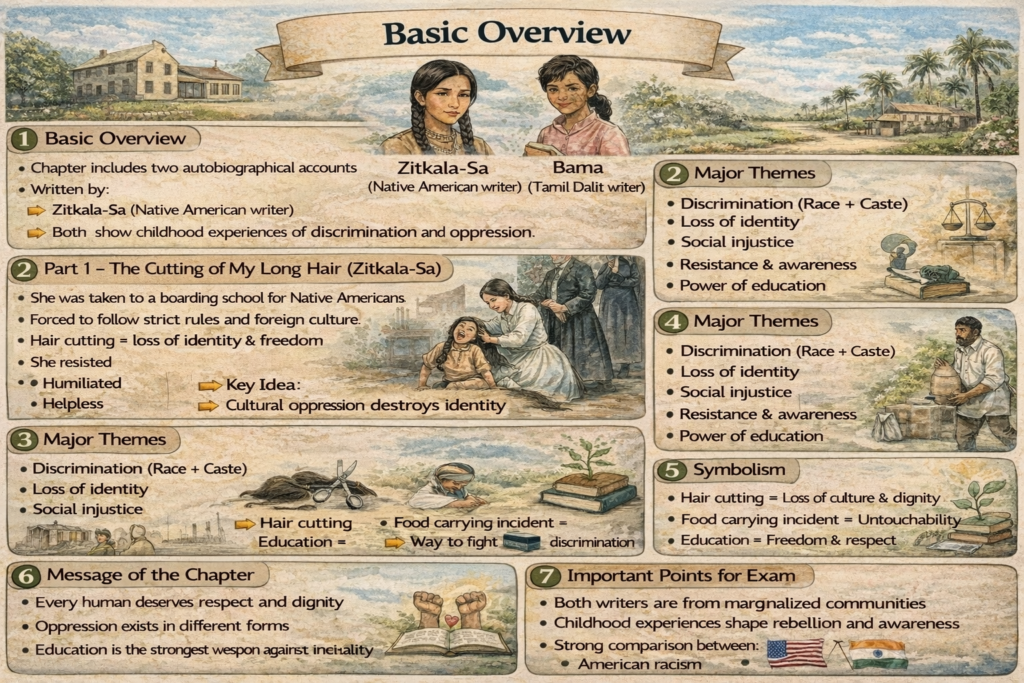
Key Content Of Chapter 6 Memories of Childhood 1. Basic Overview Chapter includes two autobiographical accounts Written by:Zitkala-Sa (Native American writer)Bama (Tamil Dalit writer) Both show childhood experiences of discrimination and oppression 2. Part 1 – The Cutting of My Long Hair (Zitkala-Sa) She was taken to a boarding school for Native Americans Forced to follow strict rules and foreign culture Hair cutting = loss of identity & freedom She resisted but was physically forced Felt:Humiliated Helpless Like an animal 👉 Key Idea:
3. Part 2 – We Too Are Human Beings (Bama) Based on caste discrimination in India Bama sees an elder carrying food without touching it Reason → He belonged to a lower caste She feels: 👉 Her brother advises:
Study hard Education = way to fight discrimination 4. Major Themes Discrimination (Race + Caste) Loss of identity Social injustice Resistance & awareness Power of education 5. Symbolism Hair cutting → Loss of culture & dignityFood carrying incident → UntouchabilityEducation → Freedom & respect6. Message of the Chapter Every human deserves respect and dignity Oppression exists in different forms Education is the strongest weapon against inequality 7. Important Points for Exam Both writers are from marginalized communities Childhood experiences shape rebellion and awareness Strong comparison between:American racism Indian caste system Also Read- B.Pharm and D.Pharm Notes PDF (All Semester) – Complete Study Material & Syllabus
CBSE Class 12 English – Vistas (Chapter 6)
Memories of Childhood – Complete Study Material
Get complete Class 12 English Vistas Chapter 6 “Memories of Childhood” notes,
NCERT book PDF, summary, important questions, and exam-ready study material in simple English.
Perfect for quick revision and board exam preparation.
1. Who wrote “The Cutting of My Long Hair”?
A. Bama
B. Zitkala-Sa
C. Kalki
D. Pearl S. Buck
2. Why was Zitkala-Sa afraid of cutting her hair?
A. It meant loss of identity
B. She didn’t like short hair
C. It was painful
D. She wanted to look modern
3. Where was Zitkala-Sa taken?
A. Hospital
B. Boarding school
C. Temple
D. Market
4. What did Zitkala-Sa do to avoid hair cutting?
A. Hid under the bed
B. Ran away
C. Cried loudly
D. Fought with teacher
5. Who wrote “We Too Are Human Beings”?
A. Bama
B. Zitkala-Sa
C. Gandhi
D. Tagore
6. What did Bama see that shocked her?
A. A fight
B. Food carried without touching
C. A robbery
D. A festival
7. Why did the elder carry food by a string?
A. It was heavy
B. To save time
C. Due to caste discrimination
D. It was a tradition
8. What advice did Bama’s brother give her?
A. Leave school
B. Study hard
C. Ignore studies
D. Work in fields
9. What is the main theme of the chapter?
A. Discrimination
B. Love
C. Adventure
D. Humor
10. What is the role of education in the chapter?
A. Time pass
B. Tool for equality
C. Entertainment
D. Punishment
Also Read- Class 12 English Flamingo Notes (Chapter Wise) – CBSE Guide
Q1. What is the main theme of “Memories of Childhood”?
The main theme is discrimination and oppression faced by marginalized communities and the importance of equality and dignity.
Q2. Who are the authors of this chapter?
The chapter includes two accounts written by Zitkala-Sa and Bama.
Q3. Why was Zitkala-Sa forced to cut her hair?
She was forced to cut her hair as part of the school rules, which aimed to suppress her cultural identity.
Q4. What does the cutting of hair symbolize?
It symbolizes loss of identity, cultural oppression, and humiliation.
Q5. What incident made Bama aware of caste discrimination?
Bama saw an elder carrying food by a string without touching it, which revealed the practice of untouchability.
Q6. What advice did Bama’s brother give her?
He advised her to study hard and gain education to overcome discrimination and earn respect.
Q7. How are the experiences of Zitkala-Sa and Bama similar?
Both experienced discrimination in childhood and developed awareness about injustice in society.
Q8. What message does the chapter convey?
The chapter conveys that all humans are equal and education is a powerful tool to fight injustice.
1 The Third Level – (Jack Finney)
2 The Tiger King – (Kalki)
3 Journey to the End of the Earth – (Tishani Doshi)
4 The Enemy – (Pearl S. Buck)
5 On the Face of It – (Susan Hill)
6 Memories of Childhood – (Zitkala-Sa & Bama)
Related