Explore Cannabis sativa medical uses, focusing on Epidiolex (CBD). Learn its composition, mechanism, price, availability, and comparison with other cannabis-based medicines. | Pulse by Anubhav
Cannabis sativa has both therapeutic and psychoactive properties, with CBD-based medicines like Epidiolex offering safe medical benefits without causing a “high.” It works via CB1 and CB2 receptors to control seizures, reduce inflammation, and calm the nervous system. Other drugs like Dronabinol and Nabilone contain THC and have psychoactive effects. These medicines are used for epilepsy, pain, and chemotherapy-related issues but require prescription and proper regulation.
Note: This entire blog content is for educational purposes only and is not medical advice.
Also Read- Overthinking: The Silent Enemy of Peace (How to Stop It Before It Ruins You)
🔍 Cannabis sativa Introduction
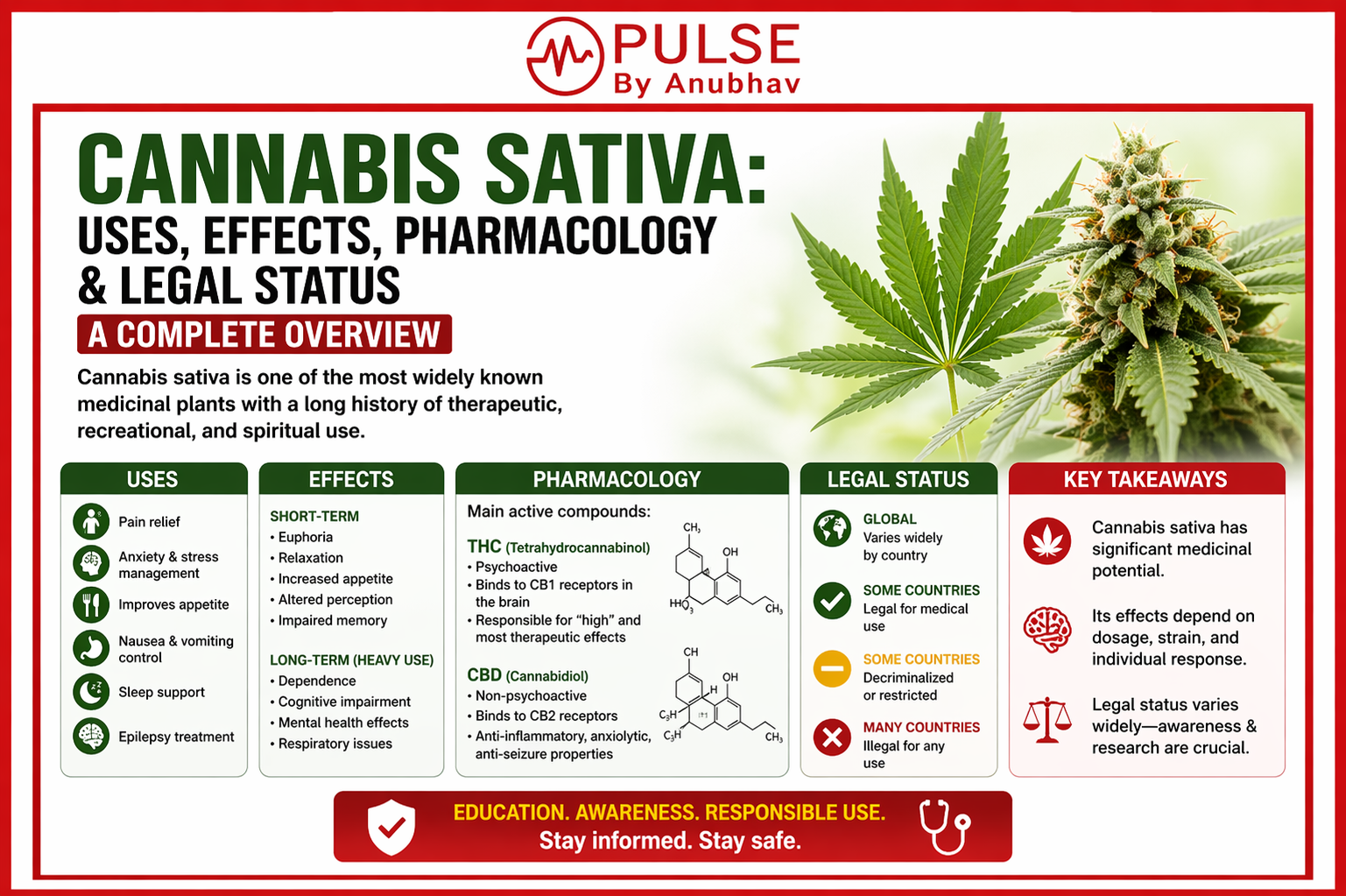
Cannabis sativa is a psychoactive plant belonging to the Cannabaceae family. It is widely used for recreational, medicinal, and industrial purposes.
👉 It is one of the most commonly abused substances worldwide, but it also has significant therapeutic potential due to its active compounds (cannabinoids).
🧪 Active Principles (Cannabinoids)
THC (Δ⁹-Tetrahydrocannabinol)
- Main psychoactive component
- Causes euphoria, altered perception, and addiction
CBD (Cannabidiol)
- Non-psychoactive
- Shows anti-epileptic, anxiolytic, and anti-inflammatory effects
CBN (Cannabinol)
- Mild sedative
CBG (Cannabigerol)
- Precursor compound of other cannabinoids
🧾 Preparations of Cannabis
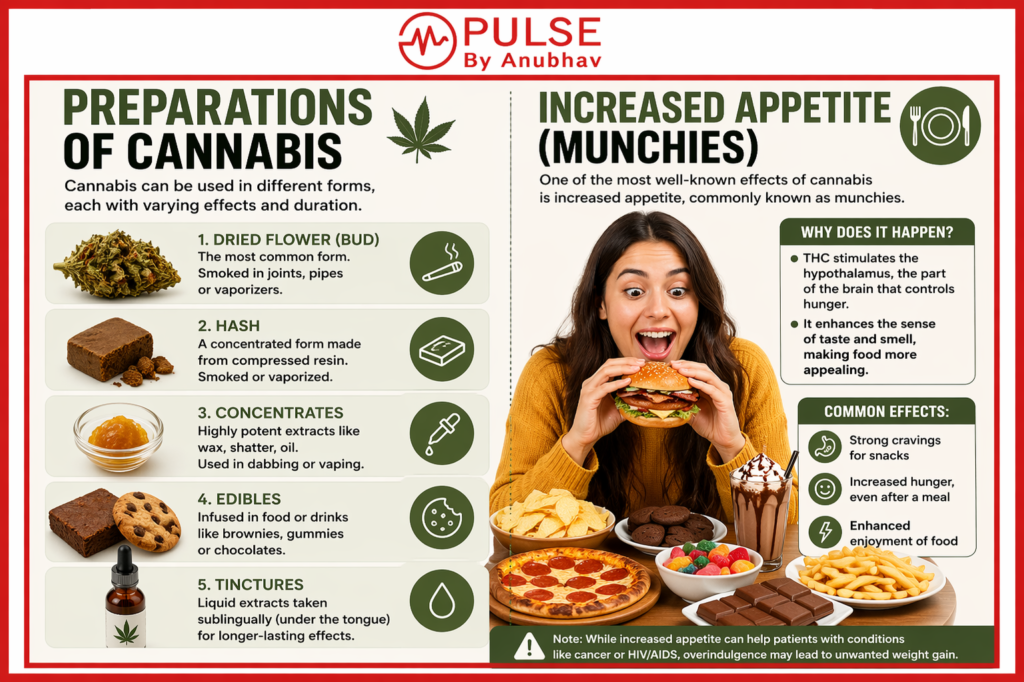
1. Bhang 💁🏻♂️
- Obtained from leaves & seeds
- Consumed as drinks (e.g., thandai)
- Low potency
2. Ganja
- From flowering tops of female plant
- Usually smoked
- Moderate to high THC
3. Charas ☠️ (Hashish)
- Resin extract
- Highly potent
4. Hash Oil
- Concentrated extract
- Very high THC content
💊 Pharmaceutical Preparations
- Dronabinol
→ Synthetic THC
→ Used as appetite stimulant & antiemetic - Nabilone
→ THC analogue
→ Used in chemotherapy-induced vomiting - Epidiolex
→ Pure CBD
→ Used for epilepsy treatment
⚙️ Mechanism of Action
Cannabis sativa acts through the Endocannabinoid System:
🔹 CB1 Receptors (Brain)
- Controls mood, memory, coordination
🔹 CB2 Receptors (Immune System)
- Regulates inflammation and immunity
👉 THC Effects:
- ↑ Dopamine → Euphoria & dependence
- Alters GABA & glutamate → Cognitive impairment
💊 Pharmacological Effects
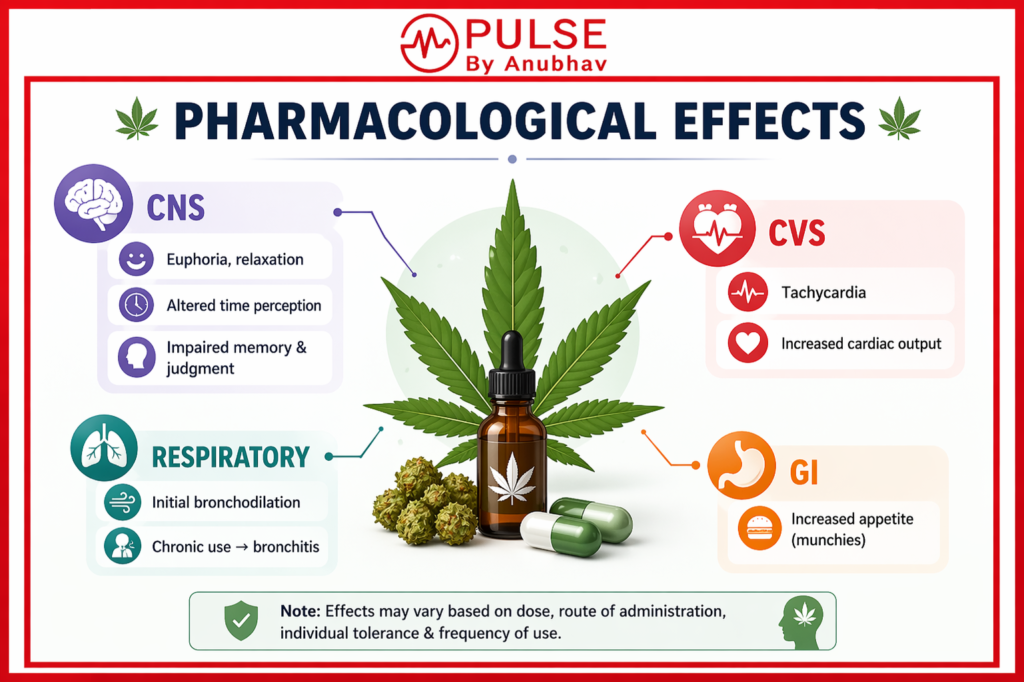
🧠 CNS
- Euphoria, relaxation
- Altered time perception
- Impaired memory & judgment
❤️ CVS
- Tachycardia
- Increased cardiac output
🌬️ Respiratory
- Initial bronchodilation
- Chronic use → bronchitis
🍔 GI
- Increased appetite (munchies)
🩺 Medical Uses
✔️ Established Uses
- Epilepsy (CBD)
- Chronic pain
- Chemotherapy-induced nausea & vomiting
- Appetite stimulation (HIV/AIDS, cancer)
⚠️ Emerging Uses
- Anxiety
- Sleep disorders
- Multiple sclerosis
Also Read- Drug Addiction: From Experiment to a Deadly Trap That Destroys Lives Slowly
Best Cannabis sativa Medicine? Uses, Price & Full Comparison Explained | Pulse by Anubhav
- CBD (Cannabidiol) – Non-psychoactive compound
- Minimal or no THC
- Acts on CB1 & CB2 receptors
- Reduces abnormal brain activity
- Controls seizures
- Provides calming & anti-inflammatory effects
- Epilepsy (Dravet & Lennox-Gastaut syndrome)
- Anxiety relief
- Chronic pain
- Prescription required
- Available in licensed pharmacies
- May require import approval in India
| Medicine | Main Component | Uses | Mechanism | Key Difference |
|---|---|---|---|---|
| Epidiolex | CBD | Epilepsy | Modulates CB receptors, reduces neuronal excitability | No psychoactive effect |
| Dronabinol | Synthetic THC | Appetite stimulant, antiemetic | Activates CB1 → increases appetite & dopamine | Psychoactive (causes high) |
| Nabilone | THC analogue | Chemotherapy vomiting | CB1 receptor activation → antiemetic effect | Stronger & longer acting than THC |
| Sativex | THC + CBD | Multiple sclerosis pain | Balanced CB1 & CB2 action | Balanced psychoactive + therapeutic effect |
| Cannabis Oil (Medical) | CBD dominant | Pain, anxiety | Anti-inflammatory & calming effect via ECS | Less regulated, variable composition |
🌿 Cannabis sativa Q (Mother Tincture) – Uses, Benefits & Working
Cannabis sativa Q (Mother Tincture) ek homeopathic preparation hai jo Cannabis sativa plant se banayi jati hai.
👉 Iska use mainly urinary disorders, sexual weakness, aur nervous system issues mein kiya jata hai.
👉 Ye controlled aur diluted form hoti hai, isliye iska effect psychoactive drugs jaisa strong nahi hota.
🧪 Composition
- Prepared from fresh flowering tops of Cannabis sativa
- Extracted using alcohol (ethanol)
- Contains trace cannabinoids (THC, CBD) in highly diluted form
👉 Homeopathy mein isse “Q” ya Mother Tincture bola jata hai (base form before dilution).
⚙️ Mechanism of Action
Cannabis sativa Q mainly kaam karta hai:
- Nervous system modulation → anxiety & irritability ko calm karta hai
- Urinary tract effect → burning urination aur infection symptoms ko reduce karta hai
- Mild cannabinoid action → CB receptors par halka effect
👉 Yeh body ke natural healing response ko stimulate karta hai (homeopathic principle).
🩺 Uses of Cannabis sativa Q
Urinary Problems
- Burning urination 🔥
- Frequent urination
- Urinary tract irritation
Male Sexual Health
- Premature ejaculation
- Sexual weakness
- Gonorrhea-related symptoms (homeopathic indication)
✔️ Nervous System
- Anxiety
- Restlessness
- Mental irritation
💊 Dosage
👉 General dose:
- 10–15 drops in half cup water, 2–3 times daily
⚠️ Doctor ki advice lena better hota hai (self-use avoid kar).
⚠️ Side Effects
- Usually safe in homeopathic doses
- Overuse se mild symptoms ho sakte hain:
- Headache
- Dizziness
- Irritation
💰 Price
- Approx: ₹100 – ₹250 (30ml bottle)
- Brand par depend karta hai
📍 Availability
- Available at homeopathic stores & online pharmacies
- Easily available in India without strict restriction
⚖️ Important Note
👉 Cannabis sativa Q ek homeopathic medicine hai — iska effect THC drugs jaisa psychoactive nahi hota.
👉 Safe use ke liye proper dosage aur guidance zaroori hai.
Cannabis sativa Q ek useful homeopathic remedy hai jo especially urinary aur nervous system disorders mein help karta hai — but use responsibly.
⚠️ Adverse Effects
🔸 Acute Effects
- Anxiety, panic
- Impaired coordination
- Hallucinations (high dose)
- Dry mouth, red eyes
🔸 Chronic Effects
- Dependence (Cannabis Use Disorder)
- Memory impairment
- Amotivational syndrome
- Increased risk of psychosis
Also read- Milk vs Curd: Which is Better for Gut Health, Digestion & Immunity?
❓ Do You Know What is a “Trip”?
💫 Cannabis “Trip” / Acute Intoxication
A trip is the THC-induced psychoactive state after consuming Cannabis sativa, especially potent forms like charas.
🌈 Desired Effects
- Euphoria (“high”)
- Relaxation, laughter
- Altered sensory perception
- Time distortion
- Increased appetite
⚠️ Disturbing Effects (Bad Trip / Toxic Effects)
- Anxiety, panic attacks
- Paranoia (feeling watched or unsafe)
- Confusion, impaired judgment
- Hallucinations & delusions
👉 Examples of dangerous delusions:
- Feeling of superpowers (e.g., stopping a bus with hands)
- Believing they can fly or jump safely from heights
- Misinterpreting surroundings (seeing/hearing things not present)
⚖️ Legal Status in India
Under the NDPS Act, 1985:
- Bhang → Allowed in some states
- Ganja & Charas → Illegal
✨ Final Note
Cannabis sativa is a plant with dual nature — it has important medical benefits but also significant risks when misused. Understanding its pharmacology and effects is essential, especially for pharmacy students.
onwiwh