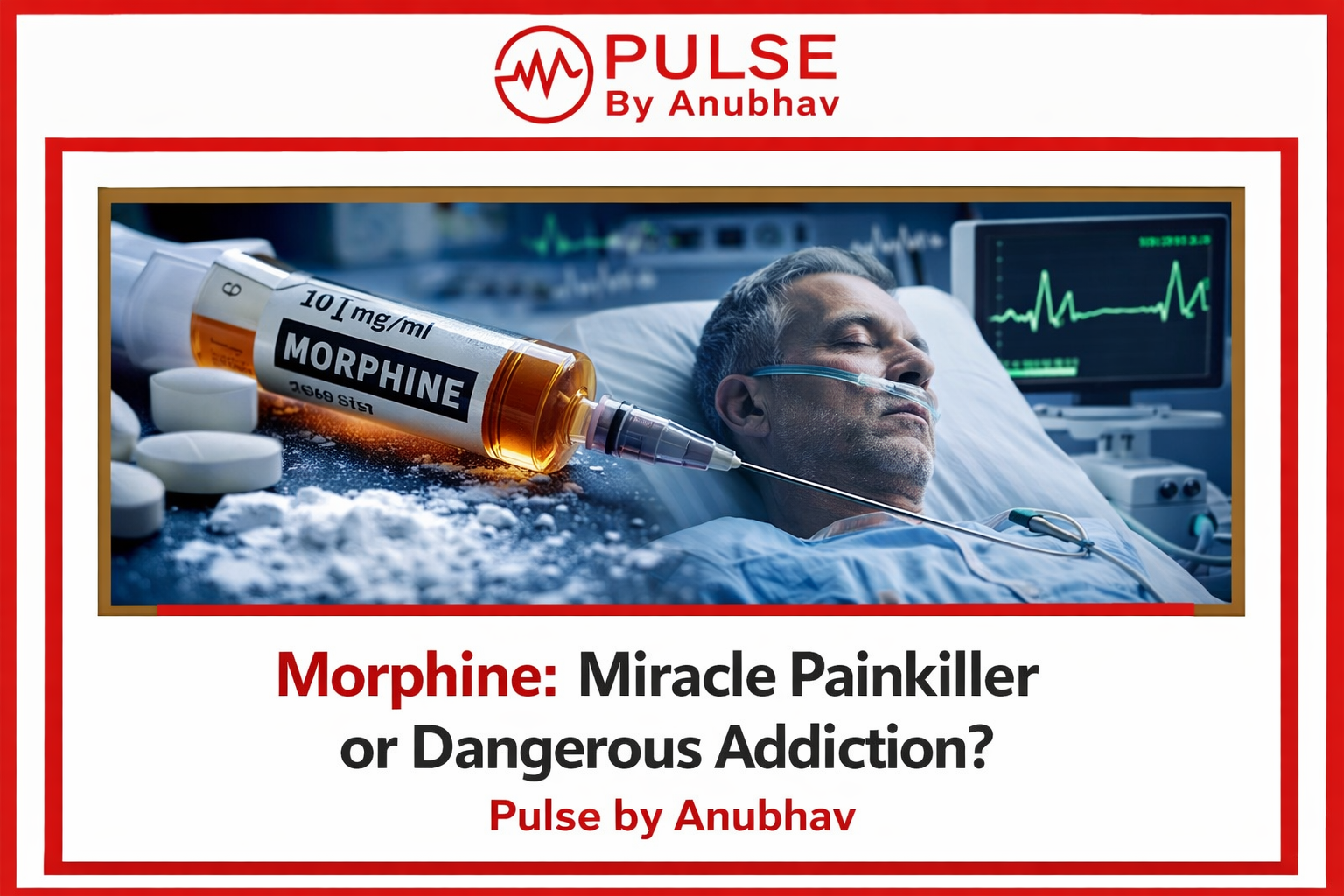
Morphine is a miracle painkiller that can take away unbearable pain—but if misused, it can also lead to dangerous addiction and even death.
Morphine is a powerful opioid analgesic (painkiller) extracted from opium, which comes from the poppy plant (Papaver somniferum).
It is known as the gold standard for severe pain relief in modern medicine and is widely used in hospitals under strict medical supervision.
Note: This entire blog content is for educational purposes only and is not medical advice.
Also Read- Overthinking: The Silent Enemy of Peace (How to Stop It Before It Ruins You)
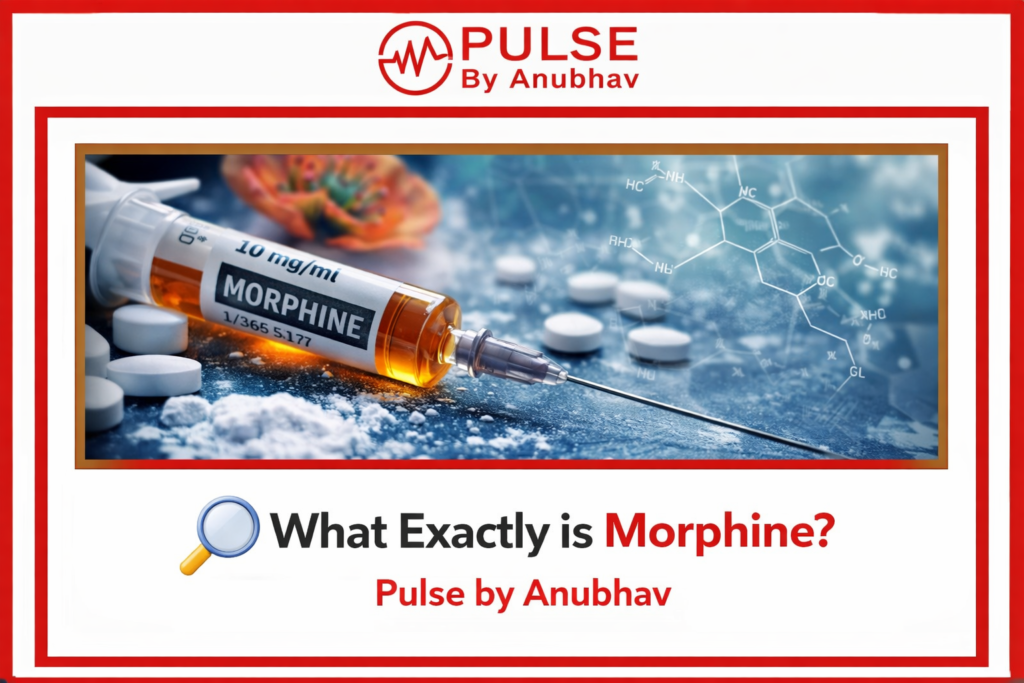
🔍 What Exactly is Morphine?
Morphine is a powerful opioid analgesic (pain-relieving drug) derived from opium, a natural substance obtained from the poppy plant (Papaver somniferum). It is widely used in modern medicine to treat moderate to severe pain, especially in hospital settings under strict supervision.
👉 In simple words:
Morphine doesn’t remove the cause of pain—it changes how your brain perceives the pain.
🧪 Type of Morphine
- Drug Class: Opioid Analgesic
- Source: Natural (derived from opium plant)
- Category: Narcotic painkiller
- Usage Level: Prescription-only (controlled drug)
🌿 From Plant to Powerful Drug
Morphine comes from opium, a natural substance obtained by drying the latex of the poppy plant.
➡️ Opium contains several important compounds (alkaloids):
- Morphine (most potent)
- Codeine
- Thebaine
👉 Among these, morphiine is the strongest and most medically important.
⚙️ How Morphine Works Inside the Body
Morphinee works by binding to opioid receptors in the brain, especially mu (μ) receptors.
🧠 What happens after that?
- Pain signals from nerves are blocked
- Brain’s emotional response to pain is reduced
- A feeling of calm or mild euphoria is created
👉 That’s why patients don’t just feel less pain—they also feel relaxed and detached from discomfort.
⚡ Why Doctors Use Morphine
Doctors use morphinee when pain becomes too severe for normal medicines.
💊 Common medical uses:
- Cancer pain (chronic severe pain)
- Post-surgical pain
- Severe injuries or burns
- Heart attack (to reduce pain and anxiety)
- End-of-life care (palliative care)
😴 Effects on Mind and Body
Morphinee affects not just pain—but the entire body system.
🧘 Positive Effects:
- Strong pain relief
- Calmness and relaxation
- Sleepiness
- Reduced anxiety
⚠️ Negative Effects:
- Slow breathing
- Reduced heart rate
- Clouded thinking
- Loss of alertness
👉 At high doses, morphiine can shut down vital functions, especially breathing.
⚠️ Common Side Effects (Very Important)
Even when used properly, morphiine can cause side effects:
- Nausea and vomiting
- Constipation (very common 🚨)
- Dizziness
- Dry mouth
- Itching (due to histamine release)
- Excessive sleepiness
👉 Long-term use almost always leads to constipation and tolerance.
Also Read- Drug Addiction: From Experiment to a Deadly Trap That Destroys Lives Slowly
🚨 The Dark Side of Morphine
❗ 1. Addiction (Dependence)
Morphiine directly affects the brain’s reward system.
➡️ With repeated use:
- The body becomes dependent
- The brain starts craving it
- Higher doses are needed (tolerance)
👉 This is how addiction begins.
❗ 2. Respiratory Depression (Most Dangerous)
Morphiine slows down breathing.
⚠️ In overdose:
- Breathing becomes very slow
- Oxygen levels drop
- Can lead to coma or death
👉 This is the main cause of death in opioid overdose.
❗ 3. Overdose Risk
Taking too much morphiine—or mixing it with:
- Alcohol 🍺
- Sleeping pills 💊
- Other drugs
➡️ can be fatal within minutes to hours.
Also Read- Overthinking: The Silent Enemy of Peace (How to Stop It Before It Ruins You)
From Opium to Morphiine to Heroin: How One Drug Becomes Deadly
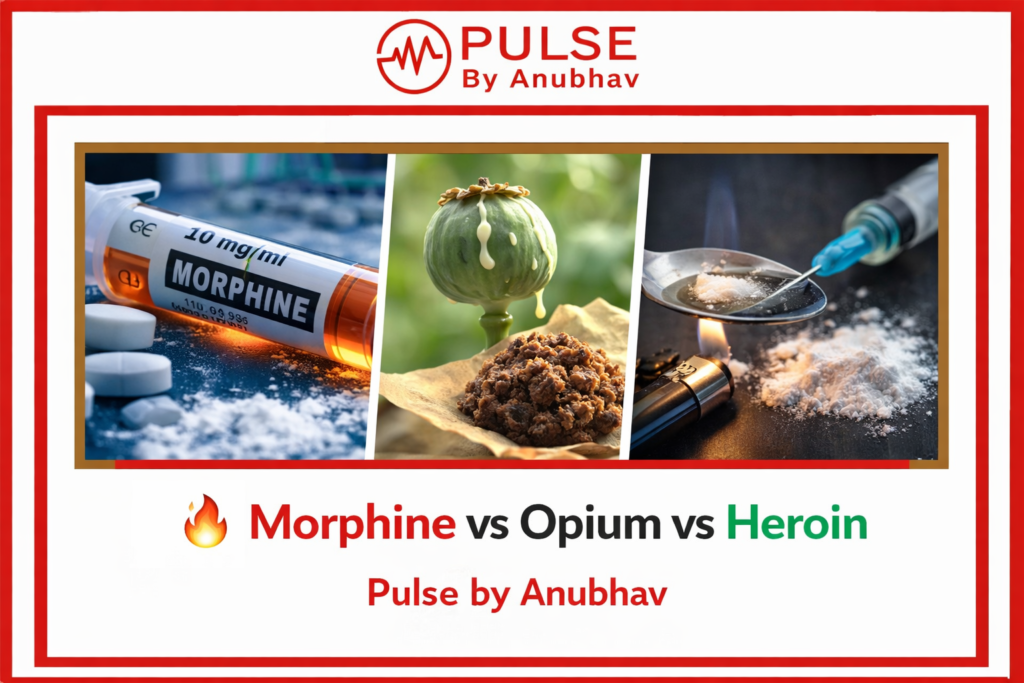
🌿 Opium
- Raw natural extract
- Contains multiple compounds
- Less potent than morphine
💉 Morphine
- Purified from opium
- Much stronger
- Used in medicine
☠️ Heroin
- Chemically modified morphine
- Reaches the brain faster
- Extremely addictive and illegal
These Morphiine Medicines Can Save Lives… But Also Destroy Them!
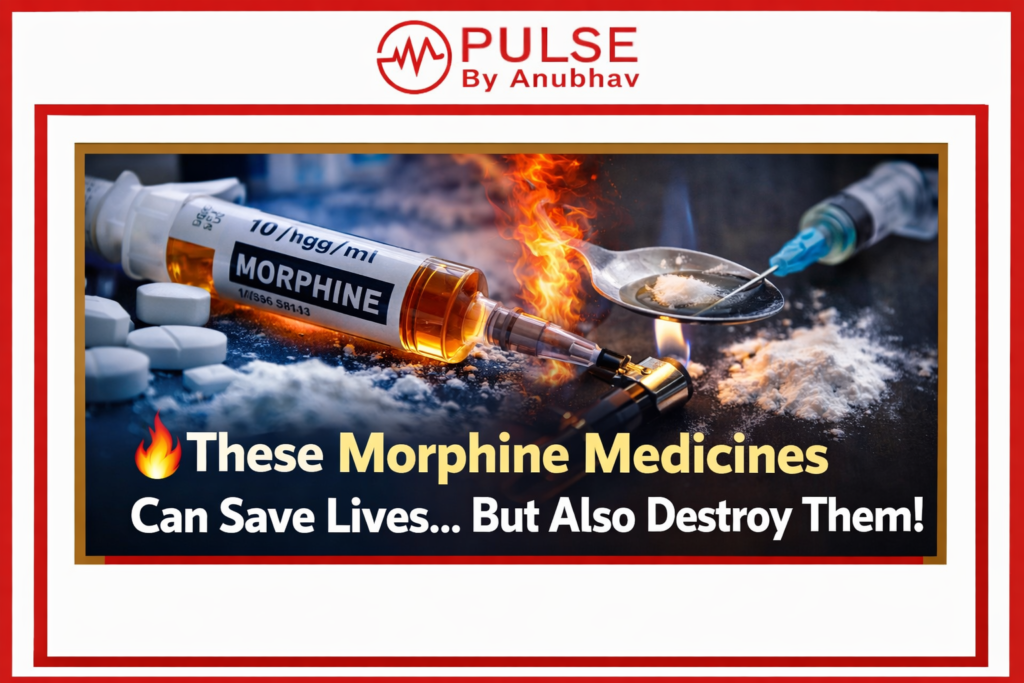
🔥 Top Morphine Medicines (Market Available)
- Hospitals & licensed pharmacies
- Slow-release morphine for long-lasting pain relief
- Chronic cancer pain
- Severe long-term pain
- Prescription-only pharmacies
- Extended-release morphine capsules
- Severe continuous pain
- Hospital settings
- Liquid morphine for fast relief
- End-of-life care
- Acute severe pain
- Hospitals (injection form)
- Injected morphine for immediate effect
- Post-surgery pain
- Severe trauma
— Pulse by Anubhav
🧠 Tolerance & Withdrawal
With long-term use of morphiine:
📉 Tolerance:
- Same dose → less effect
- Higher doses needed
😣 Withdrawal Symptoms (if stopped suddenly):
- Anxiety
- Sweating
- Body pain
- Diarrhea
- Insomnia
👉 Withdrawal is usually not fatal, but extremely uncomfortable.
⚖️ Is Morphine Good or Bad?
Morphiine is a double-edged sword:
💊 Good:
- Saves patients from unbearable pain
- Essential in modern medicine
☠️ Bad:
- Highly addictive
- Risk of overdose and death
👉 Morphiine is safe only under strict medical supervision.
Morphiine is not just a drug—it’s a powerful tool.
👉 In the right hands: Relief, dignity, comfort
👉 In the wrong hands: Addiction, destruction, death
— Pulse by Anubhav 🔥
🤯 Did You Know?
👉 Morphine was first isolated in the early 1800s and named after Morpheus, the Greek god of dreams.
5 thoughts on “Morphine: Miracle Painkiller or Dangerous Addiction? | Pulse by Anubhav”