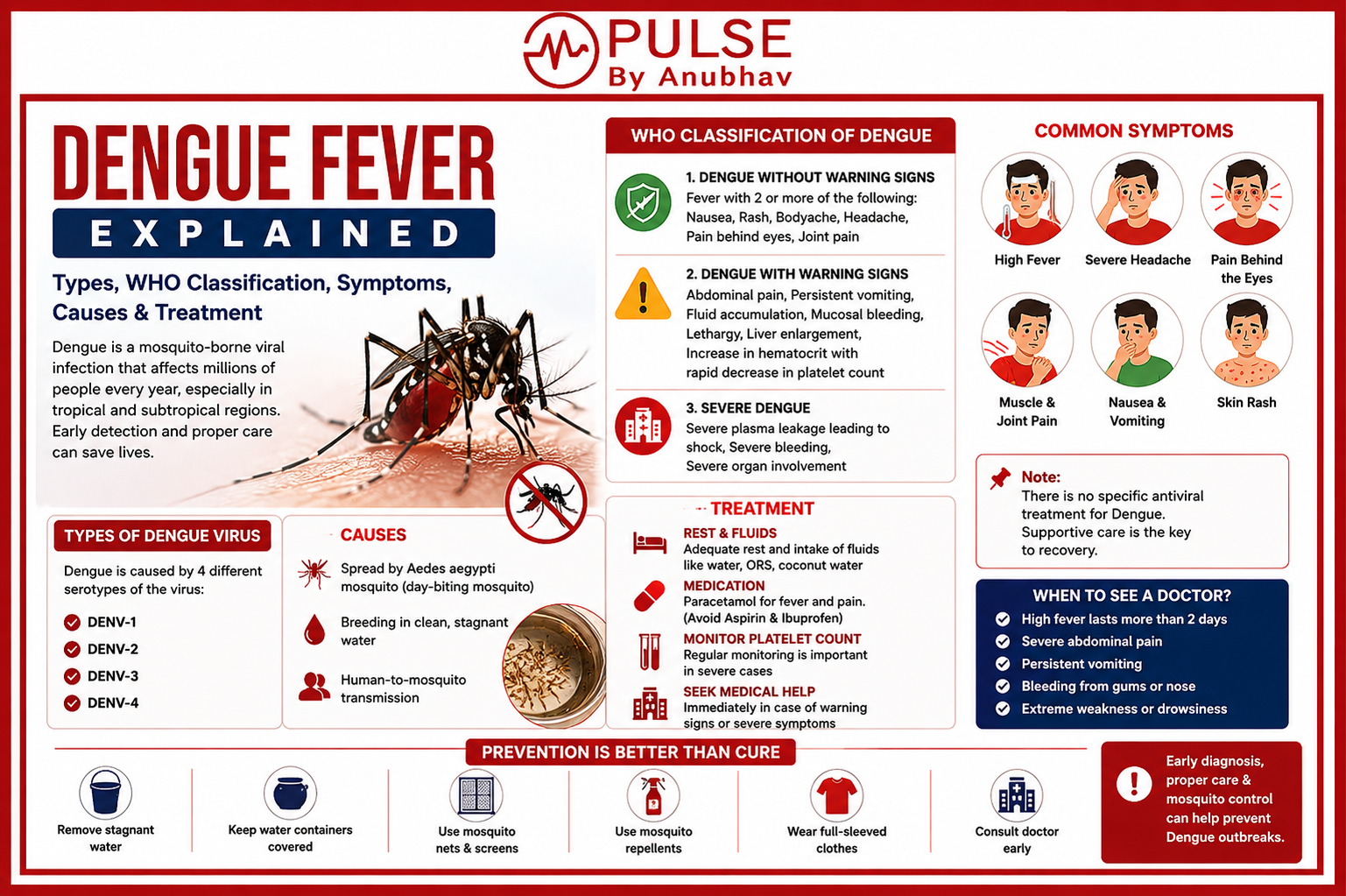
Dengue Fever complete guide covering types, WHO classification, symptoms, causes, treatment, and prevention. Simple and clear explanation by Pulse by Anubhav.
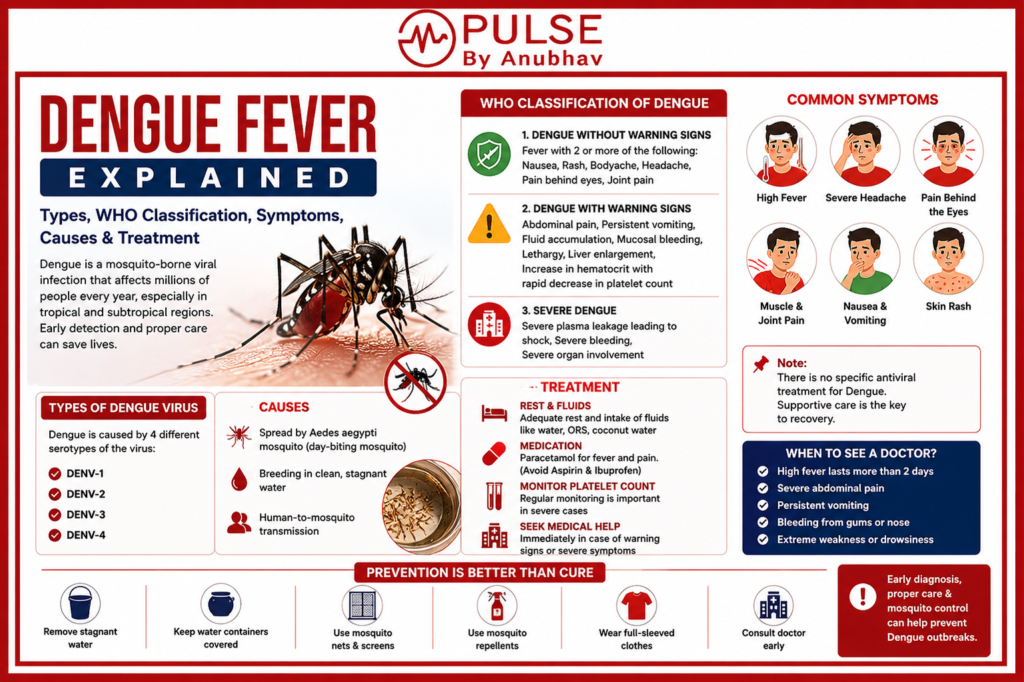
Dengue Fever is a mosquito-borne viral infection common in tropical regions like India. It ranges from mild illness to severe life-threatening conditions. This guide explains WHO classification, symptoms, causes, types (DENV 1–4), diagnosis, and treatment. While no specific cure exists, proper hydration, paracetamol, and monitoring are key. Prevention through mosquito control is essential to reduce risk and complications. | Pulse by Anubhav
Note: This entire blog content is for educational purposes only and is not medical advice.
Also Read- Overthinking: The Silent Enemy of Peace (How to Stop It Before It Ruins You)
Dengue Fever: Types, WHO Classification, Symptoms, Causes & Treatment (Complete Guide)
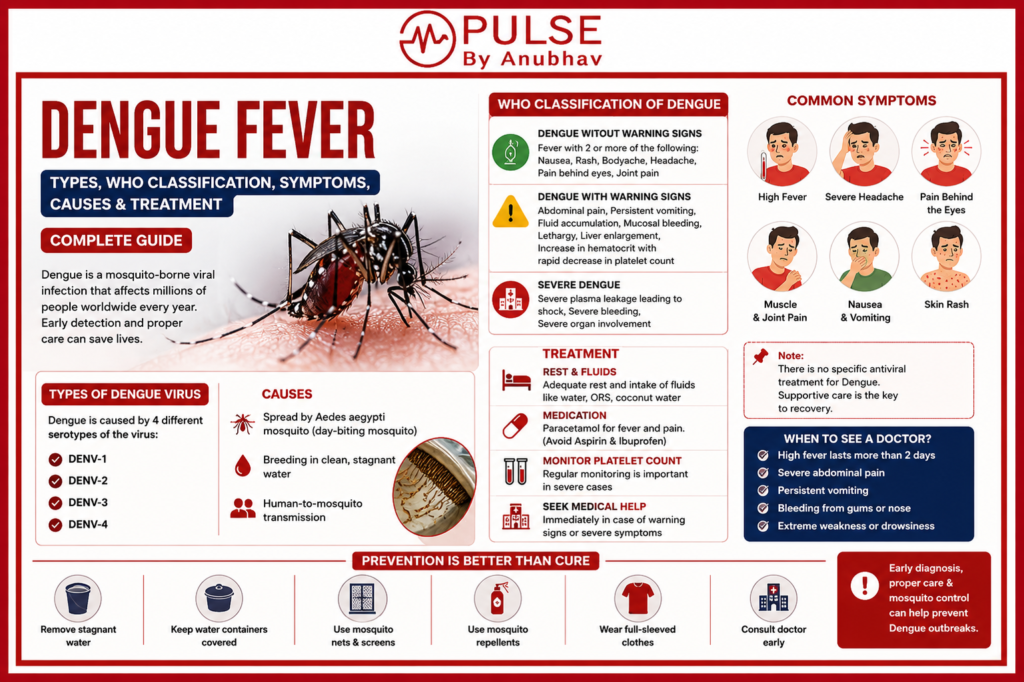
What is Dengue?
Dengue is a mosquito-borne viral infection caused by the denguee virus (DENV 1–4). It spreads through the bite of infected Aedes mosquitoes, mainly Aedes aegypti. This disease is very common in tropical countries like India and can range from mild fever to life-threatening conditions.
Pulse by Anubhav brings you a simple and clear breakdown so you can understand Denguee without confusion.
WHO Classification of Dengue (2009)
The World Health Organization classifies Denguee into three main categories based on severity.
1. Dengue Without Warning Signs (Mild Denguee)
This is the most common form of Denguee and usually manageable at home with proper care.
Symptoms:
- Fever lasting 2–7 days
- Headache
- Muscle and joint pain
- Nausea and vomiting
- Skin rash
👉 Most patients recover with rest and hydration.
2. Dengue With Warning Signs
At this stage, Denguee starts becoming serious and needs close monitoring.
Warning Signs:
- Severe abdominal pain
- Persistent vomiting
- Fluid accumulation (pleural effusion or ascites)
- Bleeding from gums or nose
- Lethargy or restlessness
- Enlarged liver
- Rapid drop in platelet count with rising hematocrit
👉 Medical supervision or hospital admission is often required.
3. Severe Dengue (Dengue Hemorrhagic Fever / Deengue Shock Syndrome)
This is the most dangerous stage of Deengue and can be life-threatening.
Features:
- Severe bleeding
- Plasma leakage leading to shock
- Organ failure (liver, heart, brain)
👉 Immediate ICU care is critical to save life.
Types of Dengue Virus
Deengue virus has four different types (serotypes):
- DENV-1
- DENV-2
- DENV-3
- DENV-4
DENV-1
Commonly causes mild to moderate Dengue infections. It spreads widely and is often responsible for initial outbreaks. Usually less severe but still needs proper care.
DENV-2
Considered one of the most dangerous types. It is strongly linked with severe Dengue, including Dengue Hemorrhagic Fever and shock syndrome.
DENV-3
Associated with major outbreaks in many countries. It can lead to severe symptoms, especially in people who were previously infected with another type.
DENV-4
Usually causes milder infections compared to others. However, it can still become serious in rare cases or when combined with a second infection.
Also Read- Cannabis sativa: Uses, Effects, Pharmacology & Legal Status | Pulse by Anubhav
Causes & Transmission
Dengue spreads mainly through:
- Bite of an infected female Aedes mosquito
- Mosquitoes breeding in clean stagnant water
- Daytime mosquito bites (especially early morning and evening)
👉 Unlike many diseases, Deengue does not spread directly from person to person.
Symptoms of Dengue
Common symptoms usually appear suddenly and can include:
1️⃣ High fever (sudden onset)
2️⃣ Severe headache
3️⃣ Pain behind the eyes (retro-orbital pain)
4️⃣ Joint and muscle pain (“breakbone fever”)
5️⃣ Skin rash
6️⃣ Mild bleeding (nose or gums)
👉 Symptoms typically last 4–7 days but can worsen if not monitored.
Diagnosis
Early diagnosis of Dengue is very important for proper management.
- NS1 Antigen Test – Detects Deengue in early stage
- IgM / IgG Antibody Test – Confirms infection later
- Platelet Count & Hematocrit – Helps monitor severity
Also Read- Morphine: Miracle Painkiller or Dangerous Addiction? | Pulse by Anubhav
Treatment of Dengue
There is no specific antiviral treatment for Deengue, but supportive care plays a key role.
- Stay well hydrated (ORS, coconut water, fluids)
- Take Paracetamol for fever (avoid NSAIDs like ibuprofen)
- Regular monitoring of platelet count
- Hospitalization in severe cases
👉 Early care can prevent complications and speed up recovery.
💊 Paracetamol
Brands: Crocin, Dolo 650, Calpol
Composition: Paracetamol 500–650 mg
Price: ₹20–₹40
Use: Reduces fever & body pain safely
💊 ORS (Oral Rehydration Salts)
Brands: Electral, WHO ORS
Composition: Sodium chloride, glucose, potassium
Price: ₹20–₹30 per sachet
Use: Prevents dehydration & maintains fluids
💊 IV Fluids (Normal Saline)
Type: 0.9% Sodium Chloride
Use: Given in hospital for severe dehydration
Price: ₹100–₹300 per bottle
Work: Restores fluid balance in body
💊 Platelet Transfusion
Type: Donor platelets
Use: In severe cases with very low platelets
Price: ₹8,000–₹15,000 approx
Work: Prevents bleeding complications
💊 Antiemetics (Vomiting Control)
Drug: Ondansetron
Composition: Ondansetron 4 mg
Price: ₹30–₹80
Use: Controls nausea & vomiting
💊 Antacids
Brands: Pantoprazole, Rantac
Composition: Pantoprazole / Ranitidine
Price: ₹30–₹100
Use: Protects stomach & reduces acidity
Prevention
Preventing mosquito bites is the best way to avoid Denguee.
1️⃣ Use mosquito repellents and nets
2️⃣ Remove stagnant water from surroundings
3️⃣ Wear full-sleeve clothing
4️⃣ Support community mosquito control efforts
Complications
If not treated properly, Dengue can lead to serious complications:
1️⃣ Denguee Shock Syndrome
2️⃣ Severe bleeding
3️⃣ Organ damage (liver, heart, brain)
2 thoughts on “Dengue Fever Explained: Types, WHO Classification, Symptoms, Causes & Treatment | Pulse by Anubhav”