H1N1 cases in Delhi have surged nearly six-fold. Learn about symptoms, warning signs, prevention tips, high-risk groups and when to seek medical care.
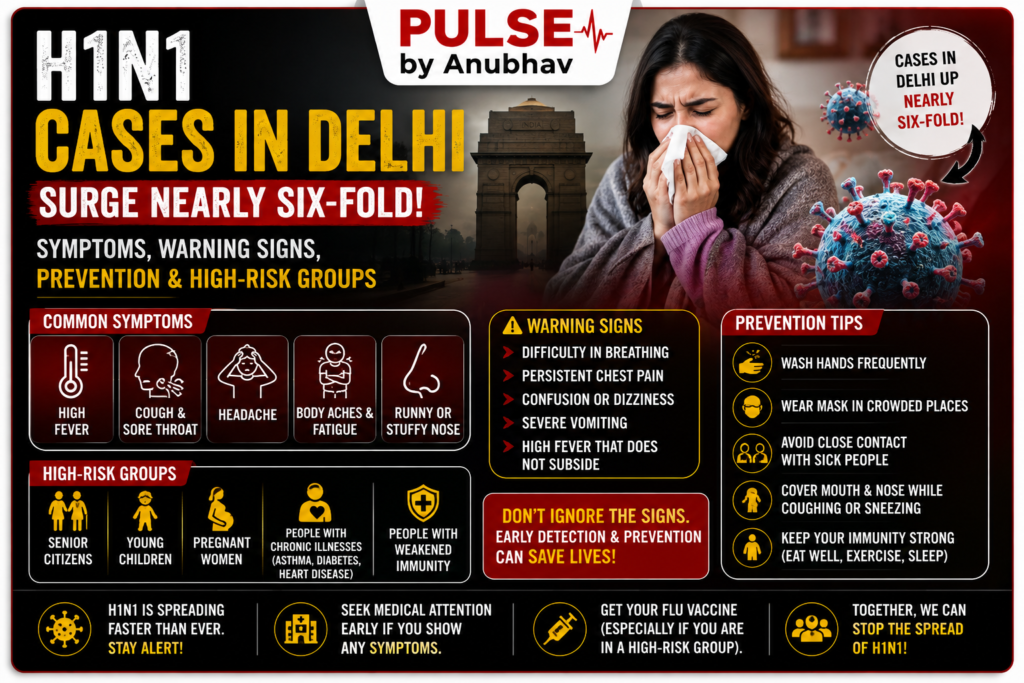
Delhi has reported a sharp rise in H1N1 cases, with infections increasing nearly six-fold compared to last year, raising concerns among health experts. While most people recover with timely care, children, older adults, pregnant women and those with chronic illnesses face a higher risk of complications. This guide from Pulse by Anubhav explains the common symptoms, warning signs, prevention measures, high-risk groups and when it is important to seek immediate medical attention to stay protected during the ongoing influenza surge.
H1N1 Cases in Delhi Surge Nearly Six-Fold: What You Need to Know About Symptoms, Warning Signs and Prevention
Delhi is witnessing a significant H1N1 influenza surge, with more than 1,300 confirmed cases reported this year compared to around 229 cases during the same period last year. The sharp increase has prompted health experts to urge residents not to dismiss flu-like symptoms as a routine seasonal illness.
While most people recover within a few days with proper care, doctors warn that H1N1 can lead to serious complications in vulnerable individuals, especially during the monsoon season when respiratory viruses spread more easily. According to specialists, hospitals across Delhi-NCR have reported a noticeable rise in patients with fever, cough, sore throat and body aches over the past few weeks.
At Pulse by Anubhav, we believe awareness is the first step toward prevention. Knowing the symptoms early and understanding when to seek medical care can help reduce the risk of severe illness.
Why Are H1N1 Cases Rising in Delhi?
Medical experts believe the current influenza surge in Delhi is largely linked to seasonal weather changes. During the monsoon, cooler temperatures, higher humidity and increased indoor gatherings create favorable conditions for influenza viruses to spread.
Doctors are also seeing more patients getting tested for respiratory infections, leading to better detection of H1N1 cases. Although COVID-19 continues to circulate at low levels, influenza has become one of the primary causes of viral respiratory infections this season.
Common H1N1 Symptoms You Shouldn’t Ignore
H1N1 often begins like a normal flu, making it difficult to identify without proper testing. The most common symptoms include:
- High fever or chills
- Persistent cough
- Sore throat
- Runny or blocked nose
- Headache
- Muscle and joint pain
- Extreme fatigue
- Body weakness
- Loss of appetite
Some patients, especially children, may also experience nausea, vomiting or diarrhea. Most mild infections improve within 3 to 7 days, but symptoms should be monitored closely.
Who Is at Higher Risk of Severe H1N1 Infection?
Although anyone can contract H1N1, some groups are much more likely to develop serious complications.
People considered at higher risk include:
- Older adults
- Children under five years of age
- Pregnant women
- People with diabetes
- Heart disease patients
- Individuals with asthma or COPD
- Chronic kidney disease patients
- People with weakened immune systems
For these individuals, influenza should never be treated as “just another seasonal flu.”
Warning Signs That Require Immediate Medical Attention
Doctors advise seeking medical help immediately if any of the following symptoms develop:
- Difficulty breathing or shortness of breath
- Chest pain or chest pressure
- High fever that does not improve
- Bluish lips or fingertips
- Persistent vomiting
- Severe dehydration
- Confusion or unusual drowsiness
- Oxygen levels dropping below normal
- Symptoms improving initially but suddenly becoming worse
Early treatment can significantly reduce the risk of complications such as viral pneumonia and respiratory failure.
Why Antibiotics Won’t Treat H1N1
One of the biggest misconceptions is that antibiotics can cure influenza.
H1N1 is caused by a virus, not bacteria. Antibiotics are only useful when a bacterial infection develops alongside influenza. Taking antibiotics without medical advice not only fails to treat the infection but also contributes to antibiotic resistance.
Doctors may recommend antiviral medicines for certain patients, particularly those in high-risk groups or those with severe symptoms.
Simple Prevention Tips to Reduce Your Risk
Health experts continue to recommend basic preventive measures to slow the spread of H1N1.
- Wash your hands frequently with soap and water.
- Cover your mouth and nose while coughing or sneezing.
- Avoid touching your eyes, nose and mouth with unwashed hands.
- Wear a mask if you have flu-like symptoms.
- Stay home when you are sick.
- Avoid crowded places whenever possible.
- Eat a balanced diet and stay hydrated.
- Get enough sleep to support your immune system.
- Consider the seasonal influenza vaccine after consulting your healthcare provider.
These small precautions can make a significant difference in protecting both yourself and those around you.
Medicine Name
Example: Oseltamivir (Tamiflu)
Medicine Type
Antiviral Medicine
Used For
Treatment of H1N1 Influenza, Seasonal Flu and other viral influenza infections (Only if prescribed by a doctor).
Available As
Capsule, Tablet, Oral Suspension (availability may vary by manufacturer).
How Does This Medicine Work?
Explain in simple language how the medicine works inside the body, which virus or condition it targets, how quickly it starts working, and why early treatment may improve recovery. Mention that effectiveness depends on timely medical advice and individual health conditions.
Who Should Take It?
- Adults (Only if prescribed by a doctor)
- Children (As advised by a pediatrician)
- Pregnant women (Medical consultation required)
- Senior citizens
- High-risk patients with chronic diseases
Who Should Avoid This Medicine?
- People allergic to its ingredients.
- Patients with severe kidney or liver disease unless advised by a doctor.
- Anyone taking medicines that may interact with it.
How To Take This Medicine
Write here whether the medicine should be taken before food or after food, how many times a day it is generally prescribed, the usual treatment duration, and the importance of completing the prescribed course. Never mention dosage unless verified by a healthcare professional.
Possible Side Effects
- Nausea
- Vomiting
- Headache
- Stomach discomfort
- Dizziness
- Any uncommon reactions that require immediate medical attention.
Medicine Price
Mention the approximate price range, whether generic versions are available, and that prices may vary depending on the brand, strength, pharmacy and location.
Where Can You Buy It?
- Government Hospitals (if available)
- Private Hospitals
- Licensed Medical Stores
- Online Pharmacies (Only with valid prescription where applicable)
Storage Instructions
Store the medicine in a cool and dry place away from direct sunlight and keep it out of reach of children. Always follow the storage instructions printed on the medicine label.
The information provided above is for educational purposes only and should not be considered medical advice. Never start, stop or change any medicine without consulting a qualified healthcare professional. Availability, price and treatment recommendations may vary depending on your location and medical condition.
Government Advisory: Dos and Don’ts
Health authorities have advised residents to follow simple public health measures throughout the ongoing influenza season.
Do’s
- Practice good hand hygiene.
- Use tissues while coughing or sneezing.
- Maintain distance from infected individuals.
- Follow your doctor’s advice if diagnosed with H1N1.
- Monitor symptoms carefully.
Don’ts
- Avoid self-medication.
- Don’t ignore persistent fever or breathing problems.
- Avoid visiting crowded gatherings when sick.
- Do not share personal items with infected individuals.
- Don’t return to work or school until fully recovered.
The Bottom Line
The current H1N1 surge in Delhi is a reminder that seasonal influenza should never be taken lightly. Although most infections remain mild, vulnerable individuals can develop life-threatening complications if treatment is delayed.
Recognizing Symptoms, understanding the Warning Signs, and following basic Prevention measures remain the most effective ways to stay safe during this influenza season.
At Pulse by Anubhav, we encourage readers to rely on verified health information, avoid self-medication, and consult a qualified healthcare professional whenever symptoms become severe or persistent.
Medical Disclaimer: This article is intended for educational and awareness purposes only. It should not be considered medical advice or a substitute for professional diagnosis or treatment. If you experience severe flu-like symptoms or belong to a high-risk group, consult a qualified healthcare provider immediately.
1 thought on “H1N1 Cases in Delhi Surge Nearly Six-Fold: Symptoms, Warning Signs, Prevention & High-Risk Groups”