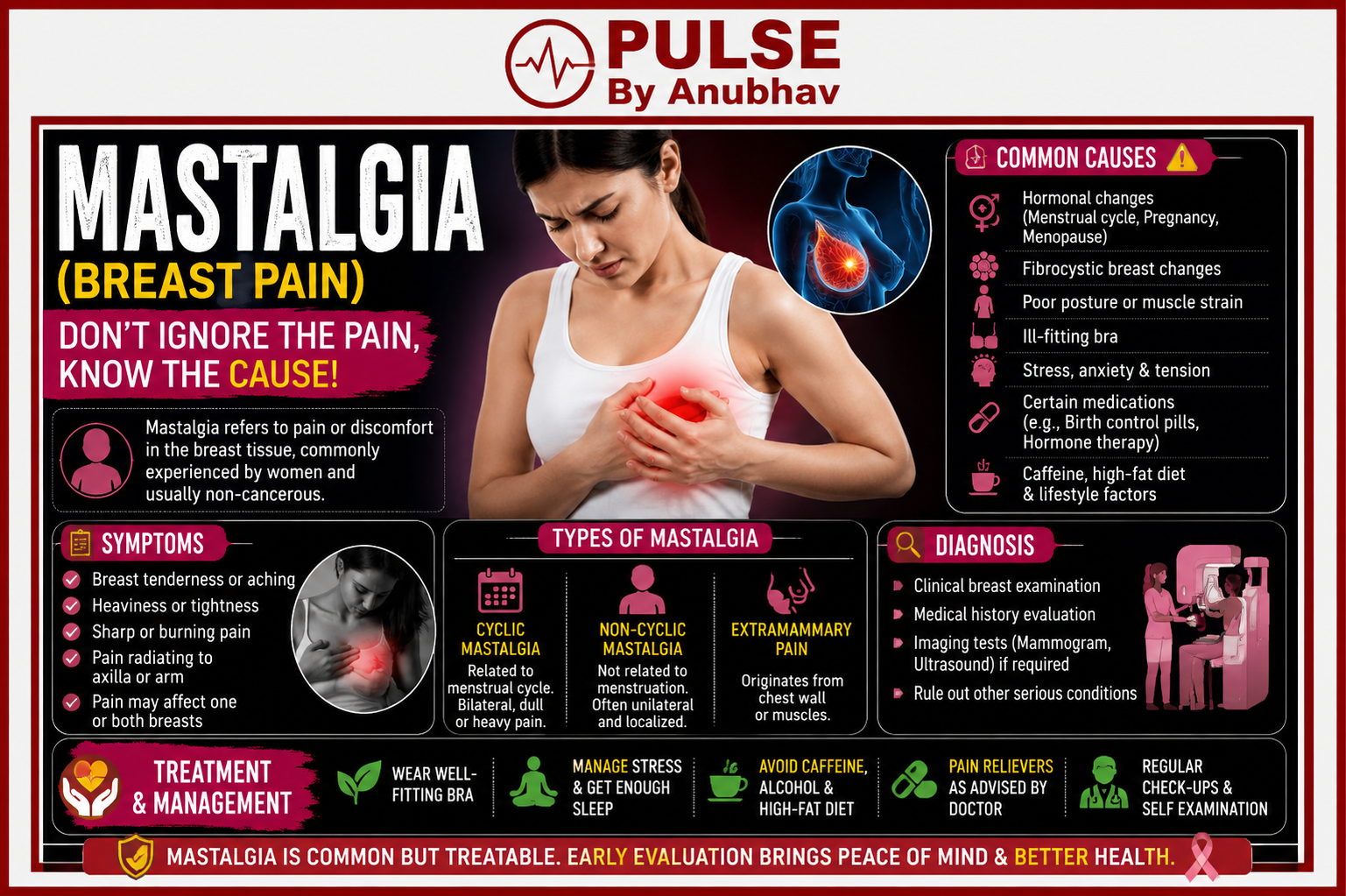
Learn everything about Mastalgia (Breast Pain), including its causes, symptoms, types, diagnosis, treatment, medicines, and warning signs. Read the complete expert guide by Pulse by Anubhav.
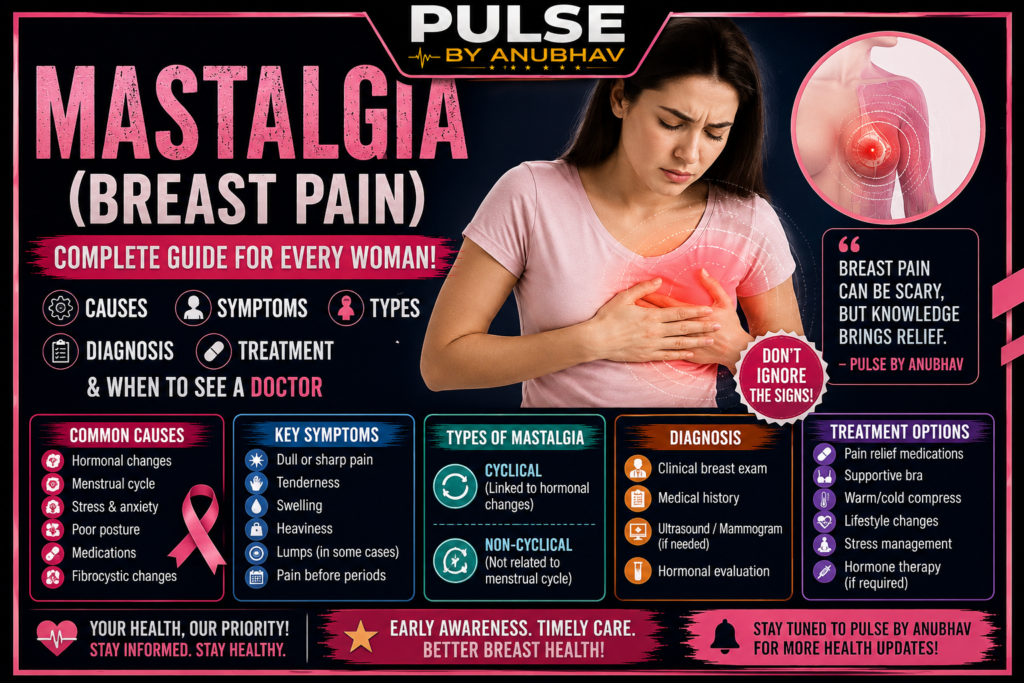
Mastalgia, commonly known as breast pain, affects many women at different stages of life and is usually caused by hormonal changes or other non-cancerous conditions. This comprehensive guide by Pulse by Anubhav explains the types of mastalgia, common causes, symptoms, risk factors, diagnosis, treatment options, commonly prescribed medicines, self-care tips, and warning signs that require medical attention. Learn when breast pain is normal, when to consult a doctor, and how to manage symptoms effectively for better breast health.
Note: This entire blog content is for educational purposes only and is not medical advice.
Also Read- Serena Williams vs Maya Joint at Wimbledon Tennis 2026: First Singles Match in Four Years
MASTALGIA (Breast Pain): Causes, Symptoms, Types, Diagnosis & Treatment
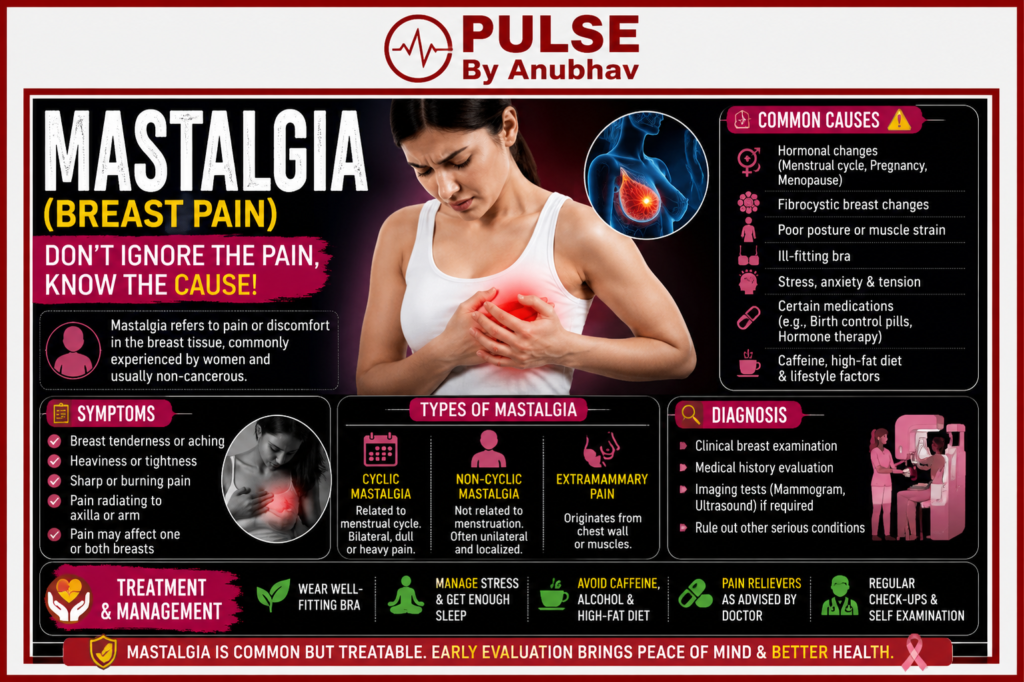
Breast pain can be worrying, but in most cases, mastalgia is not a sign of breast cancer. Understanding the causes, symptoms, and available treatment options can help reduce anxiety and ensure you seek medical care when necessary. This comprehensive guide by Pulse by Anubhav explains everything you need to know about mastalgia.
What is Mastalgia?
Mastalgia is the medical term for breast pain. It may feel like tenderness, soreness, heaviness, burning, aching, or discomfort in one or both breasts.
Studies suggest that 70–80% of women experience breast pain at least once during their lifetime. Fortunately, the majority of cases are related to benign (non-cancerous) conditions.
Types of Mastalgia
1. Cyclical Mastalgia
Cyclical mastalgia is linked to hormonal changes during the menstrual cycle.
Common Features
- Usually affects both breasts
- Most common in women aged 20–50 years
- Pain becomes worse before menstruation
- Symptoms improve once the menstrual period begins
2. Non-Cyclical Mastalgia
Non-cyclical mastalgia is not related to menstrual periods.
Common Features
- Often affects only one breast
- Pain may be sharp, burning, or localized
- More common in women after menopause
3. Extramammary Breast Pain
In this type, the pain originates outside the breast but is felt in the breast area.
Possible Causes
- Muscle strain
- Costochondritis (inflammation of rib cartilage)
- Neck disorders
- Shoulder problems
- Chest wall conditions
Also Read- FIFA New Zealand vs Belgium Highlights: Belgium Thrash New Zealand 5-1 to Finish Top of Group G
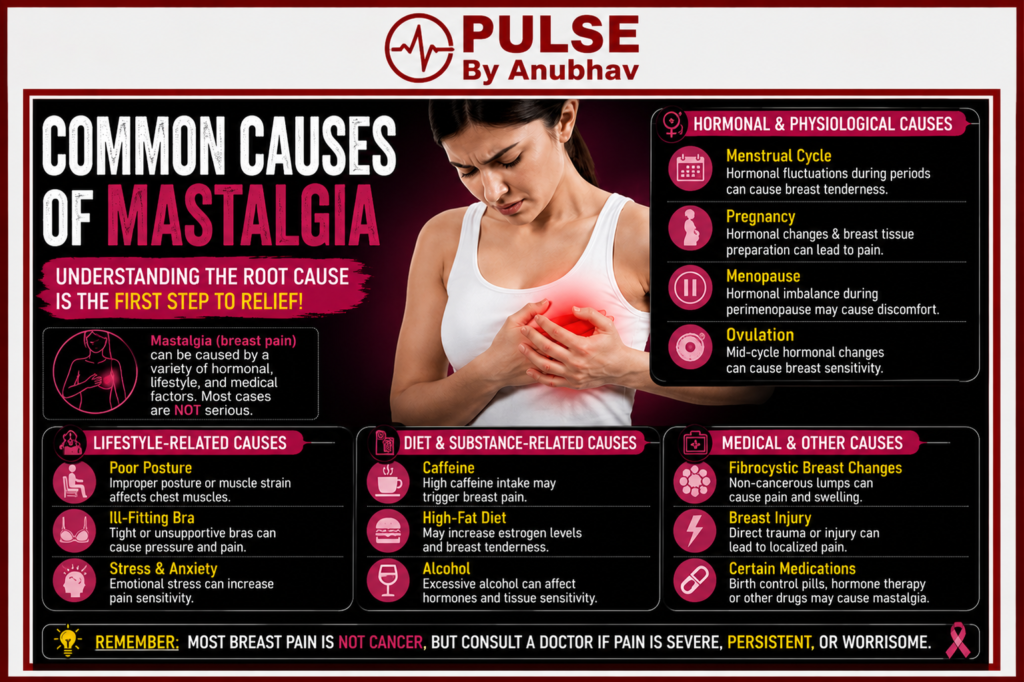
Common Causes of Mastalgia
Breast pain can develop due to several medical and lifestyle factors, including:
- Hormonal fluctuations
- Premenstrual Syndrome (PMS)
- Fibrocystic breast changes
- Breast cysts
- Pregnancy
- Breastfeeding
- Large breast size
- Poorly fitting bras
- Emotional stress and anxiety
- Breast injury or trauma
- Certain medications
- Breast infections (Mastitis)
Risk Factors for Mastalgia
Some women are more likely to experience breast pain due to factors such as:
- Age between 20 and 50 years
- Hormonal imbalance
- Family history of benign breast disease
- High stress levels
- Obesity
- Large breast size
- Pregnancy
- Hormonal medications
- Excessive caffeine intake (may worsen symptoms in some individuals)
Symptoms of Mastalgia
Breast pain can vary from mild discomfort to severe tenderness.
Common Symptoms Include
- Breast tenderness
- Aching pain
- Burning sensation
- Feeling of heaviness
- Breast swelling
- Sharp or stabbing pain
- Pain extending to the armpit
- Increased discomfort before menstruation
How is Mastalgia Diagnosed?
A healthcare professional may recommend one or more of the following evaluations:
Clinical Examination
- Physical breast examination
- Review of symptoms
- Menstrual history
Imaging Tests
- Breast ultrasound
- Mammography (when recommended based on age or symptoms)
💊 Commonly Prescribed Medicines for Mastalgia
1. Paracetamol
| Composition | Paracetamol 500 mg / 650 mg |
| Popular Brands | Dolo 650, Crocin Advance, Calpol |
| How It Works | Blocks pain signals in the brain to reduce mild to moderate breast pain. |
| When Used | Usually recommended for temporary relief of mild breast pain. |
| Approx. Price | ₹15–40 per strip |
| Availability | Available at local pharmacies and licensed online medicine stores. |
2. Ibuprofen
| Composition | Ibuprofen 200 mg / 400 mg |
| Popular Brands | Brufen, Advil |
| How It Works | Reduces pain and inflammation by blocking prostaglandin production. |
| When Used | Used for breast pain associated with inflammation or tenderness if suitable for the patient. |
| Approx. Price | ₹20–60 per strip |
| Availability | Available at licensed pharmacies. |
3. Diclofenac Gel
| Composition | Diclofenac Diethylamine Gel |
| Popular Brands | Voveran Emulgel, Volini Gel |
| How It Works | Provides local pain relief by reducing inflammation where it is applied. |
| When Used | May be recommended for localized breast pain under medical guidance. |
| Approx. Price | ₹90–250 |
| Availability | Available at pharmacies and online medicine stores. |
4. Tamoxifen (Prescription Only)
| Composition | Tamoxifen Citrate 10 mg / 20 mg |
| Popular Brands | Tamofen, Cytotam, Tamoxifen Tablets |
| How It Works | Blocks estrogen receptors and may reduce severe cyclical breast pain. |
| When Used | Reserved for severe or persistent Mastalgia when other treatments have not helped. |
| Approx. Price | ₹120–400 per strip |
| Availability | Available only with a valid doctor’s prescription. |
5. Danazol (Prescription Only)
| Composition | Danazol 100 mg / 200 mg |
| Popular Brands | Danogen, Danazol Tablets |
| How It Works | Reduces hormonal stimulation of breast tissue to relieve chronic breast pain. |
| When Used | Used only in selected severe cases due to possible side effects. |
| Approx. Price | ₹250–700 per strip |
| Availability | Prescription medicine available at licensed pharmacies. |
1️⃣Never start Tamoxifen or Danazol without a doctor’s prescription.
2️⃣If breast pain is accompanied by a lump, bloody nipple discharge, skin dimpling, fever, or persistent swelling, seek immediate medical evaluation.
3️⃣Pulse by Anubhav recommends using medicines only under the guidance of a qualified healthcare professional.
When Should You See a Doctor?
Medical evaluation is important if you notice any of the following:
- A new breast lump
- Bloody nipple discharge
- Skin dimpling or puckering
- Persistent pain in one specific area
- Breast redness or swelling
- Changes in breast shape or size
- Pain affecting daily activities or sleep
Tips to Relieve Mastalgia
Lifestyle changes can help reduce breast discomfort in many women.
Self-Care Measures
- Wear a well-fitted supportive bra
- Exercise regularly
- Stay hydrated
- Follow a balanced diet
- Get adequate sleep
- Practice stress management techniques
- Reduce caffeine if it appears to trigger symptoms
- Take medications only as prescribed by your healthcare provider
Does Mastalgia Mean Breast Cancer?
In most cases, the answer is no.
Breast pain alone is rarely caused by breast cancer. Most cases are related to hormonal changes or other benign breast conditions. However, persistent pain, especially when accompanied by a lump, nipple discharge, or skin changes, should always be evaluated by a healthcare professional.
Take-Home Message
- Mastalgia is a common condition affecting women of all ages.
- Most breast pain is non-cancerous.
- Identifying the underlying cause helps guide appropriate treatment.
- Early medical evaluation is recommended if symptoms persist or new breast changes develop.
- Regular breast self-awareness and timely medical consultation can support better breast health.
Health Note by Pulse by Anubhav: This article is intended for educational purposes only and should not replace professional medical advice. Always consult a qualified healthcare provider for diagnosis and treatment of persistent breast pain or any unusual breast changes.
Also Read- FIFA 2026 Iran vs Egypt Highlights: Last-Minute VAR Drama Ends in 1-1 Draw, Egypt Reach Round of 32
2 thoughts on “MASTALGIA (Breast Pain): Causes, Symptoms, Types, Diagnosis, Treatment & When to See a Doctor”