
Learn about infertility, including its causes, symptoms, diagnosis, treatment, fertility medicines, IVF, IUI, prevention tips, and when to seek medical help in this complete guide by Pulse by Anubhav.
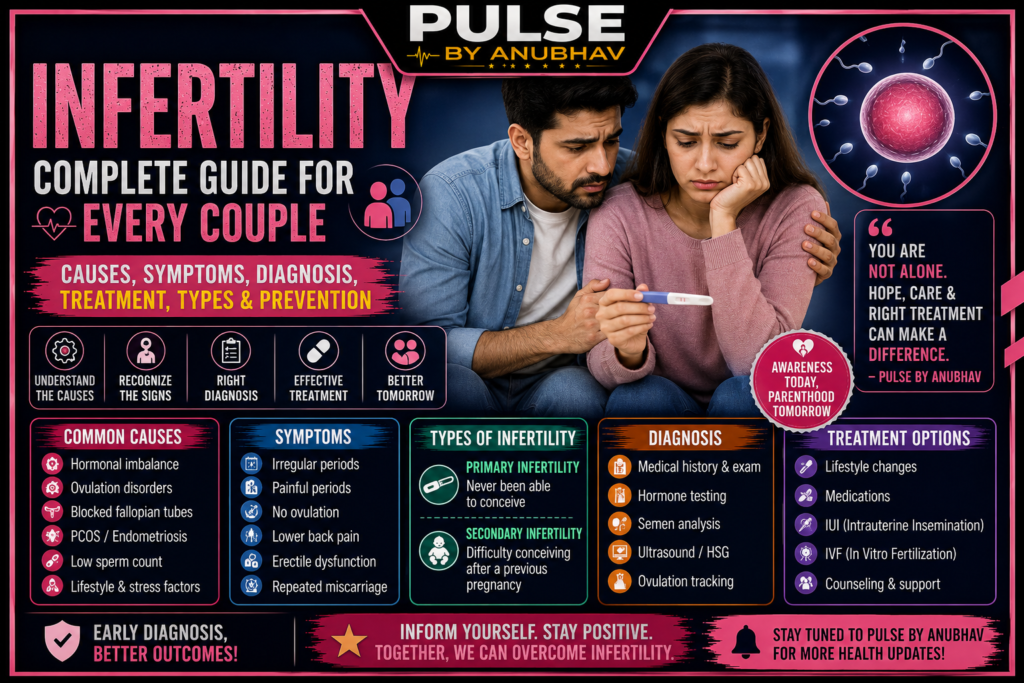
Infertility is a common medical condition that affects both men and women and can make it difficult to achieve pregnancy despite regular, unprotected intercourse. This comprehensive guide by Pulse by Anubhav explains the causes, symptoms, risk factors, diagnosis, fertility medicines, lifestyle changes, IUI, IVF, ICSI, prevention tips, and when to consult a fertility specialist. Early diagnosis and personalized treatment can significantly improve the chances of a successful pregnancy.
Also read- Migraine Headache: Symptoms, Causes & Treatment
Note: This entire blog content is for educational purposes only and is not medical advice.
Infertility: Understanding the Journey to Parenthood
Infertility is more common than many people realize, affecting millions of individuals and couples worldwide. It is not solely a women’s health issue—male and female factors contribute almost equally. Fortunately, advances in reproductive medicine, healthier lifestyle choices, and early diagnosis have made parenthood possible for many families. At Pulse by Anubhav, we believe that accurate information is the first step toward informed decisions and hope.

What is Infertility?
Infertility is the inability to achieve pregnancy despite having regular, unprotected sexual intercourse for a specific period:
- Women younger than 35 years: Unable to conceive after 12 months of trying.
- Women aged 35 years or older: Unable to conceive after 6 months of trying.
Pregnancy depends on both partners. Research shows that male-related factors contribute to nearly half of infertility cases, either alone or combined with female factors.
Global Facts About Infertility
- Around 1 in 6 adults experience infertility during their lifetime.
- Infertility affects people of every age, race, and socioeconomic background.
- Millions of couples face emotional and social challenges due to misconceptions surrounding infertility.
- Both primary infertility and secondary infertility are common worldwide.
Types of Infertility
Primary Infertility
Primary infertility refers to couples who have never achieved pregnancy despite regular, unprotected intercourse for the recommended duration.
Secondary Infertility
Secondary infertility occurs when a couple has difficulty conceiving after previously experiencing one or more pregnancies, regardless of the pregnancy outcome.
How Pregnancy Normally Happens
For a healthy pregnancy to occur, several biological processes must work together:
- The ovary releases a healthy egg (ovulation).
- Healthy sperm travel successfully to the egg.
- Fertilization occurs inside the fallopian tube.
- The fertilized embryo moves into the uterus.
- The embryo implants into a healthy uterine lining.
A problem at any stage can reduce fertility and make conception difficult.
Also read- FIFA 2026 Iran vs Egypt Highlights: Last-Minute VAR Drama Ends in 1-1 Draw, Egypt Reach Round of 32
Causes of Female Infertility
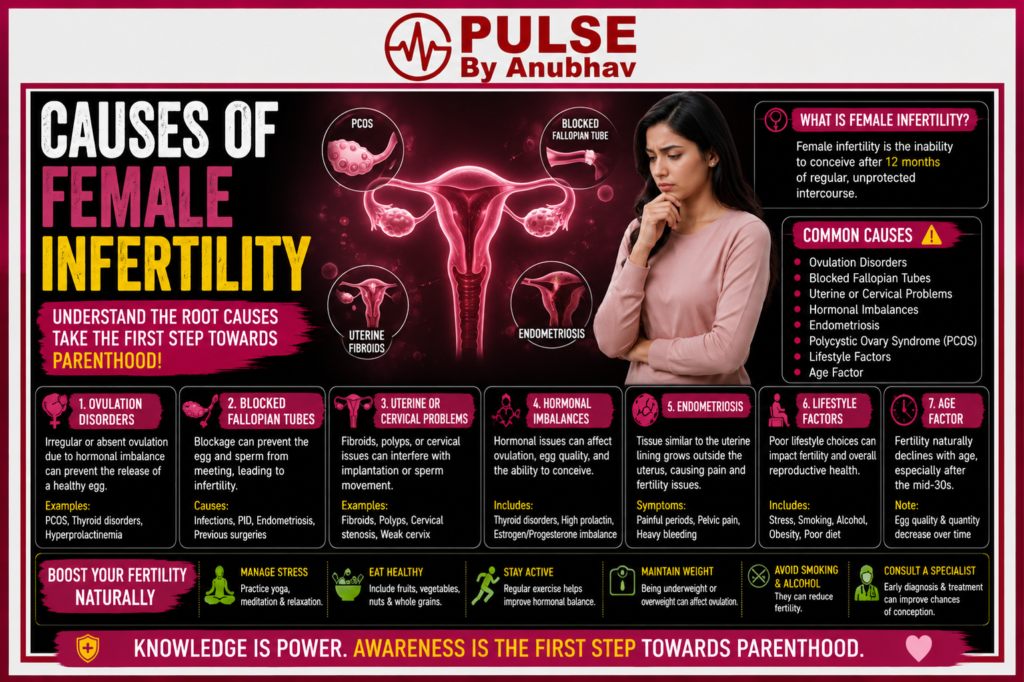
Ovulation Disorders
Ovulation disorders are among the most common causes of female infertility.
Common conditions include:
- Polycystic Ovary Syndrome (PCOS)
- Thyroid disorders
- Elevated prolactin levels
- Premature ovarian insufficiency
- Hypothalamic dysfunction caused by stress, excessive exercise, or significant weight loss
Common symptoms include:
- Irregular menstrual cycles
- Missed periods
- Very long cycles
- Absence of menstruation
Fallopian Tube Disorders
Healthy fallopian tubes are essential because fertilization usually occurs within them.
Damage or blockage may result from:
- Pelvic inflammatory disease (PID)
- Sexually transmitted infections (STIs)
- Endometriosis
- Previous ectopic pregnancy
- Prior abdominal or pelvic surgery
Endometriosis
Endometriosis develops when tissue similar to the uterine lining grows outside the uterus.
It may cause:
- Severe menstrual pain
- Chronic pelvic pain
- Pain during intercourse
- Reduced fertility due to inflammation and scar tissue
Uterine Conditions
A healthy uterus is necessary for embryo implantation.
Problems may include:
- Uterine fibroids
- Endometrial polyps
- Congenital uterine abnormalities
- Intrauterine adhesions (Asherman syndrome)
Age-Related Fertility Decline
Female fertility naturally decreases with age, especially after 35 years, because both egg quantity and egg quality gradually decline. This also increases the risk of miscarriage and chromosomal abnormalities.
Causes of Male Infertility
Male infertility accounts for nearly half of all infertility cases.
Common causes include:
- Low sperm count
- Poor sperm motility
- Abnormal sperm morphology
- Varicocele
- Genetic disorders
- Hormonal imbalance
- Infections
- Smoking
- Excessive alcohol consumption
- Drug abuse
- Heat exposure
- Obesity
Lifestyle Factors That Can Affect Fertility
Daily habits play a significant role in reproductive health.
Risk factors include:
- Smoking
- Heavy alcohol intake
- Recreational drug use
- Obesity or being underweight
- Poor nutrition
- Lack of quality sleep
- Chronic stress
- Excess caffeine intake
- Exposure to pesticides, radiation, and environmental toxins
Symptoms of Infertility
Symptoms in Women
Possible warning signs include:
- Irregular periods
- Heavy menstrual bleeding
- Painful periods
- No menstrual periods
- Pelvic pain
- Pain during sexual intercourse
Symptoms in Men
Possible symptoms include:
- Erectile dysfunction
- Ejaculation problems
- Reduced sexual desire
- Testicular pain or swelling
- Small testes
- Reduced facial or body hair due to hormonal disorders
Important: Many individuals with infertility may experience no noticeable symptoms, making timely medical evaluation essential.
How Doctors Diagnose Infertility
Female Fertility Evaluation
Doctors may recommend:
- Hormonal blood tests
- Ovulation assessment
- Pelvic ultrasound
- Hysterosalpingography (HSG)
- Hysteroscopy
- Laparoscopy (when required)
- Ovarian reserve testing (AMH and antral follicle count)
Male Fertility Evaluation
Common investigations include:
- Semen analysis (first-line test)
- Hormone testing
- Scrotal ultrasound
- Genetic testing (when appropriate)
- Sperm DNA fragmentation testing in selected cases
Also read- The Jungle Movie Review: Box Office Collection , Audience Reaction & Honest Verdict
Treatment Options for Infertility
Treatment depends entirely on the underlying cause and may involve one or more approaches.
Lifestyle Modification
Doctors often recommend:
- Achieving a healthy body weight
- Eating a balanced diet
- Regular physical activity
- Stress management
- Quitting smoking
- Limiting alcohol consumption
- Avoiding recreational drugs
Medications
Medicines are commonly prescribed for:
- Ovulation disorders
- Hormonal imbalances
- Certain endocrine conditions affecting fertility
There is no single medicine that treats every case of infertility. Doctors prescribe fertility medicines only after identifying the underlying cause through blood tests, ultrasound, semen analysis, or other fertility investigations. The treatment plan differs for men and women.
| Medicine (Generic) | Main Use | How It Works | Example Brand* | Monitoring |
|---|---|---|---|---|
| Clomiphene Citrate | Ovulation disorders (especially PCOS) | Stimulates hormones that help the ovary release a mature egg. | Clomid®, Siphene® | Ultrasound follicle monitoring |
| Letrozole | Ovulation induction | Reduces estrogen temporarily, encouraging the brain to release more FSH and LH. | Femara®, Letoval® | Ultrasound and ovulation tracking |
| Human Menopausal Gonadotropin (hMG) | Stimulates multiple follicles | Provides FSH and LH hormones to support egg development. | Menopur® | Ultrasound + blood hormone tests |
| Recombinant FSH | IVF and IUI cycles | Directly stimulates ovarian follicles to mature. | Gonal-f®, Puregon® | Close fertility specialist supervision |
| hCG Injection | Triggers ovulation | Helps release the mature egg at the correct time. | Ovitrelle®, Pregnyl® | Timed intercourse, IUI, or IVF |
| Metformin | PCOS with insulin resistance | Improves insulin sensitivity and may restore regular ovulation. | Glycomet®, Glucophage® | Blood sugar monitoring when required |
| Cabergoline / Bromocriptine | High prolactin levels | Reduces prolactin hormone and restores ovulation. | Dostinex®, Parlodel® | Periodic prolactin blood tests |
| Levothyroxine | Hypothyroidism | Corrects thyroid hormone deficiency that may affect fertility. | Eltroxin®, Thyronorm® | Regular TSH monitoring |
⚠️ Important Safety Information
- These medicines should only be taken after evaluation by a fertility specialist.
- The dosage varies depending on age, hormone levels, ovarian reserve, and fertility diagnosis.
- Self-medication can lead to ovarian hyperstimulation, multiple pregnancy, or treatment failure.
- Brand names may differ depending on your country and healthcare provider.
- Always purchase prescription medicines from licensed pharmacies with a valid prescription.
Surgical Treatment
Surgery may help treat:
- Fibroids
- Polyps
- Endometriosis
- Selected cases of blocked fallopian tubes
- Varicocele
Intrauterine Insemination (IUI)
IUI involves placing specially prepared healthy sperm directly into the uterus around ovulation to improve the likelihood of fertilization.
In Vitro Fertilization (IVF)
During IVF, eggs are collected from the ovaries, fertilized with sperm in a laboratory, and the healthiest embryo is transferred into the uterus.
Intracytoplasmic Sperm Injection (ICSI)
ICSI involves injecting a single healthy sperm directly into an egg and is particularly beneficial in severe male infertility.
Fertility Preservation
People planning cancer treatment or delaying pregnancy may consider:
- Egg freezing
- Sperm freezing
- Embryo freezing
Certain medicines can affect fertility in men or women, especially when used for a long time or in high doses. However, this does not mean everyone taking these medicines will become infertile. The effect depends on your age, overall health, dosage, and the duration of treatment. Never stop a prescribed medicine without consulting your doctor.
| Medicine Category | How It May Affect Fertility | Examples |
|---|---|---|
| Chemotherapy Drugs | May damage eggs or sperm and sometimes reduce fertility permanently depending on the drug and dose. | Cyclophosphamide, Cisplatin |
| Anabolic Steroids | Can reduce testosterone production, lower sperm count, and shrink the testicles. | Testosterone injections, Bodybuilding steroids |
| Cancer Hormone Therapy | May temporarily or permanently affect reproductive hormone production. | Tamoxifen, GnRH medicines |
| Some Antidepressants | May reduce sexual desire or affect ejaculation in some individuals. | SSRIs (selected patients) |
| Certain Antipsychotics | Can increase prolactin levels, which may interfere with ovulation or sperm production. | Risperidone, Haloperidol |
| Long-term Opioids | May reduce reproductive hormones and decrease fertility over time. | Morphine, Oxycodone |
| NSAIDs (Long-term Use) | In some women, prolonged use may interfere with ovulation. | Ibuprofen, Naproxen |
Important Note
Most people who take these medicines do not become infertile. Many fertility-related side effects improve after treatment is stopped, while others may require medical evaluation. If you are planning a pregnancy, discuss your medications with your healthcare provider before making any changes.
Tips to Improve Fertility Naturally
While lifestyle changes cannot treat every cause of infertility, they can improve overall reproductive health.
- Eat a nutritious, balanced diet.
- Maintain a healthy weight.
- Exercise regularly without overtraining.
- Sleep 7–9 hours each night.
- Manage stress effectively.
- Quit smoking completely.
- Limit alcohol intake.
- Take folic acid before conception if recommended.
- Control chronic conditions such as diabetes and thyroid disorders.
Common Myths and Facts About Infertility
Myth: Infertility only affects women.
Fact: Male factors contribute to approximately half of infertility cases.
Myth: Stress alone causes infertility.
Fact: Stress may influence fertility but is rarely the only cause.
Myth: IVF guarantees pregnancy.
Fact: IVF increases the chances of pregnancy but cannot guarantee success.
Myth: Only women experience age-related fertility decline.
Fact: Male fertility also gradually decreases with age, although the decline is generally slower.
When Should You See a Fertility Specialist?
You should consult a fertility specialist if:
- You are under 35 and have been trying for pregnancy for 12 months.
- You are 35 years or older and have tried for 6 months.
- You experience irregular or absent menstrual periods.
- You have PCOS, endometriosis, or blocked fallopian tubes.
- You have had recurrent miscarriages.
- There is a known male fertility issue.
- You have undergone chemotherapy or pelvic surgery.
Early evaluation often improves treatment outcomes and expands available options.
Emotional Impact of Infertility
Infertility can affect emotional well-being, relationships, and self-confidence. Feelings of stress, anxiety, sadness, or frustration are common. Seeking support from healthcare professionals, counselors, support groups, or trusted family members can make the journey more manageable. Remember, infertility is a medical condition—not a personal failure.
Final Thoughts
Infertility is a complex but treatable medical condition that affects both men and women. Thanks to continuous advances in fertility medicine, assisted reproductive technologies, and personalized treatment plans, millions of couples successfully become parents every year. Early diagnosis, healthy lifestyle choices, and timely medical care significantly improve the chances of conception.
At Pulse by Anubhav, our goal is to provide reliable, easy-to-understand health information that empowers readers to make informed decisions. If you suspect fertility problems, don’t delay seeking medical advice—early evaluation may open the door to more treatment options and better outcomes.
Also read- MASTALGIA (Breast Pain): Causes, Symptoms, Types, Diagnosis, Treatment & When to See a Doctor
Frequently Asked Questions (FAQs) About Infertility
What is infertility?
Infertility is the inability to achieve pregnancy after 12 months of regular, unprotected intercourse for women under 35 years, or after 6 months for women aged 35 years or older. It can affect both men and women and often requires medical evaluation to identify the underlying cause.
What are the most common causes of infertility?
Common causes include ovulation disorders such as PCOS, blocked fallopian tubes, endometriosis, uterine abnormalities, hormonal disorders, low sperm count, poor sperm motility, varicocele, genetic conditions, and certain lifestyle factors like smoking, obesity, and excessive alcohol use.
Can infertility be treated successfully?
Yes. Many cases of infertility can be managed with lifestyle changes, fertility medicines, hormone therapy, surgery, intrauterine insemination (IUI), or in vitro fertilization (IVF). The best treatment depends on the specific cause of infertility.
When should I see a fertility specialist?
You should consult a fertility specialist if you are under 35 and have been trying to conceive for 12 months without success, or if you are 35 years or older and have tried for 6 months. Earlier evaluation is recommended if you have irregular periods, recurrent miscarriages, PCOS, endometriosis, or a known male fertility issue.
Can men also be responsible for infertility?
Yes. Male factors contribute to nearly half of all infertility cases. Low sperm count, poor sperm quality, hormonal imbalances, infections, and lifestyle habits can all affect male fertility.
Can lifestyle changes improve fertility?
In many people, healthy lifestyle habits such as maintaining a healthy weight, eating a balanced diet, exercising regularly, quitting smoking, limiting alcohol, managing stress, and getting adequate sleep can improve reproductive health and fertility.
Is IVF the only treatment for infertility?
No. IVF is only one of several treatment options. Depending on the cause, many couples conceive naturally after medical treatment, fertility medicines, hormone therapy, surgery, or IUI without requiring IVF.
Can infertility be prevented?
Not every case of infertility can be prevented, but maintaining a healthy lifestyle, treating medical conditions early, avoiding smoking and recreational drugs, limiting alcohol, and seeking timely medical care can reduce certain fertility risks.
You actually make it appear so easy with your presentation but I find this matter to be really something that I feel I might never understand. It sort of feels too complex and extremely extensive for me. I am taking a look forward on your next put up, I will attempt to get the grasp of it!