Learn everything about Digitalis including uses, mechanism, side effects, toxicity, diagnosis, dosage, and life-saving benefits in heart disease | Pulse by Anubhav
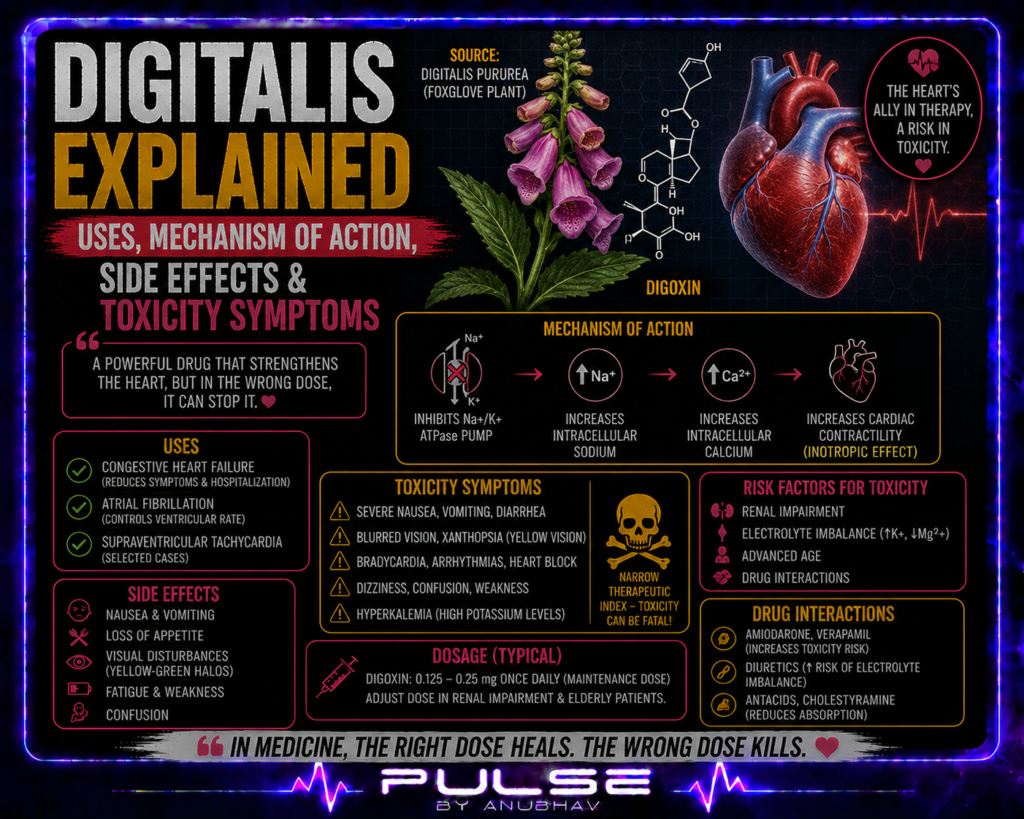
Digitalis is a powerful cardiac glycoside medicine used mainly for heart failure and atrial fibrillation. It improves heart contractions, controls abnormal heart rhythms, and helps maintain proper circulation. The article explains its mechanism of action, side effects, toxicity symptoms, diagnosis methods, market medicines, and life-saving importance. It also covers ECG tests, blood Digoxin levels, toxicity risks, and safety precautions in simple medical language by Pulse by Anubhav.
Note: This entire blog content is for educational purposes only and is not medical advice.
Also Read- Overthinking: The Silent Enemy of Peace (How to Stop It Before It Ruins You)
💓 Digitalis: Uses, Mechanism, Side Effects & Toxicity Explained 🌿
🌱 What is Digitalis?
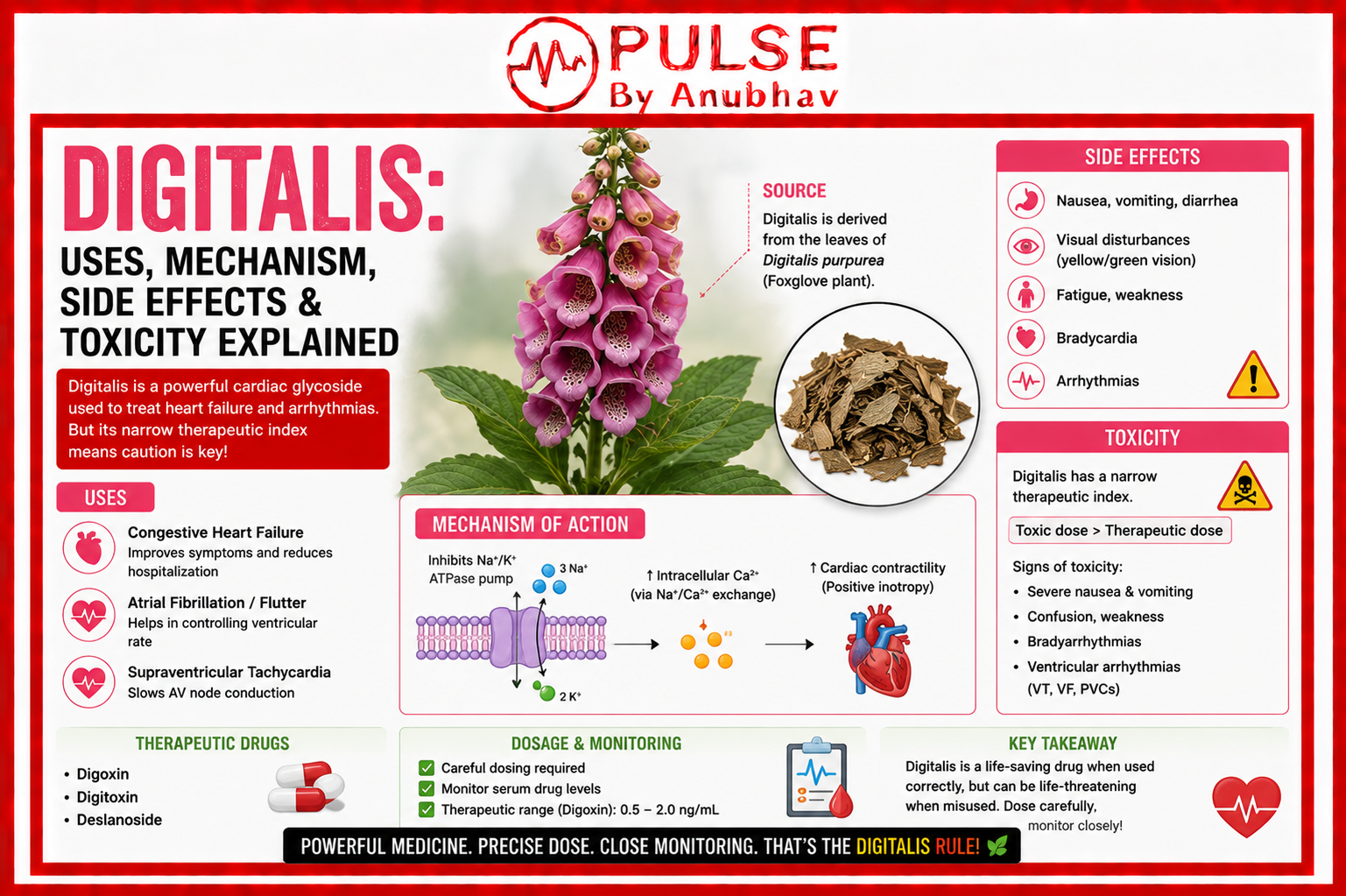
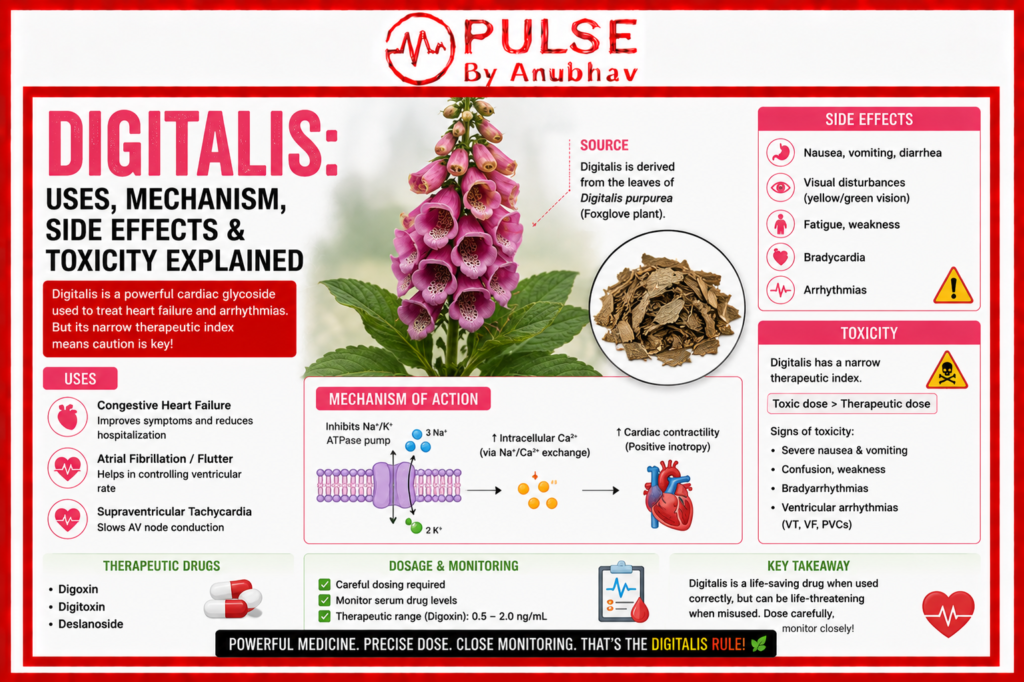
Digoxin, commonly known as Digitalis, is a cardiac glycoside medicine obtained from the foxglove plant (Digitalis purpurea and Digitalis lanata). It is mainly used to treat serious heart conditions by improving the strength and efficiency of heart contractions.
For decades, Digitalis has played an important role in cardiac treatment. However, the medicine must be used carefully because the difference between a safe dose and a toxic dose is very small.
❤️ Uses of Digitalis
✔️ Heart Failure
Digitalis helps a weakened heart pump blood more effectively. This improves circulation and helps reduce symptoms such as:
- Fatigue
- Breathlessness
- Swelling in the legs
✔️ Atrial Fibrillation
Digitalis is commonly used to control heart rate in patients suffering from irregular heartbeat disorders like atrial fibrillation.
✔️ Certain Arrhythmias
In selected abnormal heart rhythm conditions, Digitalis may be prescribed under proper medical supervision.
⚙️ Mechanism of Action
Digitaliis mainly works by inhibiting the sodium-potassium ATPase pump present in cardiac muscle cells.
This action leads to:
- Increased calcium inside cardiac cells
- Stronger heart contractions
- Slower heart rate
- Improved cardiac output
💊 Common Side Effects of Digitalis
Some patients may experience mild side effects while using Digitaliis, including:
1️⃣ Nausea
2️⃣ Vomiting
3️⃣ Loss of appetite
4️⃣ Fatigue
5️⃣ Headache
6️⃣ Dizziness
Certain patients may also notice weakness or a slower pulse rate.
⚠️ Digitalis Toxicity
Digitalis toxicity occurs when the drug concentration becomes excessively high in the body. In severe situations, it can become a medical emergency.
🚨 Symptoms of Toxicity
1️⃣ Gastrointestinal Symptoms
- Severe nausea
- Vomiting
- Abdominal pain
2️⃣ Cardiac Symptoms
- Slow heartbeat
- Dangerous arrhythmias
- Palpitations
3️⃣ Neurological Symptoms
- Confusion
- Drowsiness
- Weakness
4️⃣ Visual Disturbances
One classic sign of Digitalis toxicity is:
👁️ Yellow vision or blurred vision
Also Read- Who Is Tejasswi Prakash? Age, Height, Family, Relationship With Karan Kundrra & More
⚡ Risk Factors for Toxicity
The risk of Digitaliis toxicity increases in conditions such as:
- Kidney disease
- Elderly age
- Dehydration
- Low potassium levels
- Drug interactions
- Excess dosage
Because Digoxin is eliminated through the kidneys, impaired kidney function may cause dangerous drug accumulation inside the body.
🩺 Diagnosis
Doctors diagnose Digitalis toxicity using:
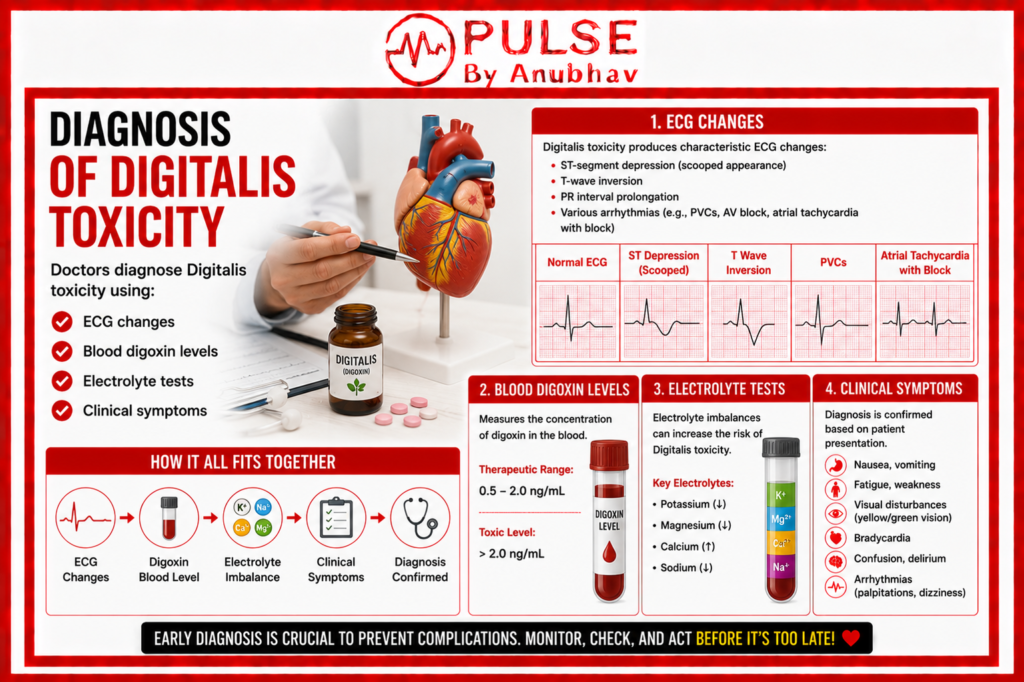
- ECG changes
- Blood digoxin levels
- Electrolyte tests
- Clinical symptoms
🩺 Diagnosis of Digitalis Toxicity
Doctors diagnose Digitalis toxicity by checking symptoms, heart activity, blood tests, and electrolyte balance. Since Digitalis directly affects the heart, proper diagnosis is extremely important to prevent serious complications.
⚡ 1. ECG (Electrocardiogram)
ECG is one of the most important tools used to detect Digitalis toxicity. It records the electrical activity of the heart and helps doctors identify dangerous rhythm changes.
What doctors look for:
- Slow heartbeat (Bradycardia)
- Irregular heart rhythm
- Arrhythmias
- Characteristic ECG changes caused by Digoxin
The test is painless and usually completed within 5–10 minutes in hospitals, clinics, or cardiac centers.
🧪 2. Blood Digoxin Level Test
Doctors measure the amount of Digoxin present in the blood using a laboratory blood test.
Why this test matters:
- Helps confirm Digoxin overdose
- Checks whether drug levels are toxic
- Guides treatment decisions
Blood samples are collected from a vein and sent to a pathology laboratory. Reports are often available within a few hours depending on the hospital.
⚖️ 3. Electrolyte Tests
Electrolyte imbalance can increase the risk of Digitalis toxicity. Doctors especially check:
- Potassium levels
- Magnesium levels
- Calcium levels
Low potassium is one of the biggest risk factors for Digoxin toxicity. These tests are done through standard blood investigations in hospitals and diagnostic labs.
👨⚕️ 4. Clinical Examination
Doctors also diagnose Digitalis toxicity by carefully observing the patient’s symptoms and medical history.
Common symptoms checked by doctors include:
- Nausea and vomiting
- Blurred or yellow vision
- Dizziness
- Confusion
- Weakness
- Palpitations
🏥 Where are these tests done?
Digitalis toxicity diagnosis is usually done in:
- Hospitals
- Cardiac care units
- Emergency departments
- Diagnostic laboratories
- Specialized heart clinics
Radhe Radhe Sabhi Ko
💊 Digitalis Medicines Available in Market & How They Work
Digitalis medicines are widely used in cardiology to manage serious heart conditions like heart failure and atrial fibrillation. These medicines help the heart pump blood more effectively and maintain proper heart rhythm.
In modern medicine, Digitalis-based drugs are considered highly important because in many emergency and chronic cardiac conditions, they can become life-saving medicines when used correctly under medical supervision.
🩺 Common Digitalis Medicines Available in Market
| Medicine Name | Generic Name | Main Use | Availability |
|---|---|---|---|
| Lanoxin | Digoxin | Heart failure & atrial fibrillation | Hospitals & medical stores |
| Digitek | Digoxin | Heart rhythm control | Prescription pharmacies |
| Cardoxin | Digoxin | Cardiac support therapy | Cardiac clinics & pharmacies |
| Digibind | Digoxin Immune Fab | Digitalis toxicity treatment | Emergency hospitals |
⚙️ How Digitalis Medicines Work
Digitalis medicines mainly work by increasing the force of heart muscle contraction. This helps the heart pump blood more efficiently throughout the body.
Main actions include:
- Strengthens weak heart contractions
- Slows down abnormal fast heart rate
- Improves blood circulation
- Helps control irregular heartbeat
- Improves cardiac output
These medicines act on the sodium-potassium ATPase pump present inside cardiac muscle cells, leading to increased calcium levels in the heart.
💰 Price Range of Digitalis Medicines
The price of Digitalis medicines depends on the brand, dosage, and country.
- Basic Digoxin tablets may cost around ₹20–₹150 per strip
- Imported or specialized brands can be more expensive
- Emergency antidote injections like Digibind are costly and mostly available in hospitals
Prices may vary depending on the pharmacy, hospital, and manufacturer.
🏥 Where are these medicines available?
Digitalis medicines are usually available at:
- Hospital pharmacies
- Cardiac care centers
- Licensed medical stores
- Online pharmacies (with prescription)
- Emergency departments
Since these are prescription medicines, they should only be used under medical supervision.
❤️ Why Digitalis is Considered Life-Saving
In patients with severe heart failure or dangerous irregular heartbeat, Digitalis can significantly improve heart function and stabilize circulation.
Life-saving benefits include:
- Helps weak hearts pump efficiently
- Controls dangerous fast heart rhythms
- Reduces symptoms like breathlessness and swelling
- Improves quality of life in cardiac patients
- Can prevent worsening heart complications
However, because the medicine has a narrow therapeutic index, overdose can become dangerous. Proper dosage and regular monitoring are extremely important.
🧠 Important Safety Note
Never start or stop Digitalis medicines without consulting a qualified doctor. Self-medication may lead to serious toxicity and dangerous heart complications.
✨ Pulse by Anubhav — Making Pharmacology & Medical concepts simple, powerful, and easy to understand for every student.
📚 Historical Importance
The medical importance of Digitalis became widely recognized through the work of William Withering in the 18th century. His research transformed foxglove from a traditional herbal remedy into a major cardiac medicine.
🧠 Key Points to Remember
- Digitalis is a cardiac glycoside medicine
- It increases the force of heart contraction
- Mainly used in heart failure and atrial fibrillation
- Has a narrow therapeutic index
- Toxicity can affect the heart, stomach, brain, and eyes
✨ Pulse by Anubhav
Stay connected with Pulse by Anubhav for simplified medical and pharmacology content explained in an easy and student-friendly way.
❓ Frequently Asked Questions About Digitalis \Digoxin
1️⃣ What is Digoxin used for?
Digoxin is mainly used to treat heart failure and irregular heartbeat conditions such as atrial fibrillation. It helps improve heart function and blood circulation.
2️⃣ How does Digoxin work in the body?
Digoxin increases the force of heart contractions and slows down abnormal fast heart rate, helping the heart pump blood more effectively.
3️⃣ Is Digoxin a life-saving medicine?
Yes, in certain serious heart conditions, Digoxin can become life-saving by improving cardiac function and controlling dangerous heart rhythms.
4️⃣ What are the common side effects of Digoxin?
Common side effects may include nausea, vomiting, dizziness, weakness, headache, and loss of appetite.
5️⃣ What happens in Digoxin toxicity?
Digoxin toxicity occurs when the medicine level becomes too high in the body. It may cause dangerous heart rhythm problems, confusion, blurred vision, and severe nausea.
6️⃣ How do doctors diagnose Digoxin toxicity?
Doctors diagnose toxicity using ECG tests, blood Digoxin levels, electrolyte tests, and clinical symptoms.
7️⃣ Can Digoxin affect vision?
Yes, one classic symptom of toxicity is yellow vision or blurred vision.
8️⃣ Is Digoxin available without prescription?
No, Digoxin is a prescription medicine and should only be used under proper medical supervision.
9️⃣ Why is regular monitoring important while taking Digoxin?
Regular monitoring helps doctors prevent toxicity and maintain safe medicine levels in the body.
✨ Pulse by Anubhav — Simplifying Pharmacology & Healthcare topics with easy explanations for students and readers.
5 thoughts on “Digitalis Explained: Uses, Mechanism of Action, Side Effects & Toxicity Symptoms | Pulse by Anubhav”