Learn about Hantavirus symptoms, causes, spread, prevention, and treatment options including Ribavirin medicine. Complete easy guide by Pulse by Anubhav for better awareness.
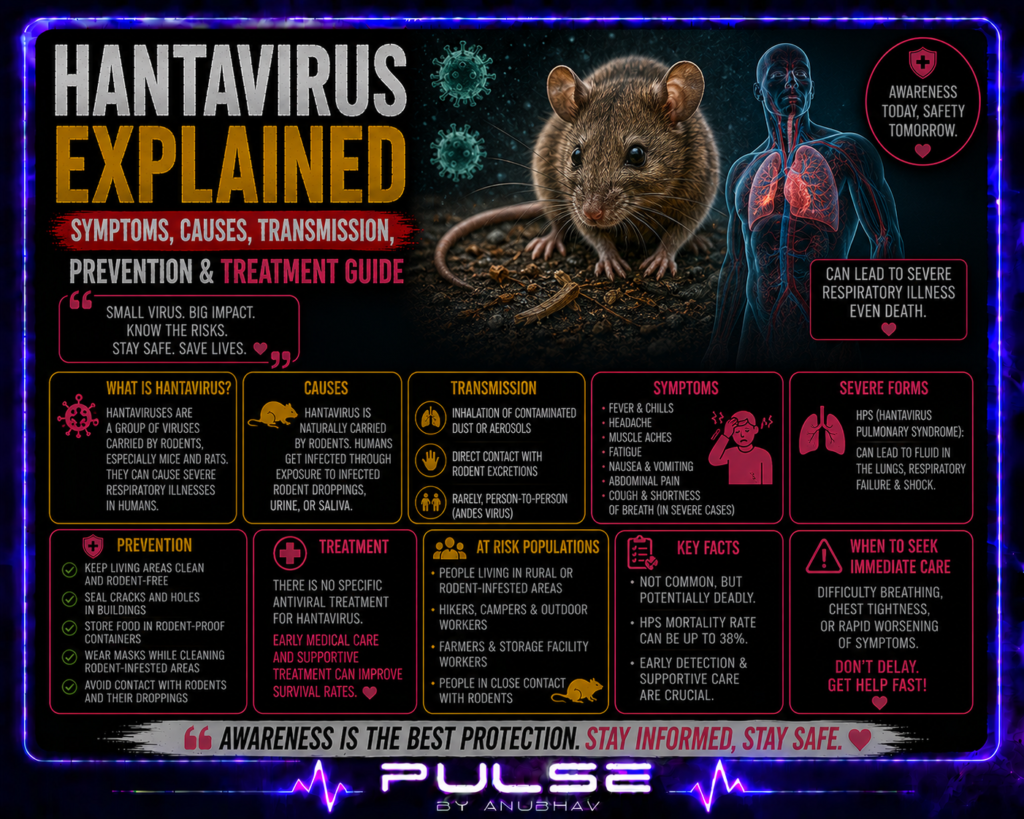
Hantavirus is a rare but serious viral infection spread mainly through contact with infected rodents, their urine, saliva, or droppings. Early symptoms often resemble flu, including fever, fatigue, and muscle pain, but severe cases can quickly affect the lungs and kidneys. There is no fully approved cure, though Ribavirin may help in some cases. Early hospitalization, oxygen support, and proper medical care are essential. Awareness and rodent control remain the best prevention methods.
Also Read- Malaria Explained: Symptoms, Causes, Prevention & Treatment Guide | Pulse by Anubhav
Note: This entire blog content is for educational purposes only and is not medical advice.
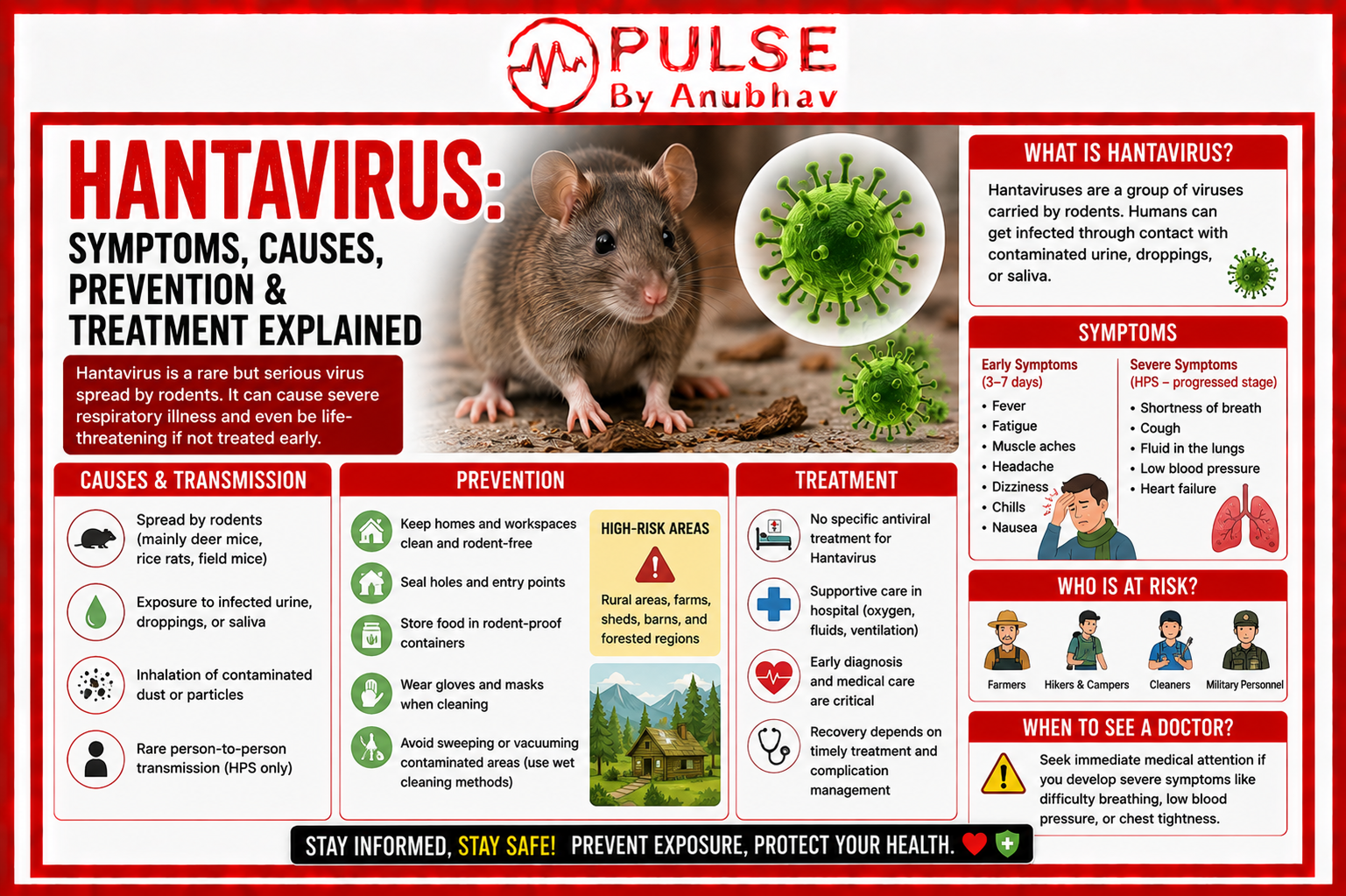
🦠 Hantavirus: Symptoms, Causes, Prevention & Treatment Explained
📌 Introduction
Hantavirus is a rare but dangerous viral infection mainly spread through contact with infected rodents. Even though cases are uncommon, the disease can quickly become life-threatening because it may affect the lungs, kidneys, and blood circulation.
The infection gained worldwide attention due to its high fatality rate in severe cases. One major problem is that early symptoms often look similar to common flu or viral fever, making early diagnosis difficult.
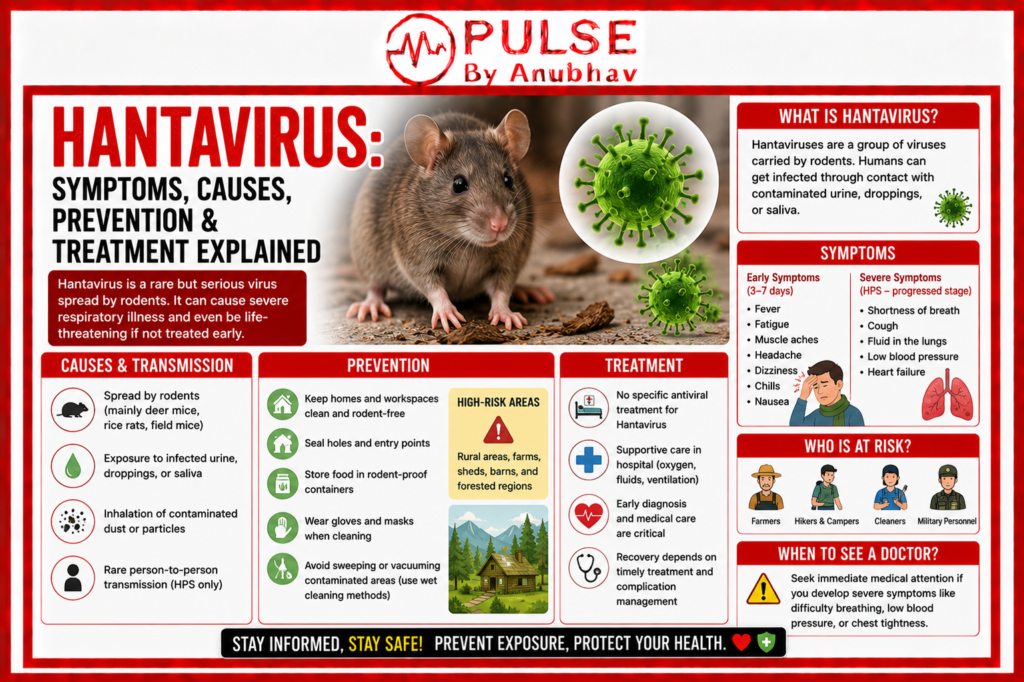
Pulse by Anubhav brings you a simple and complete guide to understanding Hantavirus symptoms, causes, prevention, and treatment.
🔬 What is Hantavirus?
Hantaviruses belong to the Hantaviridae family of viruses. Different strains are found across the world, and each strain is usually linked to a specific rodent species.
Humans accidentally become infected after exposure to infected rodent:
- Urine
- Saliva
- Droppings
🐭 Main Sources of Infection
Hantavirus is commonly associated with rodents such as:
- Rats 🐁
- Deer mice
- Cotton rats
- Field mice
Interestingly, these rodents usually do not become sick themselves but can still carry and spread the virus.
⚠️ How Does Hantavirus Spread?
1️⃣ Airborne Transmission (Most Common)
This is the primary way people get infected.
When rodent urine or droppings dry out, virus particles can mix with dust and become airborne. Breathing contaminated air may cause infection.
Common Risk Situations:
- Cleaning old storerooms
- Sweeping dusty cabins
- Entering rodent-infested buildings
2️⃣ Direct Contact
Touching contaminated surfaces and then touching the:
- Nose
- Mouth
- Eyes
may spread the virus.
3️⃣ Rodent Bites
Rare, but possible in some cases.
4️⃣ Contaminated Food
Food exposed to infected rodents may also transmit the infection.
❌ Does Hantavirus Spread From Person to Person?
Most Hantavirus strains do not spread between humans.
However, a few rare strains found in South America have shown limited human-to-human transmission.
⏳ Incubation Period
Symptoms usually appear between:
👉 1 to 8 weeks after exposure
🤒 Symptoms of Hantavirus
Hantavirus illness usually develops in stages.
🩺 Early Symptoms (Prodromal Phase)
Early symptoms often resemble viral flu, which can make diagnosis difficult initially.
Common Early Symptoms:
1️⃣ Fever
2️⃣ Severe fatigue
3️⃣ Muscle aches
4️⃣ Back pain
5️⃣ Headache
6️⃣ Chills
7️⃣ Nausea
8️⃣ Vomiting and abdominal pain
Many people may mistake it for ordinary viral fever during this stage.
🫁 Cardiopulmonary Phase (Dangerous Stage)
After a few days, symptoms may suddenly worsen.
Serious Symptoms Include:
- Shortness of breath
- Persistent cough
- Chest tightness
- Rapid heartbeat
- Low blood pressure
- Fluid accumulation in lungs
This phase can become fatal very quickly if medical care is delayed.
🚨 Hantavirus Pulmonary Syndrome (HPS)
HPS is the severe lung-related disease caused by Hantavirus, mainly seen in North and South America.
Key Features:
- Severe breathing difficulty
- Pulmonary edema (fluid-filled lungs)
- Oxygen deficiency
- Shock
- Respiratory failure
Without urgent treatment, mortality can be very high.
🩸 Hemorrhagic Fever with Renal Syndrome (HFRS)
This form is more common in Europe and Asia and mainly affects:
- Kidneys
- Blood vessels
Symptoms Include:
- Fever
- Bleeding tendencies
- Low platelet count
- Kidney dysfunction
- Reduced urine output
🔬 Diagnosis of Hantavirus
Doctors diagnose Hantavirus using laboratory tests, imaging, and clinical history.
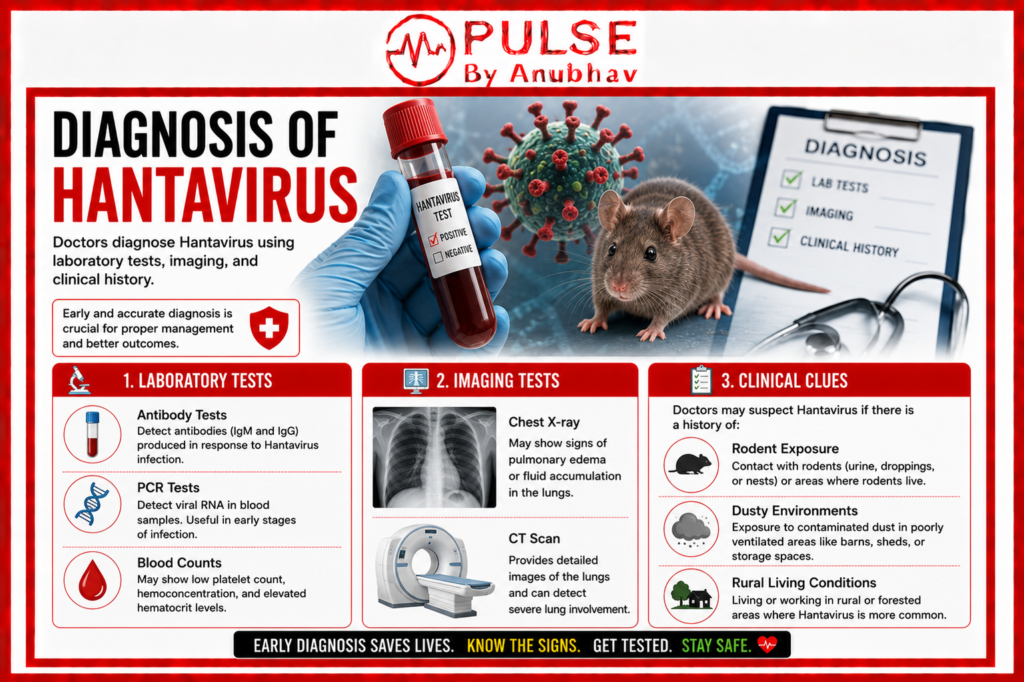
🧪 Laboratory Tests
- Antibody tests
- PCR tests
- Blood counts
🩻 Imaging Tests
- Chest X-ray
- CT scan
📝 Clinical Clues
Doctors may suspect Hantavirus if there is a history of:
- Rodent exposure
- Dusty environments
- Rural living conditions
Also Read- Digitalis Explained: Uses, Mechanism of Action, Side Effects & Toxicity Symptoms | Pulse by Anubhav
💊 Treatment of Hantavirus
Currently, there is no universally approved specific antiviral cure for Hantavirus.
Treatment mainly focuses on supportive medical care.
🏥 Hospital Management
Mild Cases
- Monitoring
- Fluids
- Oxygen support
Severe Cases
- ICU admission
- Mechanical ventilation
- Blood pressure support
- Advanced respiratory care
Early medical treatment significantly improves survival chances.
💊 Best Medicines Used in Hantavirus Treatment Explained
Hantavirus currently has no officially approved specific cure. Most patients are treated with supportive hospital care like oxygen support, ICU monitoring, and ventilation.
However, one antiviral medicine called Ribavirin has been used in some Hantavirus cases, especially in HFRS (Hemorrhagic Fever with Renal Syndrome).
🧪 Medicine Name
Ribavirin
- Medicine Type: Antiviral Drug
- Used For: Some Hantavirus infections, mainly HFRS
- Works Against: Certain RNA viruses
⚙️ How Ribavirin Works
Ribavirin works by stopping the virus from multiplying inside the body. It interferes with viral RNA production, making it harder for the virus to spread and damage organs.
Doctors believe it may help during the early stages of infection before severe lung complications begin.
🏷️ Popular Brand Names
- Virazole
- Rebetol
- Ribasphere
- Generic Ribavirin
🧬 Composition
Strengths Available: 200 mg tablets/capsules commonly used
💰 Approximate Price in India
- Generic Ribavirin 200mg: ₹150 – ₹600 (depends on brand & quantity)
- Hospital injectable forms may cost higher
🏥 Where is it Available?
- Major pharmacies
- Hospital medical stores
- Government-approved medicine suppliers
- Online pharmacies (with prescription)
⚠️ Important Side Effects
- Anemia
- Nausea
- Weakness
- Headache
- Liver-related complications in some patients
🚨 Important Medical Warning
Ribavirin should only be used under medical supervision. Self-medication can be dangerous because severe Hantavirus cases often require ICU-level supportive care.
🛡️ Prevention of Hantavirus
Since rodents are the primary source, prevention mainly focuses on rodent control and hygiene.
✅ Preventive Measures
🏠 Home Safety
✔ Seal holes and cracks
✔ Keep food covered
✔ Dispose of garbage properly
🧼 Cleaning Safety
✔ Wear gloves and masks
✔ Use disinfectant before cleaning droppings
✔ Avoid dry sweeping or vacuuming rodent waste
🌲 Outdoor Protection
✔ Avoid sleeping near rodent nests
✔ Store camping food securely
👨🌾 High-Risk Groups
People at higher risk include:
- Farmers
- Campers
- Warehouse workers
- Construction workers
- People cleaning abandoned buildings
🌍 Global Distribution of Hantavirus
Different Hantavirus strains are found worldwide.
Common Regions:
- North America
- South America
- Europe
- China
- Korea
Cases remain relatively rare in India, but awareness is still important.
⚠️ Complications of Hantavirus
Severe infection may lead to:
1️⃣ Respiratory failure
2️⃣ Kidney failure
3️⃣ Shock
4️⃣ Organ damage
5️⃣ Death
📊 Mortality Rate
Hantavirus Pulmonary Syndrome (HPS) may have a mortality rate of around:
👉 30–40% in severe untreated cases
Early diagnosis and immediate treatment can save lives.
📌 Key Takeaways
Hantavirus spreads mainly through infected rodent waste
Early symptoms often resemble flu or viral fever
Severe infection can rapidly affect lungs and kidneys
No specific cure exists yet, but supportive care helps
Rodent control and hygiene are the best prevention methods
🩺 Stay informed. Stay protected.
Pulse by Anubhav
❓ FAQs About Henta Virus
1. What is Henta Virus?
Henta Virus is a rare viral infection mainly spread through infected rodents, their urine, saliva, or droppings. It can seriously affect the lungs and kidneys in severe cases.
2. How does this rodent-borne virus spread?
The infection usually spreads when people breathe contaminated dust particles from rodent waste or touch infected surfaces and then touch their mouth, nose, or eyes.
3. What are the early symptoms?
Common early signs include fever, body pain, fatigue, chills, headache, nausea, and stomach discomfort. Many people mistake it for normal viral fever initially.
4. Can this infection spread from person to person?
Most strains do not spread between humans. However, a few rare South American variants have shown limited human-to-human transmission.
5. Is there any medicine available?
There is no fully approved cure yet. Doctors mainly provide supportive care like oxygen therapy and ICU treatment. Ribavirin may help in some cases if given early.
6. How dangerous is this disease?
Severe lung-related cases can become life-threatening very quickly and may cause breathing failure if treatment is delayed.
7. How can people protect themselves?
People should avoid contact with rodents, seal home cracks, clean contaminated areas carefully, and use masks and gloves while handling rodent waste.
8. Who is at higher risk?
Farmers, campers, warehouse workers, and people cleaning dusty abandoned buildings have a higher risk of exposure.
4 thoughts on “Hantavirus Explained: Symptoms, Causes, Transmission, Prevention & Treatment Guide | Pulse by Anubhav”