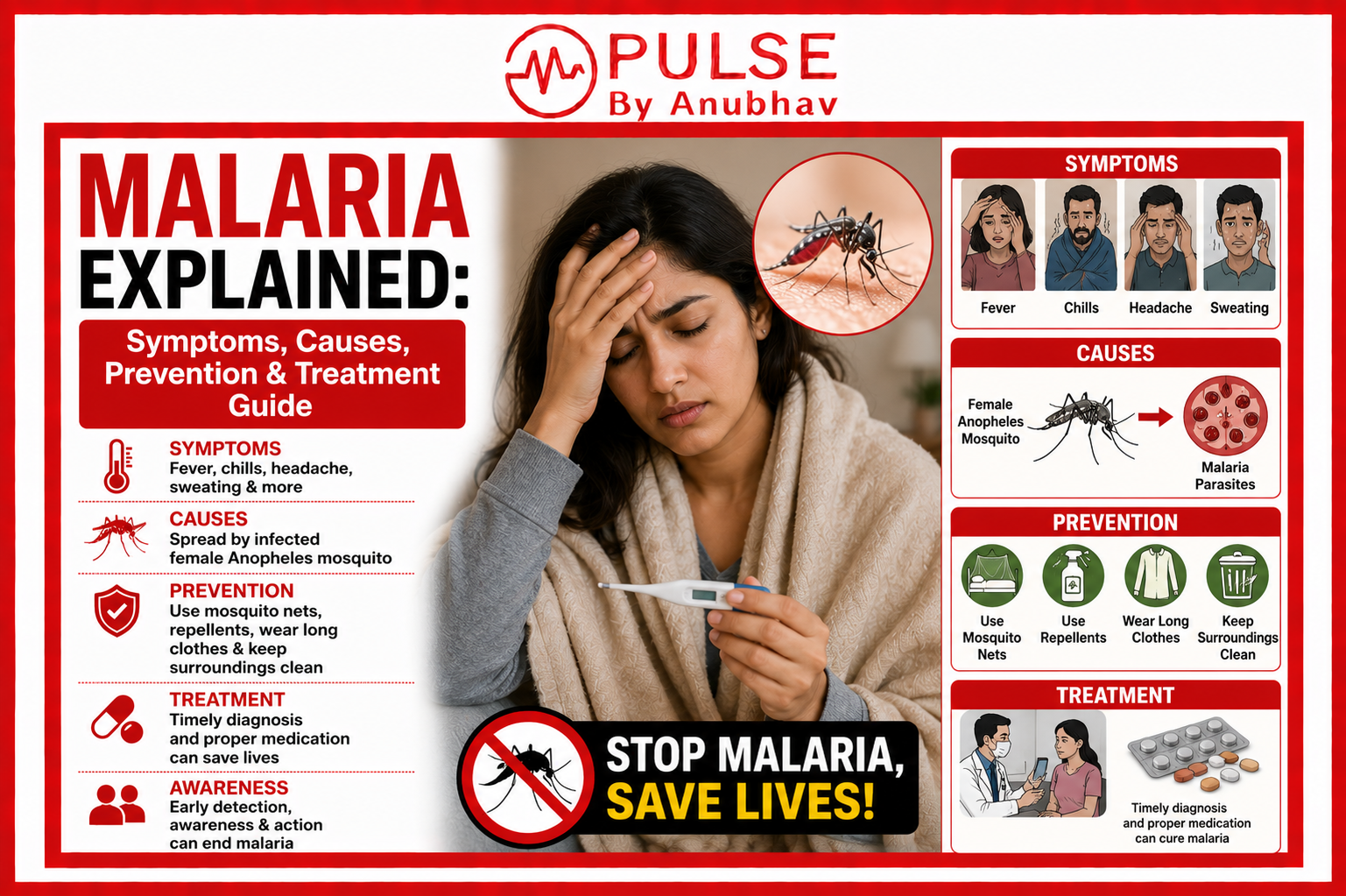
Malaria is a serious mosquito-borne disease caused by parasites. Learn its symptoms, causes, prevention, and treatment to stay safe and protect your health effectively.
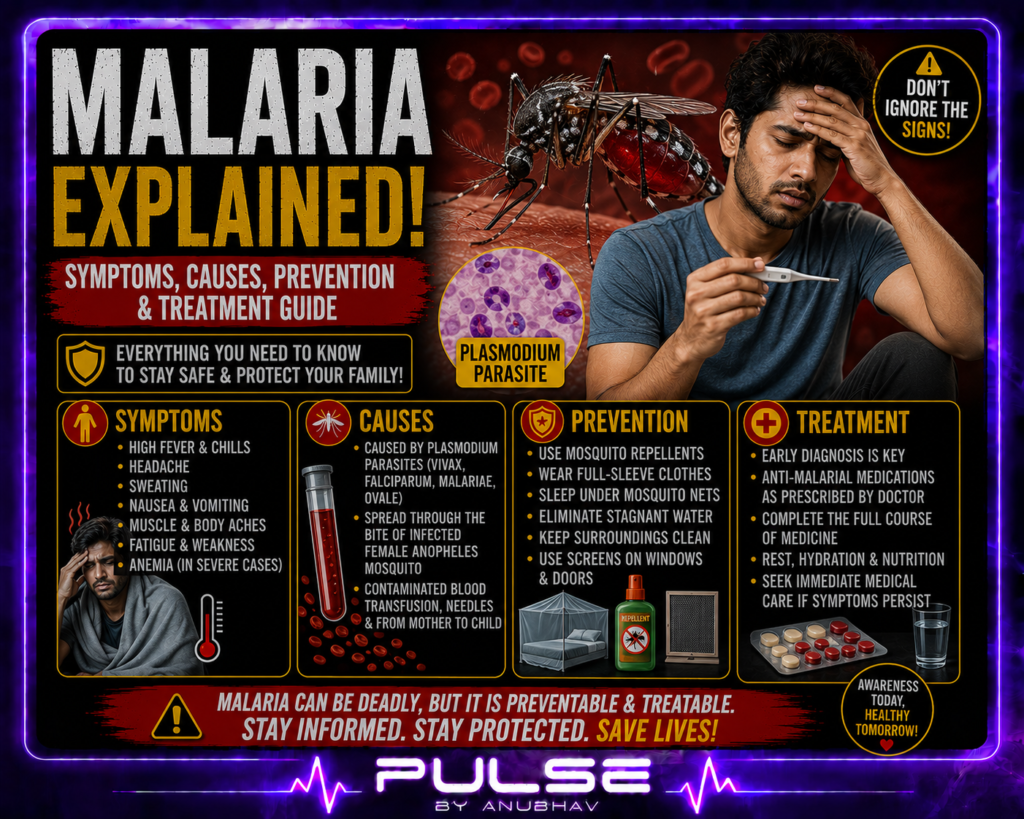
Malaria is a life-threatening disease spread by infected mosquitoes, mainly affecting tropical regions. It is caused by Plasmodium parasites that attack the liver and red blood cells. Common symptoms include fever, chills, and fatigue, while severe cases can lead to organ failure. Early diagnosis and proper treatment are crucial. Preventive steps like mosquito control, repellents, and clean surroundings can significantly reduce the risk of infection.
Note: This entire blog content is for educational purposes only and is not medical advice.
Malaria: Symptoms, Causes, Prevention & Treatment 🦟
Complete Guide on Malaria
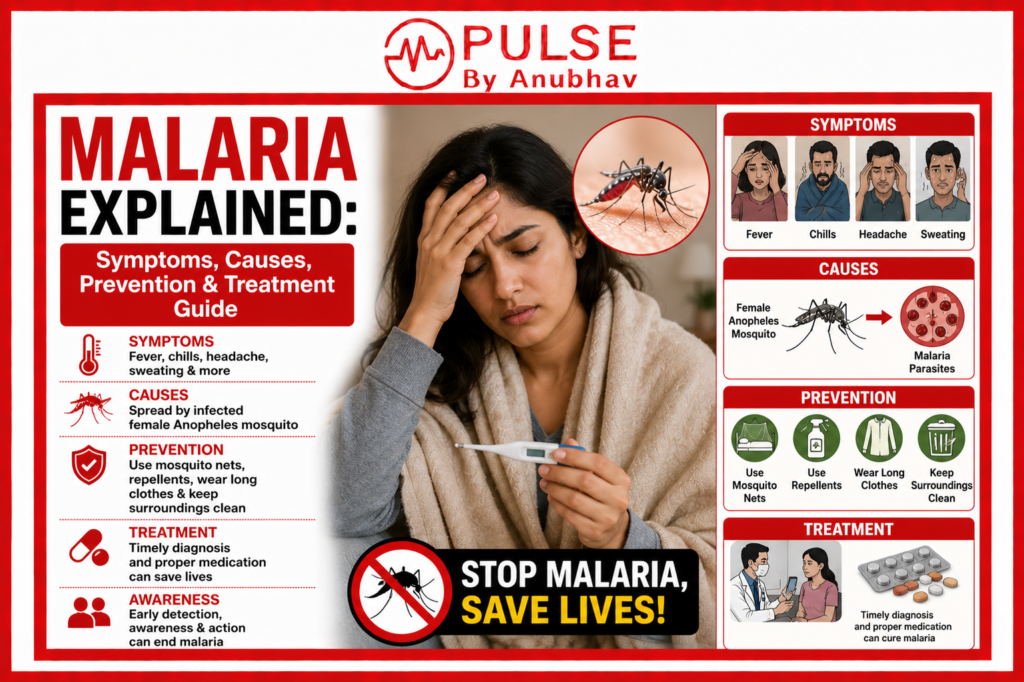
Malaria is one of the most common and dangerous mosquito-borne diseases affecting millions of people worldwide every year. It is caused by Plasmodium parasites and spreads through the bite of infected female Anopheles mosquitoes. Although Ague is preventable and treatable, delayed diagnosis can lead to severe complications and even death.
Stay aware, stay protected — Pulse by Anubhav
What is Malaria?
Malaria is a parasitic infectious disease that mainly affects the liver and red blood cells. Once an infected mosquito bites a person, the parasite enters the bloodstream and starts multiplying inside the body.
It is more common in tropical and subtropical regions where warm temperatures and stagnant water help mosquitoes breed easily.
Causes of Malaria
Malaria is caused by microscopic parasites belonging to the Plasmodium genus. These parasites enter the human body through mosquito bites and begin their life cycle inside the host.
Once inside the body, the parasites multiply rapidly, leading to infection and the typical symptoms of malaria.
Main Types of Malaria Parasites
1️⃣Plasmodium falciparum
- Most severe and life-threatening
- Can cause cerebral Ague and organ failure
- Common in Africa and parts of Asia
2️⃣Plasmodium vivax
- Most widespread type
- Can remain dormant in the liver and relapse later
3️⃣Plasmodium malariae
- Causes long-lasting but relatively mild infection
4️⃣Plasmodium ovale
- Less common but can also relapse
5️⃣Plasmodium knowlesi
- Found mainly in Southeast Asia
- Can quickly become severe
How Malaria Spreads
Transmission of Ague
Ague spreads through:
- Bite of infected female Anopheles mosquito
- Blood transfusion with infected blood
- Sharing contaminated needles
- Mother-to-child transmission during pregnancy
⚠️ Malaria does NOT spread through touching, coughing, or sharing food.
Life Cycle of Malaria Parasite
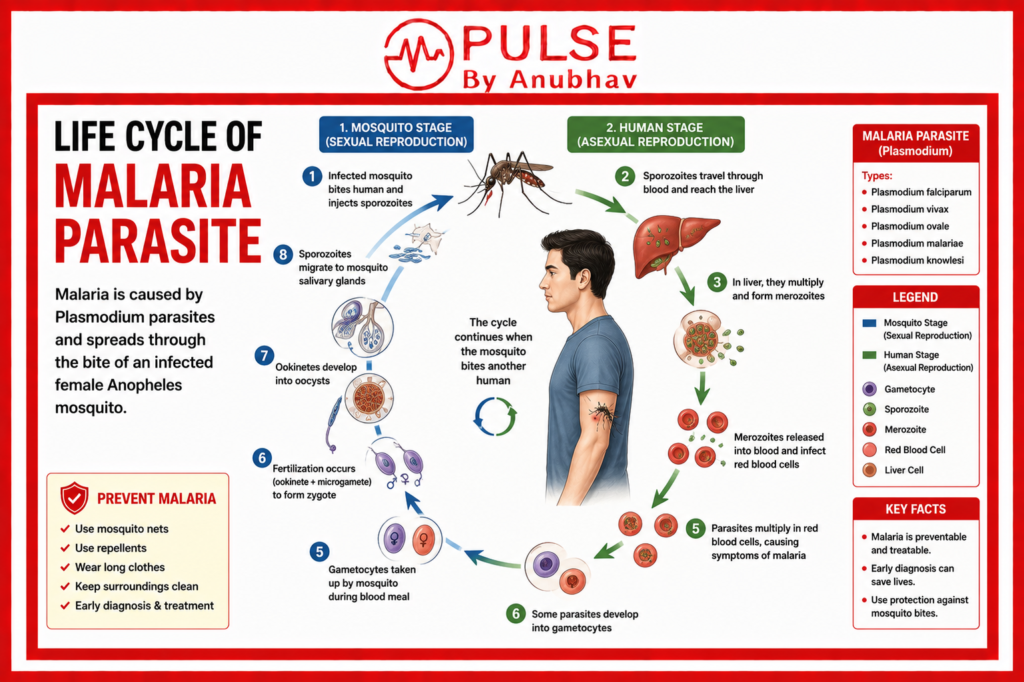
1️⃣ Mosquito bites an infected person and picks up parasites
2️⃣ Mosquito bites a healthy person
3️⃣ Parasites enter the bloodstream and reach the liver
4️⃣ They multiply and infect red blood cells
5️⃣ Red blood cells burst, causing fever and chills
Also read- Cancer: Early Signs You Should Never Ignore (Save Your Life Early)
Symptoms of Malaria
Symptoms usually appear within 10–15 days after infection.
Early Symptoms of Malaria
- High fever
- Chills and shivering
- Excessive sweating
- Headache
- Muscle and body pain
- Weakness and fatigue
- Nausea and vomiting
- Loss of appetite
Severe Symptoms of Malaria
- Difficulty breathing
- Severe anemia
- Yellowing of skin (jaundice)
- Confusion or unconsciousness
- Seizures
- Kidney failure
- Low blood pressure
Types of Malaria
Uncomplicated Ague
- Mild symptoms like fever and chills
- No major organ damage
Severe Ague
- Affects vital organs
- Requires immediate medical attention
Cerebral Ague
- A serious brain complication
- Can lead to seizures, coma, or death
Diagnosis of Malaria
Doctors diagnose malaria using laboratory tests such as:
- Blood Smear Test: Detects parasites under a microscope
- Rapid Diagnostic Test (RDT): Quick detection of Ague antigens
- PCR Test: Advanced and highly accurate method
Treatment of Malaria
Treatment depends on:
- Type of parasite
- Severity of disease
- Patient’s age and immunity
Best Malaria Medicines Guide | Pulse by Anubhav
Malaria treatment depends on the type of parasite and severity, but the good news is — it is completely treatable if diagnosed early. Here are the most effective medicines used for malaria, explained in a simple and practical way.
1. Artemether + Lumefantrine
First-Line TreatmentHow it works: This combination kills malaria parasites in the blood and stops their growth cycle quickly.
| Drug Type | Combination Therapy (ACT) |
|---|---|
| Generic Name | Artemether + Lumefantrine |
| Brand Name | Coartem, Lumether |
| Composition | 20mg Artemether + 120mg Lumefantrine |
| Category | Ethical + Generic both available |
| Price (India) | ₹80 – ₹250 (approx) |
| Availability | Medical stores, hospitals |
2. Chloroquine
Classic TreatmentHow it works: Stops parasite growth in red blood cells and helps clear infection.
| Drug Type | Antimalarial |
|---|---|
| Generic Name | Chloroquine |
| Brand Name | Lariago |
| Composition | 250mg / 500mg tablets |
| Category | Generic + Ethical |
| Price (India) | ₹20 – ₹100 |
| Availability | Widely available |
3. Primaquine
Relapse PreventionHow it works: Kills dormant parasites in the liver and prevents relapse.
| Drug Type | Antimalarial |
|---|---|
| Generic Name | Primaquine |
| Brand Name | Primacip |
| Composition | 7.5mg / 15mg tablets |
| Category | Ethical + Generic |
| Price (India) | ₹30 – ₹150 |
| Availability | Doctor prescription required |
4. Quinine
Severe MalariaHow it works: Used in severe cases, it kills parasites rapidly in the bloodstream.
| Drug Type | Antimalarial Alkaloid |
|---|---|
| Generic Name | Quinine |
| Brand Name | Qualaquin |
| Composition | 300mg tablets / Injection |
| Category | Ethical |
| Price (India) | ₹100 – ₹400 |
| Availability | Hospitals / emergency use |
5. Artesunate
Emergency TreatmentHow it works: Rapidly reduces parasite count in severe malaria cases.
| Drug Type | Artemisinin derivative |
|---|---|
| Generic Name | Artesunate |
| Brand Name | Falcigo, Artesunate Injection |
| Composition | 60mg Injection |
| Category | Ethical |
| Price (India) | ₹150 – ₹500 |
| Availability | Hospitals only |
⚠️ Important: Always take malaria medicines under doctor supervision. Self-medication can lead to complications or drug resistance.
⚠️ Avoid self-medication, as incorrect treatment can worsen the condition or cause drug resistance.
Also Read- Dark Circles Under Eyes: Why They Happen & Best Treatments to Remove Them
Prevention of Malaria
Best Preventive Measures
- Sleep under mosquito nets
- Use mosquito repellents
- Wear full-sleeved clothes
- Avoid stagnant water around your home
- Keep surroundings clean
- Use indoor insecticide sprays
- Install window screens
Complications of Malaria
If left untreated, Ague can lead to:
- Brain damage
- Severe dehydration
- Respiratory failure
- Multi-organ failure
- Coma
- Death
High-Risk Groups
People at higher risk include:
- Children under 5 years
- Pregnant women
- Elderly individuals
- Travelers to high-risk areas
- People with weak immunity
Important Facts About Malaria
- Malaria is preventable and curable
- Early diagnosis saves lives
- Mosquito control is the key to prevention
- Delayed treatment can become fatal
Conclusion
Ague remains a major global health concern, especially in tropical regions. Understanding its symptoms, causes, and prevention methods is essential to protect yourself and your family.
Take precautions, avoid mosquito bites, and seek medical help immediately if symptoms appear.
Stay informed. Stay safe. — Pulse by Anubhav
Also read- Dengue Fever Explained: Types, WHO Classification, Symptoms, Causes & Treatment | Pulse by Anubhav
4 thoughts on “Malaria Explained: Symptoms, Causes, Prevention & Treatment Guide | Pulse by Anubhav”