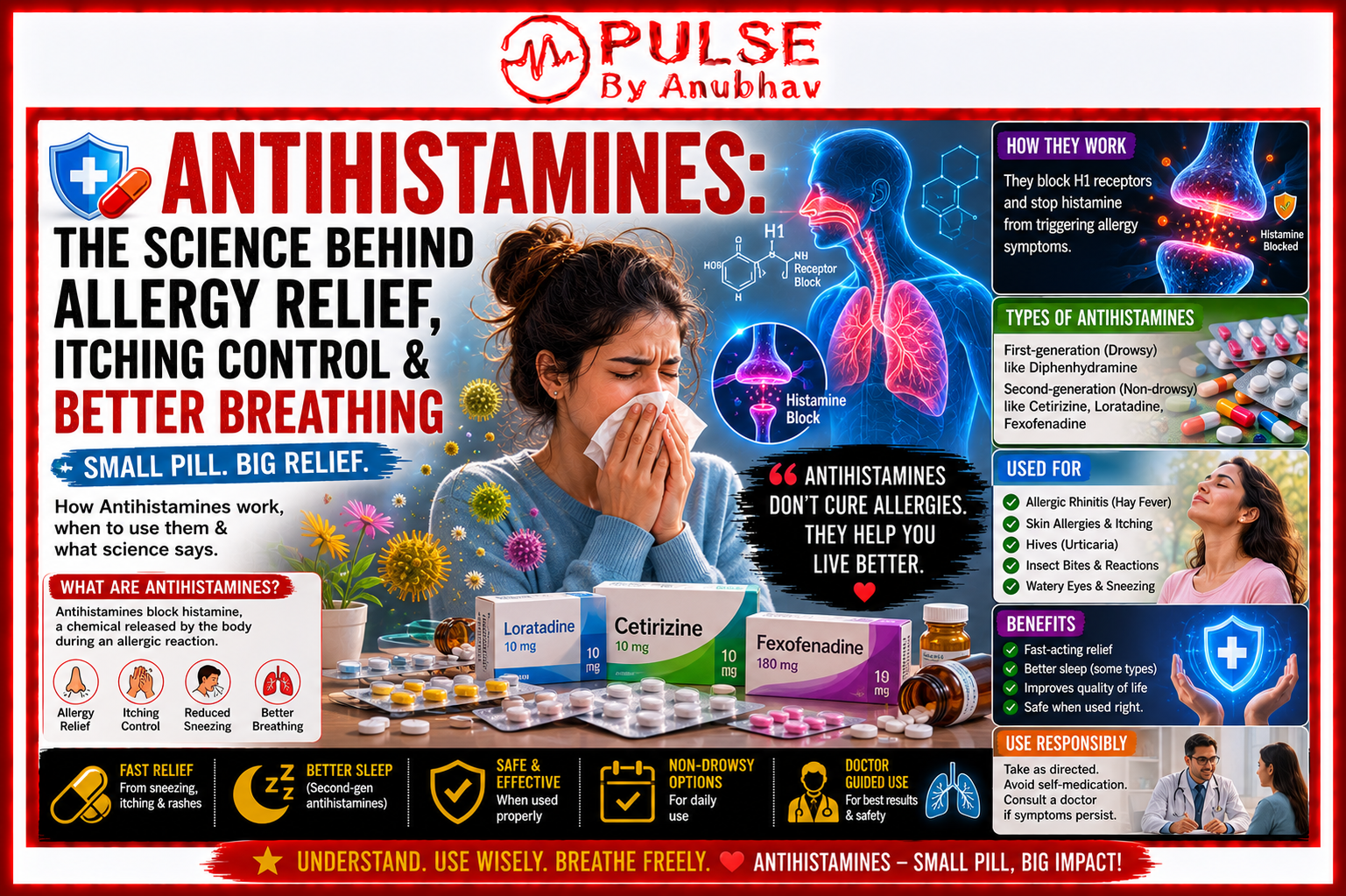
Still suffering from allergies? Discover how Antihistamines work, their benefits, side effects, types, and the best options for allergy relief, itching control, and easier breathing. This article has been written by Anubhav Kumar Jha, a B.Pharm graduate and health content writer at Pulse by Anubhav, for educational purposes only.
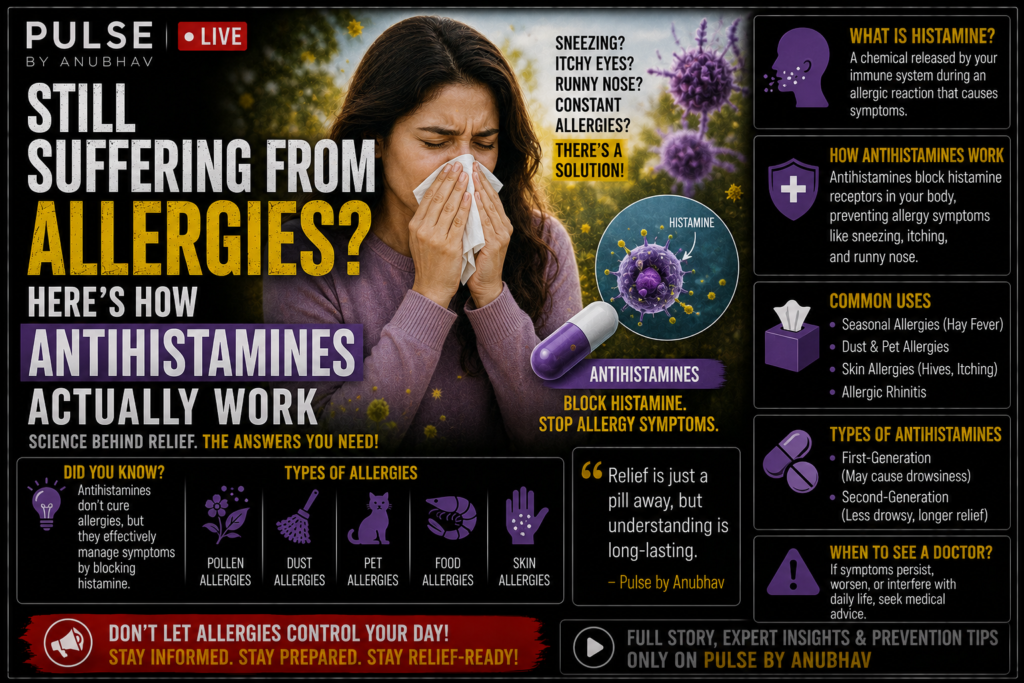
Antihistamines are among the most widely used medicines for managing allergies, itching, sneezing, watery eyes, and runny nose. They work by blocking histamine—the chemical responsible for triggering allergy symptoms in the body. This guide explains what antihistamines are, how they work, common uses, side effects, OTC options, and the differences between popular choices like Cetirizine, Levocetirizine, and Fexofenadine. Explore this complete comparison by Pulse by Anubhav and make smarter allergy-care decisions.
Also read- Heart Palpitations: Causes, Symptoms, Treatment & When to Worry
Note: This entire blog content is for educational purposes only and is not medical advice.
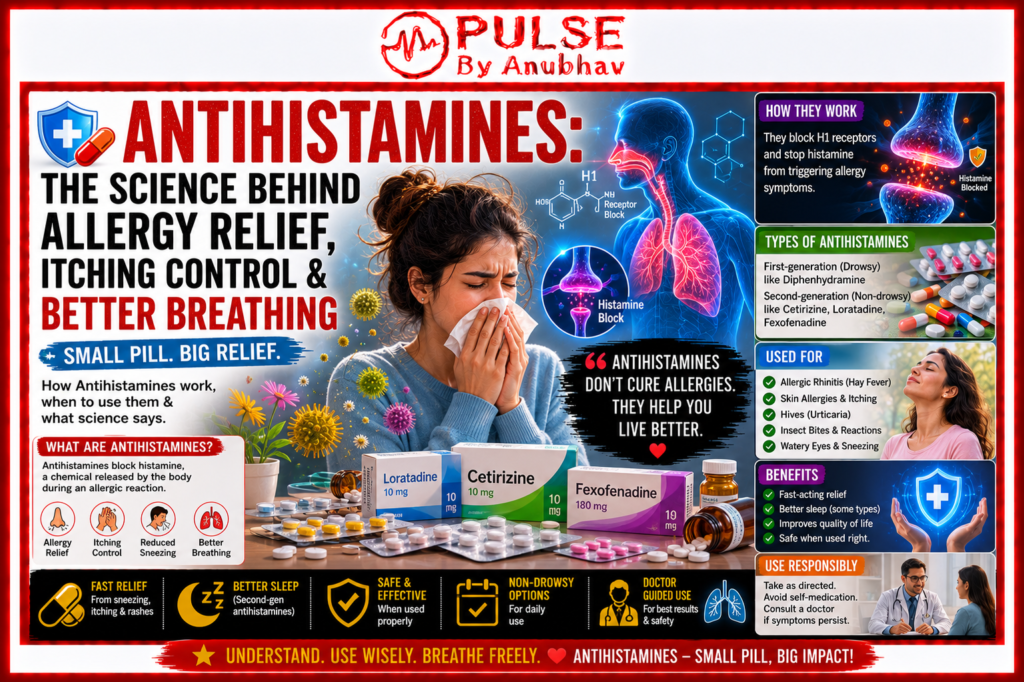
💊 Antihistamines: The Science Behind Allergy Relief, Itching Control & Better Breathing
Imagine stepping outside on a beautiful morning expecting fresh air and peace—but within minutes, the sneezing begins, your nose starts running, your eyes become watery, and constant itching ruins the moment. For millions of people, allergies are not just seasonal discomfort; they’re something that affects daily life.
That’s where Antihistamines come in. These medicines have become one of the most trusted options for controlling allergy symptoms and helping people feel comfortable again.
But what exactly are antihistamines, how do they work, and what should you know before using them? In this guide by Pulse by Anubhav, let’s break it down in a simple and easy-to-understand way.
🌿 What Is Histamine and Why Does Your Body Release It?
Histamine is a natural chemical produced by your immune system. It plays an important role in protecting the body from things it believes may be harmful.
Sometimes, however, your immune system reacts to harmless substances and treats them like dangerous invaders.
Common allergy triggers include:
- 🌸 Pollen
- 🏠 Dust mites
- 🐕 Pet dander
- 🍄 Mold
- 🍽️ Certain foods
When this happens, the body releases histamine into the bloodstream—which causes allergy symptoms.
Common Symptoms Triggered by Histamine
- 🤧 Sneezing attacks
- 👃 Runny or blocked nose
- 👁️ Itchy, watery eyes
- 🌡️ Skin irritation and hives
- 🦟 Itching after insect bites
- 😮 Swelling and discomfort
Histamine exists to protect the body, but too much of it can make everyday life frustrating.
💊 What Are Antihistamines?
Antihistamines are medications created to reduce the effects of histamine in the body.
They work by blocking histamine receptors before histamine can activate them and trigger allergy symptoms.
Think about it like this:
- Histamine = Key 🔑
- Body receptors = Lock 🔒
- Antihistamines = Lock cover 🛡️
If histamine cannot unlock the receptor, symptoms become less noticeable.
As a result, antihistamines may help reduce:
- ✔ Sneezing
- ✔ Itching
- ✔ Swelling
- ✔ Watery eyes
- ✔ Nasal irritation
🔬 How Do Antihistamines Work?
Most allergy-related antihistamines target what are known as H1 receptors.
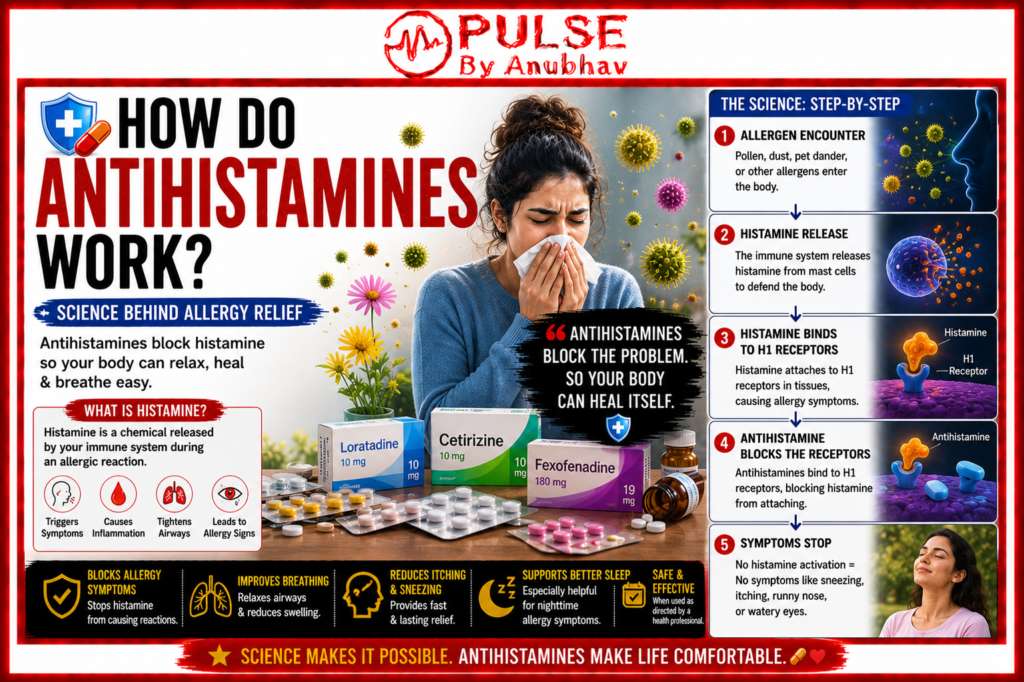
When histamine binds to these receptors, your body reacts by creating symptoms such as:
- Blood vessel expansion
- Extra mucus production
- Tissue swelling
- Skin itching
- Eye irritation
Antihistamines block these receptors and help lower the intensity of allergic reactions.
That’s one reason why antihistamines are often considered a first step for managing many allergy symptoms.
🤧 Conditions Commonly Treated with Antihistamines
🌸 Seasonal Allergies (Hay Fever)
Seasonal allergies caused by pollen can lead to uncomfortable symptoms. Antihistamines may help reduce:
- Sneezing
- Runny nose
- Itchy eyes
- Nasal irritation
🐕 Pet Allergies
Proteins found in animal fur, skin, and saliva can trigger allergic reactions. Antihistamines are commonly used for symptom control.
🩹 Hives (Urticaria)
Hives appear as itchy raised patches on the skin and are frequently linked to histamine release.
🦟 Insect Bites and Stings
Many antihistamines help reduce itching and mild swelling after insect bites.
🌿 Allergic Skin Conditions
Certain allergic skin conditions may respond well to antihistamine treatment.
✈️ Motion Sickness
Some older antihistamines are also used to help manage nausea and dizziness during travel.
📋 Types of Antihistamines
1️⃣ First-Generation Antihistamines
These are older medications that can be effective but often cause sleepiness because they affect the brain more directly.
Examples include:
- Diphenhydramine
- Chlorpheniramine
Because of their sedating effect, they are sometimes associated with sleep support under professional guidance.
2️⃣ Second-Generation Antihistamines
These newer medicines are designed to provide relief with less daytime drowsiness.
Examples include:
- Cetirizine
- Loratadine
- Fexofenadine
These are commonly preferred for daily use because they interfere less with concentration.
⚠️ Possible Side Effects of Antihistamines
Although antihistamines are generally well tolerated, side effects can still happen.
Common side effects include:
- 😴 Drowsiness
- 😵 Dizziness
- 💧 Dry mouth
- 👁️ Blurred vision
- 🤕 Headache
- 😮💨 Fatigue
Older antihistamines are more likely to make people feel sleepy.
The Ultimate Antihistamines Guide: Compare Relief, Side Effects, Prices & Best Uses
Complete Antihistamines Comparison Guide
Explore everything about Antihistamines in one premium comparison table — OTC options, side effects, tablets, itching relief, H2 antihistamines, examples, and educational resources.
| Category | Meaning | Popular Examples | Common Use | Availability | Key Insight |
|---|---|---|---|---|---|
💊 Antihistamines Over The Counter | Common allergy medicines often available without prescription depending on region. |
Cetirizine Loratadine Fexofenadine |
Sneezing Runny Nose Allergy Relief | Usually Available | Best known for quick everyday allergy symptom support. |
🧬 Antihistamine Drugs | Medicines that reduce histamine activity inside the body. |
Cetirizine Levocetirizine Diphenhydramine | Allergy Management | Varies | Different generations may affect alertness differently. |
⚠️ Antihistamine Side Effects | Possible effects that may appear during use. |
Drowsiness Dry Mouth Headache | Depends on medicine | — | Older options may cause more sleepiness. |
🩹 Antihistamine For Itching | Often used for allergy-related skin irritation and itching. |
Cetirizine Levocetirizine Fexofenadine |
Itching Hives | Often Available | Useful when itching is linked to histamine response. |
🧪 H2 Antihistamines | Different group targeting H2 receptors instead of common allergy receptors. | Famotidine | Stomach Acid Support | Varies | Different purpose than standard allergy antihistamines. |
💊 Antihistamine Tablets | Tablet form designed for convenient use. |
Cetirizine Loratadine | Daily Allergy Support | Common | Follow medicine label instructions carefully. |
📚 What Are Antihistamines Examples | Popular antihistamines people frequently search. |
Cetirizine Levocetirizine Loratadine Fexofenadine | General Allergy Relief | Depends | Selection varies based on symptoms. |
📄 Antihistamines PPT | Educational presentation material for learning. |
Mechanism Uses Types | Study Purpose | Educational | Popular among students and presentations. |
✨ Pulse by Anubhav Tip
The best Antihistamine depends on symptoms, timing, and personal response—not simply on popularity.
💊 Best Antihistamines Guide — Brand Name, Price, How They Work & Which One Is Right for You?
Not all Antihistamines work the same way. Some are preferred for faster allergy relief, some aim to reduce sleepiness, and others are commonly chosen for longer comfort. Explore this premium comparison by Pulse by Anubhav.
Cetirizine
Brand Examples: Zyrtec • Cetzine
Levocetirizine
Brand Examples: LCZ • Xyzal
Fexofenadine
Brand Examples: Allegra
🏆 Quick Comparison
| Medicine | Relief | Day Use | Sleepiness |
|---|---|---|---|
| Cetirizine | ⭐⭐⭐⭐⭐ | ⭐⭐⭐⭐ | ⭐⭐ |
| Levocetirizine | ⭐⭐⭐⭐⭐ | ⭐⭐⭐⭐⭐ | ⭐⭐⭐ |
| Fexofenadine | ⭐⭐⭐⭐ | ⭐⭐⭐⭐⭐ | ⭐ |
🚨 Can Antihistamines Be Dangerous?
For most healthy adults, antihistamines are considered safe when used properly.
However, taking more than recommended or using them incorrectly may increase the risk of:
- Severe drowsiness
- Confusion
- Rapid heartbeat
- Difficulty urinating
- Poor coordination
Children and older adults may be more sensitive to these effects.
Always follow label instructions and seek medical advice if symptoms continue.
Anti Histamine Dosage Guide — Adults & Children
Explore commonly referenced Anti Histamine dosage ranges for adults and children in one clean comparison table. Dosage can vary depending on age, symptoms, medical history, and product instructions.
| Medicine | Adults | Children (6–12 Years) | Typical Frequency |
|---|---|---|---|
💊 Cetirizine | 10 mg | 5 mg | Once Daily |
💊 Levocetirizine | 5 mg | 2.5 mg | Once Daily |
💊 Fexofenadine | 120–180 mg | 30 mg | Once / Twice |
💊 Loratadine | 10 mg | 5 mg | Once Daily |
💊 Diphenhydramine | 25–50 mg | Doctor Advised | Every 6 Hours |
Important Safety Note
Always consult a doctor before giving Anti Histamines to children. Dosage may vary depending on age, body weight, allergies, and medical conditions. Never exceed package instructions.
💡 Tips for Safe Antihistamine Use
- ✅ Use only the recommended dose
- ✅ Avoid alcohol with sedating antihistamines
- ✅ Read medication labels carefully
- ✅ Ask a doctor before use during pregnancy or breastfeeding
- ✅ Tell your healthcare provider about other medicines you use
🤰 Anti Histamines During Pregnancy — Are They Safe?
Many people search whether taking Anti Histamines during pregnancy is safe—but the answer is not the same for everyone.
During pregnancy, the decision to use any medicine should always be made with guidance from a healthcare professional. The right choice depends on factors such as pregnancy stage, symptoms, medical history, and overall health.
Self-medication should be avoided, even for medicines that are commonly used for allergies.
⚠️ Important: Some healthcare professionals may consider certain options such as Loratadine in specific situations, but that does not mean it is suitable for everyone.Always speak with your doctor before starting, stopping, or changing any medicine during pregnancy.
If allergy symptoms become severe or continue for a long time during pregnancy, consult your healthcare provider rather than choosing medicines on your own.
Pregnancy is a time to be extra careful with medicines. Even common Anti Histamines should only be used after professional medical advice.
🚨 Allergy Warning Signs: When Anti Histamines Are Not Enough & You Should See a Doctor
🚨 When Should You See a Doctor for Allergy Symptoms?
Most mild allergy symptoms may improve over time, but some situations should never be ignored. While Anti Histamines are commonly used for allergy relief, they may not always be enough—especially when symptoms become severe or continue for a long period.
Symptoms Last More Than 2 Weeks
If sneezing, itching, runny nose, watery eyes, or allergy symptoms continue for more than 2 weeks, consult a healthcare professional instead of repeatedly self-medicating.
Breathing Difficulty or Chest Tightness
Difficulty breathing, wheezing, severe coughing, or chest discomfort should be medically evaluated as soon as possible.
Face, Tongue or Throat Swelling
Sudden swelling of the face, lips, tongue, or throat may be signs of a severe allergic reaction (anaphylaxis). This can become an emergency.
Seek urgent medical care immediately. Anti Histamines alone may not be enough in this situation.
🥗 Foods That May Support Healthy Histamine Balance
Food is not a replacement for medical treatment, but some nutrient-rich foods are commonly discussed for supporting overall wellness and balanced immune responses.
Quercetin Rich Foods
- Onion
- Apple
- Broccoli
Quercetin is a plant compound often discussed for supporting normal inflammatory responses.
Vitamin C Sources
- Lemon
- Amla
- Kiwi
Vitamin C is commonly included as part of a balanced diet and overall wellness support.
Omega-3 Foods
- Flaxseeds
- Walnuts
Omega-3 rich foods are often included in healthy dietary patterns.
❌ Foods Some People May Limit During Allergy Discussions
Food reactions vary by person. Some individuals discuss limiting certain foods depending on symptoms and professional advice.
Food choices alone do not replace allergy treatment. If symptoms become severe, breathing changes, or swelling appears, seek medical care rather than relying only on Anti Histamines.
🌟 Final Thoughts
Antihistamines remain one of the most widely used and trusted options for allergy symptom relief. By blocking the action of histamine, they help reduce sneezing, itching, swelling, watery eyes, and other symptoms that can interfere with daily life.
Whether you’re dealing with seasonal allergies, pet allergies, insect bites, or recurring skin reactions, understanding how antihistamines work can help you make informed decisions.
At Pulse by Anubhav, we believe health information should be simple, useful, and easy to understand—so you can breathe easier and feel better every day.
Also read- Ebola Virus: The Deadly Disease That Shocked the World and How Scientists Fought Back
❓ Frequently Asked Questions About Anti Histamines
Anti Histamines are medicines that help block histamine, a chemical released during allergic reactions. They are commonly used to reduce symptoms such as sneezing, itching, runny nose, watery eyes, hives, and allergy-related discomfort.
Commonly discussed Anti Histamines include Cetirizine, Levocetirizine, Loratadine, and Fexofenadine. The suitable choice depends on symptoms, timing, and individual response.
Some Anti Histamines may cause drowsiness. Older generations are more associated with sleepiness, while newer options are commonly preferred for reduced daytime drowsiness.
Yes, Anti Histamines are often used for allergy-related itching, hives, and certain skin reactions because they reduce the effect of histamine in the body.
Many Anti Histamines are available over the counter depending on local regulations, although availability may vary by product and location.
H1 Anti Histamines are commonly associated with allergy relief, while H2 Anti Histamines work differently and are commonly linked with reducing stomach acid.
Response time varies depending on the medicine and the individual. Some people may notice relief sooner, while others may experience gradual improvement.
Some newer Anti Histamines are commonly preferred for daytime use because they are designed to cause less sleepiness compared with older options.
We stumbled over here different web page and thought I might as well check things out. I like what I see so now i am following you. Look forward to looking over your web page repeatedly.