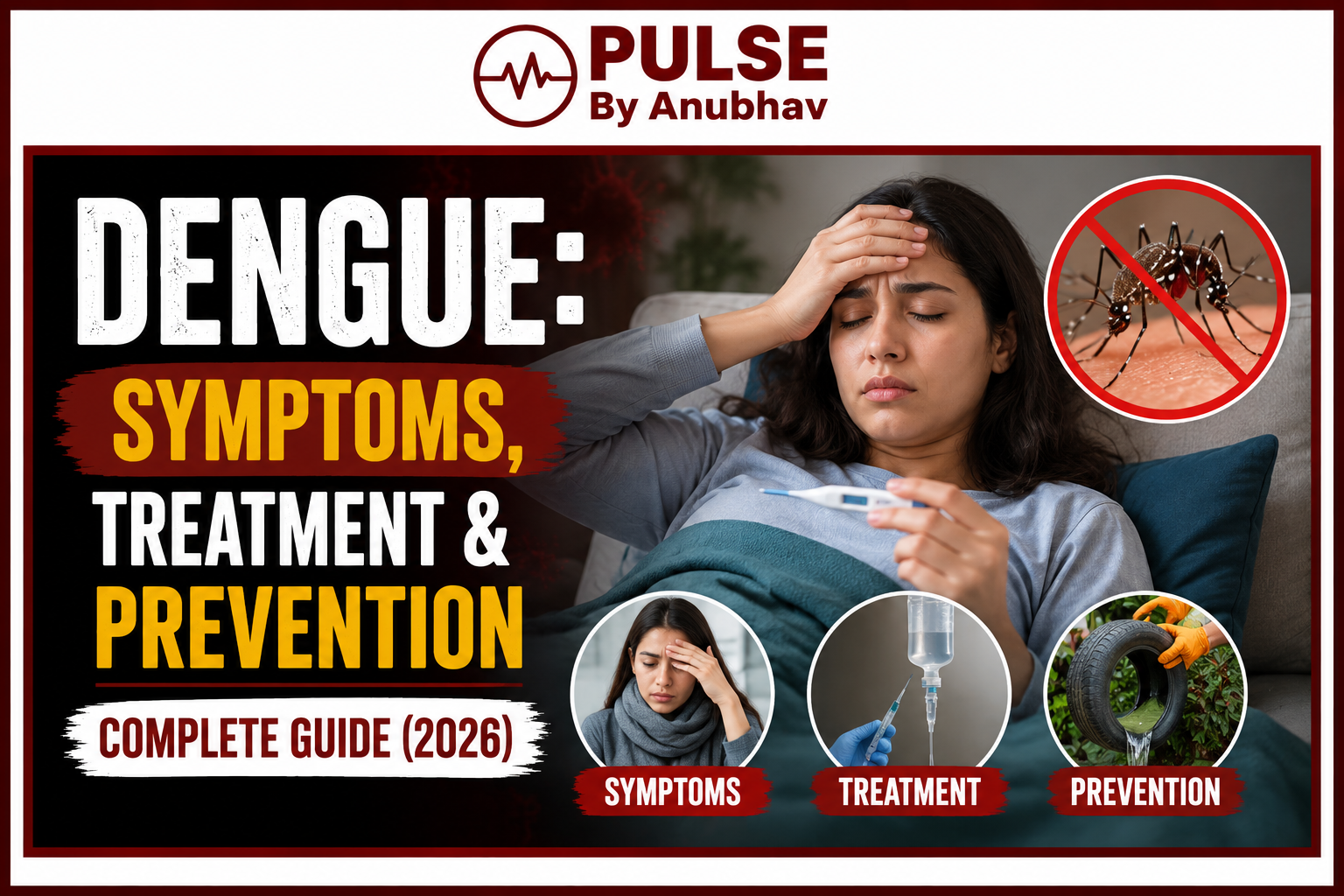
Learn about DENGUE symptoms, treatment, prevention, warning signs, recovery tips, and expert health advice in this complete guide by Pulse by Anubhav.
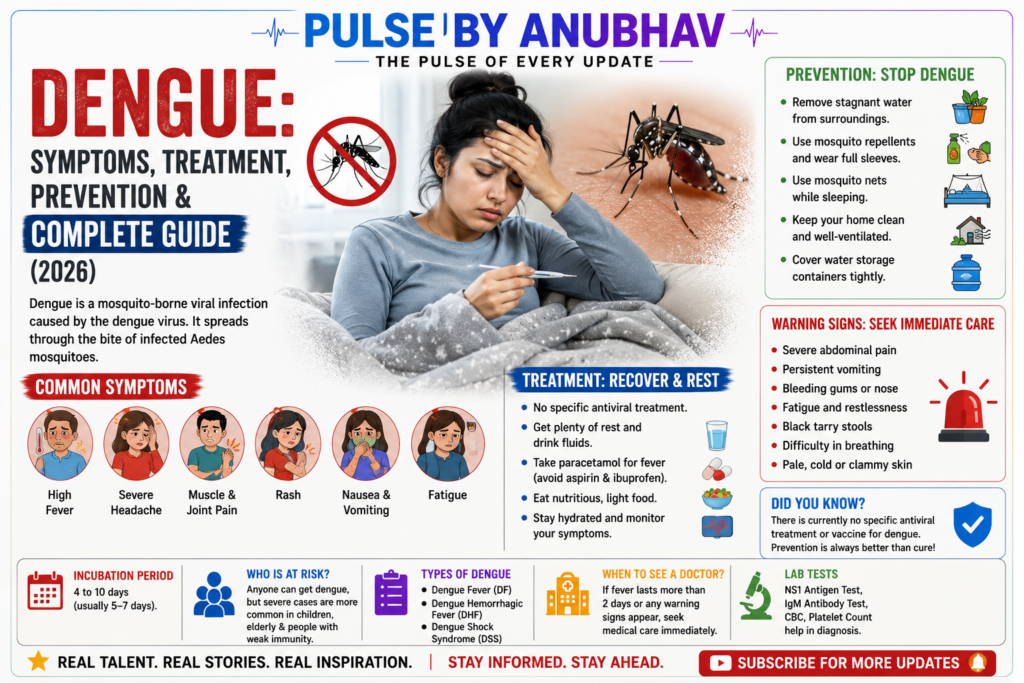
DENGUE is a mosquito-borne viral infection that becomes more common during the monsoon season. Early recognition of symptoms, proper hydration, timely diagnosis, and appropriate medical care are essential for a safe recovery. This guide covers dengue symptoms, warning signs, stages, treatment, prevention tips, and recovery advice in simple language. Pulse by Anubhav aims to provide reliable, easy-to-understand health information to help you stay informed and protect your family from dengue.
Also read- Antihistamines: How They Work, Types, Side Effects & Best Options (Cetirizine vs Fexofenadine)
Note: This entire blog content is for educational purposes only and is not medical advice.
Dengue: Symptoms, Treatment & Prevention | Complete Guide
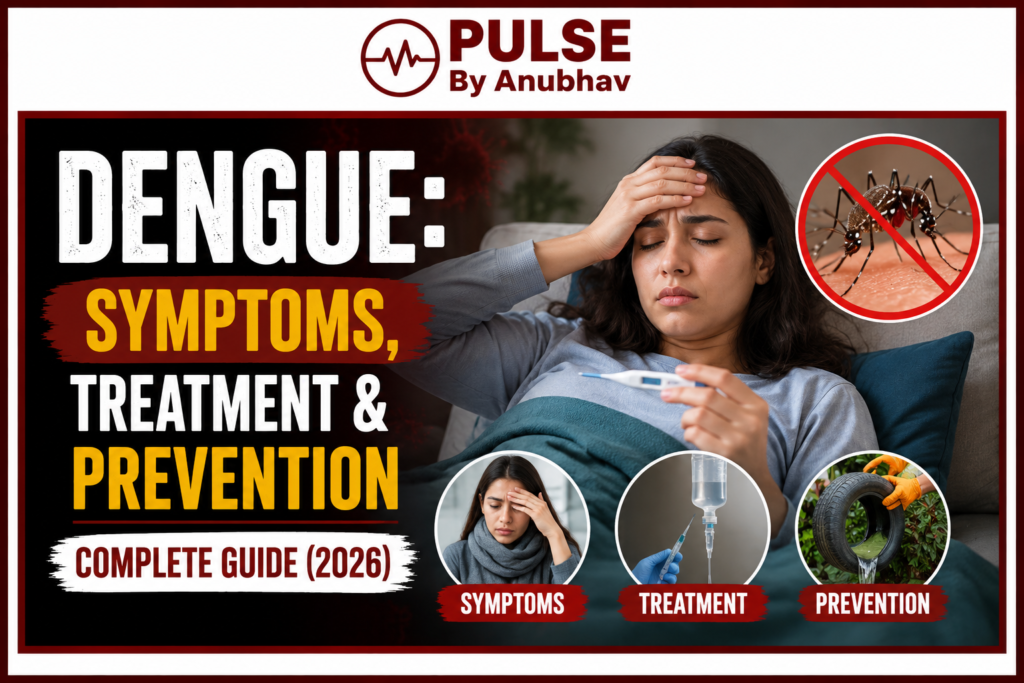
Dengue is one of the most common mosquito-borne viral infections, especially during the monsoon season. While most people recover with proper care, severe dengue can become life-threatening if warning signs are ignored. Understanding the causes, symptoms, treatment, and prevention methods is the best way to protect yourself and your family.
Why Is Dengue So Common Nowadays?
Several factors have contributed to the rapid rise in dengue cases across many regions.
Rainwater Creates Mosquito Breeding Sites
Stagnant water in coolers, buckets, flower pots, tyres, water tanks, and containers provides the perfect environment for Aedes mosquitoes to breed.
Warm and Humid Weather
High temperatures and humidity allow mosquitoes to reproduce faster, increasing the risk of dengue transmission.
Rapid Urbanization
Poor sanitation, overcrowded areas, and improper waste management create additional breeding grounds for mosquitoes.
Climate Change
Changing weather patterns and longer rainy seasons have extended mosquito breeding periods in many countries.
Increased Travel
People travelling between cities and countries can contribute to the spread of the dengue virus into new areas.
Also Read- Alliance: Seema Sajdeh’s Exit Leaves Sohail Khan Emotional as Arslan Goni Becomes the New Scorpion
What Is Dengue?
Dengue is a viral infection caused by the Dengue virus (DENV) and is transmitted through the bite of an infected Aedes aegypti mosquito.
Key Facts About Dengue
- It spreads through infected mosquito bites.
- Aedes mosquitoes usually bite during the daytime, especially in the early morning and before sunset.
- Dengue does not spread through touching, hugging, coughing, or sharing food with an infected person.
- Early diagnosis and proper medical care significantly improve recovery.
Symptoms of Dengue
Symptoms usually appear 4 to 10 days after being bitten by an infected mosquito.
Common Symptoms
- Sudden high fever
- Severe headache
- Pain behind the eyes
- Muscle and joint pain
- Nausea and vomiting
- Skin rash
- Extreme weakness and fatigue
- Mild bleeding from the gums or nose
Warning Signs That Need Immediate Medical Attention
Seek emergency medical care immediately if any of these symptoms develop.
Serious Warning Signs
- Severe abdominal pain
- Persistent vomiting
- Bleeding from the gums or nose
- Blood in vomit or stool
- Difficulty breathing
- Cold or clammy skin
- Extreme drowsiness or confusion
- Reduced urine output
These symptoms may indicate severe dengue, which requires urgent hospital treatment.
How Is Dengue Diagnosed?
Doctors diagnose dengue based on symptoms, physical examination, and laboratory investigations.
Common Diagnostic Tests
- Complete Blood Count (CBC)
- Platelet Count
- Hematocrit (HCT)
- NS1 Antigen Test
- Dengue IgM and IgG Antibody Tests
Regular monitoring helps doctors assess disease progression and decide the appropriate treatment plan.
Dengue Treatment and Management
There is currently no specific antiviral medicine for dengue. Treatment mainly focuses on relieving symptoms and preventing complications.
Recommended Treatment
- Drink plenty of water and ORS to stay hydrated.
- Take adequate rest.
- Use Paracetamol for fever only as advised by your doctor.
- Monitor platelet count and hematocrit regularly.
- Severe cases may require hospital admission and intravenous (IV) fluids.
Medicines Used During Dengue: What You Should Know
Know which medicines are generally considered safe, which should be avoided, and why medical supervision is important.
Allopathic Care
- Paracetamol (Acetaminophen) is commonly used to reduce fever and relieve body pain. It should only be taken according to a doctor’s advice or the instructions on the medicine label.
- ORS (Oral Rehydration Solution) helps prevent dehydration caused by fever, vomiting, or poor fluid intake.
- In moderate or severe dengue, doctors may recommend intravenous (IV) fluids in the hospital to maintain blood circulation.
- Doctors regularly monitor platelet count, hematocrit, blood pressure, and hydration status instead of relying only on platelet numbers.
- There is currently no specific antiviral medicine that cures dengue. Treatment focuses on symptom relief and supportive care.
Ayurvedic Medicines
- Some people use Ayurvedic preparations as supportive care during recovery.
- Scientific evidence for most herbal products in treating dengue is limited.
- Never replace hospital treatment or medical advice with herbal remedies.
- Always consult a qualified Ayurvedic physician before taking any herbal medicine, especially if you have severe dengue or other medical conditions.
Homeopathic Medicines
- Homeopathic remedies are used by some individuals as complementary care.
- There is no strong scientific evidence that homeopathic medicines cure dengue.
- They should never delay emergency medical treatment or hospitalization when warning signs are present.
- Consult a qualified healthcare professional before starting any alternative therapy.
Medicines to Avoid Without Medical Advice
- Aspirin
- Ibuprofen
- Diclofenac
- Naproxen
- Other NSAID painkillers
These medicines may increase the risk of bleeding in dengue and should generally be avoided unless specifically prescribed by a doctor.
Important Safety Advice
Dengue treatment depends on the severity of the illness. Most patients recover with adequate fluids, rest, fever control using appropriate medicines, and regular medical monitoring. Seek immediate medical attention if you develop severe abdominal pain, persistent vomiting, bleeding, difficulty breathing, confusion, or reduced urine output.
Best Foods to Eat During Dengue Recovery
A healthy diet supports faster recovery and helps prevent dehydration.
Recommended Foods
- Coconut water
- ORS and plenty of fluids
- Fresh fruits, especially Vitamin C-rich fruits
- Watermelon
- Bananas
- Vegetable or chicken soup
- Khichdi and other soft foods
- Green leafy vegetables
Eat light, nutritious meals and avoid oily or heavily processed foods whenever possible.
How to Prevent Dengue
Preventing mosquito bites remains the most effective way to reduce the risk of dengue infection.
Effective Prevention Tips
- Remove stagnant water every week.
- Clean coolers, flower pots, and water tanks regularly.
- Use mosquito repellents.
- Wear full-sleeved clothing.
- Install window and door screens.
- Sleep under mosquito nets when needed.
- Keep your surroundings clean.
- Stay protected even during the daytime, as Aedes mosquitoes mainly bite during daylight hours.
Important Facts About Dengue
Things Everyone Should Know
- A low platelet count alone does not determine the severity of dengue.
- Doctors also monitor hematocrit, hydration status, blood pressure, and warning signs.
- Most patients recover completely with timely diagnosis and proper medical care.
- Self-medication can be dangerous. Always consult a qualified healthcare professional.
Recovery Tips After Dengue
Following your doctor’s advice during recovery can help your body heal more quickly.
Healthy Recovery Habits
- Stay well hydrated.
- Eat nutritious and easily digestible food.
- Get enough sleep and rest.
- Follow all prescribed medications and medical advice.
- Attend follow-up blood tests if recommended.
- Never ignore new or worsening warning signs.
Dengue Guide: Symptoms, Treatment & Prevention
This guide explains the most searched questions about dengue in simple language. Early diagnosis, proper hydration, and timely medical care can help prevent serious complications.
7 Warning Signs of Dengue Fever
Most dengue patients recover with proper care, but some may develop severe dengue. If any of the following warning signs appear, immediate medical attention is essential.
- Severe or persistent abdominal pain.
- Repeated or persistent vomiting.
- Bleeding from the gums or nose.
- Blood in vomit or black stools.
- Difficulty breathing or rapid breathing.
- Extreme weakness, confusion, or unusual drowsiness.
- Reduced urine output or signs of dehydration.
Prevention of Dengue
The best way to prevent dengue is to avoid mosquito bites and eliminate mosquito breeding sites around your home and workplace.
- Remove stagnant water from buckets, tyres, flower pots, and coolers every week.
- Keep water tanks tightly covered.
- Use mosquito repellents during the day and evening.
- Wear full-sleeved clothing whenever possible.
- Install mosquito screens on windows and doors.
- Keep your surroundings clean and dispose of waste properly.
- Protect children and elderly family members from mosquito exposure.
4 Stages of Dengue Fever
Dengue generally progresses through four clinical stages, although not every patient experiences severe illness.
1. Incubation Stage
After a mosquito bite, the virus remains in the body for about 4–10 days before symptoms begin.
2. Febrile Stage
High fever, headache, body pain, eye pain, nausea, and fatigue usually develop during the first few days.
3. Critical Stage
In some patients, the fever starts decreasing but complications such as plasma leakage, bleeding, or shock may occur. This stage requires close medical monitoring.
4. Recovery Stage
Most patients gradually regain strength, appetite, and hydration over the following days with supportive treatment and adequate rest.
Treatment of Dengue Fever
There is currently no specific antiviral medicine that cures dengue. Treatment mainly focuses on relieving symptoms and preventing complications.
- Drink plenty of fluids and ORS to prevent dehydration.
- Take adequate rest until recovery.
- Paracetamol may be used for fever only under appropriate medical guidance.
- Avoid aspirin, ibuprofen, diclofenac, and other NSAIDs unless advised by a doctor.
- Severe cases may require hospital admission and intravenous fluids.
- Regular monitoring of platelet count and hematocrit helps doctors assess disease progression.
7 Warning Signs of Dengue Fever in Children
Children may deteriorate more quickly than adults. Parents should seek urgent medical care if any of these symptoms develop.
- Persistent high fever with unusual tiredness.
- Repeated vomiting or refusal to drink fluids.
- Severe stomach pain.
- Bleeding from the nose or gums.
- Difficulty breathing.
- Excessive sleepiness, irritability, or confusion.
- Cold hands and feet or reduced urination.
Mild Dengue Symptoms
Many people experience mild dengue and recover completely with rest and proper hydration. Common mild symptoms include fever, headache, muscle pain, mild joint pain, nausea, skin rash, and general weakness. Even mild cases should be monitored because symptoms can occasionally worsen after the fever begins to settle.
Is Dengue Contagious?
No. Dengue does not spread directly from one person to another through touching, hugging, coughing, sneezing, sharing food, or casual contact. The infection spreads when an infected Aedes mosquito bites a person carrying the virus and later bites someone else. Preventing mosquito bites remains the most effective way to stop transmission.
Dengue Symptoms Day by Day
Symptoms vary from person to person, but the illness often follows a predictable pattern.
Day 1–2
Sudden high fever, headache, body aches, pain behind the eyes, and fatigue usually begin.
Day 3–4
Nausea, vomiting, skin rash, muscle pain, and weakness may become more noticeable. Proper hydration is very important.
Day 4–6
The fever may start coming down. This is also the period when warning signs can appear in some patients, so close observation is essential.
Day 7–10
Most patients begin recovering gradually. Energy levels improve, appetite returns, and symptoms slowly resolve with continued rest and adequate fluid intake.
Also Read- Mirabai Chanu Wins Gold at Commonwealth Games 2026 as India Adds Three Weightlifting Medals
Final Thoughts
Dengue is a preventable disease, and early recognition of symptoms can make a significant difference. Eliminating mosquito breeding sites, maintaining good hygiene, and seeking timely medical care are the most effective ways to reduce the risk of severe illness.
At Pulse by Anubhav, we are committed to providing reliable, easy-to-understand health information that helps readers stay informed and make better healthcare decisions.
Remember: No Mosquito = No Dengue. Protect yourself, protect your family, and spread awareness to build a healthier community. 🦟💛
4 thoughts on “DENGUE: Symptoms, Treatment, Prevention & Complete Guide (2026)”