Intermittent Fasting explained: discover its benefits, risks, 16:8 schedule, weight loss potential, side effects, and safe fasting tips.
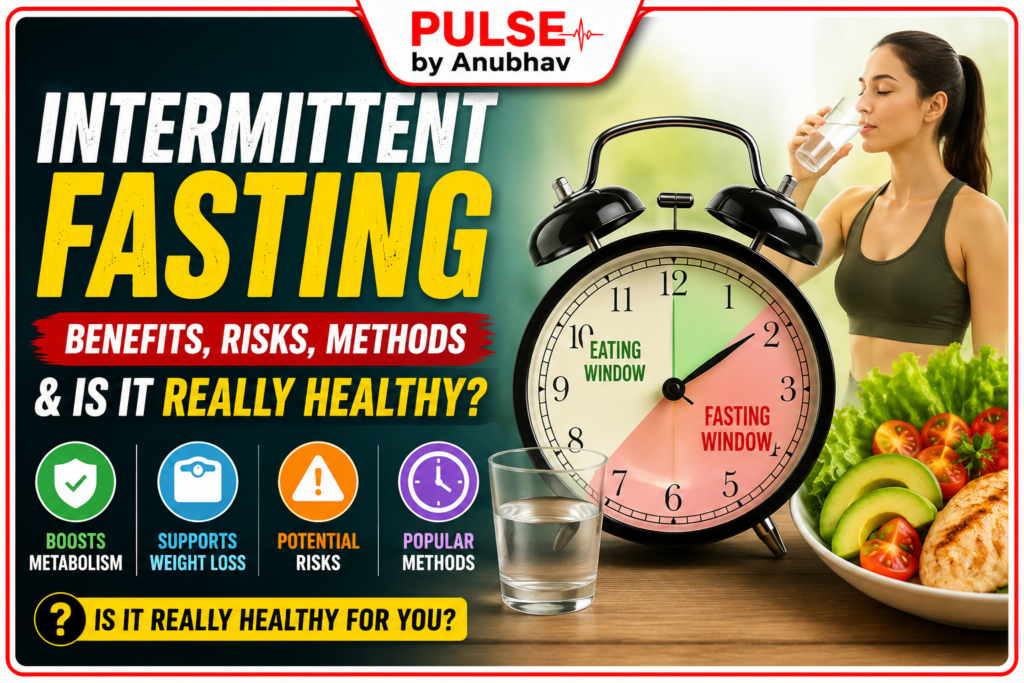
Intermittent Fasting is a popular eating pattern that alternates between fasting and eating periods. Methods such as 16:8, 14:10, and 5:2 are commonly followed for weight management and metabolic health. While potential benefits include easier calorie control and improved insulin sensitivity, fasting may also cause hunger, headaches, low energy, or nutrient deficiencies. Pulse by Anubhav explains its benefits, risks, schedules, and safety tips to help you understand fasting better.
Also Read- DENGUE: Symptoms, Treatment, Prevention & Complete Guide (2026)
Note: This entire blog content is for educational purposes only and is not medical advice.
Intermittent Fasting: Miracle Health Hack or Hidden Risk? 🤔🥗
Intermittent Fasting has become one of the world’s most popular eating patterns, especially among people looking to lose weight, manage calorie intake, and improve metabolic health. Instead of focusing only on what you eat, intermittent fasting mainly focuses on when you eat.
But is Intermittent Fasting actually healthy for everyone? While it may offer several potential benefits, fasting also comes with risks and side effects that should not be ignored. Here is a simple look at its benefits, risks, popular methods, and safety tips.
🤔 What Is Intermittent Fasting?
Intermittent Fasting (IF) is an eating pattern that alternates between periods of eating and fasting. Unlike a traditional diet, it does not necessarily prescribe specific foods. Instead, it limits eating to particular periods of the day or week.
The fasting duration can vary depending on the method you choose.
⏰ Popular Intermittent Fasting Methods
1️⃣ 16:8 Method
Fast for 16 hours and consume your meals within an 8-hour eating window.
2️⃣ 14:10 Method
Fast for 14 hours and eat within a 10-hour window. It is a gentler approach that may be easier for beginners.
3️⃣ 5:2 Diet
Eat normally for five days of the week and significantly reduce calorie intake on two non-consecutive days.
4️⃣ Alternate-Day Fasting
Alternate between regular eating days and days involving fasting or significantly reduced calorie intake.
5️⃣ OMAD (One Meal a Day)
OMAD involves consuming most or all of the day’s calories in a single meal. Because this is a more restrictive approach, professional guidance may be appropriate, particularly for people with medical conditions.
Also Read- Cervicitis Cervix: Symptoms, Causes, Treatment & Prevention Guide
🌟 Potential Benefits of Intermittent Fasting
Intermittent Fasting has been studied for its potential effects on weight management and metabolic health. However, results can vary from person to person.
⚖️ 1. May Support Weight Loss
Intermittent fasting may naturally reduce overall calorie intake by shortening the amount of time available for eating.
During fasting periods, the body can also increasingly rely on stored energy. However, sustainable weight loss still depends heavily on overall calorie intake, diet quality, activity levels, sleep, and other lifestyle factors.
🩸 2. May Improve Insulin Sensitivity
Some research suggests that intermittent fasting may help improve insulin sensitivity and support blood sugar management in certain people.
However, anyone with diabetes or taking blood sugar-lowering medication should consult a qualified healthcare professional before attempting fasting.
❤️ 3. May Support Heart Health
Intermittent fasting may have beneficial effects on certain cardiovascular risk factors, including blood pressure, triglycerides, and cholesterol in some individuals.
More research is needed to determine its long-term cardiovascular benefits.
🧬 4. May Influence Cellular Repair Processes
Fasting is associated with cellular processes such as autophagy, through which cells break down and recycle damaged components.
However, much of the research into fasting-induced autophagy has been conducted in animals or laboratory settings, and its implications in humans are still being studied.
🌿 5. May Affect Inflammation
Some studies suggest that fasting patterns may influence markers associated with inflammation.
However, intermittent fasting should not be considered a treatment for inflammatory or chronic diseases.
🧠 6. Potential Effects on Brain Health
Research is exploring whether intermittent fasting may influence brain function and long-term neurological health.
Although early findings are interesting, stronger human evidence is needed before firm conclusions can be made.
🍽️ 7. Longer Breaks Between Meals
Intermittent fasting naturally creates longer gaps between meals. Some people find this eating schedule comfortable, while others may experience digestive discomfort or hunger.
⏰ 8. Convenient Eating Pattern
For some people, Intermittent Fasting may feel simpler than continuously tracking calories or preparing multiple meals throughout the day.
The best eating pattern, however, is one that can be followed safely and consistently.
Also read- Infertility: Causes, Symptoms, Diagnosis, Treatment, Types & Prevention Guide
⚠️ Intermittent Fasting Risks & Side Effects
Intermittent Fasting is not completely risk-free, and side effects are more likely when fasting periods are too long or nutritional needs are not properly met.
❌ Hunger and Cravings
Increased hunger and food cravings are common, particularly when someone first begins fasting.
❌ Low Energy
Some people may experience tiredness, weakness, or reduced exercise performance while adapting to a new eating schedule.
❌ Headaches
Headaches may occur due to dehydration, changes in caffeine consumption, hunger, or inadequate calorie intake.
❌ Irritability and Mood Changes
Hunger and fluctuations in energy levels may temporarily affect mood, concentration, or productivity.
❌ Nutrient Deficiencies
Restricting eating time without planning balanced meals could result in inadequate intake of protein, fibre, vitamins, minerals, and other essential nutrients.
❌ Muscle Loss
Inadequate protein intake, excessive calorie restriction, and lack of resistance exercise may contribute to muscle loss.
❌ Digestive Problems
Eating a very large meal immediately after fasting may lead to bloating, indigestion, nausea, or stomach discomfort in some people.
❌ Sleep Disturbances
Hunger or eating large meals close to bedtime may interfere with sleep quality in certain individuals.
🚫 Who Should Avoid Intermittent Fasting?
Intermittent Fasting may not be appropriate for everyone. Extra caution is particularly important for:
❌ Pregnant or breastfeeding women
❌ Children and teenagers who are still growing
❌ People with a current or previous eating disorder
❌ Individuals who are underweight or malnourished
❌ People with certain chronic medical conditions
❌ People taking medicines that need to be consumed with food
❌ People using medications that can significantly affect blood sugar
Anyone with an existing medical condition or taking regular medication should discuss fasting with their healthcare provider before making major changes to their eating schedule.
Also Read- Galaxy F70 Pro 5G India Launch Teased: Samsung Confirms Flipkart Availability
💧 How to Follow Intermittent Fasting Safely
If Intermittent Fasting is appropriate for you, adopting it gradually may make the transition easier.
✅ Stay properly hydrated throughout the day.
✅ Eat balanced meals containing enough protein, fibre, healthy fats, fruits, vegetables, and whole grains.
✅ Avoid binge eating when your fasting period ends.
✅ Maintain regular physical activity and prioritise good-quality sleep.
✅ Consider beginning with a shorter overnight fasting period, such as 12–14 hours, rather than immediately attempting an extreme fasting schedule.
✅ Pay attention to how your body responds.
Persistent dizziness, fainting, severe weakness, confusion, or other concerning symptoms should not simply be ignored as a normal part of fasting.
🍎 Healthy Foods During the Eating Window
The quality of your diet remains important even when following Intermittent Fasting.
Some nutritious options include:
🥚 Eggs – a convenient source of protein and nutrients
🥜 Nuts and seeds – provide healthy fats, fibre, and minerals
🥗 Leafy green vegetables – rich in fibre and micronutrients
🍎 Fruits – provide vitamins, minerals, fibre, and antioxidants
🐟 Fish – provides protein and, depending on the type, omega-3 fatty acids
🍗 Lean chicken – a useful source of high-quality protein
🫘 Beans and lentils – provide plant-based protein and fibre
🥛 Milk or yoghurt – sources of protein, calcium, and other nutrients
🌾 Whole grains – provide complex carbohydrates and fibre
🥑 Healthy fats – including foods such as avocado, nuts, seeds, and olive oil
❌ Foods to Limit During Intermittent Fasting
Following a fasting schedule does not cancel out the effects of an unhealthy diet.
Try to limit excessive amounts of:
🍩 Sugary snacks
🍟 Deep-fried foods
🥤 Soft drinks and sugar-sweetened beverages
🍔 Ultra-processed foods
🍰 Sweets, cakes, and desserts
Occasionally enjoying these foods is different from making them the foundation of your eating window.
Why I Stopped Intermittent Fasting
People searching “Why I stopped intermittent fasting” often describe reasons such as persistent hunger, low energy, headaches, irritability, difficulty exercising, sleep disruption, or simply finding the fasting schedule difficult to maintain. Intermittent fasting can work for some people, but there is no need to continue if it negatively affects your health, nutrition, or daily routine.
Dangers of Intermittent Fasting
The potential dangers of intermittent fasting include dehydration, dizziness, headaches, fatigue, overeating after a fast, inadequate nutrient intake, and possible muscle loss when calorie or protein intake is too low. Fasting can also be risky for certain people with medical conditions or medications affected by food intake.
Common Intermittent Fasting Myths
❌ Myth: Intermittent Fasting Melts Fat Overnight
✅ Reality: There is no overnight shortcut to sustainable fat loss. Your overall calorie balance, food choices, activity levels, sleep, and consistency still matter.
❌ Myth: You Can Eat Anything During the Eating Window
✅ Reality: Intermittent fasting determines when you eat, but the nutritional quality and quantity of your food remain important.
❌ Myth: Everyone Should Try Intermittent Fasting
✅ Reality: There is no single eating pattern that works for everyone. Health conditions, medications, age, nutritional needs, lifestyle, and individual preferences should all be considered.
If you are new to intermittent fasting, terms such as the 16:8 method, fasting schedules, weight-loss plans, books and tracking apps can feel confusing. Here is what these popular intermittent fasting topics actually mean and how they fit into a healthy lifestyle.
Intermittent Fasting Meaning
Intermittent fasting is an eating pattern that separates the day or week into periods of eating and fasting. Instead of being a specific diet, it mainly focuses on when you eat. Food quality and overall nutrition still remain important.
Intermittent Fasting Benefits
Potential intermittent fasting benefits may include easier calorie control, weight management and improvements in some markers of metabolic health. Results vary between individuals, and fasting should not be treated as a cure or guaranteed shortcut to better health.
Intermittent Fasting Schedule
An intermittent fasting schedule determines when you eat and when you fast. Common approaches include 12:12, 14:10 and 16:8. Beginners may find a shorter overnight fast easier before considering longer fasting periods.
Intermittent Fasting 16:8
Intermittent fasting 16:8 involves fasting for approximately 16 hours and eating within an 8-hour window. For example, someone might eat between 11 AM and 7 PM and fast for the remaining hours. The timing can be adjusted according to lifestyle and individual needs.
Best Intermittent Fasting for Weight Loss
There is no single best intermittent fasting for weight loss plan for everyone. A sustainable schedule that helps control calorie intake while providing enough protein, fibre and essential nutrients is generally more practical than an extreme fasting routine.
Intermittent Fasting Book
An intermittent fasting book may help readers understand different fasting methods, meal timing and the theory behind fasting. However, books can vary significantly in quality. Health claims should be compared with reliable medical and nutrition evidence rather than accepted automatically.
Intermittent Fasting App
An intermittent fasting app is mainly a tracking tool that can record fasting and eating windows, send reminders and monitor progress. An app can make a routine easier to follow, but it cannot determine whether fasting is medically appropriate for you.
Intermittent Fasting Reddit Discussions
People often explore Intermittent Fasting Reddit discussions to read personal experiences, meal ideas and progress stories. These communities may provide practical perspectives, but individual experiences are not medical evidence and results experienced by one person may not apply to another.
⭐ Intermittent Fasting: Final Verdict
Intermittent Fasting can be a useful eating strategy for some people, particularly when it helps them maintain an appropriate calorie intake and follow a healthier eating routine. Research suggests it may offer benefits for weight management and certain markers of metabolic health, but it is not a miracle diet or guaranteed shortcut to better health.
What matters most is what happens during the eating window. Nutritious food, adequate protein, regular physical activity, proper hydration, sufficient sleep, and a sustainable lifestyle remain essential.
More restrictive fasting is not automatically more effective. The right approach is one that meets your nutritional requirements and can be maintained without negatively affecting your physical or mental well-being.
Pulse by Anubhav 💊 believes health trends should be understood through balanced information rather than hype. If you have diabetes, a chronic health condition, a history of disordered eating, or take regular medication, consult a qualified healthcare professional before starting Intermittent Fasting.
Also Read- Who Is Simran Behl? Playground Season 5 Star’s Age, Height, Family, Biography & Career
FAQs About Intermittent Fasting
Quick answers to common questions about intermittent fasting, weight loss, fasting schedules, the 16:8 method, food and safety.
1 thought on “Intermittent Fasting: Benefits, Risks, Methods & Is It Really Healthy?”