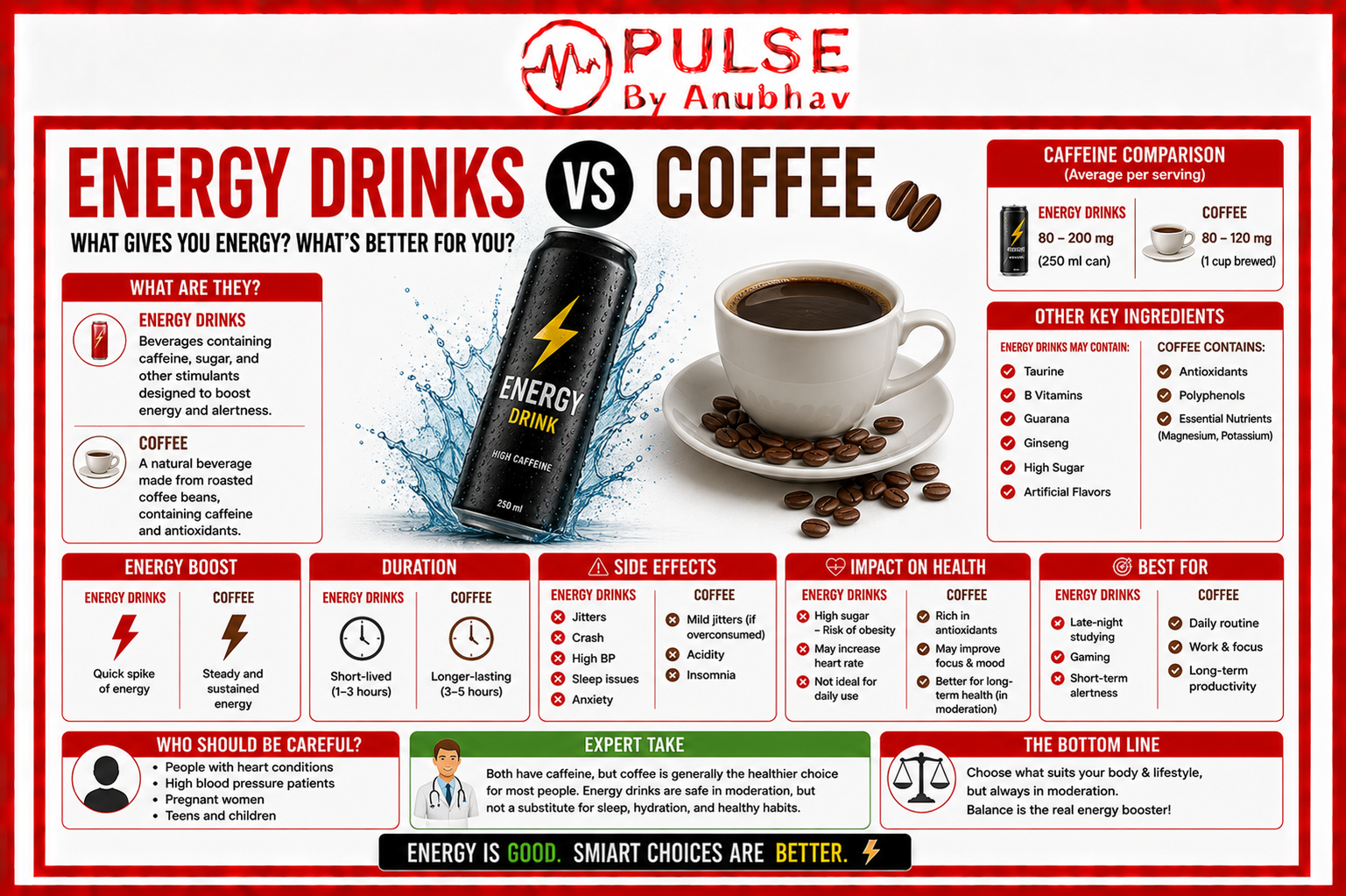
Energy Drinks vs Coffee: Discover which caffeine source is safer, how they affect heart health, sleep, energy, anxiety, and why excessive stimulant intake can become dangerous.
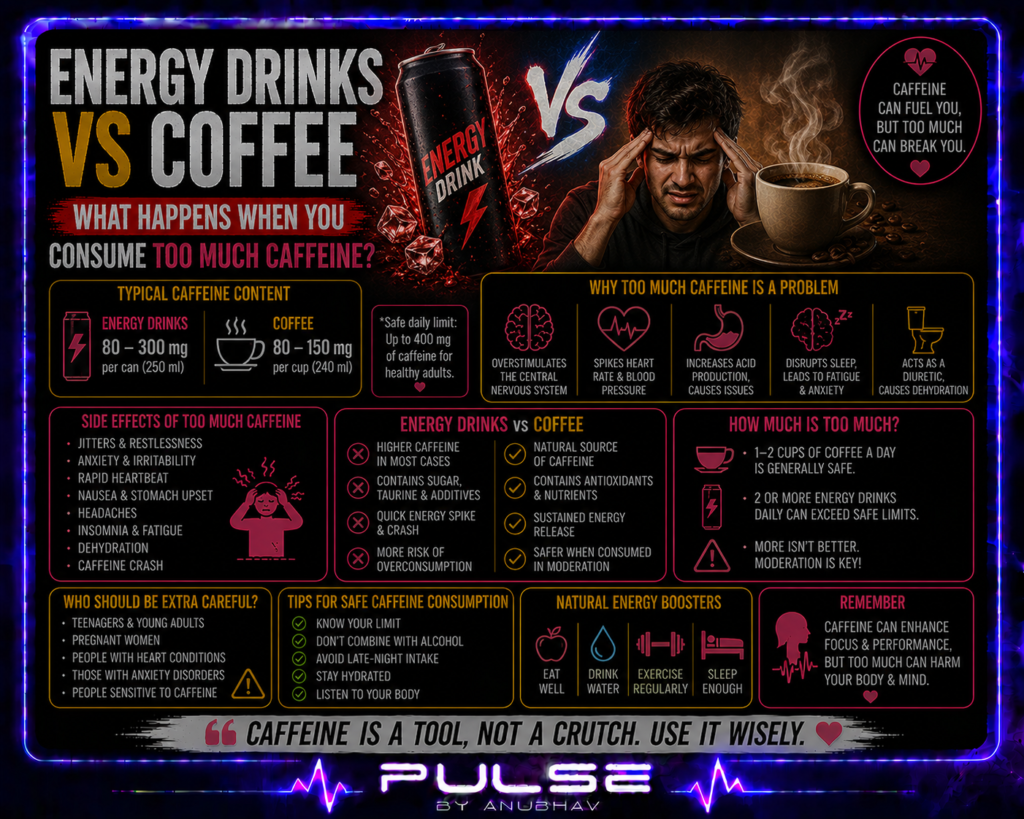
Energy Drinks vs Coffee is one of today’s biggest caffeine debates. While coffee contains natural caffeine and antioxidants, energy drinks often include high sugar, artificial stimulants, and excessive caffeine that may stress the heart and nervous system. Overconsumption can lead to anxiety, poor sleep, rapid heartbeat, and fatigue. Moderate intake is important, but long-term dependence on stimulants may negatively affect overall health and mental performance.
Note: This entire blog content is for educational purposes only and is not medical advice.
🥤 Energy Drinks vs Coffee ☕
📌 Introduction
From late-night studying to intense gym workouts and long office shifts, caffeine has become a major part of modern life. Millions of people depend on:
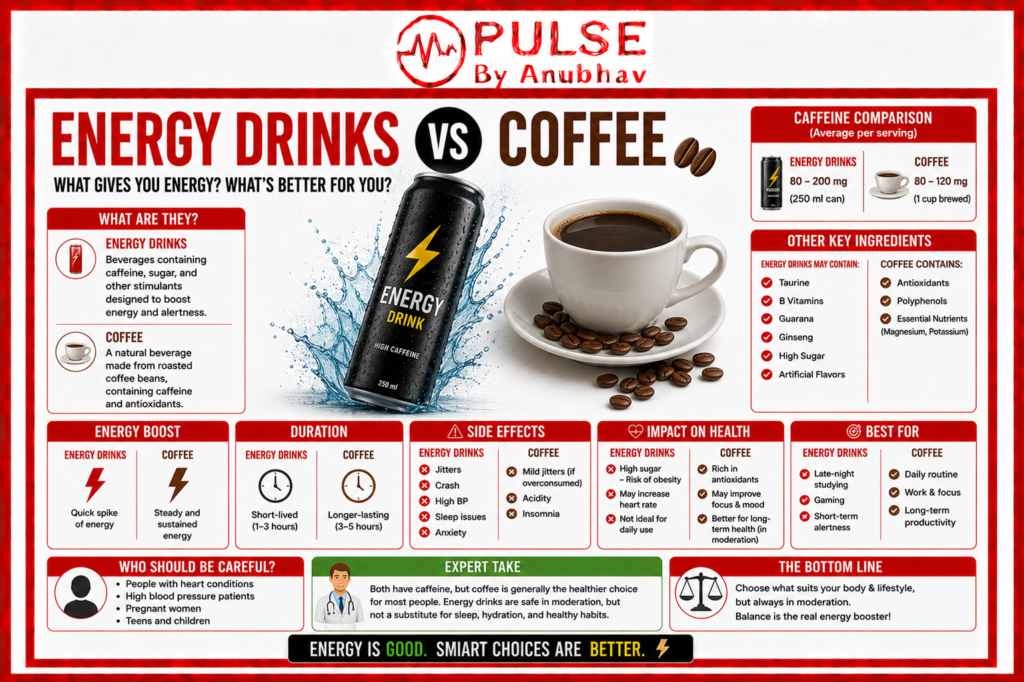
- ☕ Coffee
- 🥤 Energy drinks
- ⚡ Pre-workout supplements
- 🥤 Soft drinks
to stay awake, focused, and productive.
But while caffeine may temporarily improve alertness, excessive stimulant intake can seriously affect:
- ❤️ Heart health
- 🧠 Brain function
- 😴 Sleep quality
- ⚡ Stress hormones
- 🩸 Blood pressure
One of the biggest health debates today is:
🥤 Are Energy Drinks Worse Than Coffee?
The answer is more complex than most people think. In this detailed guide by Pulse by Anubhav, let’s understand how caffeine affects your body and what happens when you consume too much of it.
☕ What Is Coffee?
Coffee is a natural beverage made from roasted coffee beans. Its primary active ingredient is:
- ⚡ Caffeine
Coffee also contains beneficial compounds such as:
1️⃣ Antioxidants
2️⃣ Polyphenols
3️⃣ Plant-based compounds linked to potential health benefits
For many adults, moderate coffee consumption may help:
- ✔ Improve alertness
- ✔ Increase concentration
- ✔ Reduce temporary fatigue
- ✔ Support mental performance
Some research also suggests moderate coffee intake may support cardiovascular health in certain individuals.
🥤 What Are Energy Drinks?
Energy drinks are manufactured stimulant beverages designed to rapidly boost:
- ⚡ Energy
- ⚡ Mental focus
- ⚡ Alertness
- ⚡ Physical performance
Unlike regular coffee, many energy drinks contain:
- ⚠ Extremely high caffeine levels
- ⚠ Excess sugar
- ⚠ Artificial stimulants
- ⚠ Taurine
- ⚠ Guarana
- ⚠ Additives and flavoring agents
These products are heavily marketed toward:
- 📚 Students
- 🎮 Gamers
- 🏋 Gym-goers
- 💼 Night-shift workers
❤️ How Caffeine Affects the Heart
Caffeine stimulates the central nervous system. After consumption, the body releases stress hormones such as:
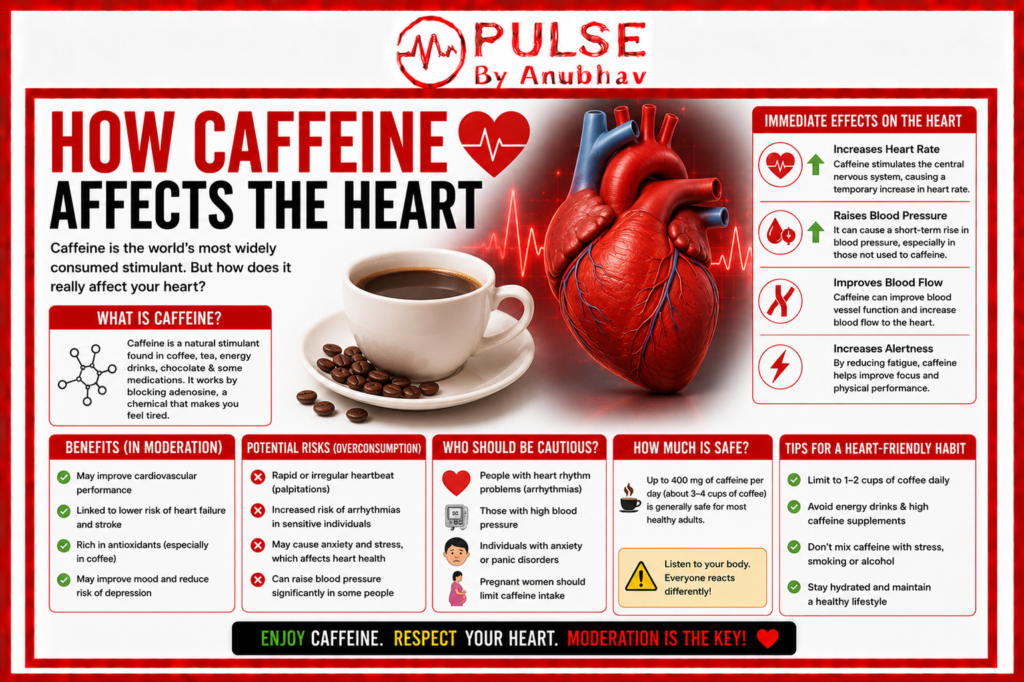
- Adrenaline
- Noradrenaline
This may temporarily:
- ⬆ Increase heart rate
- ⬆ Raise blood pressure
- ⬆ Improve alertness
- ⬆ Boost energy
In moderate amounts, many healthy adults tolerate caffeine well. However, excessive intake may overstimulate the cardiovascular system.
🚨 Why Energy Drinks Raise More Concern
Coffee mainly contains natural caffeine. But many energy drinks combine:
- ⚠ High caffeine
- ⚠ Massive sugar content
- ⚠ Multiple stimulants together
This combination may place greater stress on the heart and nervous system compared to regular coffee.
🫀 What Happens to Your Heart After Excess Energy Drinks?
⚠️ Rapid Heartbeat
The heart may beat faster than normal. Some people experience:
- Palpitations
- Pounding heartbeat
- Fluttering sensation in the chest
🩸 Increased Blood Pressure
High stimulant intake may temporarily raise blood pressure levels. Frequent overstimulation can strain the cardiovascular system over time.
😨 Anxiety & Panic Symptoms
Too much caffeine may overstimulate the brain and nervous system, leading to:
- Restlessness
- Nervousness
- Panic-like feelings
- Trembling
- Sweating
😴 Sleep Disruption
Energy drinks consumed late in the day may severely affect sleep quality. Poor sleep itself increases:
- ⚠ Stress hormones
- ⚠ Fatigue
- ⚠ Cravings
- ⚠ Mental exhaustion
This creates a dangerous cycle:
😴 Tiredness → 🥤 More caffeine → 😵 Worse sleep → ⚡ More exhaustion
☕ Is Coffee Safer Than Energy Drinks?
For most healthy adults:
✔ Moderate coffee intake is generally considered safer.
Why?
- ✔ Usually lower sugar
- ✔ Fewer artificial stimulants
- ✔ Contains antioxidants
- ✔ More predictable caffeine levels
However, excessive coffee intake can still cause:
- ⚠ Anxiety
- ⚠ Insomnia
- ⚠ Palpitations
- ⚠ Digestive discomfort
Too much of any stimulant may become harmful.
⚠️ The Hidden Danger: Mixing Multiple Caffeine Sources
Many people unknowingly combine:
- ☕ Coffee
- 🥤 Energy drinks
- 💊 Pre-workout supplements
- 🥤 Soft drinks
- 🍫 Chocolate
This may push caffeine intake dangerously high without realizing it.
🚨 Signs Your Body Is Reacting Badly to Excess Caffeine
Watch for these warning signs:
- ⚠ Fast heartbeat
- ⚠ Chest tightness
- ⚠ Shaking hands
- ⚠ Severe anxiety
- ⚠ Headaches
- ⚠ Difficulty sleeping
- ⚠ Dizziness
- ⚠ Constant restlessness
These symptoms may indicate stimulant overload.
Also Read- Weight Loss Explained: Science-Backed Fat Loss Tips for a Healthier Body | Pulse by Anubhav
🧠 Why Students & Young Adults Are Most Vulnerable
Students often consume large amounts of caffeine during:
- 📚 Exams
- 🌙 All-night studying
- 🎮 Gaming sessions
But chronic sleep deprivation combined with excessive stimulants may:
- Increase stress levels
- Reduce concentration
- Worsen anxiety
- Affect memory and focus
Many people mistake temporary stimulation for real energy.
🛌 Sleep Is More Powerful Than Stimulants
Caffeine may temporarily hide tiredness — but it cannot replace:
- ✔ Proper sleep
- ✔ Recovery
- ✔ Balanced nutrition
- ✔ Mental rest
Long-term sleep deprivation may negatively affect:
- 🧠 Brain function
- ❤️ Heart health
- ⚡ Energy levels
- 🩸 Hormonal balance
🛡️ How To Consume Caffeine More Safely
✅ Healthy Caffeine Tips
- ✔ Limit excessive energy drinks
- ✔ Stay hydrated
- ✔ Avoid caffeine late at night
- ✔ Read labels carefully
- ✔ Prioritize sleep over stimulants
- ✔ Avoid combining multiple caffeine products
Moderation always matters.
📊 How Much Caffeine Is Too Much?
Caffeine sensitivity varies between individuals. Factors include:
- Body weight
- Genetics
- Anxiety levels
- Sleep quality
- Existing heart conditions
Some people tolerate caffeine far better than others.
🥤 Energy Drinks vs Coffee ☕ Comparison
📌 Best Energy Drink Brands vs Coffee Brands
| Category | Top Brands |
|---|---|
| 🥤 Energy Drinks | Monster Energy, Red Bull, Sting, Prime Energy, Celsius |
| ☕ Coffee Brands | Starbucks, Nescafé, Davidoff, Blue Tokai, Bru Coffee |
⚡ 1. Red Bull vs Starbucks Coffee
🥤 Red Bull
- Price: ₹125–₹150
- Available: Supermarkets, gyms, online stores
- Popular Among: Gamers, students, night workers
- Strong Use In: USA, UK, Thailand
- Benefits: Fast energy boost, improved alertness
- Side Effects: High sugar, anxiety, rapid heartbeat
☕ Starbucks Coffee
- Price: ₹180–₹450
- Available: Starbucks outlets, delivery apps
- Popular Among: Office workers, students
- Strong Use In: USA, Canada, Europe
- Benefits: Antioxidants, better focus
- Side Effects: Insomnia if consumed excessively
🔥 2. Monster Energy vs Nescafé
🥤 Monster Energy
- Price: ₹140–₹170
- Popular Among: Gym-goers, gamers
- Benefits: High stimulation, workout energy
- Side Effects: High caffeine overload risk
- Popular Countries: USA, Mexico, Australia
☕ Nescafé
- Price: ₹10–₹450
- Popular Among: Families, office workers
- Benefits: Convenient, lower sugar
- Side Effects: Acidity in some people
- Popular Countries: India, Brazil, Germany
⚠️ 3. Sting vs Bru Coffee
🥤 Sting Energy
- Price: ₹20–₹25
- Popular Among: Teenagers, students
- Benefits: Cheap and instantly energizing
- Side Effects: Sugar crash, hyperactivity
- Popular Countries: India, Vietnam
☕ Bru Coffee
- Price: ₹2–₹300
- Popular Among: Indian households
- Benefits: Affordable daily caffeine source
- Side Effects: Sleep issues if overused
- Popular Countries: India
💥 4. Prime Energy vs Davidoff Coffee
🥤 Prime Energy
- Price: ₹300–₹600
- Popular Among: Influencer followers, teenagers
- Benefits: Trendy branding, strong caffeine hit
- Side Effects: Excess stimulant load
- Popular Countries: USA, UK
☕ Davidoff Coffee
- Price: ₹450–₹900
- Popular Among: Premium coffee lovers
- Benefits: Smooth flavor, lower additives
- Side Effects: Overconsumption may cause anxiety
- Popular Countries: Europe, India
⚡ 5. Celsius Energy vs Blue Tokai Coffee
🥤 Celsius Energy
- Price: ₹250–₹400
- Popular Among: Fitness enthusiasts
- Benefits: Sugar-free energy option
- Side Effects: Excess caffeine sensitivity
- Popular Countries: USA, Canada
☕ Blue Tokai Coffee
- Price: ₹200–₹700
- Popular Among: Young professionals
- Benefits: Fresh roasted coffee, rich antioxidants
- Side Effects: Excess intake may disturb sleep
- Popular Countries: India
🧠 Final Verdict
Both energy drinks and coffee contain caffeine, but energy drinks often include excessive sugar, artificial stimulants, and very high caffeine levels.
For most healthy adults, moderate coffee intake is generally considered safer compared to heavy energy drink consumption.
Too much of either can affect:
- ❤️ Heart health
- 😴 Sleep quality
- 🧠 Mental focus
- ⚡ Stress levels
The safest strategy is moderation, hydration, and proper sleep.
Also Read- Digitalis Explained: Uses, Mechanism of Action, Side Effects & Toxicity Symptoms | Pulse by Anubhav
💁🏻♀️ Final Takeaway
Both coffee and energy drinks contain caffeine — but energy drinks often combine extremely high caffeine, sugar, and stimulants that may place greater stress on the heart and nervous system.
The real danger is not always one cup of coffee.
It is chronic overstimulation, poor sleep, stress, and excessive dependence on stimulants.
Temporary energy should never come at the cost of long-term health.
Stay informed. Stay balanced. — Pulse by Anubhav
Also Read- Class 12 Physical Education Notes (Chapter Wise) – CBSE Guide
❓ Energy Drinks vs Coffee – FAQs
🥤 Are energy drinks worse than coffee for heart health?
In many cases, energy beverages may place more stress on the heart because they often contain extremely high caffeine, sugar, and artificial stimulants compared to regular coffee.
☕ Is coffee safer than caffeinated energy beverages?
Moderate coffee intake is generally considered safer for most healthy adults because it usually contains fewer additives and lower sugar levels than many stimulant drinks.
⚡ What happens if you consume too much caffeine daily?
Excess caffeine consumption may cause rapid heartbeat, anxiety, sleep problems, headaches, shakiness, increased blood pressure, and mental exhaustion over time.
🫀 Can energy beverages affect heart rate?
Yes, high stimulant intake from popular power drinks may temporarily increase heart rate and blood pressure, especially when consumed excessively.
😴 Do energy drinks affect sleep more than coffee?
Many stimulant beverages contain very high caffeine levels that may stay in the body longer, potentially causing severe sleep disruption and poor recovery.
📚 Why do students consume so many energy drinks?
Students often rely on caffeinated drinks during exams, gaming sessions, and late-night studying to stay awake and focused for longer hours.
🏋️ Are pre-workout drinks similar to energy drinks?
Many pre-workout supplements contain high stimulant levels similar to commercial energy beverages and may also affect sleep, anxiety, and heart health.
💧 How can you consume caffeine more safely?
To reduce health risks, limit excessive stimulant intake, stay hydrated, avoid combining multiple caffeine sources, and prioritize proper sleep.
🧠 Can too much caffeine increase anxiety?
Yes, excessive stimulant consumption may overstimulate the nervous system and trigger nervousness, panic-like symptoms, restlessness, and mood changes.
🌍 Which countries consume the most energy drinks and coffee?
Coffee consumption is very high in countries like Finland, Italy, and the USA, while energy beverage usage is rapidly growing in the USA, UK, India, and Thailand.
As soon as I discovered this internet site I went on reddit to share some of the love with them.