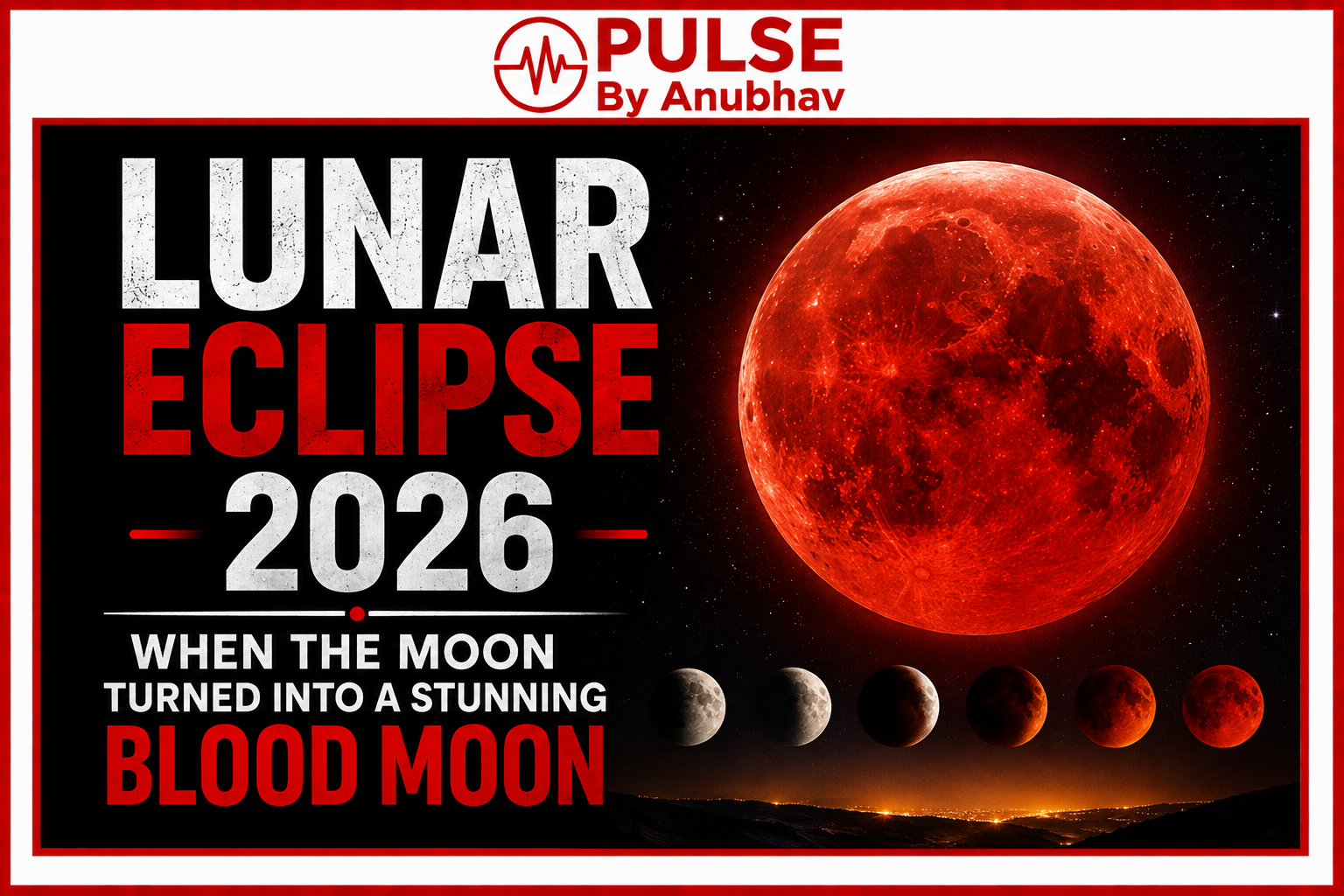
Lunar eclipse 2026 turned the Moon deep red, creating a stunning blood moon. Check the eclipse timing, visibility and best viewing tips.
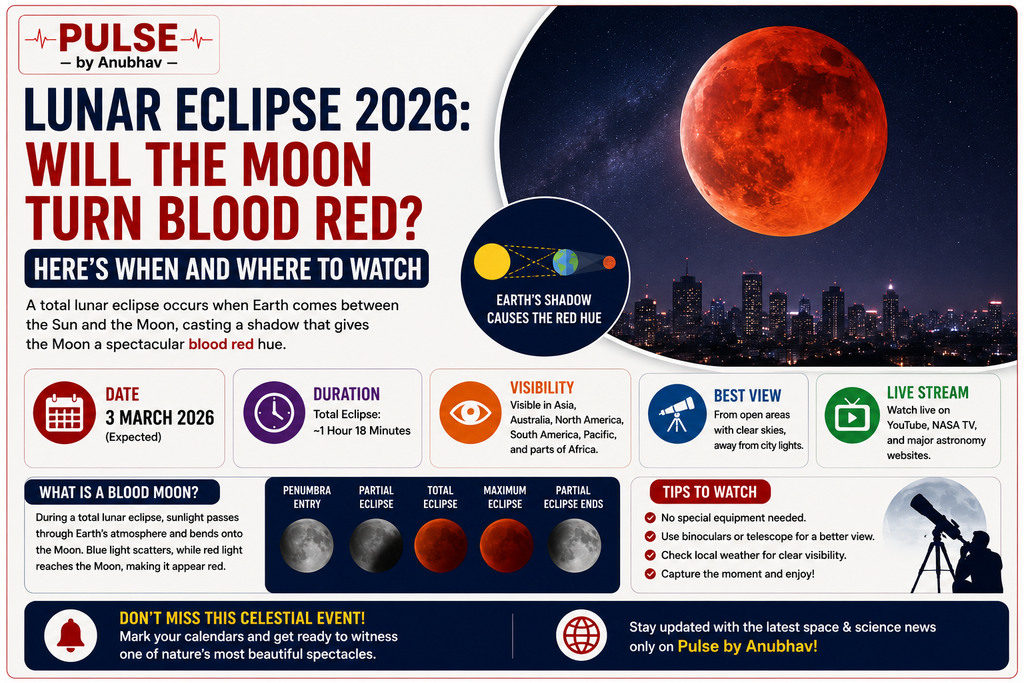
The August 27–28, 2026 lunar eclipse created a spectacular blood moon-like view as more than 96% of the Moon entered Earth’s darkest shadow. Although it was technically a deep partial lunar eclipse, the reddish-orange colour made it appear almost like a total eclipse. The event was widely visible across North and South America, while parts of Europe and Africa saw portions of the eclipse. Here’s everything to know about the timing, visibility and viewing tips.
Also Read- RRB NTPC UG Result 2026 Out: CBT 1 Merit List PDF, Scorecard & Zone-Wise Result (CEN 07/2025)
Lunar Eclipse 2026: When the Moon Turned Into a Stunning Blood Moon
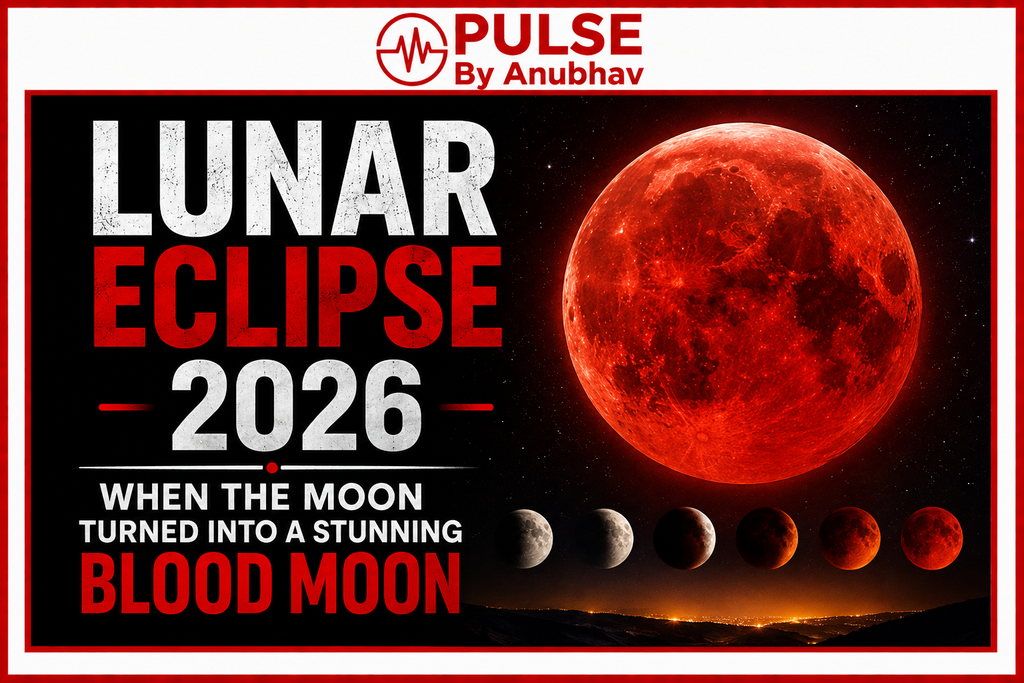
Skywatchers across North and South America had a spectacular reason to look up as a rare and deeply coloured lunar eclipse unfolded overnight. The August 27–28 celestial event was not a complete total lunar eclipse, but it came remarkably close, with more than 96% of the Moon moving into Earth’s darkest shadow.
At the peak of the event, the Moon developed a dramatic reddish-orange appearance, giving viewers the familiar blood moon effect. The eclipse was visible from several parts of the world, with some locations getting a much better view than others.
For astronomy lovers, photographers and casual skywatchers, it was one of those night-sky events that was difficult to miss.
What happened during the lunar eclipse?
A lunar eclipse occurs when Earth moves between the Sun and the Moon during a full Moon. As Earth blocks direct sunlight from reaching the lunar surface, its shadow gradually spreads across the Moon.
This particular event was classified as a deep partial lunar eclipse rather than a total eclipse. At maximum, roughly 96% of the Moon was covered by Earth’s central shadow, leaving only a small bright portion exposed.
That made the event look almost like a total eclipse from many locations.
Why did the Moon look red?
The reddish colour is one of the most fascinating parts of a blood moon.
When sunlight passes through Earth’s atmosphere, shorter blue wavelengths are scattered more easily, while red and orange wavelengths can travel through the atmosphere and reach the Moon.
That filtered light is then reflected back toward Earth, giving the eclipsed Moon its rusty, copper or deep-red appearance.
The exact colour can vary depending on atmospheric conditions, including dust, clouds and particles in the atmosphere. This is also why some lunar eclipses appear brighter red while others have a darker, almost brownish shade.
When did the eclipse reach its peak?
The lunar eclipse began at around 9:23 p.m. ET on Thursday, August 27, as the Moon entered the outer portion of Earth’s shadow.
The more noticeable partial phase followed at around 10:33 p.m. ET, when the dark shadow began covering a much larger section of the lunar surface.
Peak eclipse timing
The event reached its maximum at approximately 12:12–12:13 a.m. ET on August 28, when more than 96% of the Moon was inside Earth’s umbra.
The eclipse then gradually moved toward its conclusion, with the Moon leaving the outer shadow at around 3:01 a.m. ET.
Because the event lasted for several hours, skywatchers had plenty of time to observe the Moon changing shape and colour.
Where was the lunar eclipse visible?
The best views were available across large parts of North and South America.
Observers in eastern North America and much of South America had the opportunity to follow almost the entire eclipse. Parts of western North America could see the Moon rise while the eclipse was already underway.
Some regions of Europe and Africa could also witness portions of the event, although the Moon set before the complete eclipse sequence finished in many locations.
Weather conditions ultimately played an important role. Even from a location inside the viewing zone, clouds could easily hide the Moon.
Do you need special glasses to watch a lunar eclipse?
No. Unlike a solar eclipse, a lunar eclipse is safe to watch with the naked eye.
You do not need special eclipse glasses to look at the Moon during any stage of the event. Binoculars or a telescope can make the changing colours and shadow details easier to see, but they are completely optional.
For the best experience, skywatchers were advised to find an open location away from tall buildings, trees and excessive city lighting.
Also Read- Mohsin Khan Announces Engagement to Tamanna: Who Is His Fiancée? See Photos
How to get the best view of the blood moon
If you want to catch a future blood moon, a little preparation can make a big difference.
Pick a dark location
Move away from bright city lights whenever possible. A darker sky makes the Moon and its changing colours much easier to appreciate.
Check the weather
Cloud cover can ruin an otherwise perfect eclipse night, so checking the local forecast before heading outside is always worthwhile.
Keep the sky unobstructed
Choose a location with a wide view of the sky. An open field, rooftop or elevated area can offer a better perspective, depending on local conditions.
Try photographing it
A smartphone can capture the Moon, especially when using Night Mode or a longer exposure. A tripod or another stable surface can help prevent blurry images.
Those using a DSLR or mirrorless camera with a telephoto lens can capture much more detail in the lunar surface and the changing shadow.
Why was this eclipse special?
This wasn’t just another ordinary partial eclipse.
With more than 96% of the Moon entering Earth’s umbra, the event was one of the deepest partial lunar eclipses visible from Earth in years. For viewers, the small illuminated section combined with the reddish shadowed portion to create an appearance very similar to a total blood moon.
That near-total look is what made the event particularly interesting for both professional photographers and casual observers.
What comes next for lunar eclipse watchers?
The night-sky calendar still has plenty in store for astronomy enthusiasts. While future lunar eclipses may not always produce such a dramatic red appearance, each one offers a different viewing experience depending on the Moon’s position and the observer’s location.
For Pulse by Anubhav, these celestial events are a reminder that some of the most spectacular sights don’t require a ticket, a screen or a special venue — sometimes, all you need is a clear sky and a few minutes to look up.
FAQs About Blood Moon Total Lunar Eclipse
Lunar Eclipse FAQs
Everything you need to know about the lunar eclipse and blood moon.
What is a lunar eclipse?
A lunar eclipse happens when Earth moves between the Sun and the Moon, causing Earth’s shadow to fall across the Moon. Depending on how much of the Moon enters the shadow, the eclipse can be partial or total.
Why does the Moon turn red during a lunar eclipse?
The Moon can appear red or orange during a lunar eclipse because sunlight passes through Earth’s atmosphere before reaching the lunar surface. Red and orange wavelengths are able to pass through more easily, creating the famous blood moon effect.
Is every lunar eclipse a blood moon?
No. The term blood moon is generally used for a total lunar eclipse when the Moon takes on a noticeable reddish colour. A deep partial lunar eclipse can also make much of the Moon appear red, but it is not technically a total blood moon.
Is it safe to watch a lunar eclipse with naked eyes?
Yes. Unlike a solar eclipse, watching a lunar eclipse with your naked eyes is safe. Special eclipse glasses are not required. Binoculars or a telescope can be used if you want a closer view of the Moon.
Where can a lunar eclipse be seen?
A lunar eclipse can be seen from the nighttime side of Earth wherever the Moon is above the horizon. Visibility depends on the timing of the eclipse and the observer’s location.
How can I get the best view of a blood moon?
Choose a location with a clear and unobstructed view of the sky, preferably away from bright city lights. Check the local weather forecast beforehand, and use a tripod or Night Mode on your phone if you want to photograph the blood moon.
Can I photograph a lunar eclipse with my phone?
Yes. Modern smartphones can capture a lunar eclipse, especially when Night Mode, manual controls or a long-exposure setting is available. Keeping the phone steady can significantly improve the final image.
1 thought on “Lunar Eclipse 2026: Will the Moon Turn Blood Red? Here’s When and Where to Watch”