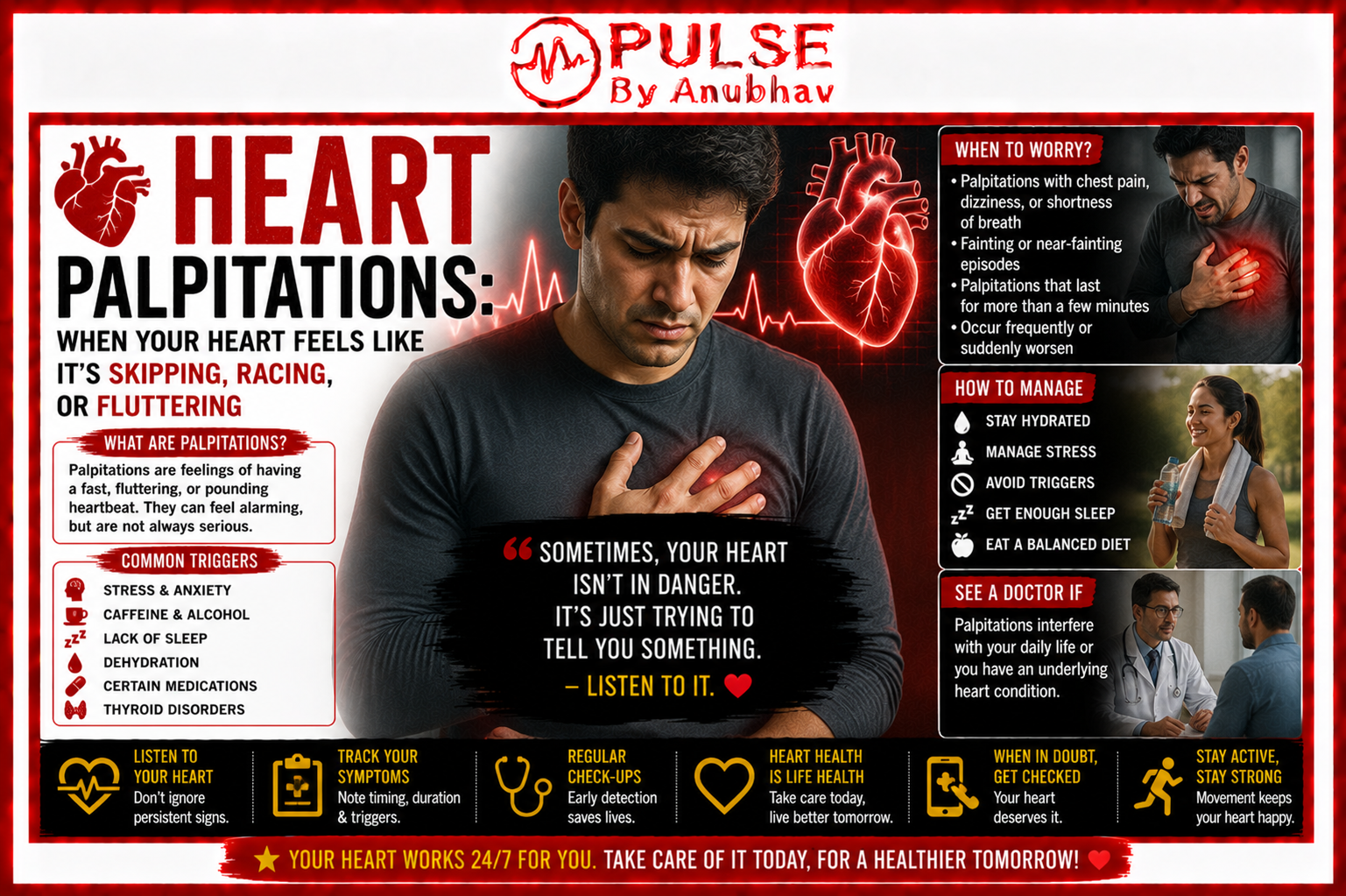
Heart Palpitations can feel scary, but they are not always serious. Learn the causes, symptoms, treatment options, medicines, and warning signs to know when to seek help.
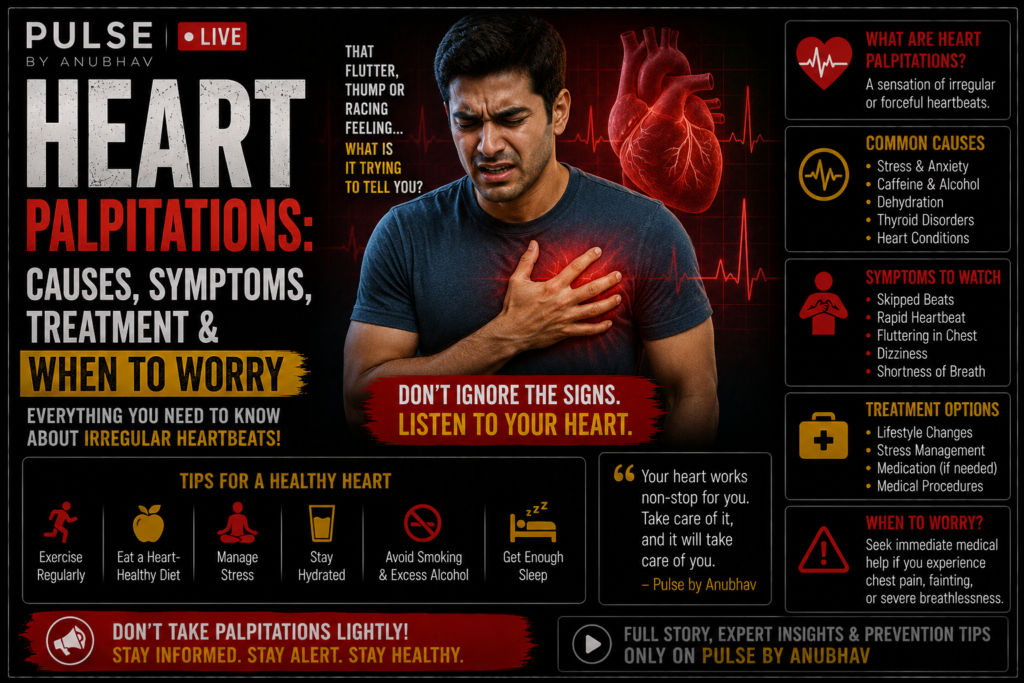
Heart Palpitations are the sensation of feeling your heart race, flutter, pound, or skip beats. They may happen due to stress, anxiety, dehydration, lack of sleep, excess caffeine, medications, thyroid imbalance, or underlying heart conditions. While occasional episodes are often harmless, frequent palpitations or symptoms like chest pain, dizziness, fainting, or shortness of breath should not be ignored. This guide by Pulse by Anubhav explains causes, diagnosis, treatment options, and when to seek medical care.
Also Read- Digitalis Explained: Uses, Mechanism of Action, Side Effects & Toxicity Symptoms | Pulse by Anubhav
Note: This entire blog content is for educational purposes only and is not medical advice.
❤️ Heart Palpitations: When Your Heart Feels Like It’s Skipping, Racing, or Fluttering
Have you ever been resting quietly and suddenly noticed your heart beating harder, faster, fluttering, or feeling like it skipped a beat? That strange sensation is known as Heart Palpitations. While it can feel worrying in the moment, it does not always mean something serious is happening.
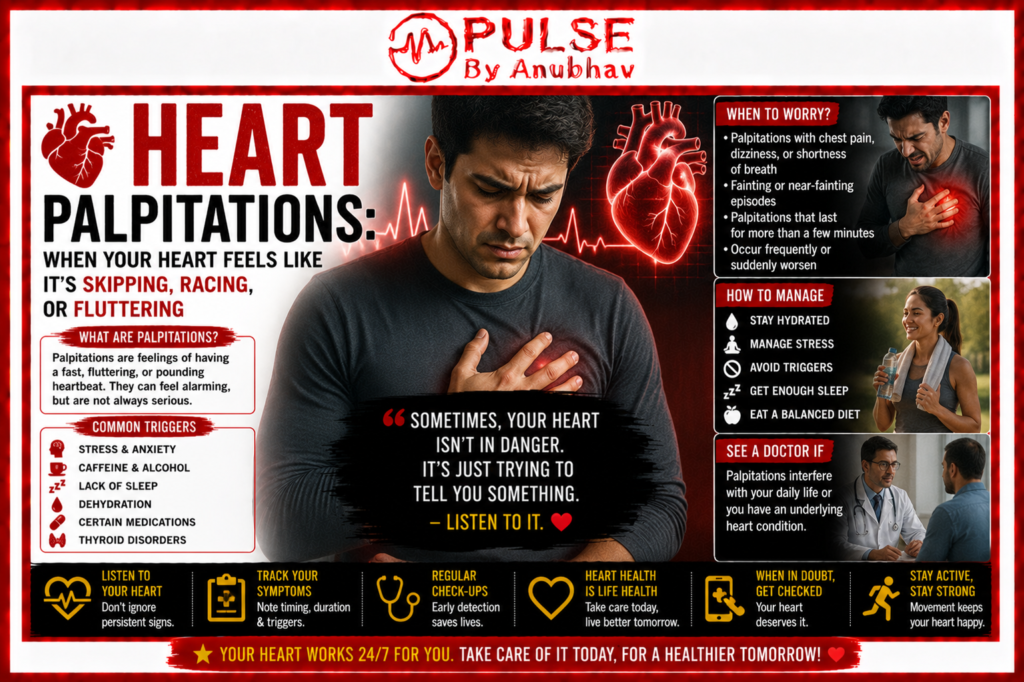
Heart palpitations are surprisingly common and can happen because of everyday factors like stress, dehydration, poor sleep, or too much caffeine. But in some situations, they may also signal an underlying condition that should not be ignored.
In this guide by Pulse by Anubhav, let’s understand what heart palpitations are, what causes them, how they’re diagnosed, and when it’s time to seek medical advice.
Understanding Heart Palpitations
💓 What Are Heart Palpitations?
Heart Palpitations describe the feeling that your heartbeat is different from normal. It may feel stronger, faster, irregular, or more noticeable than usual.
Common sensations include:
✔ Racing heartbeat
✔ Fluttering in the chest
✔ Skipped or extra beats
✔ Pounding in the chest, neck, or throat
✔ Sudden awareness of heartbeat
Episodes may last only a few seconds or continue for several minutes.
⚠️ Common Causes of Heart Palpitations
Heart palpitations can happen for multiple reasons. Some are temporary, while others may need medical attention.
☕ Too Much Caffeine
Coffee, tea, energy drinks, and stimulant-based supplements may temporarily increase heart activity.
😰 Stress and Anxiety
Stress hormones like adrenaline can make your heart beat faster and create fluttering sensations.
😴 Lack of Sleep
Poor sleep can affect hormone balance and increase the chances of experiencing palpitations.
💧 Dehydration
Low fluid intake may disturb electrolyte levels and affect normal heartbeat patterns.
💊 Certain Medications
Some medications can trigger palpitations, including cold medicines, asthma inhalers, thyroid medications, and weight-management products.
🦋 Thyroid Issues
An overactive thyroid may increase metabolism and lead to rapid heart sensations.
❤️ Heart-Related Conditions
Occasionally, Heart Palpitations may be linked with arrhythmias or other cardiovascular concerns.
🚨 Symptoms That Should Not Be Ignored
Occasional palpitations are often harmless, but additional symptoms deserve attention.
Watch for:
1️⃣ Dizziness
2️⃣ Lightheadedness
3️⃣ Chest pain
4️⃣ Shortness of breath
5️⃣ Unusual fatigue
6️⃣ Fainting or near-fainting
If these occur together with palpitations, medical evaluation is recommended.
🔍 How Heart Palpitations Are Diagnosed
Doctors may recommend tests to understand what is causing the symptoms.
ECG (Electrocardiogram)
Records the electrical activity of the heart.
Holter Monitor
Tracks heart rhythm over an extended period.
Blood Tests
Checks for thyroid imbalance, anemia, or electrolyte problems.
Echocardiogram
Uses imaging to assess heart structure and movement.
Stress Testing
Evaluates heart performance during physical activity.
Also read- Ebola Virus: The Deadly Disease That Shocked the World and How Scientists Fought Back
🌿 Natural Ways to Manage Heart Palpitations
Lifestyle habits can sometimes reduce the frequency of symptoms.
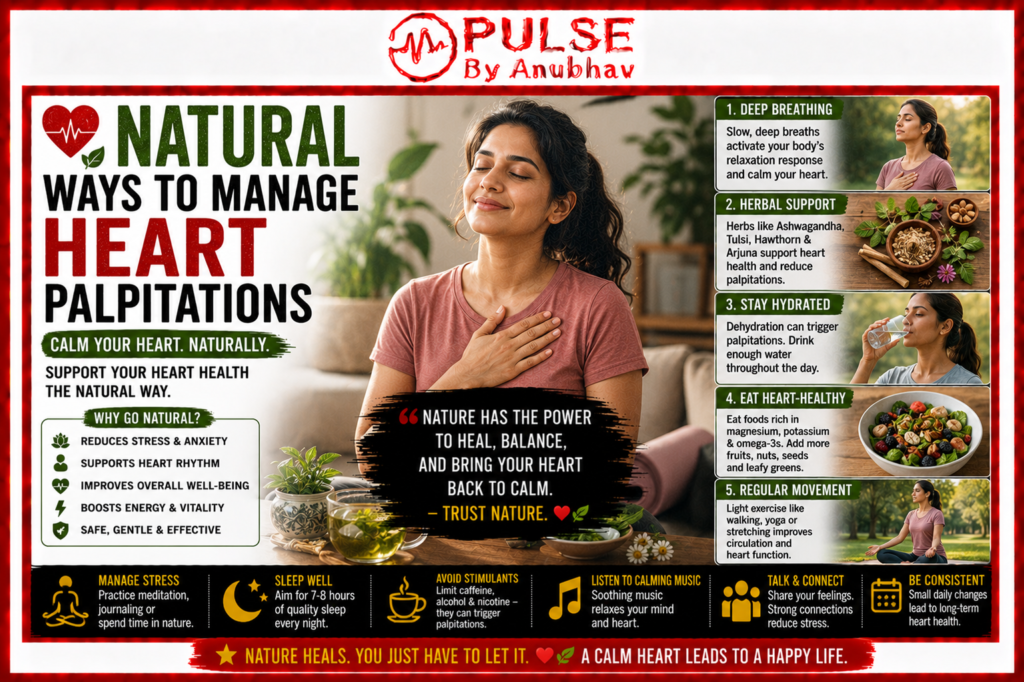
Stay Hydrated
Drink enough water throughout the day.
Improve Sleep Quality
Aim for consistent and restorative sleep.
Reduce Caffeine Intake
Cut back if stimulants appear to trigger episodes.
Manage Stress
Try breathing exercises, yoga, walking, or relaxation techniques.
Follow a Heart-Friendly Diet
Focus on foods rich in potassium, magnesium, fruits, vegetables, and whole grains.
💊 Best Medicines for Heart Palpitations (Depends on the Cause)
There is no single best medicine for Heart Palpitations. Doctors choose treatment based on the underlying cause after evaluation. Some people may not need medicine at all and improve with hydration, sleep, stress management, or reducing caffeine.
| Medicine (Example) | Composition | How It Works | Common Use | Approx Price (India)* |
|---|---|---|---|---|
| Metoprolol | Metoprolol Succinate / Metoprolol Tartrate | Beta-blocker that slows heart rate and reduces adrenaline effect. | Fast heartbeat, some rhythm-related conditions, blood pressure | Varies by brand and strength |
| Propranolol | Propranolol Hydrochloride | Helps reduce stress-related heartbeat sensations and slows heart response. | Anxiety-related symptoms, selected rhythm conditions | Varies by brand and strength |
| Diltiazem | Diltiazem Hydrochloride | Calcium channel blocker that may help regulate heartbeat. | Selected heart rhythm conditions | Varies by brand and strength |
| Verapamil | Verapamil Hydrochloride | Helps control electrical activity and heart rate. | Certain rhythm-related conditions | Varies by brand and strength |
| Amiodarone | Amiodarone Hydrochloride | Anti-arrhythmic medicine that helps stabilize abnormal rhythm. | Specific rhythm disorders only under medical supervision | Varies by brand and strength |
🛒 Where Can You Get These Medicines?
These medicines are usually available through licensed pharmacies and hospital pharmacies in India. Some may require a doctor’s prescription depending on local regulations and product category.
⚠️ Important Before Taking Any Medicine
- Do not start or stop heart medicines without medical advice.
- Heart palpitations can happen due to stress, dehydration, caffeine, thyroid issues, medications, or heart rhythm conditions.
- Getting the correct diagnosis matters more than choosing a medicine.
Pulse by Anubhav Note: This information is for educational purposes and is not a substitute for medical diagnosis or treatment.
🚑 When to Seek Immediate Medical Help
Seek urgent medical attention if Heart Palpitations happen with:
🔴 Chest pain
🔴 Severe shortness of breath
🔴 Fainting
🔴 Extreme dizziness
🔴 A rapid or irregular heartbeat that does not stop
💡 Final Thoughts
Heart Palpitations may feel uncomfortable or alarming, but many cases are linked to everyday lifestyle triggers rather than serious disease. However, recurring symptoms or warning signs should never be ignored.
Your heart never stops working for you—so listening to the signals it gives can make a real difference.
Stay informed, take care of your heart, and keep learning with Pulse by Anubhav.
Also read- Weight Loss Explained: Science-Backed Fat Loss Tips for a Healthier Body | Pulse by Anubhav
Frequently Asked Questions (FAQs)
1. What are Heart Palpitations?
Heart Palpitations are sensations where your heartbeat feels unusually fast, strong, fluttering, pounding, or like it is skipping beats. They may happen due to stress, caffeine, dehydration, poor sleep, medications, or heart-related conditions.
2. Are Heart Palpitations dangerous?
Not always. Occasional Heart Palpitations are often harmless and linked to lifestyle factors. However, frequent episodes or symptoms like chest pain, dizziness, fainting, or shortness of breath should be evaluated by a healthcare professional.
3. What is the best medicine for Heart Palpitations?
There is no single best medicine for Heart Palpitations because treatment depends on the cause. Doctors may recommend treatment only after identifying whether symptoms are related to stress, thyroid issues, dehydration, medications, or heart rhythm conditions.
4. Can stress and anxiety cause Heart Palpitations?
Yes. Stress and anxiety can trigger adrenaline release, which may make your heart beat faster and create sensations of racing or fluttering.
5. Can caffeine trigger Heart Palpitation?
Yes. Coffee, tea, energy drinks, and other stimulants may increase heart activity and trigger palpitations in some people.
6. How can I stop Heart Palpitationns naturally?
Staying hydrated, improving sleep quality, reducing caffeine, managing stress, and following a balanced diet may help reduce occasional Heart Palpitations.
7. When should I worry about Heart Palpitatiions?
Seek medical attention if Heart Palpitatiions occur with chest pain, severe dizziness, fainting, breathing difficulty, or a heartbeat that stays unusually fast or irregular.
8. Can dehydration cause Heart Palpitations?
Yes. Dehydration may affect electrolyte balance and can sometimes lead to noticeable heartbeat changes or palpitations.
3 thoughts on “Heart Palpitations: Causes, Symptoms, Treatment & When to Worry”