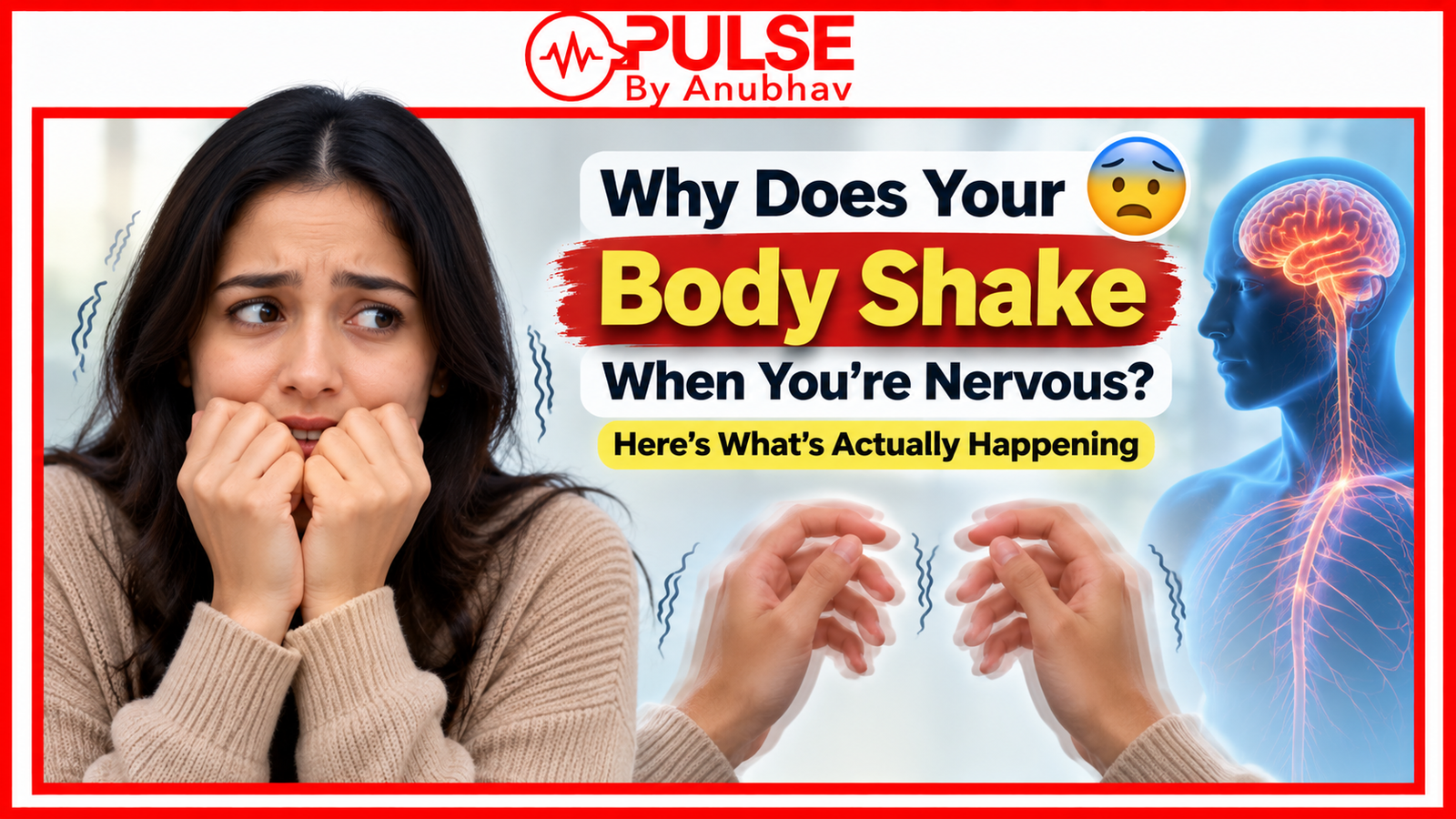
Why does your body shake when nervous? Learn how anxiety, stress, and a nervous tremor cause shaking and simple ways to feel calmer.
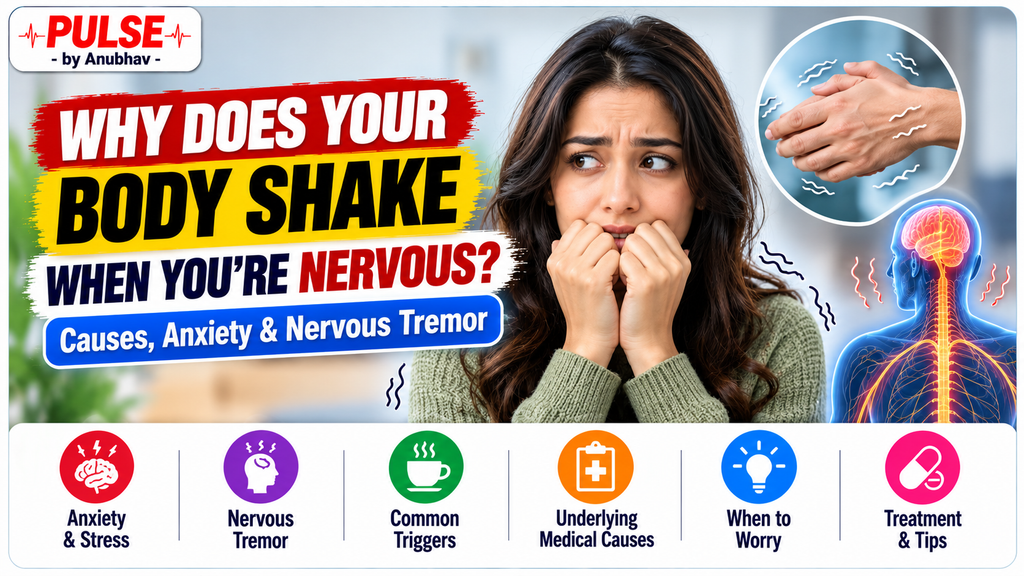
A body shake can happen when you’re nervous, stressed, scared, or anxious. The body’s fight-or-flight response can release adrenaline, increase muscle activity, and cause trembling in your hands, legs, or even your whole body. Caffeine, poor sleep, hunger, and some medicines can also contribute to shaking. Learn the common causes, simple ways to calm nervous shaking, and when persistent or unexplained tremors may need medical attention. Read more on Pulse by Anubhav.
Also Read- Eye Twitch: Why Does Your Eye Twitch? Causes, Triggers & When to Worry
😰 Why Does Your Body Shake When You’re Nervous? Here’s What’s Actually Happening
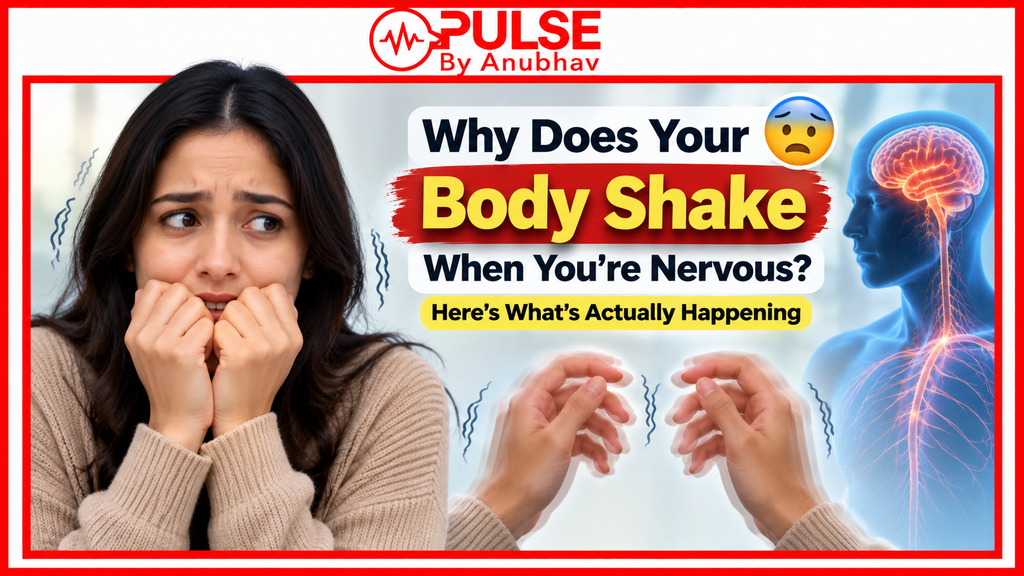
Have you ever noticed your hands trembling before an exam, your legs shaking during a presentation, or your whole body feeling shaky when you’re scared?
You’re definitely not alone.
A sudden body shake can feel strange and sometimes even frightening. But in many situations, it is simply your body’s natural response to stress, fear, or nervousness.
So, why does your body shake when you’re nervous? What is actually happening inside your body? And how can you tell the difference between a normal stress response and something that needs medical attention?
Let’s break it down. 👇
🧠 Why Does Your Body Shake When You’re Nervous?
When you feel nervous, frightened, or under intense stress, your brain can activate something called the fight-or-flight response.
Think of it as your body’s emergency preparation system.
Your brain basically sends a message:
🚨 “Something might be wrong. Get ready to react!”
This activates the sympathetic nervous system, which can trigger the release of stress hormones such as adrenaline (epinephrine).
That chain reaction can look like this:
Stressful situation
⬇️
Brain detects a possible threat
⬇️
Sympathetic nervous system activates
⬇️
Adrenaline is released
⬇️
Heart rate, breathing and muscle activity increase
⬇️
😰 Trembling or body shake
The interesting part?
Your body doesn’t necessarily need to be in physical danger.
An exam, job interview, public speaking, argument, important phone call, or even a frightening thought can trigger a similar stress response.
🤲 Why Do Your Hands Shake When You’re Nervous?
Your hands are often where a nervous tremor becomes most noticeable.
When adrenaline increases muscle readiness, the muscles involved in precise movements may begin to tremble.
You may notice:
- Shaky fingers
- Difficulty holding a pen
- Trembling while holding a glass
- Fingers feeling like they’re vibrating
- Difficulty performing precise movements
That’s why someone who feels perfectly fine normally may suddenly notice shaky hands before an exam, interview, presentation, or important conversation.
Also Read- LPU Protest Turns Violent in Phagwara: Students Climb MiG-23, Tank Amid Alleged Rape Case
🦵 Why Do Your Legs Shake When You’re Scared?
Your legs contain some of the body’s largest muscle groups.
When you’re frightened, your body prepares you to move quickly if necessary. Increased muscle tension and activation can therefore make your legs feel shaky or unstable.
You might experience:
Shaky knees → trembling thighs → wobbly legs
After the stressful situation ends, you may also feel tired or temporarily weak as your body returns to its normal state.
😨 Why Does My Whole Body Shake?
A stronger stress response can sometimes cause trembling throughout several parts of the body.
You may experience:
- 🫨 Shaky hands
- 🦵 Trembling legs
- 💓 Racing heartbeat
- 💦 Sweating
- 🫁 Faster breathing
- 🥶 Chills or cold sensations
- 😵 Light-headedness
Some people describe this as “internal shaking.” It can feel like your body is vibrating from the inside, even when the visible movement is very small.
🧠 Can Anxiety Make You Shake?
Yes, anxiety can cause shaking.
Anxiety can activate the body’s stress response even when there is no immediate physical danger.
A body shake or nervous tremor may appear during:
- Social situations
- Exams
- Public speaking
- Arguments
- Fearful thoughts
- Panic episodes
- Long periods of stress
Sometimes, the physical symptoms can even appear before you consciously realize that you’re feeling anxious.
This is one reason anxiety can feel so physical. It’s not simply “in your head” — the body’s stress response can produce very real physical sensations.
☕ Can Caffeine Make Body Shaking Worse?
If you’re already nervous, consuming a lot of caffeine may make shakiness more noticeable.
Coffee, energy drinks, tea, and other caffeinated products can contribute to:
- Jitteriness
- Restlessness
- Faster heartbeat
- Trembling
- Increased feelings of anxiety
If you regularly notice a body shake after caffeine, try reducing your intake and see whether the symptoms improve.
😴 Can Lack of Sleep Cause Shaking?
Poor sleep can make you feel tired, restless, and more sensitive to stress.
If you’re already nervous, several nights of inadequate sleep may make the physical symptoms of stress feel stronger.
This combination can sometimes make shakiness more noticeable:
😴 Poor sleep + ☕ excess caffeine + 😰 stress = 🫨 more shakiness
Getting enough sleep won’t necessarily prevent every episode, but good sleep can help your body handle everyday stress more effectively.
🍽️ Could Hunger Be Causing Your Body Shake?
Not every episode of shaking is caused by anxiety.
Going for a long time without eating can sometimes lead to low blood glucose, which may be accompanied by:
- Shaking
- Sweating
- Hunger
- Weakness
- Dizziness
- Fast heartbeat
So, if you repeatedly become shaky when you haven’t eaten, don’t automatically assume it’s anxiety.
If these episodes happen often, discussing them with a healthcare professional is a good idea.
💊 Can Medicines Cause Trembling?
Yes. Some medicines can cause or worsen tremor as a side effect.
Pay attention if your shaking started after:
- Starting a new medicine
- Increasing a dose
- Changing medicines
If you notice a new or worsening tremor after a medication change, speak with your doctor or pharmacist.
Don’t stop a prescribed medicine suddenly unless a healthcare professional tells you to do so.
🧠 Is a Nervous Tremor the Same as a Tremor?
Not necessarily.
Tremor is a general medical term used for involuntary, rhythmic shaking.
A temporary nervous tremor can happen during stress and may improve once you become calm.
However, persistent tremor can have many possible causes, including certain medicines, metabolic problems, and neurological conditions.
The timing, pattern, severity, and other symptoms can help a healthcare professional work out what may be causing it.
🟢 When Is Nervous Shaking Usually Less Concerning?
Temporary shaking is generally less concerning when:
- ✅ It occurs during a stressful situation
- ✅ There is an obvious trigger
- ✅ It improves as you calm down
- ✅ It happens only occasionally
- ✅ You don’t have other concerning symptoms
For example:
Before an exam → shaky hands → exam finishes → you relax → shaking stops
That pattern can fit a normal stress response.
🚨 When Should You See a Doctor?
Don’t automatically assume persistent or unexplained shaking is just anxiety.
Consider speaking with a healthcare professional if:
- Shaking happens frequently without an obvious trigger
- It continues even when you’re completely relaxed
- It is becoming progressively worse
- It interferes with writing, eating, working, or other daily activities
- It mainly affects one side of the body
- You develop weakness or numbness
- You develop balance or coordination problems
- You have persistent unexplained weight loss, sweating, or a racing heartbeat
- The shaking began after starting or changing a medicine
⚠️ Get Urgent Medical Help If…
Seek urgent medical attention if shaking occurs with symptoms such as:
- Sudden facial weakness
- Difficulty speaking
- Severe weakness
- Loss of consciousness
- Severe chest pain
- Severe difficulty breathing
- Sudden major problems with movement or coordination
These symptoms should not simply be blamed on anxiety.
🧘 How Can You Reduce Nervous Shaking?
You can’t always stop the body’s stress response immediately, but you can give your body a chance to settle down.
🌬️ 1. Slow Your Breathing
Take slow, comfortable breaths instead of rapidly breathing. Try to make your breathing gentle and controlled.
👐 2. Relax Your Muscles
Drop your shoulders and consciously relax your hands, jaw, and other tense muscles.
🪑 3. Sit Somewhere Safe
If your legs are trembling or you’re feeling light-headed, sit down until you feel more stable.
☕ 4. Reduce Excess Caffeine
If caffeine makes you jittery, consider cutting back, especially before situations that already make you nervous.
😴 5. Prioritize Sleep
A well-rested body may handle everyday stress better than a body that is constantly tired.
🍽️ 6. Eat Regularly
Avoid unnecessarily long gaps between meals if you notice that hunger makes you shaky.
🧘 7. Practice Relaxation
Gentle exercise, meditation, yoga, and other relaxation techniques may help you manage overall stress and anxiety.
Also Read- Anahat Singh Wins Historic Silver at Asian Games 2026: India’s Squash Star Makes History
🫨 Anxiety & Shaking: What Could Be Happening?
Feeling shaky, jittery or experiencing a nervous tremor can happen during anxiety and stressful situations. Here’s a simple way to understand it.
😰 Uncontrollable Shaking From Anxiety
Strong anxiety can activate your body’s fight-or-flight response. Adrenaline and increased muscle tension may make your hands, legs or even your whole body feel shaky.
⚡ How to Calm Shaking From Anxiety Quickly
You may not be able to switch off the stress response instantly, but you can give your body a chance to settle.
🤔 Why Do I Shake When I’m Nervous or Excited?
Nervousness and excitement can both activate the body’s stress response. That’s why you may notice similar physical sensations during very different situations.
😡 Why Do I Shake When I’m Angry?
Anger can also trigger a strong physical stress response. Your heart rate may increase, your muscles can become tense, and your body may start trembling.
🫨 Feeling Jittery and Anxious for No Obvious Reason?
Sometimes shakiness appears even when you can’t immediately identify what is making you anxious. Stress, poor sleep, caffeine and other factors can contribute to feeling jittery.
🎤 How to Reduce Shaking During Public Speaking
Public speaking can trigger a nervous tremor because your brain may interpret the situation as stressful. Preparing your body before you speak can help you feel more in control.
🌿 Can You Reduce Anxiety Shaking Naturally?
If anxiety is contributing to your shaking, healthy stress-management habits may help over time.
💊 What About Medication for Anxiety-Related Shaking?
Medication may be appropriate for some people with anxiety, but the right treatment depends on the underlying cause and the individual’s situation.
❤️ The Bottom Line
So, why does your body shake when you’re nervous?
In many cases, it’s because your brain has activated the fight-or-flight response.
Stress hormones such as adrenaline help prepare your body to respond quickly. As a result, your hands may tremble, your legs may shake, your heart may race, and you may sweat.
For many people, this type of shaking is temporary and settles once the stressful situation passes.
But persistent, worsening, or unexplained shaking shouldn’t automatically be blamed on anxiety.
Your body isn’t necessarily “going wrong.”
Sometimes, it’s simply responding to stress and telling you:
“I’m stressed. I need a moment to calm down.” ❤️
For more simple, easy-to-understand health explainers, keep reading Pulse by Anubhav.
FAQs About Why Does Your Body Shake?
❓ Frequently Asked Questions About Body Shake
Common questions about anxiety, nervous tremor and unexplained shaking.