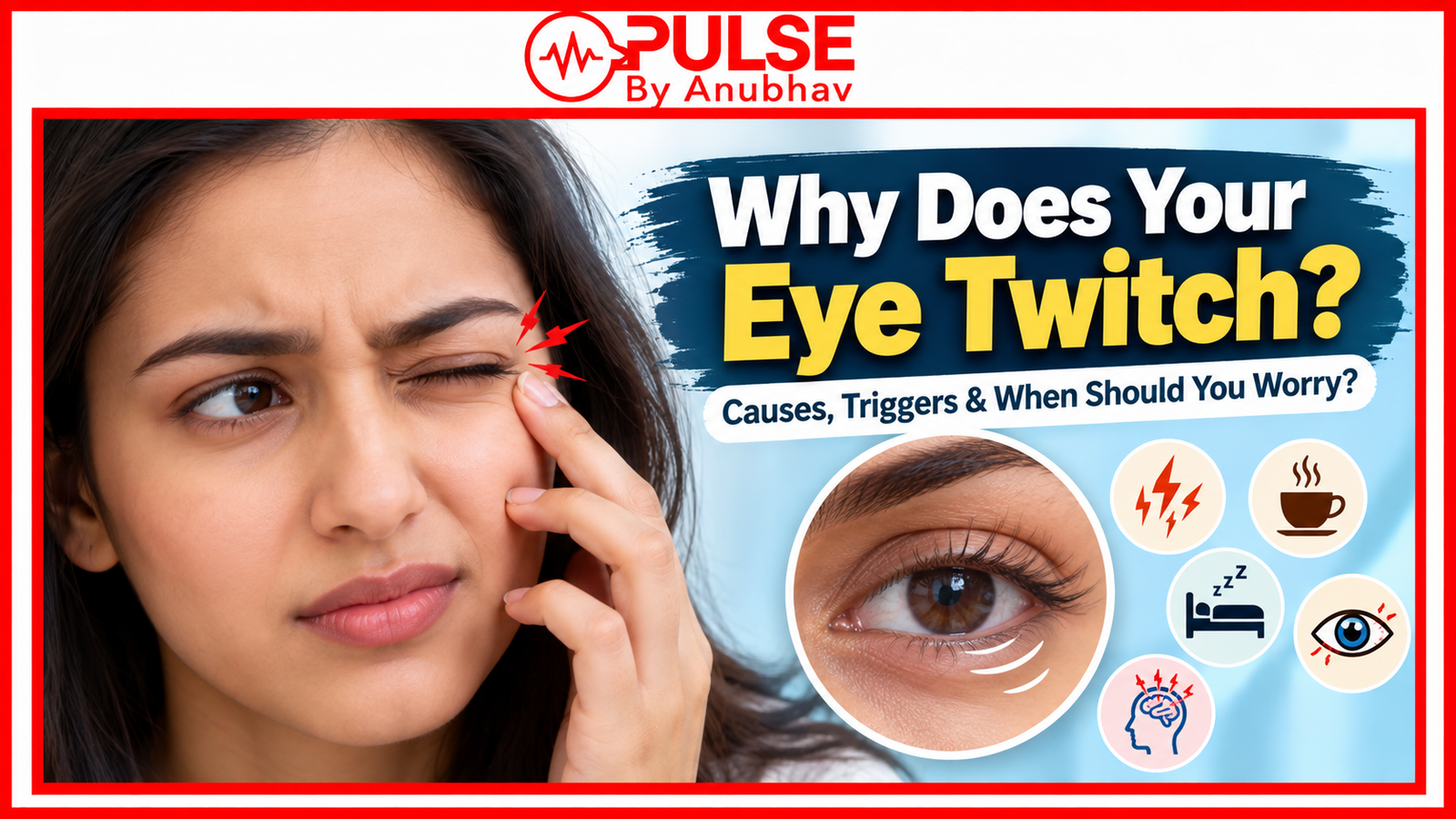
Eye Twitch explained: discover common causes, triggers, simple relief tips and warning signs that mean it may be time to see a doctor.
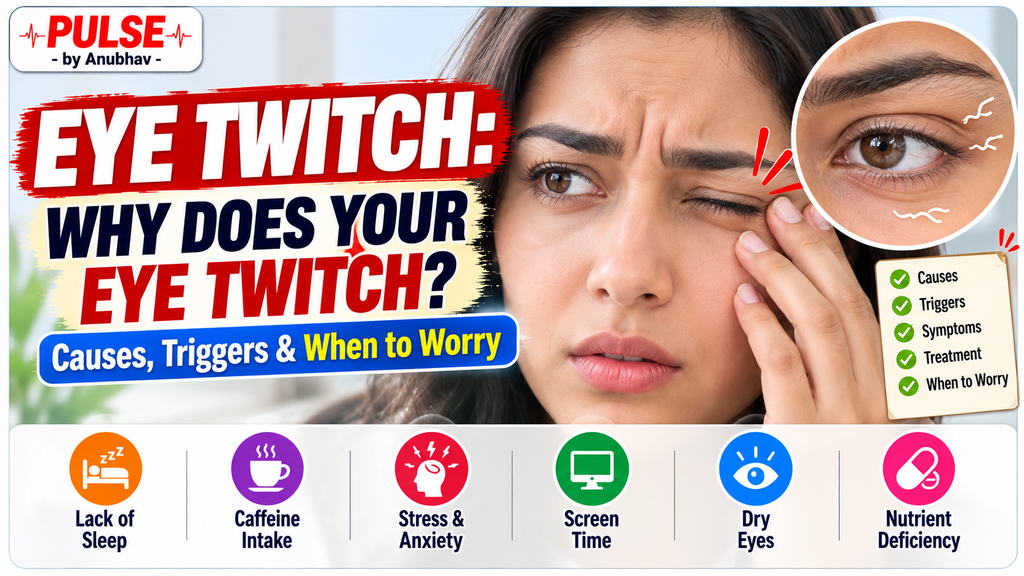
Why does your eye twitch? An Eye Twitch is often linked to everyday triggers like lack of sleep, stress, excess caffeine, screen time, dry eyes or irritation. Most occasional twitches are harmless and settle on their own. But persistent twitching, eyelid closure, facial movements, vision changes, pain or neurological symptoms may need medical attention. In this guide by Pulse by Anubhav, learn the common causes, myths, practical tips and warning signs to watch for.
Also Read- Anahat Singh Wins Historic Silver at Asian Games 2026: India’s Squash Star Makes History
👁️ Why Does Your Eye Twitch? Causes, Triggers & When Should You Worry?
Have you ever been sitting normally and suddenly felt your eyelid twitch, flutter or jump for a few seconds? 😳
An eye twitch can feel strange and sometimes annoying, especially when it happens repeatedly. But the good news is that occasional eyelid twitching is usually temporary and harmless.
In many cases, simple things like lack of sleep, stress, caffeine, screen time or eye irritation can trigger it. However, if the twitch continues for a long time, becomes severe or appears with other unusual symptoms, it may be worth speaking with a healthcare professional.
At Pulse by Anubhav, let’s understand why your eye may twitch, what can trigger it and when you should actually worry.
🔍 What Is an Eye Twitch?
An eye twitch is an involuntary contraction of the muscles around the eyelid. One common form is called eyelid myokymia.
You may notice it as:
- 👁️ A fluttering eyelid
- ⚡ A tiny muscle jumping around the eye
- 🔄 Repeated eyelid movements
- 💓 A small pulsing sensation
- 😵 A feeling that your eyelid is moving on its own
An eye twitch commonly affects one eye at a time. It may last for a few seconds or minutes and, in some cases, can continue intermittently for several days.
🧠 Why Does Your Eye Twitch?
There isn’t always one single reason behind eyelid twitching. Several everyday habits and conditions can make the muscles around your eye more likely to contract.
😴 1. Lack of Sleep
Not getting enough sleep is a common reason your eyelid may start twitching.
Late nights, an irregular sleep schedule or poor-quality sleep can leave your body tired and may make muscle twitching more noticeable.
What can help: Try maintaining a regular sleep routine and getting adequate rest each night.
☕ 2. Too Much Caffeine
Your morning coffee may not be the only thing keeping you awake.
Large amounts of caffeine from coffee, tea, energy drinks and other caffeinated beverages can sometimes contribute to muscle activity and may make an eye twitch more noticeable.
If your eyelid has recently started twitching, reducing excess caffeine for a few days may be worth trying.
😰 3. Stress and Anxiety
Feeling stressed can affect your body in several ways, and some people notice more eyelid twitching during stressful periods.
Work pressure, lack of relaxation, emotional stress or prolonged concentration may make the twitch feel more frequent.
Taking short breaks, practising relaxation techniques and getting enough sleep may help reduce these triggers.
📱 4. Too Much Screen Time
Spending hours continuously looking at a phone, laptop or computer can contribute to digital eye strain.
When concentrating on a screen, people often blink less. This can contribute to dry or tired eyes, which may make eyelid twitching more noticeable.
Try the 20-20-20 rule: Every 20 minutes, look at something around 20 feet away for at least 20 seconds.
👁️ 5. Dry or Irritated Eyes
Dryness and irritation can also make the eye uncomfortable.
Allergies, smoke, wind, prolonged screen use and environmental irritation may contribute to dry or irritated eyes.
You may notice:
- A gritty feeling
- Burning or irritation
- Increased watering
- Eye discomfort
- More frequent blinking
Managing the underlying irritation may help if it is contributing to the twitch.
💡 6. Bright Light and Eye Irritation
Very bright light or irritation around the eye can sometimes make eyelid movements more noticeable.
Try reducing excessive glare and avoid repeatedly rubbing your eyes, especially if they already feel irritated.
Also Read- LPU Protest Turns Violent in Phagwara: Students Climb MiG-23, Tank Amid Alleged Rape Case
🧂 Does an Eye Twitch Mean You Have a Vitamin or Mineral Deficiency?
You may have heard that an eye twitch automatically means you are deficient in magnesium, potassium or another vitamin or mineral.
That’s not necessarily true.
A simple eyelid twitch does not automatically indicate a nutritional deficiency. While nutritional problems can affect muscles and nerves, twitching alone isn’t enough to determine that you have a deficiency.
So, don’t start taking supplements just because your eyelid is twitching.
If you have other symptoms, dietary concerns or a medical reason to suspect a deficiency, a healthcare professional can help decide whether further evaluation or testing is appropriate.
👁️ Does Left Eye Twitching Mean Something Different From Right Eye Twitching?
A common question is whether left eye twitching and right eye twitching have different meanings.
Medically, the side of the eye that twitches does not reliably predict good luck, bad luck or future events.
You may have heard sayings such as:
“If your left eye is twitching, something bad will happen.”
That’s a superstition, not a medical diagnosis. 😄
Whether your left or right eyelid is twitching, the more useful thing is to look at possible triggers such as tiredness, stress, caffeine, dryness and eye strain.
🚨 When Should You See a Doctor?
Most occasional eye twitches are not serious and settle without specific treatment.
However, consider seeing a doctor or eye specialist if the twitch:
- Continues for a prolonged period
- Keeps returning frequently
- Causes your entire eyelid to close
- Spreads to other parts of your face
- Occurs with eye redness, swelling or significant pain
- Is accompanied by unusual eye discharge
- Occurs with changes in your vision
- Happens with eyelid drooping
- Appears alongside weakness or other neurological symptoms
These symptoms don’t necessarily mean something serious is happening, but they deserve proper medical evaluation rather than being ignored.
⚠️ When Is Eye Twitching an Emergency?
Seek urgent medical care if sudden eye or facial symptoms occur together with signs such as:
- Sudden facial weakness
- Difficulty speaking
- Sudden loss or major change in vision
- Severe headache
- Weakness or numbness in an arm or leg
- Other sudden neurological symptoms
These symptoms can have causes that require immediate medical attention.
🌿 How Can You Stop an Eye Twitch?
If your eye twitch is related to everyday triggers, a few simple lifestyle changes may help:
✅ Get Enough Sleep
Give your body and eyes enough time to recover, especially after several late nights.
☕ Reduce Excess Caffeine
If you consume a lot of coffee, tea or energy drinks, consider cutting back and see whether the twitch becomes less frequent.
📱 Take Screen Breaks
Avoid staring continuously at your phone or computer. Regular breaks can give your eyes some much-needed rest.
😌 Manage Stress
Relaxation, breathing exercises, physical activity and regular breaks from work may help when stress is a trigger.
💧 Stay Hydrated
Maintain adequate fluid intake throughout the day, especially in hot weather or when you’re physically active.
👁️ Don’t Rub Your Eyes
Repeated rubbing can increase irritation, particularly if your eyes are already dry or sensitive.
💤 Give Your Eyes Some Rest
If your eyes feel tired after a long day, reducing screen exposure and getting proper sleep may help.
Real-Life Example: The Late-Night Student
Imagine a student who spends several nights studying until 2–3 AM. After a few days of poor sleep, they suddenly notice their lower eyelid fluttering while attending class or using their phone.
Lack of sleep may be one of the everyday factors contributing to the eyelid twitch. Getting back to a consistent sleep schedule may help.
Real-Life Example: Too Much Coffee
Suppose someone normally drinks one cup of coffee but suddenly starts having three or four cups a day because of work pressure and late nights. A few days later, they notice frequent eyelid fluttering.
The increase in caffeine may be contributing to the twitching. Reducing excess caffeine and getting enough sleep may help.
Real-Life Example: Hours on the Phone
Imagine someone working on a laptop for eight hours and then spending another two hours scrolling through their phone at night. Their eyes start feeling tired and dry, followed by occasional eyelid twitching.
Taking regular screen breaks, blinking frequently and giving the eyes proper rest may reduce eye strain and discomfort.
Real-Life Example: Stressful Work Week
A person has an unusually stressful week at work, sleeps less than usual and spends long hours in front of a computer. By Friday, they notice their eyelid twitching several times throughout the day.
In this situation, several factors may overlap — stress, tiredness, prolonged screen use and reduced rest.
🚨 When an Eye Twitch Needs Medical Attention
Most occasional eyelid twitches are not serious. However, don’t simply ignore the symptom if it becomes persistent, severe or appears with other unusual symptoms.
- The twitch continues for a prolonged period.
- Your entire eyelid closes involuntarily.
- The movement spreads to other parts of your face.
- Your eye becomes significantly red, swollen or painful.
- You experience changes in vision.
- Your eyelid starts drooping.
- You develop weakness, numbness or other neurological symptoms.
⚠️ Don’t Ignore Sudden Neurological Symptoms
If eye or facial symptoms suddenly occur together with facial weakness, difficulty speaking, sudden vision loss, severe headache or weakness or numbness in an arm or leg, seek urgent medical care.
💡 The Bottom Line
An eye twitch can definitely be annoying, but occasional eyelid twitching is usually temporary and often linked to everyday factors such as sleep deprivation, stress, caffeine, screen use or eye irritation.
It doesn’t automatically mean that you have a vitamin deficiency, and left-eye or right-eye twitching does not medically predict future events.
However, if the twitch becomes persistent, severe, spreads to other facial muscles or occurs with vision problems, weakness, pain or other unusual symptoms, it’s better to get it checked by a healthcare professional.
So the next time your eyelid starts doing its little dance, don’t panic. 👁️💤
Sometimes, your body may simply be asking for better sleep, less stress and a little break from the screen.
Pulse by Anubhav — simple health information, explained clearly.
Also Read- Saridon Tablets: Uses for Headache & Pain, Dosage, Side Effects and Precautions | Pulse by Anubhav
FAQs About Eye Twitch
👁️ Eye Twitch – Frequently Asked Questions
Quick answers to common questions about eyelid twitching.
What is an eye twitch?
An eye twitch is an involuntary movement or contraction of the muscles around the eyelid. It is commonly called eyelid myokymia and is often temporary.
Why does my eye keep twitching?
An eye twitch can be triggered by several everyday factors, including lack of sleep, stress, excess caffeine, prolonged screen use, dry eyes and eye irritation. Sometimes no specific trigger can be identified.
Is an eye twitch usually serious?
Most occasional eye twitches are harmless and settle on their own. However, persistent or severe twitching, especially when accompanied by other symptoms, should be evaluated by a healthcare professional.
Can stress cause an eye twitch?
Yes. Stress is a common factor associated with eyelid twitching. Getting enough rest, taking breaks and using relaxation techniques may help if stress is contributing to the twitch.
Can lack of sleep cause eye twitching?
Lack of sleep may make eyelid twitching more likely or noticeable. Maintaining a regular sleep schedule and getting adequate rest may help reduce this common trigger.
Can too much caffeine cause an eye twitch?
Excess caffeine may contribute to or worsen eyelid twitching in some people. If your twitching started after increasing coffee, tea or energy drink consumption, reducing excess caffeine may be helpful.
Does screen time cause eye twitching?
Prolonged screen use can contribute to eye strain and dryness, which may make an eye twitch more noticeable. Taking regular screen breaks and following the 20-20-20 rule can help reduce eye strain.
Does left eye twitching have a different meaning?
There is no reliable medical evidence that left-eye twitching predicts good or bad events. The idea that left or right eye twitching has a special meaning is generally based on superstition rather than medical evidence.
Does an eye twitch mean I have a vitamin deficiency?
Not necessarily. A simple eye twitch does not automatically mean you have a magnesium, potassium or vitamin deficiency. Supplements should not be started solely because of an eyelid twitch without an appropriate medical reason.
When should I see a doctor for an eye twitch?
Consider seeing a doctor if the twitch persists for a prolonged period, keeps returning, causes the entire eyelid to close, spreads to other facial muscles, or occurs with pain, swelling, vision changes, eyelid drooping or other unusual symptoms.
How can I stop an eye twitch naturally?
Getting enough sleep, reducing excess caffeine, taking regular screen breaks, managing stress, avoiding eye rubbing and addressing dry-eye irritation may help. Most simple eyelid twitches improve with time.
1 thought on “Eye Twitch: Why Does Your Eye Twitch? Causes, Triggers & When to Worry”