Understand why your period comes early or late, common causes of irregular periods, mood swings, normal menstrual cycles and when to see a doctor.
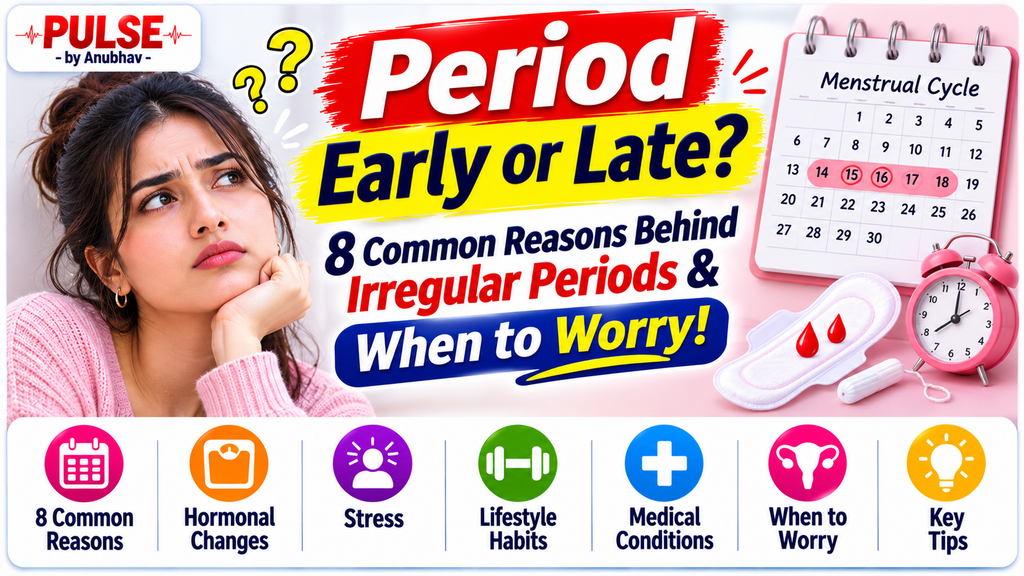
Why does your period sometimes come early or late? An irregular menstrual cycle can happen due to stress, weight changes, excessive exercise, poor sleep, hormonal fluctuations, PCOS, thyroid problems or pregnancy. Small changes in your period timing are often normal, but repeated irregularities may need medical attention. Learn about normal menstrual cycles, common causes of delayed periods, mood swings, warning signs and when to consult a gynaecologist. Stay informed with Pulse by Anubhav and understand your menstrual health better.
🌸 Why Is My Period Sometimes Early or Late? Causes, Normal Cycles & When to See a Doctor
Is your Period sometimes early, sometimes late, or completely unpredictable? One month it arrives on time, the next month it gets delayed, and sometimes it surprises you earlier than expected. 😩🌸
If this happens to you, don’t panic! You’re not alone.
Your menstrual cycle is influenced by several factors, including hormones, stress, sleep, body weight, exercise and overall health. Small changes in your cycle can be completely normal. However, repeated irregular periods may sometimes indicate an underlying health condition that needs attention.
So, why does your Period come early or get delayed? Is it normal, or is your body trying to tell you something?
Let’s understand the possible reasons, normal cycle patterns and warning signs you should never ignore. 👇
🩸 What Is a Normal Menstrual Cycle?
The menstrual cycle is the natural process your body goes through each month to prepare for a possible pregnancy. It is controlled by reproductive hormones, mainly oestrogen and progesterone.
A Menstrual Cycle is counted from the first day of one period to the first day of your next period.
For most adults, a normal menstrual cycle generally lasts around 21–35 days. During adolescence, cycles can be more variable and may take time to become regular.
Here are some common patterns:
- Cycle length: Usually 21–35 days in adults.
- Period duration: Commonly around 2–7 days.
- Bleeding: Can range from light to heavy during different days.
- Cycle variation: Your period may arrive a few days earlier or later than expected.
For example:
If your period starts on 1 October and your next period begins on 28 October, your cycle length is 27 days.
The important thing is to understand your overall cycle pattern instead of expecting your period to arrive on exactly the same date every month.
😰 1. Stress Can Delay Your Period
Have you ever noticed that your period gets delayed during exams, relationship problems, work pressure or emotionally difficult situations?
Well, stress can affect your menstrual cycle.
When you’re under significant stress, your body releases stress hormones such as cortisol. These changes can interfere with the hormonal signals responsible for ovulation.
If ovulation gets delayed, your next period may also arrive later than expected.
Stress may contribute to:
- Delayed periods
- Earlier or unpredictable periods
- Changes in menstrual flow
- Occasionally missed periods
Stress → Hormonal changes → Delayed ovulation → Delayed Period
So, if you’ve been dealing with excessive stress recently, it could be one possible reason behind your irregular cycle.
⚖️ 2. Sudden Weight Loss or Weight Gain
Your body needs sufficient energy and proper nutrition to maintain normal reproductive hormone function.
Significant weight changes, crash dieting or inadequate calorie intake can disturb the hormonal balance involved in ovulation.
This may lead to:
- Irregular periods
- Delayed menstruation
- Missed periods
- Changes in menstrual bleeding
Rapid weight loss and restrictive eating can be particularly important factors.
If your periods become irregular after a major change in body weight, don’t ignore it. Maintaining a balanced diet and discussing the changes with a healthcare professional can help identify the underlying reason.
🏃♀️ 3. Too Much Exercise Can Affect Your Menstrual Cycle
Regular physical activity is excellent for your overall health. ❤️
However, excessive exercise combined with insufficient food intake can sometimes affect the hormones responsible for menstruation.
This can happen in people who:
- Exercise intensely every day.
- Follow very restrictive diets.
- Participate in demanding sports training.
- Do not allow enough time for recovery.
When your body doesn’t receive enough energy to support its daily functions, reproductive hormone activity may be affected.
This condition can sometimes be associated with functional hypothalamic amenorrhea, which may cause periods to become irregular or stop temporarily.
😴 4. Poor Sleep and Changes in Daily Routine
Your sleeping habits can influence your overall hormonal and metabolic health.
Late-night studying, night shifts, frequent travelling, irregular sleeping schedules and major lifestyle changes may affect your body’s internal biological clock.
Sleep disturbances can also contribute indirectly to changes in reproductive hormone regulation.
You may notice menstrual changes when:
- You regularly sleep very late.
- Your work shifts suddenly change.
- You experience frequent sleep deprivation.
- You travel across different time zones.
- Your daily routine becomes unpredictable.
Poor sleep doesn’t automatically mean your period will become irregular, but maintaining a consistent sleep schedule can support overall health.
🩺 5. PCOS Can Cause Irregular Periods
Polycystic Ovary Syndrome (PCOS) is one of the important hormonal conditions associated with irregular menstrual cycles.
It can interfere with normal ovulation, making periods less frequent, delayed or unpredictable.
Some common features associated with PCOS include:
- Irregular or missed periods
- Acne and oily skin
- Increased facial or body hair
- Weight gain or difficulty managing weight in some individuals
- Hair thinning on the scalp
- Difficulty with ovulation
Not everyone with PCOS experiences the same symptoms.
Also, having one delayed period doesn’t mean you have PCOS.
However, if your menstrual cycle is repeatedly irregular, especially when accompanied by other symptoms, consult a gynaecologist for proper evaluation.
🦋 6. Thyroid Problems Can Affect Your Period
Your thyroid gland produces hormones that regulate several important body functions, including metabolism.
When thyroid hormone levels become too high or too low, they can sometimes interfere with menstrual cycle regulation.
Both hypothyroidism (underactive thyroid) and hyperthyroidism (overactive thyroid) may cause menstrual changes.
Underactive thyroid (Hypothyroidism):
- Persistent tiredness
- Feeling unusually cold
- Weight gain
- Dry skin
- Constipation
Overactive thyroid (Hyperthyroidism):
- Fast heartbeat
- Feeling unusually hot
- Unexplained weight loss
- Anxiety or restlessness
- Increased sweating
These symptoms alone cannot confirm a thyroid problem. Blood tests, including thyroid function tests, may be recommended by a healthcare professional.
💊 7. Medicines and Hormonal Contraception
Certain medicines and hormonal contraceptives can change your menstrual bleeding pattern.
For example, hormonal birth control methods may cause:
- Lighter periods
- Irregular spotting
- Less frequent bleeding
- Temporary absence of periods
Emergency contraception can also temporarily change the timing of your next period.
Some other medicines may affect menstruation depending on their type and how they influence hormonal function.
If you notice unexpected menstrual changes after starting a new medicine or contraceptive method, discuss them with your doctor. Never stop prescribed medication without medical advice.
🤰 8. Pregnancy Can Be a Reason for a Missed Period
If you’ve had sexual intercourse and your period is late, pregnancy is an important possibility to consider.
During pregnancy, normal menstrual bleeding stops because the body undergoes hormonal changes that support the developing pregnancy.
Some early pregnancy symptoms may include:
- Missed period
- Breast tenderness
- Nausea or vomiting
- Unusual tiredness
- Frequent urination
- Mild abdominal discomfort
However, these symptoms can overlap with premenstrual symptoms.
A home pregnancy test can help check whether you’re pregnant. Most tests are reliable from the first day of a missed period when used according to the instructions. If you don’t know when your period is due, testing at least 21 days after unprotected sex is another useful guideline.
If the test is negative but your period still doesn’t arrive, consider repeating the test after a few days or consulting a healthcare professional.
🌸 Why Does My Period Sometimes Come Early?
A period arriving earlier than expected can also happen for several reasons.
Some possible causes include:
- Natural menstrual cycle variation
- Stress and emotional changes
- Hormonal fluctuations
- Sudden weight changes
- Changes in exercise habits
- Hormonal contraception
- Thyroid-related problems
- Changes in ovulation patterns
Sometimes, what appears to be an early period may actually be spotting or bleeding between periods.
If early bleeding happens repeatedly, becomes unusually heavy or occurs after sexual intercourse, it is worth getting checked.
Remember, one early period doesn’t automatically indicate a health problem. Your cycle pattern over several months provides more useful information.
🚨 When Should You See a Doctor for an Irregular Period?
Occasional changes in your menstrual cycle are common. But certain symptoms should not be ignored.
Consider consulting a gynaecologist if:
- Your periods repeatedly become irregular.
- You frequently miss your periods.
- You go around 3 months without a period and are not pregnant.
- Your bleeding is unusually heavy.
- Your period repeatedly lasts longer than 7 days.
- You experience severe or worsening menstrual pain.
- You notice bleeding between periods or after sex.
- You experience symptoms associated with PCOS or thyroid disorders.
- Your period is late and pregnancy is possible.
When to seek urgent medical attention:
Get immediate medical help if you experience very heavy bleeding, severe abdominal or pelvic pain, fainting or significant dizziness.
If pregnancy is possible and you experience severe pain, particularly one-sided pelvic pain, or bleeding with dizziness or fainting, seek urgent medical evaluation because an ectopic pregnancy needs to be ruled out.
📱 Track Your Period to Understand Your Menstrual Cycle
Instead of worrying every month about when your period will arrive, start tracking your menstrual cycle.
It is a simple habit that can help you understand your body’s natural pattern.
Here are some things worth recording:
- 📅 First day of your period
- 🩸 Number of bleeding days
- 💧 Light, moderate or heavy flow
- 😣 Menstrual cramps and pain
- 😴 Sleeping pattern
- 😰 Stress levels
- 💊 Medicines and contraceptive use
- 🌸 Other physical or emotional symptoms
You can use a period-tracking application or simply maintain a calendar.
Tracking your cycle for a few months can help you notice patterns and provide useful information during a medical consultation.
❤️ Can Mood Swings Happen Before or During Your Period?
Yes! Mood changes are quite common around menstruation.
Many people experience mood swings before their period because reproductive hormone levels fluctuate throughout the menstrual cycle.
You may notice:
- Sudden irritability
- Feeling emotional or crying easily
- Anxiety or restlessness
- Low mood
- Difficulty concentrating
- Changes in sleep
- Food cravings
These symptoms are often associated with premenstrual syndrome (PMS).
They usually improve after menstruation begins or within a few days.
However, if mood changes are severe enough to affect your relationships, studies, work or everyday activities, speak with a healthcare professional. In some cases, severe premenstrual symptoms may be associated with premenstrual dysphoric disorder (PMDD).
🌸 Irregular Periods: 8 Important Questions Answered
Confused about delayed periods, menstrual cycle changes, medicines or treatment? Explore these simple explanations to understand your menstrual health better.
🩸 Maximum Delay in Periods If Not Pregnant
There is no single maximum number of days that a period can be delayed when pregnancy is not involved. Cycle timing varies between individuals.
For most adults, a menstrual cycle commonly lasts 21–35 days. A cycle that goes beyond 35 days may be considered irregular, depending on the person’s usual pattern.
Possible reasons include stress, PCOS, thyroid disorders, weight changes, excessive exercise and hormonal disturbances.
🌷 How to Manage Irregular Periods in Teenage Girls
Irregular periods are relatively common during the first few years after menstruation begins because the hormonal system is still developing.
Helpful steps include:
- Eat a balanced diet with sufficient iron and protein.
- Maintain a healthy body weight.
- Get around 8–10 hours of sleep.
- Avoid crash diets and excessive exercise.
- Track period dates and bleeding patterns.
- Manage stress through healthy daily habits.
❤️ Effects of Irregular Periods on the Body
Irregular menstruation may sometimes be associated with changes in the body, depending on its underlying cause.
- Hormonal changes: May contribute to acne, mood changes and skin changes.
- Difficulty predicting ovulation: Can make pregnancy planning difficult.
- Heavy bleeding: May lead to iron deficiency and anaemia.
- Bone health: Long-term absence of periods due to low oestrogen can affect bone density.
- Endometrial health: Long periods without ovulation, particularly in PCOS, may increase the risk of excessive thickening of the uterine lining.
Not everyone with irregular periods will experience these effects. The cause and duration of the irregularity matter.
🌸 Causes of Irregular Periods in Your 20s
During your 20s, menstrual cycles are generally more predictable, but lifestyle and hormonal changes can still affect them.
- PCOS and irregular ovulation.
- Stress, anxiety and poor sleep.
- Sudden weight gain or weight loss.
- Thyroid disorders.
- Excessive physical activity.
- Hormonal contraception.
- Pregnancy and certain medications.
A gynaecologist may recommend a pregnancy test, thyroid testing, hormone evaluation or pelvic ultrasound depending on the symptoms.
🩺 What Is the Reason for Irregular Periods in Teenagers?
The most common reason is that the hormonal system responsible for ovulation is still maturing after the first period.
Other possible causes include:
- PCOS.
- Thyroid disorders.
- Excessive exercise or inadequate nutrition.
- Emotional stress.
- Significant weight changes.
- Pregnancy, if sexually active.
In the first year after the first period, irregularity is common. However, very long gaps between periods should not automatically be considered normal.
🌼 Causes of Irregular Periods in Your 30s
Irregular periods during your 30s can occur for several reasons. Age alone does not explain every change in menstrual timing.
- PCOS and hormonal imbalances.
- Thyroid disorders.
- Stress and lifestyle changes.
- Pregnancy or breastfeeding.
- Uterine fibroids or other reproductive conditions.
- Changes in weight and physical activity.
- Primary ovarian insufficiency in some individuals.
Do not assume that irregular periods in your 30s are simply an effect of ageing.
💗 Causes of Irregular Menstruation and Possible Solutions
The right solution depends on what is causing your irregular periods. There is no single treatment that works for everyone.
- Stress: Stress management, adequate sleep and relaxation techniques.
- PCOS: Lifestyle management and doctor-prescribed hormonal or metabolic treatment when appropriate.
- Thyroid disorders: Appropriate thyroid medication after diagnosis.
- Sudden weight changes: Balanced nutrition and a sustainable weight-management plan.
- Excessive exercise: Adequate calorie intake and recovery.
- Pregnancy: Pregnancy-specific medical care rather than period-inducing medicines.
💊 Treatment for Irregular Periods
Treatment is based on the diagnosis, age, symptoms, medical history and whether pregnancy is desired.
A healthcare professional may consider the following treatments:
- Combined hormonal contraceptives: May help regulate bleeding and manage some PCOS symptoms in suitable patients.
- Progesterone or progestin medicines: May be prescribed to induce withdrawal bleeding or protect the uterine lining in selected conditions.
- Metformin: May be considered in certain people with PCOS, particularly when metabolic problems are present.
- Thyroid medicines: Used when an underactive or overactive thyroid requires treatment.
- Iron supplements: May be recommended if heavy bleeding has caused iron deficiency.
🌸 The Bottom Line
Your period doesn’t have to arrive on exactly the same date every month. Small changes in your Menstrual Cycle are common and can happen because of stress, sleep disturbances, weight changes, exercise, hormonal fluctuations and several other factors.
Sometimes, a delayed or early period may simply be part of your body’s natural cycle variation. However, repeated irregular periods can sometimes indicate conditions such as PCOS or thyroid disorders. Pregnancy should also be considered whenever it is possible.
So, don’t panic over one unusual cycle. ❤️ But don’t ignore repeated changes, unusually heavy bleeding, severe pain or periods that disappear for several months.
Remember, your period is an important part of your reproductive health. Understanding your cycle, recognising changes and seeking medical advice when needed can help you take better care of your body.
At Pulse by Anubhav, we believe that understanding your body is the first step towards better health. 🌸💊
FAQs About Period
🌸 Frequently Asked Questions About Periods
Have questions about irregular periods, delayed menstruation or mood swings? Find simple answers below.
1. How many days can a period be delayed if you are not pregnant?
There is no fixed maximum delay. Adult menstrual cycles commonly last 21–35 days. Stress, PCOS, thyroid disorders, weight changes and hormonal fluctuations can delay periods. If you go around 3 months without menstruation, consult a gynaecologist.
2. What is the most common reason for irregular periods?
Common causes include hormonal fluctuations, stress, PCOS, thyroid problems, sudden weight changes, excessive exercise and pregnancy. The exact cause depends on your symptoms and medical history.
3. Are irregular periods normal in teenage girls?
Yes, irregular periods are common during the first few years after menstruation begins because the hormonal system is still developing. However, a gap of 90 days between periods, very heavy bleeding or severe pain needs medical evaluation.
4. Can stress delay your period?
Yes. Significant stress can affect the hormonal signals responsible for ovulation. If ovulation is delayed, your next period may also arrive later than expected.
5. Can PCOS cause irregular menstrual cycles?
Yes. Polycystic Ovary Syndrome (PCOS) can interfere with ovulation and cause irregular or missed periods. Acne, increased facial hair and scalp hair thinning may also occur in some individuals.
6. Why are my periods irregular in my 20s?
Irregular periods in your 20s may be associated with PCOS, thyroid disorders, stress, weight changes, excessive exercise, pregnancy or hormonal contraception. Repeated irregularities should be discussed with a healthcare professional.
7. Why do periods become irregular in your 30s?
Possible causes include PCOS, thyroid disorders, pregnancy, breastfeeding, stress, uterine fibroids and changes in reproductive hormone function. A sudden change in a previously regular cycle deserves medical attention.
8. Can irregular periods affect fertility?
Irregular periods do not automatically mean infertility. However, irregular ovulation can make it harder to predict fertile days and may reduce the chances of conception in some cycles. Conditions such as PCOS can affect ovulation but are often manageable with appropriate treatment.
9. Can weight gain or weight loss affect periods?
Yes. Significant weight gain, rapid weight loss and inadequate calorie intake can affect reproductive hormones and ovulation, resulting in irregular, delayed or missed periods.
10. Can thyroid problems cause irregular periods?
Yes. Both hypothyroidism and hyperthyroidism can affect menstrual cycle regularity. A doctor may recommend thyroid function tests to check hormone levels.
11. Can irregular periods cause mood swings?
Hormonal fluctuations throughout the menstrual cycle can contribute to mood swings, irritability, anxiety and low mood. These symptoms are commonly associated with premenstrual syndrome (PMS).
12. What foods help support a healthy menstrual cycle?
A balanced diet containing leafy green vegetables, fruits, whole grains, pulses, nuts, seeds and adequate protein supports overall health. Iron-rich foods are particularly important if menstrual bleeding is heavy. No particular food can guarantee regular periods.
13. Which medicine is used to treat irregular periods?
Treatment depends on the underlying cause. Doctors may prescribe hormonal contraceptives, progesterone or progestin medicines, metformin for selected PCOS cases, or thyroid medicines when needed. Never take period-inducing medicines without medical advice.
14. How can I make my periods regular naturally?
Maintain a balanced diet, get adequate sleep, exercise regularly without overtraining, manage stress and avoid crash dieting. These habits support hormonal health, but persistent irregular periods require evaluation to identify the cause.
15. When should I worry about irregular periods?
Consult a doctor if you repeatedly miss periods, go around 3 months without menstruation, experience unusually heavy bleeding, severe pelvic pain or bleeding between periods. Seek urgent care for severe pain, fainting or very heavy bleeding.
1 thought on “Period Early or Late? 8 Common Reasons Behind Irregular Periods & When to Worry!”