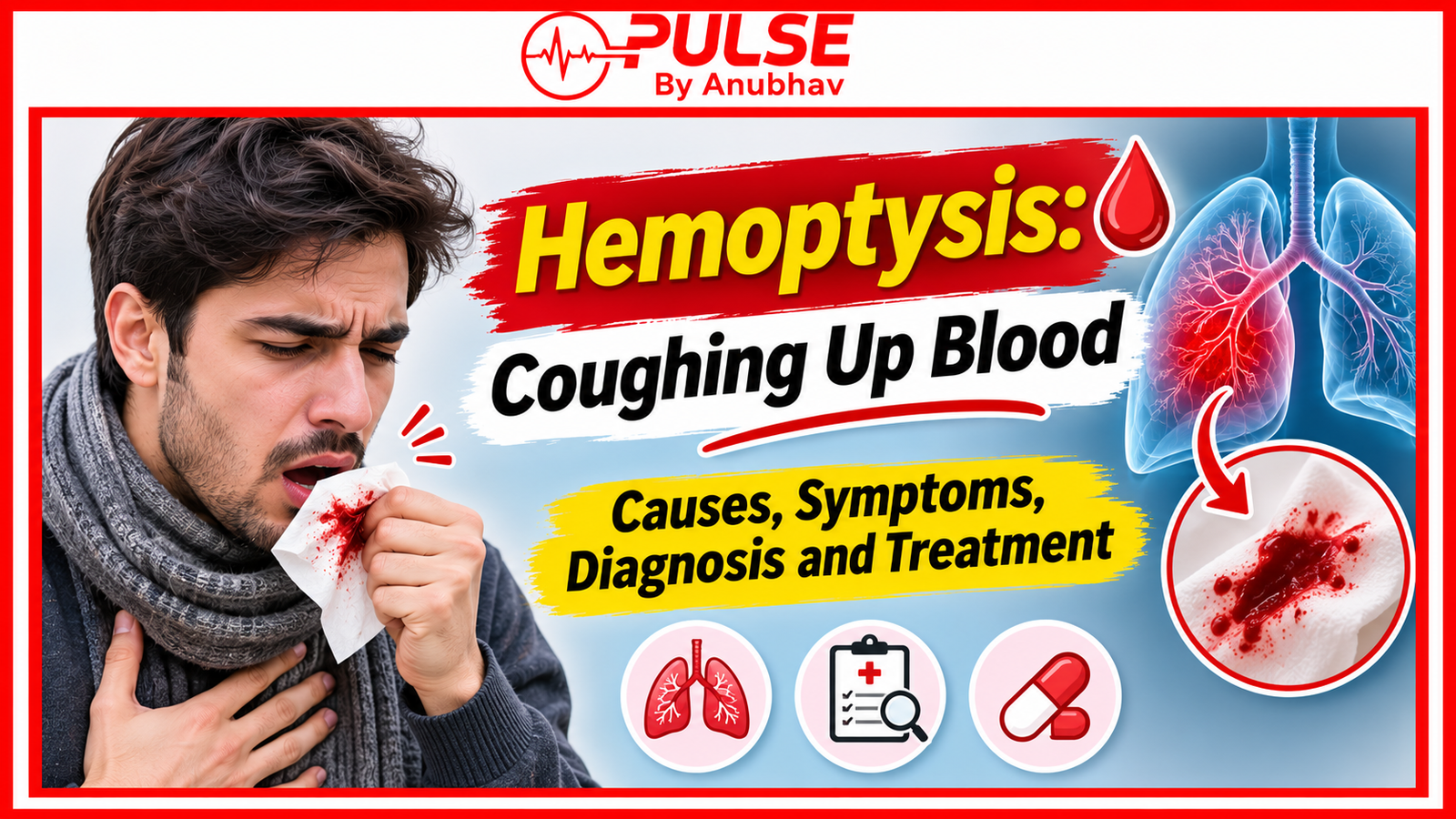
Hemoptysis causes blood in cough. Explore its symptoms, causes, diagnosis, treatment options, medicines, and when coughing up blood needs urgent care.
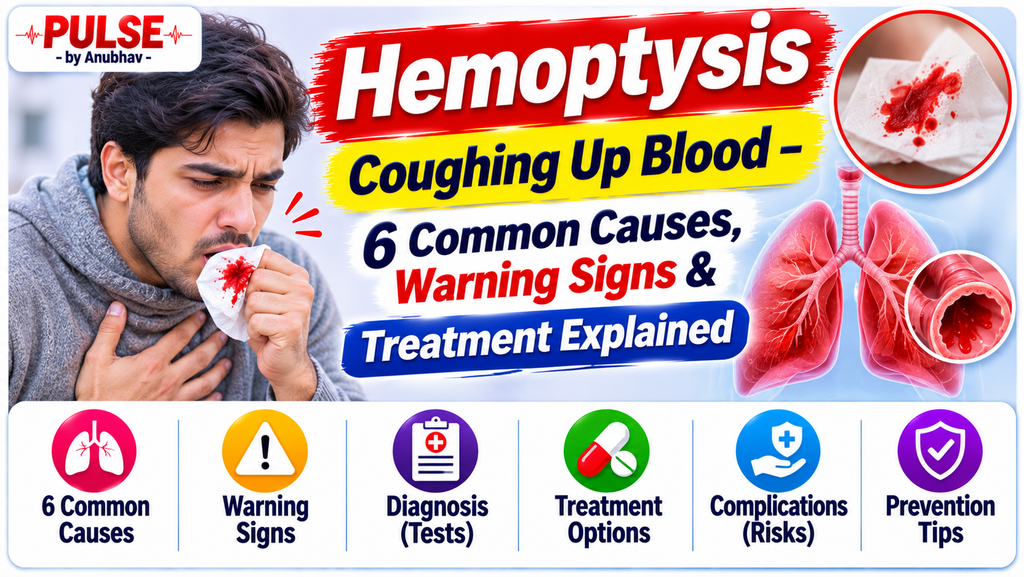
Hemoptysis, commonly known as coughing up blood, is a symptom that may indicate an underlying respiratory condition. It can occur due to tuberculosis, bronchitis, pneumonia, bronchiectasis, or serious lung diseases. Symptoms may include blood-streaked mucus, persistent cough, chest pain, fever, and breathlessness. Diagnosis may involve chest X-rays, CT scans, sputum tests, and bronchoscopy. Treatment depends on the cause and may include antibiotics, anti-TB medicines, or specialist procedures. Early medical evaluation is essential. Learn more with Pulse by Anubhav.
Note: This entire blog content is for educational purposes only and is not medical advice.
Also Read- https://pulsebyanubhav.in/sheet-masks-benefits-side-effects-skin/
🩸 Hemoptysis: Coughing Up Blood – Causes, Symptoms, Diagnosis and Treatment
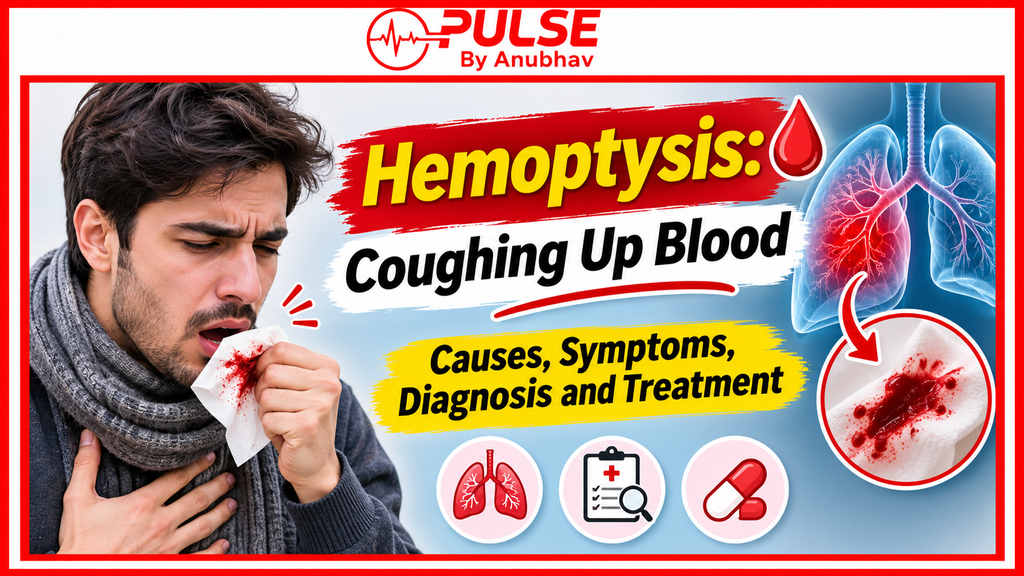
Have you ever noticed blood while coughing? Even a small amount of blood in your cough or sputum can be frightening. But more importantly, it is something you should never ignore.
Hemoptysis is the medical term used to describe coughing up blood that originates from the lower respiratory tract, including the lungs and airways. It may appear as tiny streaks of blood mixed with mucus or, in more serious cases, as a larger amount of blood.
Sometimes, coughing up blood can occur due to respiratory infections or inflammation. However, it may also indicate an underlying condition such as tuberculosis, bronchiectasis, or even lung cancer.
The important thing is to identify the actual cause and seek medical attention at the right time.
Let’s understand what Hemoptysis is, why it happens, its warning signs, and how it can be diagnosed and treated.
🔍 What Is Hemoptysis?
Hemoptysis refers to the coughing up of blood originating from the lower respiratory tract, particularly the bronchi and lungs.
In simple words, when blood enters the airways from the respiratory system and comes out during coughing, it is known as Hemoptysis.
The appearance and amount of blood can vary depending on the underlying condition.
What Does Blood in Cough Look Like?
A person experiencing Hemoptysis may notice:
- Bright red blood: Fresh blood may appear red or pinkish.
- Blood-streaked sputum: Small streaks of blood may be mixed with mucus.
- Frothy sputum: Blood may look foamy because it mixes with air and respiratory secretions.
- Larger amounts of blood: In severe cases, a person may cough up noticeable quantities of blood.
Important: Not every episode of blood coming from the mouth is Hemoptysis. Bleeding from the nose, gums, mouth, or gastrointestinal tract can sometimes look similar. Doctors distinguish these conditions by examining the source of bleeding and associated symptoms.
🫁 What Are the Common Causes of Hemoptysis?
There are several possible causes of Hemoptysis. Some are related to temporary respiratory infections, while others involve long-term lung diseases or serious medical conditions.
Here are some of the most common causes:
1. Tuberculosis (TB)
Tuberculosis is one of the important causes of coughing up blood, particularly in countries like India, where TB remains a significant public health concern.
TB is an infectious disease caused by Mycobacterium tuberculosis. It mainly affects the lungs and can damage lung tissue and blood vessels.
Common symptoms may include:
- Persistent cough lasting several weeks.
- Blood in sputum.
- Fever and night sweats.
- Unexplained weight loss.
- Loss of appetite and weakness.
If you experience these symptoms, consult a healthcare professional for proper evaluation.
2. Respiratory Tract Infections
Respiratory infections such as bronchitis and pneumonia can cause inflammation and irritation of the airways.
In some cases, this irritation damages small blood vessels, resulting in blood-streaked mucus during coughing.
Other symptoms may include fever, chest discomfort, excessive mucus production, and persistent cough.
3. Bronchiectasis
Bronchiectasis is a chronic lung condition in which the airways become permanently widened and damaged.
This makes it easier for mucus to accumulate, increasing the risk of repeated respiratory infections.
People with bronchiectasis may experience:
- Recurrent chest infections.
- Long-term cough with mucus.
- Shortness of breath.
- Blood in sputum.
Hemoptysis can sometimes occur because damaged airways contain fragile blood vessels.
4. Lung Cancer
Persistent or recurrent Hemoptysis can sometimes be associated with lung cancer.
The risk is particularly concerning in people who smoke or have a significant history of tobacco exposure.
Other possible warning signs include:
- A cough that does not improve.
- Unexplained weight loss.
- Chest pain.
- Persistent breathlessness.
- Repeated respiratory infections.
However, coughing up blood does not automatically mean someone has lung cancer. Proper medical investigations are needed to identify the cause.
5. Pulmonary Embolism
Pulmonary embolism occurs when a blood clot blocks an artery in the lungs.
It is a potentially life-threatening condition that may cause sudden breathlessness, chest pain, and occasionally Hemoptysis.
Other warning signs can include a rapid heartbeat, dizziness, and pain or swelling in one leg.
Seek emergency medical care if pulmonary embolism is suspected.
6. Other Possible Causes
Apart from the conditions mentioned above, coughing up blood may also occur due to:
- Chronic bronchitis.
- Lung abscess.
- Certain fungal lung infections.
- Blood-clotting disorders.
- Injury to the respiratory tract.
- Certain blood-thinning medications (anticoagulants).
The actual cause cannot be confirmed by looking at the blood alone. Medical assessment is important.
⚠️ What Are the Symptoms of Hemoptysis?
The main symptom of Hemoptysis is coughing up blood or blood-streaked sputum.
However, additional symptoms may appear depending on the condition responsible for the bleeding.
Common associated symptoms include:
- Persistent cough: A cough that continues for several days or weeks.
- Fever and chills: Often associated with respiratory infections.
- Chest pain: Discomfort or pain while breathing or coughing.
- Shortness of breath: Difficulty breathing or feeling breathless.
- Night sweats: Excessive sweating during sleep, sometimes associated with tuberculosis.
- Unexplained weight loss: May indicate an underlying chronic illness.
- Fatigue and weakness: Can occur due to infection, ongoing illness, or blood loss.
These symptoms help doctors understand the possible cause of Hemoptysis and decide which investigations are necessary.
🩺 How Is Hemoptysis Diagnosed?
Diagnosing Hemoptysis involves identifying where the bleeding is coming from and determining the underlying cause.
Doctors usually consider the patient’s medical history, smoking history, amount of blood, duration of symptoms, and physical examination.
Depending on the clinical situation, the following investigations may be recommended:
1. Chest X-ray
A chest X-ray is often one of the initial investigations.
It helps doctors identify certain lung infections, abnormal shadows, masses, and other changes in the chest.
However, a normal chest X-ray does not rule out every possible cause.
2. Sputum Examination
A sputum sample may be examined to identify infections, including tuberculosis.
Additional tests may be required depending on the suspected organism.
3. CT Scan of the Chest
A CT scan provides more detailed images of the lungs, airways, and surrounding structures.
It can help identify abnormalities that may not be clearly visible on a regular chest X-ray.
4. Blood Tests
Blood investigations may be performed to evaluate:
- Hemoglobin levels.
- Signs of infection.
- Platelet count.
- Blood-clotting abnormalities.
These tests help assess the patient’s overall condition and possible causes of bleeding.
5. Bronchoscopy
Bronchoscopy is a procedure in which a doctor uses a thin, flexible instrument with a camera to examine the inside of the airways.
It may help locate the bleeding site, identify abnormalities, and collect samples when necessary.
Note: Every patient does not require all these tests. The doctor selects investigations according to the severity of bleeding and suspected underlying condition.
💊 What Is the Treatment for Hemoptysis?
The treatment of Hemoptysis depends mainly on its underlying cause, the amount of bleeding, and the patient’s overall health.
The first priority is to assess the severity of bleeding and ensure that breathing and circulation remain stable.
Here are some treatment approaches:
1. Treatment for Tuberculosis
If tuberculosis is responsible for Hemoptysis, doctors prescribe an appropriate anti-tuberculosis treatment regimen.
Completing the full treatment course is essential to control the infection and prevent complications.
2. Treatment for Respiratory Infections
Bacterial infections may require antibiotics when clinically indicated.
Other supportive treatments may be recommended depending on the infection and severity of symptoms.
Antibiotics are not useful for every respiratory infection, particularly viral infections.
3. Treatment for Bronchiectasis
Management may include airway clearance techniques, appropriate medications, and treatment of respiratory infections.
In selected cases, additional specialist interventions may be required.
4. Treatment for Pulmonary Embolism
Pulmonary embolism requires urgent medical assessment.
Treatment may involve anticoagulant medicines or other emergency interventions depending on the patient’s condition and bleeding risk.
5. Treatment for Severe Hemoptysis
Severe or life-threatening bleeding requires emergency hospital management.
Doctors may use procedures such as bronchial artery embolization to control bleeding. In selected cases, surgery or other specialist interventions may be considered.
Important: Never start antibiotics, anticoagulants, or other medicines on your own. If you are already taking blood-thinning medication, inform your doctor immediately rather than stopping or changing it without medical advice.
🚨 When Should You Seek Emergency Medical Care?
Coughing up blood should always be taken seriously, especially when the bleeding is persistent, recurrent, or increasing.
Seek emergency medical care immediately if:
- You cough up more than a few small streaks of blood.
- Bleeding continues or increases.
- You experience difficulty breathing.
- You have severe chest pain.
- You feel dizzy, faint, or extremely weak.
- You cough up a large amount of blood or develop choking sensations.
Even a small amount of blood in sputum deserves prompt medical assessment, particularly if it happens repeatedly or is associated with fever, night sweats, or unexplained weight loss.
Do not wait for bleeding to become severe before seeking medical help.
🌿 Can Hemoptysis Be Prevented?
Not every case of Hemoptysis can be prevented because its causes vary. However, certain healthy habits and preventive measures can reduce the risk of some respiratory conditions.
Here are a few important steps:
- Avoid smoking: Smoking damages the lungs and increases the risk of several respiratory diseases.
- Avoid secondhand smoke: Try to stay away from tobacco smoke and other harmful airborne irritants.
- Treat respiratory infections early: Do not ignore a persistent cough, fever, or other unusual respiratory symptoms.
- Complete TB treatment: If diagnosed with tuberculosis, follow the prescribed treatment schedule carefully.
- Follow medical advice: Attend follow-up appointments and take prescribed medicines as directed.
- Maintain respiratory hygiene: Cover your mouth while coughing and follow appropriate infection-control practices.
Taking care of your respiratory health can help reduce the risk of certain lung conditions and their complications.
Coughing up blood can be alarming. The appearance, quantity of blood and other symptoms can provide important clues about the underlying problem. However, the actual cause can only be identified through proper medical evaluation.
🩸 Bright Red Blood With Mucus
Bright red blood mixed with mucus may indicate bleeding somewhere in the respiratory tract. It can occur due to airway infections, bronchiectasis or other lung conditions.
Example: A person notices red streaks in their sputum after repeated coughing.
What to do: Arrange prompt medical assessment. Seek emergency care if bleeding is more than a few streaks or breathing becomes difficult.
🔴 Small Amount of Blood in Cough
Sometimes blood appears as tiny spots or streaks rather than a large quantity. Airway inflammation or respiratory infections may be responsible.
Example: A person with bronchitis notices a few blood streaks while coughing.
What to do: Do not assume it is harmless. Even a small amount needs prompt medical evaluation.
⚠️ Is Hemoptysis Dangerous?
It can be. Some cases are associated with minor airway irritation, while others may indicate tuberculosis, pulmonary embolism or lung cancer.
Example: A patient experiences coughing up blood along with sudden chest pain and breathlessness.
What to do: Seek emergency medical attention immediately.
🫁 How to Stop Coughing Up Blood?
The bleeding cannot be safely controlled without identifying its source. Treatment must address the underlying condition.
Example: If tuberculosis causes bleeding, treating the TB infection is essential. If an abnormal blood vessel is responsible, a specialist may need to perform a procedure.
What to do: Get medical help instead of relying on cough syrups or home remedies.
There is no single best medicine for Hemoptysis. Doctors select treatment according to the cause of bleeding, its severity and the patient’s medical condition.
🚨 Important Medical Warning
Do not purchase or take a bleeding-control medicine just because you notice blood in your cough. Some medicines can be harmful in particular conditions, and severe Hemoptysis may require emergency procedures rather than tablets.
1. Tranexamic Acid (TXA)
What is it? Tranexamic acid is an antifibrinolytic medicine that helps prevent the breakdown of blood clots.
How does it work? It inhibits the activation of plasminogen and helps stabilize fibrin clots, which may reduce bleeding.
Role in Hemoptysis: Clinicians may consider tranexamic acid in selected cases as an additional bleeding-control option. Nebulized TXA has also been studied in hospital settings.
Example: A hospitalized patient with ongoing airway bleeding may be assessed by a specialist to determine whether TXA is appropriate.
Availability: Prescription-based medicine available through licensed pharmacies and hospital pharmacies. Injectable formulations are administered by healthcare professionals.
Safety: It is not suitable for everyone. The risk of blood clots, kidney function and other medical factors must be assessed.
Price reference (India):
A 1mg listing showed Tranemic 500 mg injection at approximately ₹64.80. Prices vary by brand, pharmacy and pack.
Important: This is a product-price example, not a recommended Hemoptysis prescription or the cost of treating the condition.
2. Antibiotics
What are they? Antibiotics are medicines used to treat susceptible bacterial infections.
How do they work? Depending on the drug, they kill bacteria or stop them from multiplying.
Role in Hemoptysis: They may be prescribed if bacterial pneumonia or another bacterial respiratory infection is diagnosed.
Example: If a doctor identifies bacterial pneumonia as the cause of blood-streaked sputum, an appropriate antibiotic may be prescribed.
Availability: Licensed pharmacies and hospital pharmacies with a prescription where required.
Price: Varies significantly according to the antibiotic, brand, strength and treatment duration. There is no universal price.
Remember: Antibiotics do not treat viral infections and should never be started without medical advice.
3. Anti-Tuberculosis Medicines
What are they? These are combination medicines used to treat tuberculosis.
How do they work? Different anti-TB drugs act against Mycobacterium tuberculosis through different mechanisms.
Role in Hemoptysis: If tuberculosis is confirmed as the underlying cause, an appropriate anti-TB regimen treats the infection responsible for lung damage.
Example: A patient with a confirmed pulmonary TB diagnosis and blood in sputum receives a doctor-prescribed TB treatment regimen.
Availability: Government TB facilities and authorized healthcare providers under India’s National TB Elimination Programme (NTEP).
Price: Eligible patients may receive treatment through government TB services free of cost. Private treatment costs depend on the prescribed regimen and provider.
Remember: Complete the entire prescribed course. Never stop treatment independently.
4. Medicines for Bronchiectasis
What are they? Treatment may involve prescribed antibiotics, bronchodilators in selected patients and other supportive medicines.
How do they work? Antibiotics treat bacterial infections, while airway clearance techniques help remove accumulated mucus.
Role in Hemoptysis: Managing the underlying airway disease can help reduce recurrent infections and complications.
Example: A patient with bronchiectasis and repeated chest infections may need a personalized treatment and airway-clearance plan.
Availability: Through pulmonologists, hospitals and licensed pharmacies.
Price: Depends on the specific medicine and treatment plan.
In severe or life-threatening Hemoptysis, doctors may need to control the bleeding using hospital-based procedures.
5. Bronchial Artery Embolization (BAE)
What is it? A minimally invasive procedure used to block abnormal blood vessels responsible for bleeding.
How does it work? An interventional radiologist guides a catheter into the affected artery and uses embolic material to block the bleeding vessel.
Example: A patient with severe recurrent bleeding from abnormal bronchial arteries may undergo BAE.
Availability: Specialized hospitals with interventional radiology facilities.
Price: There is no fixed national price. It depends on the hospital, procedure complexity and insurance coverage.
6. Bronchoscopy
What is it? A procedure that allows doctors to examine the inside of the airways using a flexible camera.
How does it work? The instrument is passed through the nose or mouth into the airways. Doctors may identify the bleeding site and perform selected interventions.
Example: A specialist may use bronchoscopy to investigate persistent bleeding and, in appropriate cases, control the source.
Availability: Hospitals with pulmonology and bronchoscopy facilities.
Price: Varies according to the hospital, procedure and whether additional interventions are required.
💡 Which Is the Best Treatment?
For mild bleeding, the underlying cause may be treated with appropriate medicines. For severe bleeding, emergency stabilization and specialist interventions such as bronchial artery embolization may be necessary.
There is no single treatment suitable for every patient.
Case 1: Blood-Streaked Sputum With Persistent Cough
A person has a persistent cough, fever and occasional blood streaks in sputum.
Possible evaluation: Chest X-ray, sputum testing and investigations for tuberculosis or other respiratory infections.
Possible treatment: Treatment of the confirmed underlying infection.
Case 2: Sudden Blood in Cough With Chest Pain
A person suddenly coughs up blood and develops breathlessness and chest pain.
Possible concern: Pulmonary embolism or another serious cardiopulmonary condition.
Action: Immediate emergency assessment and appropriate investigations. Do not try home treatment.
Case 3: Repeated or Heavy Bleeding
A patient experiences repeated episodes of significant bleeding despite initial medical treatment.
Possible management: Hospital stabilization, imaging and specialist assessment for procedures such as bronchial artery embolization.
⚠️ No Home Remedy Can Reliably Stop Hemoptysis
Honey, ginger, turmeric, warm water and herbal drinks cannot reliably stop bleeding from the lungs or treat its underlying cause.
Do not delay medical assessment by trying home remedies.
What Should You Do Immediately?
- Stay calm and seek medical assistance.
- Sit upright and lean slightly forward if possible.
- Spit out the blood rather than swallowing it.
- Do not smoke or exert yourself.
- Do not take cough medicines or bleeding-control medicines without medical advice.
- Inform the doctor about blood thinners and all other medicines you take.
Emergency: If bleeding is substantial, continuing, or associated with breathing difficulty, chest pain or fainting, call 112 or seek emergency hospital care immediately.
Readers also search for these questions when looking for information about coughing up blood:
Hemoptysis is a symptom, not a disease. The correct treatment depends on finding the source of bleeding. Never choose a medicine based only on the appearance of blood in your cough.
Early diagnosis, appropriate treatment and timely medical attention can make a significant difference.
Pulse by Anubhav 💊
Disclaimer: This content is for educational purposes only and does not replace professional medical advice, diagnosis or treatment. Medicine prices are indicative and may change. Never self-medicate for coughing up blood.
Also Read- Period Early or Late? 8 Common Reasons Behind Irregular Periods & When to Worry!
❤️ Final Words
Hemoptysis is more than just an ordinary cough symptom. Although it can sometimes occur due to infections or airway irritation, coughing up blood may also indicate a serious underlying lung condition.
The most important step is to identify the cause early and receive appropriate medical treatment. Never ignore repeated blood-streaked sputum or delay medical evaluation.
At Pulse by Anubhav, we believe that understanding health symptoms is the first step towards making informed healthcare decisions. Stay aware, take your health seriously, and consult a qualified healthcare professional whenever something feels unusual.
Disclaimer: This article is intended for educational and informational purposes only. It is not a substitute for professional medical advice, diagnosis, or treatment.
4 thoughts on “Hemoptysis: Coughing Up Blood – 6 Common Causes, Warning Signs & Treatment Explained”