Feeling dizzy when you stand up? Learn the common causes, symptoms, orthostatic hypotension, warning signs, and simple ways to prevent dizziness.
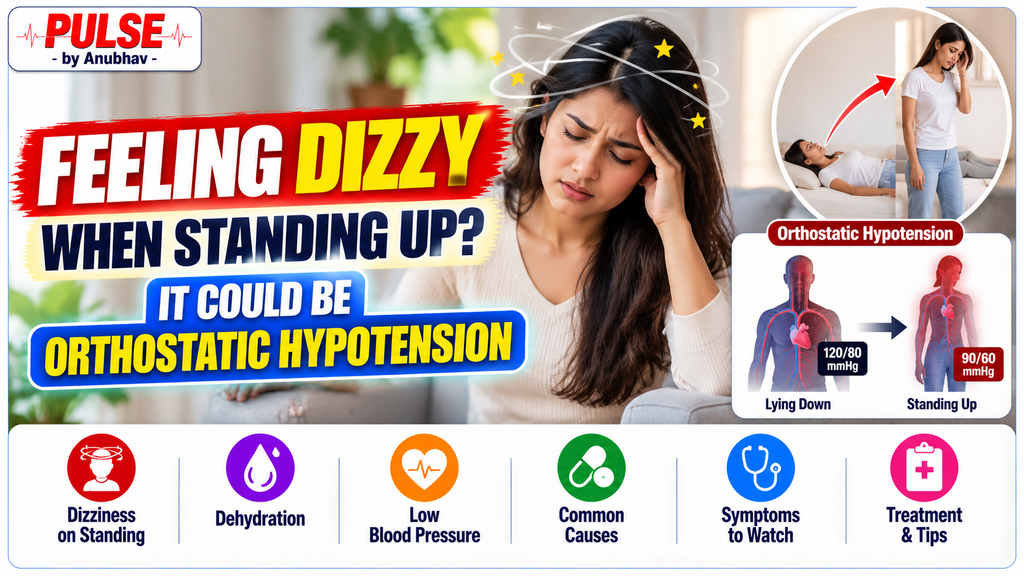
Feeling dizzy when you stand up? Learn why sudden standing can cause dizziness, blurry or black vision, and lightheadedness. Discover common causes like dehydration, low blood pressure, anemia, and orthostatic hypotension, plus warning signs and simple ways to prevent recurring dizziness.
Also Read- Rachita Ram: Fan Pinches Her Cheek Without Permission, Actress Reacts; Incident Sparks Criticism
Note: This entire blog content is for educational purposes only and is not medical advice.
🌀 Why Do I Feel Dizzy When I Stand Up Suddenly? Causes, Symptoms & What to Do
Have you ever been sitting or lying down comfortably, then suddenly stood up and felt dizzy, lightheaded, or as if you were about to faint?
Maybe your vision became blurry for a few seconds, your head suddenly felt strange, or you had to hold onto something until the feeling passed.
Sounds familiar? Don’t worry—you are not alone.
Feeling dizzy after standing up suddenly is quite common and can happen when your body takes a few moments to adjust to the change in position. One possible reason is orthostatic hypotension, also called postural hypotension, where blood pressure drops when you move from sitting or lying down to standing.
But why exactly does this happen? And when should you take it seriously?
Let’s break it down simply.
🩺 What Happens When You Suddenly Stand Up?
When you are sitting or lying down, your blood is distributed throughout your body. The moment you stand, gravity pulls some blood toward your legs and lower body.
Normally, your body quickly responds by tightening blood vessels and adjusting your heart rate. This helps maintain enough blood flow to your brain.
Think of it like this:
Standing suddenly → Blood temporarily moves toward the legs → Blood pressure may briefly drop → Heart and blood vessels adjust → Blood flow to the brain is maintained
If your body doesn’t make this adjustment quickly enough, you may temporarily feel:
- 🌀 Dizzy or lightheaded
- 👀 Blurry, dim, or tunnel-like vision
- 😵 Like you might faint
- 💓 Your heart beating faster
- 🦵 Weak or unsteady
- 🧠 Slightly confused or “off”
Usually, these symptoms last only a few seconds. However, frequent or severe episodes shouldn’t simply be ignored.
🔍 Why Do I Feel Dizzy When I Stand Up?
There isn’t always one single reason. Several factors can make dizziness more likely after standing.
1. Standing Up Too Quickly
Sometimes the simplest explanation is the correct one.
If you move quickly from lying down to standing, your cardiovascular system may need a few moments to adjust. During that short period, you may feel dizzy or lightheaded.
This can happen occasionally even in otherwise healthy people.
2. Dehydration 💧
Your body needs enough fluid to maintain normal blood circulation.
When you’re dehydrated, your blood volume can decrease, making it harder for your body to maintain blood pressure when you stand.
Dizziness may be more noticeable after:
- Heavy sweating
- Intense exercise
- Vomiting or diarrhea
- Hot weather
- Not drinking enough fluids
3. Low Blood Pressure
If your blood pressure is already on the lower side, standing suddenly may make you more likely to feel dizzy.
Certain medications can also lower blood pressure and contribute to these symptoms.
If dizziness started after beginning or changing a medication, speak with your healthcare professional instead of stopping the medicine yourself.
4. Orthostatic Hypotension
Orthostatic hypotension happens when blood pressure falls significantly after moving to an upright position.
For some people, this can cause:
- Dizziness
- Lightheadedness
- Blurred vision
- Weakness
- Feeling faint
- In some cases, actual fainting
Repeated episodes may need medical evaluation, especially if they are becoming more frequent.
5. Not Eating Enough 🍽️
Going for long periods without eating can leave you feeling weak, tired, shaky, or lightheaded.
Low blood glucose can also cause similar symptoms, particularly in people who use certain diabetes medications.
So if you regularly skip meals and feel dizzy, your eating pattern may be worth looking at.
6. Anemia 🩸
Anemia can reduce the amount of oxygen your blood can carry.
Depending on the cause and severity, you may experience dizziness along with:
- Fatigue
- Weakness
- Pale skin
- Headache
- Shortness of breath
- Fast heartbeat
If dizziness is frequent and you’re also unusually tired or weak, talking with a healthcare professional is a good idea.
7. Heat and Excessive Sweating ☀️
Hot weather can make you lose more fluid through sweating. Heat can also cause blood vessels to widen.
Together, these effects can make it harder for your body to maintain blood pressure when you suddenly stand.
That’s why you may feel particularly dizzy after getting up in very hot conditions.
8. Staying in Bed or Being Inactive for a Long Time
After prolonged bed rest or significant inactivity, your body may temporarily struggle to adjust to standing.
You might notice dizziness when getting out of bed, particularly after being inactive for an extended period.
9. Certain Medicines 💊
Some medicines can contribute to dizziness or changes in blood pressure.
These may include certain:
- Blood-pressure medicines
- Diuretics
- Antidepressants
- Medicines affecting the nervous system
However, never stop a prescribed medication on your own. If you think a medicine is causing your dizziness, discuss it with your doctor.
Also Read- Why Does Your Body Shake When You’re Nervous? Causes, Anxiety & Nervous Tremor
🧠 Is It Normal to Feel Dizzy for a Few Seconds?
Occasional, brief dizziness after standing quickly can happen.
For example:
Lying down → Stand suddenly → Feel dizzy → Vision becomes slightly dim → Wait a few seconds → Feeling returns to normal
This isn’t necessarily a sign of a serious problem.
The bigger concern is when the episodes become frequent, prolonged, severe, or associated with fainting or other symptoms.
In those situations, it’s better to find out what’s causing them rather than simply assuming it’s normal.
🚨 When Should You Take Dizziness Seriously?
You should seek medical attention if your dizziness is:
- 🔴 Frequent or getting worse
- 🔴 Causing repeated fainting
- 🔴 Happening with chest pain
- 🔴 Associated with severe shortness of breath
- 🔴 Accompanied by a very fast or irregular heartbeat
- 🔴 Associated with a severe headache
- 🔴 Happening with weakness or numbness on one side
- 🔴 Associated with difficulty speaking or walking
- 🔴 Occurring after significant blood loss or an injury
Sudden severe dizziness combined with neurological symptoms can be an emergency.
Don’t ignore these warning signs.
🩺 How Is Dizziness After Standing Checked?
If you frequently feel dizzy when standing, a healthcare professional may first ask about your symptoms and daily habits.
They may want to know:
- When the dizziness usually happens
- How long it lasts
- Whether you actually faint
- How much fluid you drink
- Your eating habits
- Which medicines you take
- Whether you experience other symptoms
Your blood pressure and pulse may also be checked while you’re lying down and again after standing.
Depending on your symptoms, your healthcare professional may recommend additional tests, such as blood tests or an ECG, to look for possible underlying causes.
💡 What Can You Do to Prevent Dizziness When Standing?
A few simple habits may help reduce episodes.
🧍 Stand Up Slowly
Don’t jump out of bed immediately.
First, sit on the edge of the bed for a moment. Give your body some time to adjust, then stand.
💧 Stay Hydrated
Drink enough fluids throughout the day, especially when you’re exercising, sweating heavily, or spending time in hot weather.
🍽️ Avoid Skipping Meals
Try to maintain regular, balanced meals instead of going for very long periods without food.
☀️ Be Careful in Hot Weather
Take breaks from excessive heat and replace fluids lost through heavy sweating.
🏃 Stay Physically Active
Regular movement can support overall cardiovascular fitness. If you’ve been inactive for a long time, increase activity gradually.
💊 Review Your Medicines
If your dizziness began after starting a new medicine or changing a dose, talk to your healthcare professional.
Don’t discontinue prescribed medication without medical advice.
Also Read- Eye Twitch: Why Does Your Eye Twitch? Causes, Triggers & When to Worry
What Does Your Dizziness Feel Like?
The exact way you feel dizzy when standing up can give you clues about what may be happening.
👀 “I stand up and see black”
Briefly seeing black or having dim vision after standing can happen when blood pressure temporarily falls and the brain receives less blood flow for a few moments.
🧍 “I feel dizzy when I stand from sitting”
Standing quickly can cause a temporary drop in blood pressure. Dehydration, low blood pressure and some medicines may make this more noticeable.
🛏️ “I feel dizzy when I get out of bed”
Getting up suddenly after lying down can trigger dizziness because your body needs time to adjust blood circulation to the upright position.
💓 “I feel lightheaded after standing”
Lightheadedness can have several causes, including dehydration, low blood pressure, anemia, certain medicines or orthostatic hypotension.
🩺 What Is Orthostatic Hypotension?
Orthostatic hypotension is a significant drop in blood pressure that can occur after moving from sitting or lying down to standing. It may cause dizziness, lightheadedness, blurred vision, weakness or even fainting.
⚠️ Don’t ignore recurring symptoms: If you frequently feel dizzy, repeatedly lose your vision, faint, or experience dizziness with chest pain, severe headache, difficulty speaking, weakness or trouble walking, seek medical attention.
Pulse by Anubhav • Health information for general awareness
Also Read- Intermittent Fasting: Benefits, Risks, Methods & Is It Really Healthy?
🌟 The Bottom Line
Feeling dizzy for a few seconds after standing suddenly is often related to your body’s temporary struggle to adjust blood pressure and blood flow.
Sometimes it’s simply because you stood up too quickly. Dehydration, low blood pressure, certain medicines, anemia, prolonged inactivity, and orthostatic hypotension can also play a role.
So, next time you get up, slow down for a moment. Stay hydrated, don’t regularly skip meals, and pay attention to how often it happens.
And remember—if dizziness keeps coming back, becomes severe, causes fainting, or appears with other concerning symptoms, don’t just brush it off.
Your body is giving you information. Listen to it.
Health information on Pulse by Anubhav is intended for general awareness and should not replace advice from a qualified healthcare professional.
FAQs About Feeling Dizzy When Standing
Frequently Asked Questions About Feeling Dizzy
Here are some common questions about dizziness when standing up, black vision and orthostatic hypotension.
Why do I feel dizzy when I stand up suddenly?
Feeling dizzy when you stand up suddenly can happen because blood temporarily moves toward your legs, causing a brief drop in blood pressure. Dehydration, low blood pressure, certain medicines and orthostatic hypotension can also contribute.
Why do I see black when I stand up?
Seeing black or experiencing dim vision for a few seconds after standing can happen when blood flow to the brain temporarily decreases. Occasional brief episodes may happen after standing quickly, but frequent or severe episodes should be medically evaluated.
What is orthostatic hypotension?
Orthostatic hypotension is a significant drop in blood pressure after moving from sitting or lying down to standing. It can cause dizziness, lightheadedness, blurred vision, weakness or fainting.
Why do I feel dizzy when I stand up from sitting?
Standing up quickly from a seated position can temporarily affect blood pressure and blood flow. Dehydration, low blood pressure, certain medications and orthostatic hypotension may make the dizziness more noticeable.
Why do I feel dizzy when I get out of bed?
Getting out of bed suddenly can cause temporary dizziness because your body needs time to adjust blood circulation after lying down. Sitting on the edge of the bed for a moment before standing may help.
What causes dizziness and lightheadedness when you stand up?
Possible causes include standing too quickly, dehydration, low blood pressure, not eating enough, anemia, heat exposure, prolonged inactivity, certain medications and orthostatic hypotension.
How can I stop getting dizzy when I stand up?
Try standing up slowly, staying adequately hydrated, avoiding long periods without food and taking care in hot weather. If dizziness happens frequently or is severe, speak with a healthcare professional to identify the underlying cause.
When should I worry about dizziness when standing?
Seek medical attention if dizziness is frequent, worsening, causes fainting, or occurs with chest pain, severe shortness of breath, severe headache, weakness or numbness on one side, difficulty speaking or difficulty walking.
2 thoughts on “Feeling Dizzy When Standing Up? It Could Be Orthostatic Hypotension”