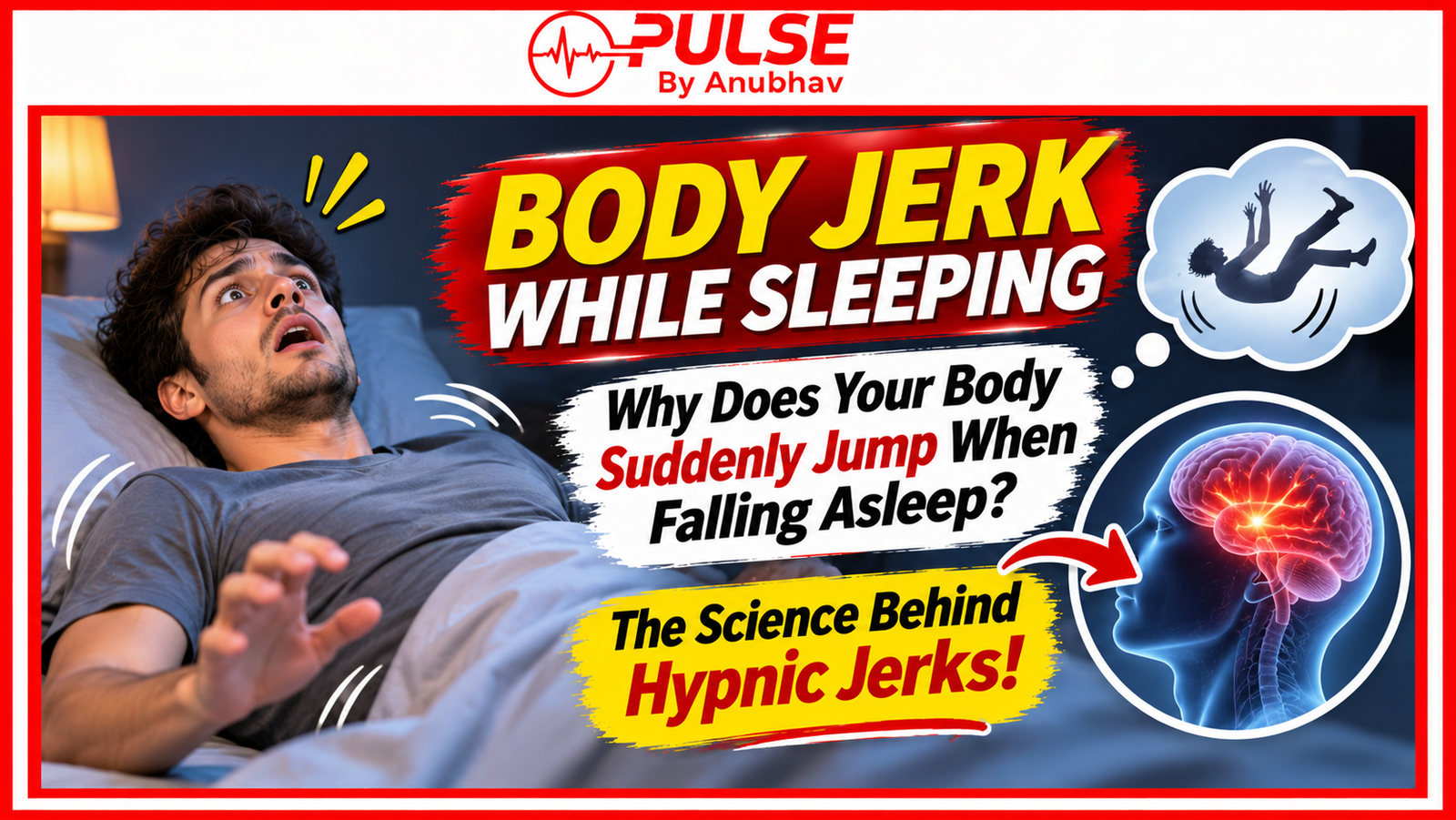
Experiencing sudden BODY JERKS while sleeping? Discover HYPNIC JERKS causes, treatment options, medicines, Ayurvedic remedies and prevention tips.
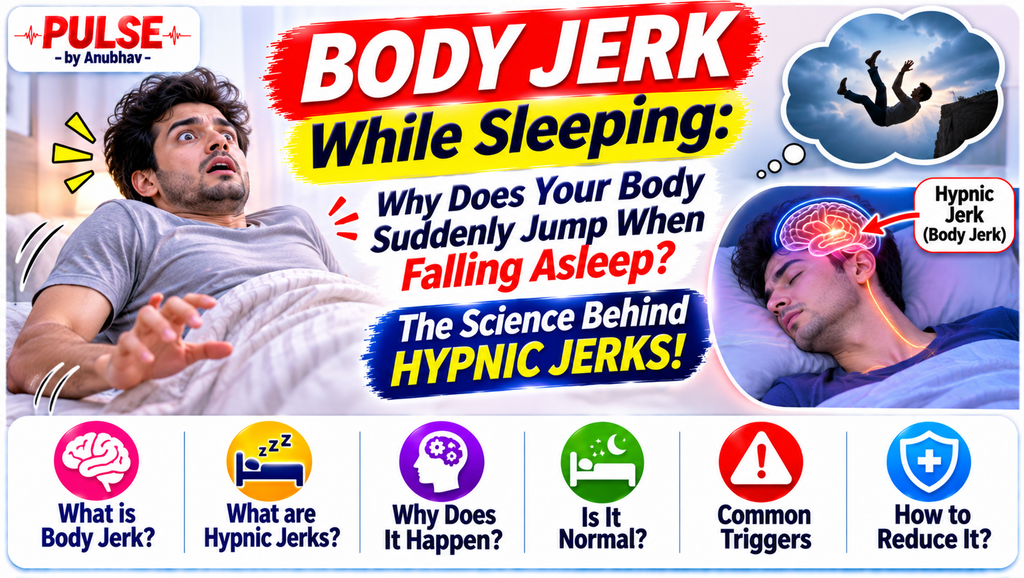
A sudden BODY JERK while falling asleep is commonly known as HYPNIC JERKS or sleep starts. These involuntary muscle contractions are usually harmless and may be associated with stress, sleep deprivation, caffeine and irregular sleeping habits. Most cases do not require medication. Clonazepam may be considered by specialists for selected conditions, but it is not a routine treatment. Ayurvedic herbs like Ashwagandha, Brahmi and Jatamansi are not proven cures. Maintain healthy sleep habits and consult a doctor if jerks become frequent or unusual. Stay informed with Pulse by Anubhav!
Note: This entire blog content is for educational purposes only and is not medical advice.
BODY JERK While Sleeping: Complete Treatment Guide
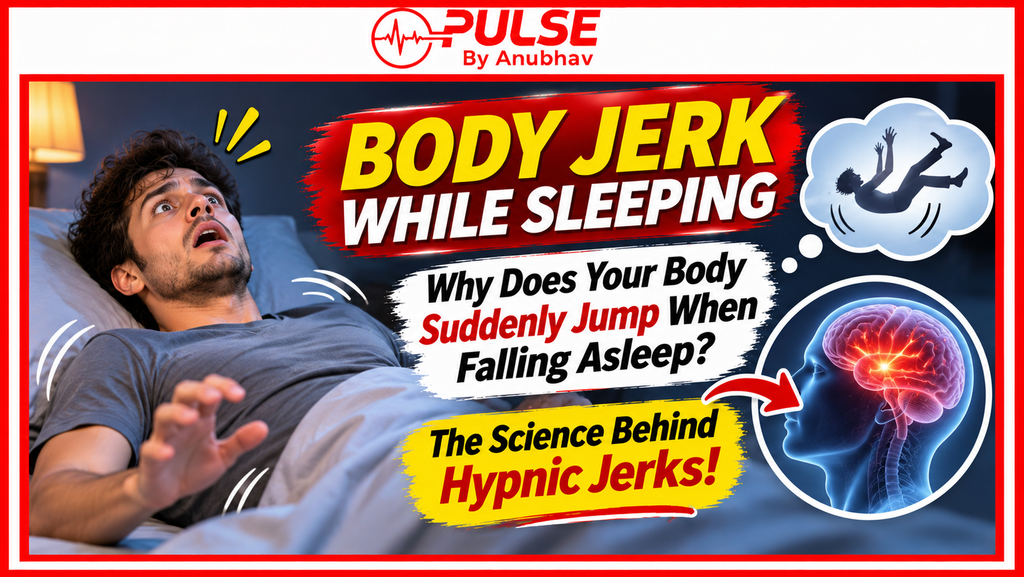
Health & Sleep Science | Pulse by Anubhav
Have you ever been lying comfortably in bed, slowly drifting into sleep, when suddenly your entire body makes a quick jump?
One moment, you are peacefully falling asleep, and the next moment, your legs kick, your hands move, or your whole body experiences a sudden jerk!
Sometimes, it even feels as if you are falling from a height, missing a step, or slipping off a staircase. You wake up immediately and wonder, “Why did my body suddenly jump? Was I dreaming, or is something wrong with my brain?”
Don’t worry! This experience is more common than you might think.
A sudden BODY JERK while falling asleep is often associated with a phenomenon known as HYPNIC JERKS, also called sleep starts or hypnagogic jerks.
But what exactly happens inside your brain when you experience this strange sensation? Why does your body suddenly move when you are supposed to be relaxing?
Let’s explore the science, common causes, symptoms and prevention tips behind this fascinating sleep phenomenon.
🧠 1. What Is a BODY JERK While Falling Asleep?
A BODY JERK while falling asleep is commonly known as a hypnic jerk. It is a sudden, brief and involuntary muscle contraction that occurs during the transition from wakefulness to sleep.
In medical terminology, hypnic jerks are considered a type of physiological myoclonus.
Myoclonus refers to sudden, shock-like muscle movements that happen involuntarily. These movements can affect a single muscle, one limb or multiple muscle groups.
Hypnic jerks generally occur during the early stages of sleep, particularly during the transition into NREM (Non-Rapid Eye Movement) sleep.
You may experience:
- A sudden jerk of your entire body.
- Unexpected movement of your arms or legs.
- A sudden kicking sensation.
- Feeling as if you are falling.
- A brief awakening with a start.
- A momentary shock-like sensation.
The interesting part is that these movements usually last only a fraction of a second.
Are they dangerous? In most cases, no. Occasional hypnic jerks are generally harmless and do not indicate that something is wrong with your brain or nervous system.
⚡ 2. Why Does Your BODY JERK Suddenly When You Are Falling Asleep?
This is where sleep science becomes interesting!
When you prepare to sleep, your brain and body gradually shift from an active, alert state to a relaxed sleeping state.
Several changes take place during this transition:
- Your muscles gradually relax.
- Your breathing pattern begins to change.
- Your heart rate may slow down.
- Brain activity starts changing.
- Your body prepares to enter different stages of sleep.
During this transition, some people experience sudden muscle contractions.
Scientists have proposed different explanations for why hypnic jerks occur. However, their exact underlying mechanism is still not completely understood.
One popular explanation is the evolutionary or falling theory.
According to this theory, as your muscles relax, your brain may interpret the sensation as a sudden loss of balance or falling. This may trigger a brief muscle contraction.
However, it is important to understand that this is only a proposed explanation, not a scientifically established mechanism.
😴 3. Why Does It Feel Like You Are Falling From a Height?
Have you ever dreamed that you were falling down a staircase, slipping from a building or missing a step, only to wake up suddenly?
You are not alone!
Many people experience a falling sensation along with a sudden BODY JERK.
This happens around the transition between wakefulness and sleep, when dream-like images, sensations and other unusual experiences can occur.
For example:
- You may feel as if you are falling into a deep hole.
- You may imagine missing a step while walking.
- You may feel that your body is suddenly dropping.
- You may experience a sudden sensation of losing balance.
Sometimes, a muscle contraction happens at the same moment, making the experience feel incredibly real.
Interestingly, not everyone experiences a falling sensation with hypnic jerks. Some people simply notice a sudden movement without any dream or unusual sensation.
Also Read- TONSILLITIS: 10 Warning Signs, Causes, Symptoms, Treatment & Home Remedies You Should Know!
🚨 4. What Causes BODY JERKS? 7 Common Factors Behind Hypnic Jerks
Hypnic jerks can occur even in healthy individuals without any identifiable reason. However, certain lifestyle factors may make them more noticeable or frequent.
Let’s understand seven possible contributing factors.
1. Excessive Stress and Anxiety
Do you go to bed with too many thoughts running through your mind?
Stress and anxiety can interfere with your ability to relax and fall asleep.
When your mind remains active at bedtime, you may experience difficulty sleeping, frequent awakenings and other sleep disturbances.
These factors may make hypnic jerks more noticeable.
2. Sleep Deprivation
Not getting enough sleep is another factor worth considering.
If you regularly sleep late, wake up early or have an irregular sleeping schedule, your body may not get sufficient recovery time.
Sleep deprivation can disrupt normal sleep patterns and is associated with an increased likelihood of experiencing sleep-related disturbances.
Try to maintain a consistent sleeping routine.
3. Excessive Caffeine Consumption
Are you someone who drinks coffee, strong tea or energy drinks late at night?
Caffeine is a central nervous system stimulant. It increases alertness and can make it difficult to fall asleep.
Consuming caffeine close to bedtime may disturb your sleep and potentially make sleep starts more noticeable.
4. Physical Exhaustion
After a long working day or an intense workout, your body may feel extremely tired.
Physical exhaustion and intense exercise have been associated with more noticeable hypnic jerks in some individuals.
Maintaining a balanced exercise routine, allowing adequate recovery and avoiding excessive fatigue may support better sleep.
5. Irregular Sleeping Habits
Sleeping at different times every day can make it difficult to maintain a consistent sleep-wake rhythm.
For example, sleeping at 11 PM one day and 3 AM the next may disturb your sleeping routine.
A regular bedtime and wake-up time can help improve sleep quality.
6. Nicotine and Other Stimulants
Nicotine is another stimulant that can interfere with sleep.
Smoking or consuming nicotine-containing products, particularly in the evening, may increase alertness and make it harder to relax.
Reducing stimulant exposure can support healthier sleeping habits.
7. Certain Medications
Some medications that affect the nervous system may cause or contribute to involuntary muscle movements.
If you notice new or unusual body jerks after starting a medication or changing its dosage, speak with your healthcare professional.
Never stop or change prescribed medication without medical advice.
🩺 5. What Are the Common Symptoms of HYPNIC JERKS?
The symptoms of hypnic jerks can vary from person to person.
Some people experience a small movement in their legs, while others feel as if their entire body suddenly jumps.
Common symptoms include:
- Sudden movement of the arms or legs.
- Unexpected whole-body jerking.
- A sudden kicking movement.
- Feeling as if you are falling from a height.
- Brief awakening just after falling asleep.
- A shock-like sensation in the body.
- Temporary increased awareness or alertness after the movement.
- Occasionally, dream-like visual or auditory sensations.
Some people experience only one BODY JERK, while others may experience multiple movements within a short period.
The intensity can also vary. Most ordinary hypnic jerks are brief and do not cause pain.
🧬 6. Are HYPNIC JERKS a Sign of a Neurological Disorder?
Not necessarily!
This is one of the most important things to understand.
Occasional hypnic jerks are generally a normal physiological phenomenon. They do not automatically indicate epilepsy, brain damage or another neurological disease.
However, not every involuntary movement during sleep is a hypnic jerk.
Certain other conditions can produce similar movements.
1. Restless Legs Syndrome (RLS)
Restless Legs Syndrome is a neurological condition that causes an uncomfortable urge to move the legs.
People with RLS often experience sensations such as crawling, tingling, itching or pulling in their legs.
These sensations generally become worse during periods of rest, particularly in the evening or at night.
2. Periodic Limb Movement Disorder (PLMD)
PLMD involves repetitive, involuntary movements of the limbs during sleep.
These movements commonly affect the legs and may occur repeatedly throughout the night.
Unlike occasional hypnic jerks, PLMD can involve recurring movements that disturb sleep.
3. Other Forms of Myoclonus
Myoclonus is a broader medical term for sudden, involuntary muscle contractions.
Although hypnic jerks are one type of physiological myoclonus, other forms may occur during wakefulness or sleep.
Some types can be associated with neurological, metabolic or medication-related conditions.
4. Nocturnal Seizures
Certain epileptic seizures can occur during sleep.
They may involve unusual body movements, changes in awareness, abnormal behaviour or other symptoms.
Repeated episodes, confusion after an event or unexplained injuries during sleep require medical assessment.
Remember: Hypnic jerks, periodic limb movements and nocturnal seizures are different conditions. Their symptoms can sometimes overlap, so a healthcare professional should evaluate unusual or persistent movements.
⚠️ 7. When Should You Worry About a BODY JERK During Sleep?
An occasional BODY JERK just before falling asleep is generally not a reason to panic.
However, you should consult a healthcare professional if:
- Jerking movements become unusually frequent.
- Movements repeatedly disturb your sleep.
- You experience involuntary jerks while fully awake.
- The movements occur repeatedly throughout the night.
- You experience unexplained injuries during sleep.
- Episodes are associated with confusion or loss of awareness.
- You develop new muscle weakness, numbness or other neurological symptoms.
Seek urgent medical attention if an episode involves prolonged seizure-like activity, serious breathing difficulty or failure to regain normal awareness.
A doctor may review your medical history, medication use, sleep habits and symptoms. Depending on the situation, further investigations such as a sleep study or neurological assessment may be recommended.
Also Read- LEECH SUCKING: Why Do Leeches Suck Blood? History, Benefits, Side Effects & Modern Medical Uses
🌙 8. How Can You Reduce HYPNIC JERKS Naturally?
You may not be able to prevent every hypnic jerk, but improving your daily routine and sleep habits can help reduce sleep disturbances.
Here are eight practical tips you can follow.
1. Maintain a Regular Sleep Schedule
Try to go to bed and wake up at approximately the same time every day.
A consistent sleep schedule helps regulate your body’s internal sleep-wake clock.
2. Reduce Caffeine Before Bedtime
Avoid coffee, strong tea and energy drinks close to bedtime.
Caffeine can remain active in your body for several hours and interfere with your ability to fall asleep.
3. Practise Relaxation Techniques
If stress keeps your mind active at night, try simple relaxation techniques.
You can practise:
- Deep breathing exercises.
- Meditation.
- Gentle yoga.
- Relaxing music.
These activities may help you feel more comfortable before sleeping.
4. Avoid Excessive Screen Time
Using your smartphone for hours before bedtime can make it difficult to maintain a healthy sleep routine.
Try reducing screen exposure and avoiding stimulating content before sleeping.
5. Get Adequate Sleep
Most adults need at least 7 hours of sleep every night.
Avoid regularly sacrificing sleep because of work, mobile usage or late-night activities.
6. Avoid Intense Late-Night Exercise
Physical activity is important for overall health, but intense workouts close to bedtime may interfere with sleep in some individuals.
Try completing vigorous exercise earlier in the day if you notice that late-night workouts affect your sleep.
7. Create a Comfortable Sleeping Environment
Your bedroom should be comfortable, quiet and dark.
A relaxing sleeping environment can make it easier to fall asleep without unnecessary disturbances.
8. Review Your Medication and Stimulant Use
If you regularly experience unusual body movements, discuss your medication and stimulant consumption with your doctor.
Never discontinue prescribed medicines without professional advice.
🔬 9. What Does Medical Science Say About HYPNIC JERKS?
According to medical descriptions of sleep-related myoclonus, hypnic jerks are recognised as physiological muscle contractions that occur during the transition from wakefulness to sleep.
They are commonly experienced by healthy individuals and generally do not require medical treatment.
The important distinction is between occasional sleep starts and persistent or unusual involuntary movements.
Medical professionals consider several factors when evaluating these episodes, including:
- Frequency and intensity of movements.
- Whether movements occur only while falling asleep.
- Presence of other neurological symptoms.
- Sleep quality and duration.
- Medication and stimulant use.
If your BODY JERK episodes are unusual, persistent or affecting your quality of life, getting a medical evaluation is always a sensible decision.
❤️ Conclusion: Your BODY JERK While Sleeping Is Usually Nothing to Fear!
That sudden jump just before falling asleep can feel frightening, especially when you wake up unexpectedly and have no idea what happened.
But in most cases, this experience is associated with a common sleep-related phenomenon called HYPNIC JERKS.
These sudden, involuntary muscle contractions usually occur during the transition from wakefulness to sleep.
Factors such as stress, sleep deprivation, caffeine consumption, physical exhaustion and irregular sleeping habits may make these episodes more noticeable.
So, the next time your body suddenly jumps while you are falling asleep, remember one thing:
You are not actually falling! Your body is experiencing a sudden muscle contraction during the transition into sleep.
Occasional sleep starts are generally harmless. However, frequent, unusual or disruptive movements should never be ignored.
Take care of your sleep because a healthy sleeping routine is an important part of maintaining a healthy brain and body.
Stay informed, stay healthy and keep learning with Pulse by Anubhav – The Pulse Of Every Update. 💊
💊 BODY JERK Treatment: Best Allopathic Medicines, Ayurvedic Remedies & How to Stop HYPNIC JERKS
🩺 1. What Is the Best Treatment for BODY JERKS?
For occasional hypnic jerks, the best first-line approach is usually lifestyle modification rather than medication.Doctors generally recommend:- Getting 7–9 hours of quality sleep.
- Reducing caffeine and nicotine consumption.
- Managing stress and anxiety.
- Avoiding excessive physical exhaustion.
- Maintaining a regular sleep schedule.
- Reviewing medications that may contribute to involuntary movements.
💉 2. Allopathic Treatment for HYPNIC JERKS
If your BODY JERKS occur repeatedly, disturb your sleep or happen alongside other symptoms, consult a neurologist or sleep specialist.The doctor may first identify whether the movements are actually hypnic jerks or another type of myoclonus or sleep disorder.Sleep Hygiene and Trigger Management
How does it work?Improving sleep quality, reducing stimulants and managing fatigue may decrease the triggers associated with sleep-onset jerks.
Medicine required: Usually no medicine is needed for uncomplicated hypnic jerks.Clonazepam – Is It Used for Severe Jerks?
Clonazepam belongs to a group of medicines called benzodiazepines. It acts on GABA-A receptors in the central nervous system and enhances the inhibitory effects of GABA, a neurotransmitter that reduces excessive neuronal activity.How does it work?It can reduce certain types of abnormal muscle activity and may be considered by a specialist in selected severe cases.
Is it the best medicine for everyone?No. It is not a routine treatment for ordinary hypnic jerks. It can cause drowsiness, dizziness, impaired coordination, tolerance and dependence. It also carries risks of respiratory depression, particularly when combined with opioids or alcohol.
Availability: Prescription-only medicine. It may be available through licensed pharmacies in India, subject to prescription requirements.Price: There is no meaningful standard price to quote for a BODY JERK treatment because this medicine is not routinely indicated. Brand, strength, pack size and pharmacy determine its price.Important: Never take clonazepam yourself for sleep starts. Do not stop long-term use suddenly.Other Medicines – Only If Another Condition Is Diagnosed
Sometimes movements that appear to be hypnic jerks are actually caused by another condition.For example:- Restless Legs Syndrome: A doctor may evaluate iron status and consider condition-specific treatment.
- Medication-related movements: The doctor may review or adjust the responsible medicine.
- Underlying neurological myoclonus: Specific medicines may be considered depending on the diagnosis.
🌿 3. Ayurvedic Treatment for BODY JERKS
Can Ayurveda help with HYPNIC JERKS?Ayurveda includes different approaches to relaxation, sleep routines and general wellness. However, there is currently insufficient reliable clinical evidence to establish that a particular Ayurvedic medicine cures hypnic jerks.Some commonly discussed Ayurvedic ingredients include:1. Ashwagandha (Withania somnifera)
Ashwagandha is traditionally used in Ayurveda for stress and general wellness.
How does it work?Some clinical studies have investigated its potential effects on stress and sleep quality. However, it has not been established as a treatment for hypnic jerks.
Availability: Ayurvedic pharmacies, licensed herbal stores and authorised online retailers.Cost: Varies by extract, brand, strength and pack size. Check the current product label and seller price.
Precaution: It may cause digestive problems and, rarely, liver injury. It can interact with thyroid, sedative and other medicines. Consult a healthcare professional before using it.2. Brahmi (Bacopa monnieri)
Brahmi is a traditional Ayurvedic herb commonly associated with cognitive wellness.
Potential role:It has been studied for certain cognitive and neurological effects, but there is no established evidence that it prevents or treats hypnic jerks.
Availability: Licensed Ayurvedic pharmacies and herbal stores.Cost: Depends on the preparation, manufacturer and pack size.
Precaution: It may cause gastrointestinal side effects and can interact with certain medicines.3. Jatamansi (Nardostachys jatamansi)
Jatamansi is a traditional Ayurvedic herb associated with relaxation and sleep-related wellness.
Potential role:Traditional use does not establish that it treats sleep-related muscle contractions. High-quality clinical evidence specifically for hypnic jerks is lacking.
Availability: Ayurvedic medicine stores and authorised herbal retailers.Cost: Varies according to formulation and manufacturer.
Precaution: Consult a qualified Ayurvedic practitioner before using it, particularly if you take other medicines.🏥 4. Where Can You Get Treatment in India?
If your BODY JERKS are frequent or unusual, you can consult:For repeated involuntary muscle movements, suspected myoclonus or other neurological symptoms.
2. Sleep Medicine SpecialistFor sleep disturbances, repeated movements during sleep or suspected sleep disorders.
3. General PhysicianA good starting point for an initial examination and referral if required.
4. Qualified BAMS PractitionerIf you want to discuss traditional Ayurvedic approaches, consult a registered practitioner and disclose all your current medicines.
🔬 5. Which Tests May Be Required?
Most people with typical, occasional hypnic jerks do not need any medical tests.However, if the symptoms are unusual or persistent, a doctor may consider:- Medical and sleep history: To understand when and how the movements occur.
- EEG: If seizure activity is suspected.
- Polysomnography: A sleep study that records different body and brain activities during sleep.
- Blood tests: If a metabolic problem or nutritional deficiency is suspected.
- Medication review: To identify possible drug-related causes.
⚠️ 6. When Should You Visit a Doctor?
Do not ignore BODY JERKS if:- They occur repeatedly throughout the night.
- They happen while you are fully awake.
- You experience confusion or loss of awareness.
- They cause injuries or significantly disturb sleep.
- You experience new weakness or other neurological symptoms.
- The movements become progressively worse.
❤️ 7. Final Verdict: Which Treatment Is Best for BODY JERKS?
If you experience occasional BODY JERKS while falling asleep, you usually do not need Allopathic or Ayurvedic medicines.The most sensible first step is improving sleep habits, reducing caffeine, managing stress and getting adequate rest.Clonazepam and other prescription medicines are not routine solutions and should only be considered by a specialist when clinically justified.Similarly, Ashwagandha, Brahmi and Jatamansi should not be promoted as proven cures for HYPNIC JERKS.Remember: Treat the actual cause, not just the symptom. Your health deserves evidence-based care!The Pulse Of Every Update.
Stay informed. Stay healthy. Make better healthcare decisions.
Medical Disclaimer: This content is for educational purposes only. It does not provide an individual diagnosis or prescription. Consult a qualified healthcare professional before starting any medicine, supplement or Ayurvedic preparation.
📢 Share This Article!
Have you ever experienced a sudden BODY JERK just before falling asleep?
Did it feel like you were falling from a height?
Share your experience in the comments and send this article to someone who has experienced these strange but fascinating HYPNIC JERKS!
Medical information disclaimer: This article is intended for educational purposes and should not replace professional medical advice, diagnosis or treatment.
Also Read- Hemoptysis: Coughing Up Blood – 6 Common Causes, Warning Signs & Treatment Explained
FAQs About BODY JERK
❓ Frequently Asked Questions About BODY JERK & HYPNIC JERKS
1. Why does my body suddenly jerk while falling asleep?
2. Are HYPNIC JERKS dangerous?
3. What causes BODY JERKS during sleep?
4. What is the best medicine for HYPNIC JERKS?
5. Is Clonazepam used for BODY JERKS?
6. Can Ashwagandha help reduce HYPNIC JERKS?
7. Can stress and anxiety cause BODY JERKS?
8. Why do I feel like I am falling when I sleep?
9. How can I stop BODY JERKS naturally?
10. Are HYPNIC JERKS a sign of epilepsy?
11. Can BODY JERKS happen during the daytime?
12. When should I see a doctor for HYPNIC JERKS?
The Pulse Of Every Update.
1 thought on “BODY JERK While Sleeping: Why Does Your Body Suddenly Jump When Falling Asleep? The Science Behind HYPNIC JERKS!”