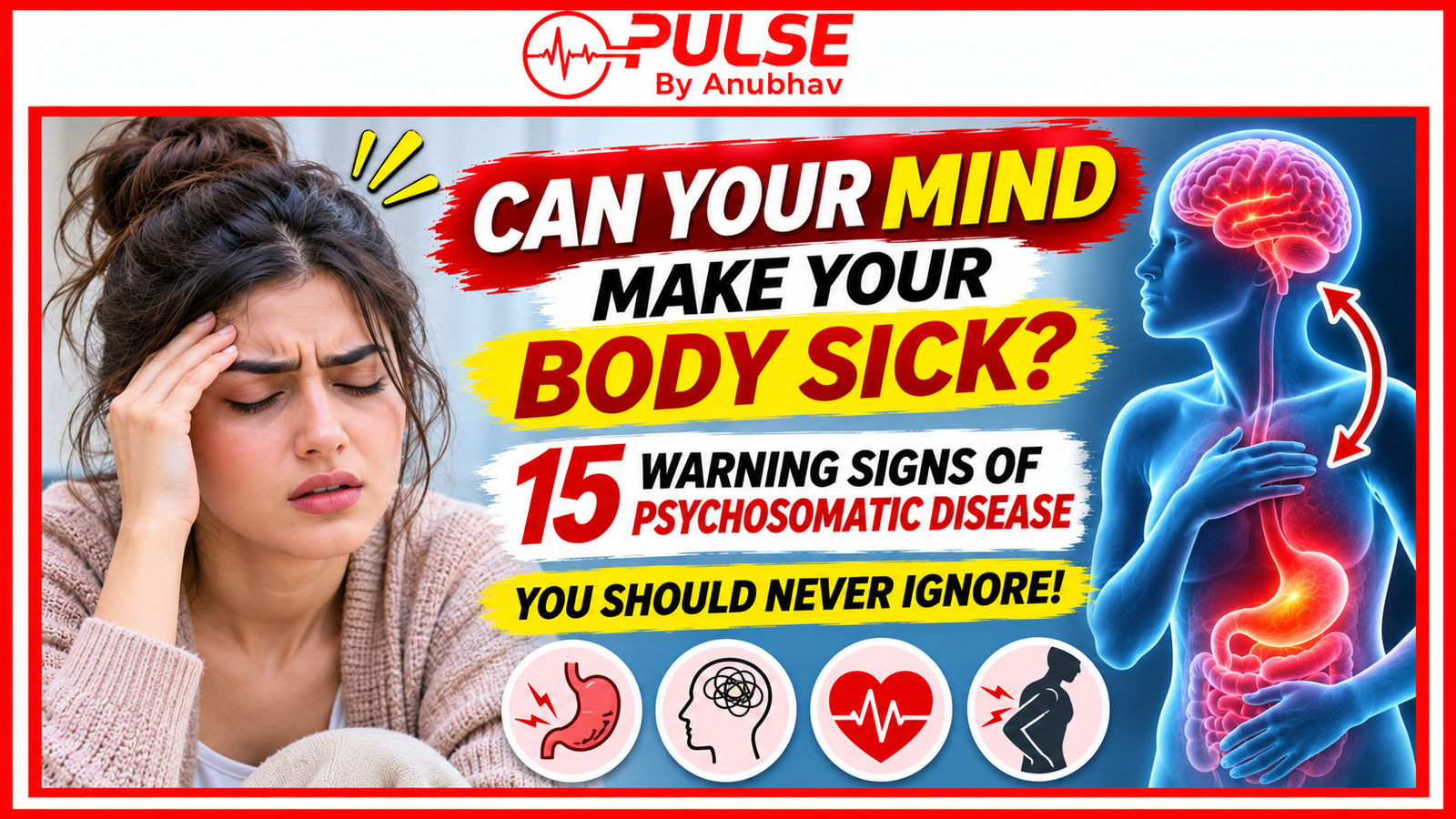
Discover 15 warning signs of PSYCHOSOMATIC DISEASE, how stress affects your body, and why your mind may make your BODY SICK.
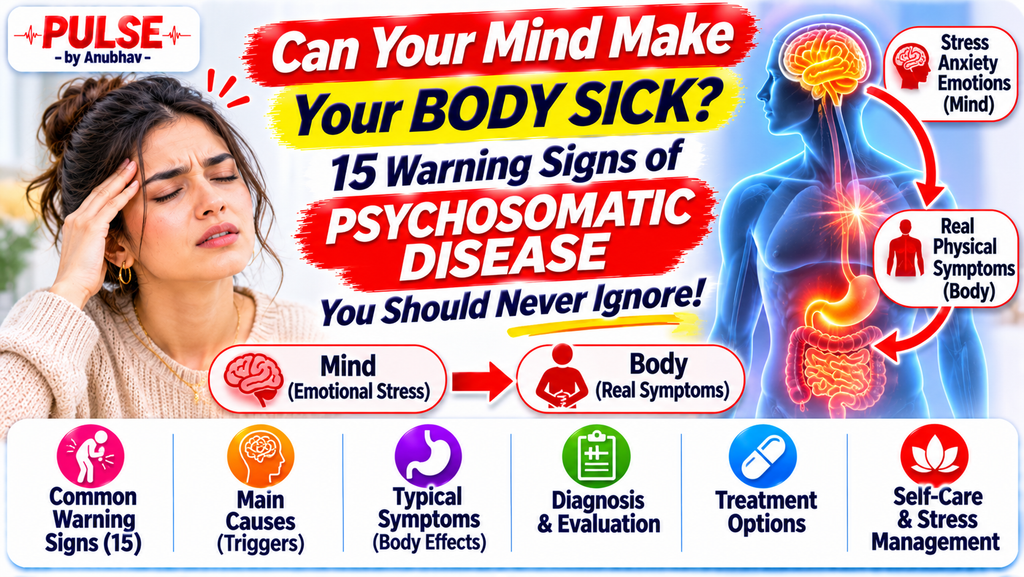
Can your mind really make your BODY SICK? PSYCHOSOMATIC DISEASE explains how stress, anxiety and emotional distress can influence physical health. From frequent headaches, stomach pain and racing heartbeat to fatigue, dizziness and sleep disturbances, psychological factors can contribute to real physical symptoms. Explore 15 warning signs, the science behind the gut-brain connection, recent medical research, diagnosis, treatment options and seven simple habits to improve your mind-body health with Pulse by Anubhav.
Also Read- Hemoptysis: Coughing Up Blood – 6 Common Causes, Warning Signs & Treatment Explained
Note: This entire blog content is for educational purposes only and is not medical advice.
🧠 CAN YOUR MIND MAKE YOUR BODY SICK? 15 WARNING SIGNS OF PSYCHOSOMATIC DISEASE YOU SHOULD NEVER IGNORE!
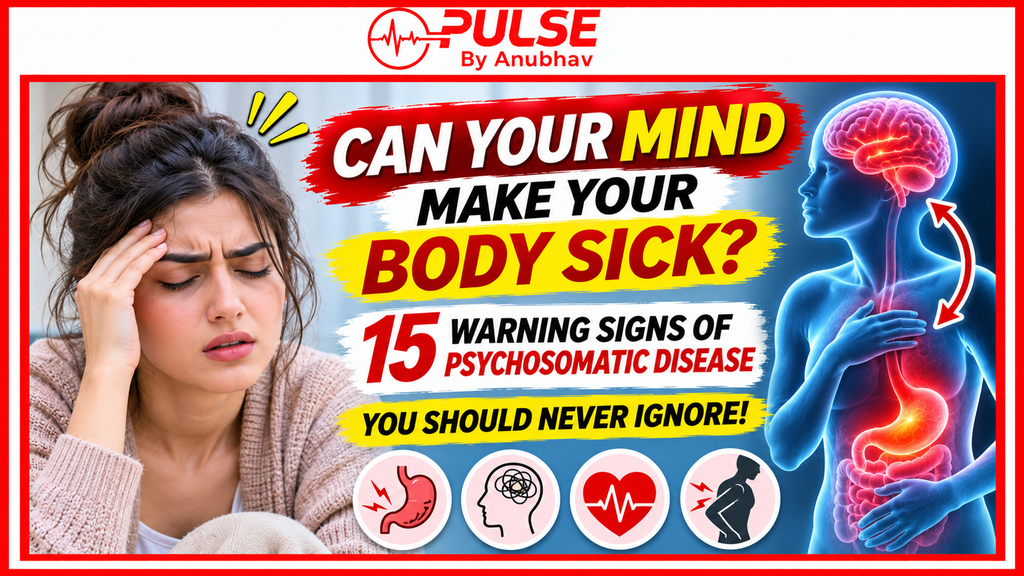
😰 Do you experience stomach pain before an examination?
💓 Does your heart suddenly start racing whenever you feel anxious?
🤕 Do you frequently experience headaches, body aches, dizziness or unexplained fatigue during stressful situations?
And sometimes, even after undergoing medical investigations, you may not find an obvious explanation for these symptoms!
But have you ever wondered whether your mind could be influencing your physical health?
Welcome to the fascinating world of PSYCHOSOMATIC DISEASE!
Your brain and body are constantly communicating. Stress, anxiety, fear and emotional distress can influence your nervous system, hormones, digestive system, immune responses and even the way your body processes pain.
Here is something important to understand: These physical symptoms are REAL. They are not imaginary, and they should never be dismissed.
In some situations, psychological stress can make your BODY SICK by triggering physical symptoms or worsening an existing medical condition.
So, let’s explore the science behind the mind-body connection, 15 possible warning signs, the latest medical research and how you can protect your physical and mental health.
🔴 WHAT IS PSYCHOSOMATIC DISEASE?
The word PSYCHOSOMATIC comes from two Greek words:
- Psyche: Mind
- Soma: Body
Psychosomatic conditions involve interactions between psychological factors and physical symptoms or illnesses.
In simple language, emotional distress, prolonged stress and psychological difficulties can contribute to physical symptoms or make certain existing health conditions worse.
Imagine a student preparing for an important examination.
A few days before the examination, the student starts experiencing:
- Loss of appetite.
- Abdominal discomfort.
- Frequent headaches.
- Increased heartbeat.
- Difficulty sleeping.
- Excessive sweating.
Why does this happen?
When the brain perceives stress, it activates several biological systems that prepare the body to respond to a challenging situation.
This response can influence digestion, breathing, heart rate, muscle tension and sleep.
The mind and body are not separate systems. What affects one can influence the other!
Also Read-Delhi AQI After Diwali 2026: 10 Shocking Effects of Toxic Air on Your Lungs You Should Never Ignore
🚨 15 PHYSICAL WARNING SIGNS THAT MAY BE ASSOCIATED WITH PSYCHOSOMATIC STRESS
Psychological stress can influence different organs and body systems. However, these symptoms can also have several physical causes, so they should not automatically be considered psychosomatic.
Let’s understand 15 symptoms that deserve attention.
1. 🤕 Frequent Headaches
Do you experience headaches whenever you are worried, emotionally disturbed or under pressure?
Stress can contribute to muscle tension and trigger or worsen tension-type headaches.
Some people also experience migraines during periods of emotional stress.
If headaches are frequent, severe or changing in nature, medical evaluation is important.
2. 💓 Racing Heartbeat (Palpitations)
Have you noticed your heartbeat suddenly increasing during fear, anxiety or emotional conflicts?
This can happen because stress activates the sympathetic nervous system.
The body releases stress-related chemicals, including adrenaline, which can increase heart rate.
However, persistent palpitations, especially when accompanied by chest pain, fainting or breathlessness, require medical attention.
3. 🤢 Stomach Pain and Digestive Problems
Your stomach and brain communicate continuously through something known as the GUT-BRAIN AXIS.
Emotional stress can influence digestive activity and contribute to symptoms such as:
- Abdominal pain.
- Bloating.
- Nausea.
- Diarrhoea.
- Constipation.
- Indigestion.
This is one reason why digestive complaints and anxiety frequently occur together.
4. 😴 Sleep Disturbances
Do you lie in bed thinking about problems, examinations, relationships or financial worries?
Excessive thinking, emotional stress and anxiety can make it difficult to fall asleep or maintain restful sleep.
Poor sleep can further increase stress, fatigue and physical discomfort, creating a difficult cycle.
5. 🥱 Unexplained Fatigue
Do you feel exhausted even after completing small everyday activities?
Prolonged stress, anxiety, depression and disturbed sleep can contribute to persistent fatigue.
However, conditions such as anaemia, thyroid disorders, nutritional deficiencies and infections can also cause tiredness.
Never ignore persistent fatigue without investigating its possible causes.
6. 🦴 Muscle Pain and Body Aches
Psychological stress can increase muscle tension, particularly around the neck, shoulders, jaw and back.
Some people unconsciously tighten their muscles when they are anxious or emotionally uncomfortable.
Over time, this may contribute to muscle soreness and discomfort.
7. 😮💨 Difficulty in Breathing
Anxiety can sometimes cause rapid breathing, also known as hyperventilation.
This may create sensations such as:
- Feeling unable to take a satisfying breath.
- Chest tightness.
- Rapid breathing.
- Light-headedness.
However, new or severe breathing difficulty should never automatically be attributed to anxiety.
8. 💦 Excessive Sweating
Have you ever noticed your palms becoming sweaty before an interview, examination or important conversation?
This happens because the sympathetic nervous system becomes activated during stressful situations.
Sweating is a normal physiological response, but excessive or unexplained sweating may require medical assessment.
9. 😵 Dizziness and Light-headedness
Stress and anxiety can contribute to dizziness, particularly when accompanied by rapid breathing.
Changes in breathing patterns can affect carbon dioxide levels in the blood and produce light-headedness.
Nevertheless, dizziness can also result from dehydration, low blood pressure, inner-ear disorders and other medical conditions.
10. 🍽️ Sudden Loss of Appetite
Have you ever completely lost your hunger during examinations, arguments or emotionally difficult situations?
Stress can influence appetite-regulating pathways and digestive functioning.
Some people eat less during stressful periods, while others experience increased hunger or emotional eating.
Both responses can be influenced by psychological and biological factors.
11. 🩹 Increased Pain Sensitivity
One fascinating aspect of the mind-body connection is how psychological distress can influence pain perception.
The nervous system processes pain signals through complex pathways involving the brain and spinal cord.
Stress, anxiety, poor sleep and emotional distress may increase pain sensitivity in some individuals.
This means an existing painful condition can sometimes feel more intense during stressful periods.
12. 😟 Chest Tightness
Anxiety can sometimes produce chest tightness, muscle tension and uncomfortable sensations around the chest.
However, chest discomfort is particularly important because it can also indicate cardiovascular or respiratory problems.
Never assume that chest pain is psychosomatic without appropriate medical assessment.
13. 🧴 Skin Problems
Did you know that psychological stress may influence certain skin conditions?
Stress can worsen symptoms in people who are already susceptible to conditions such as:
- Eczema.
- Psoriasis.
- Acne.
- Itching associated with certain skin disorders.
The relationship between the nervous system, immune responses and skin inflammation is an important area of medical research.
14. 🧠 Difficulty Concentrating
Persistent psychological stress can affect attention, memory and concentration.
You may experience:
- Difficulty remembering information.
- Reduced attention span.
- Mental exhaustion.
- Trouble making decisions.
- Reduced productivity.
This is particularly noticeable during prolonged periods of anxiety or inadequate sleep.
15. 😔 Emotional and Physical Exhaustion
Sometimes, prolonged emotional distress can make even ordinary activities feel exhausting.
A person may experience low motivation, disturbed sleep, physical discomfort and difficulty managing everyday responsibilities.
These symptoms can occur alongside anxiety, depression, chronic stress or other health conditions.
Remember, emotional exhaustion is not a weakness. It is a reason to pay attention to your overall health.
🧬 HOW DOES PSYCHOLOGICAL STRESS AFFECT YOUR BODY?
This is where medical science becomes particularly interesting!
When your brain perceives a stressful situation, it activates several biological pathways. Two important systems involved in this response are the sympathetic nervous system and the hypothalamic-pituitary-adrenal axis.
1. Sympathetic Nervous System: The Fight-or-Flight Response
The sympathetic nervous system prepares your body to respond to a perceived threat.
This response is commonly called the FIGHT-OR-FLIGHT RESPONSE.
Possible changes include:
- Increased heart rate.
- Increased sweating.
- Faster breathing.
- Increased muscle tension.
- Changes in digestive activity.
- Increased alertness.
For example, imagine suddenly hearing a loud and unexpected noise.
Your heart may start beating faster, your muscles become tense and your breathing changes.
This is a normal protective response.
2. Hypothalamic-Pituitary-Adrenal (HPA) Axis
The HPA axis is another important biological system involved in the body’s response to stress.
It involves three major structures:
- Hypothalamus: Releases corticotropin-releasing hormone (CRH).
- Pituitary gland: Releases adrenocorticotropic hormone (ACTH).
- Adrenal glands: Release cortisol.
Cortisol is an important stress hormone that helps regulate metabolism, energy availability, immune activity and the body’s response to challenging situations.
Short-term cortisol responses are normal and necessary.
However, prolonged stress and alterations in stress regulation may influence sleep, metabolism, immune functioning and other physiological processes.
This is one way psychological distress can contribute to physical discomfort.
🦠 THE GUT-BRAIN CONNECTION: WHY DOES STRESS AFFECT YOUR STOMACH?
One of the most fascinating areas of modern medical research is the GUT-BRAIN AXIS.
Your digestive system and brain are connected through several communication pathways.
These include:
- Vagus nerve.
- Enteric nervous system.
- Hormonal pathways.
- Immune signalling.
- Gut microbiota.
The enteric nervous system is sometimes called the second brain because it contains an extensive network of neurons that regulate digestive functioning.
During stressful situations, changes in nervous system activity can influence intestinal movement, digestive sensitivity and gut secretions.
This may contribute to symptoms associated with conditions such as:
- Irritable Bowel Syndrome (IBS).
- Functional Dyspepsia.
- Stress-associated digestive discomfort.
Researchers are also investigating how gut microorganisms may influence inflammation, metabolism, brain function and stress responses.
However, the gut-brain relationship is complex, and researchers are still discovering how these pathways interact.
🔬 LATEST MEDICAL RESEARCH: WHAT IS SCIENCE DISCOVERING ABOUT THE MIND-BODY CONNECTION?
Psychosomatic medicine is evolving beyond the traditional explanation that stress simply causes physical symptoms.
Modern research is investigating how the brain, nervous system, hormones, immune system and gut microbiome interact.
Several areas of research are particularly interesting.
1. The Gut Microbiome May Influence the Mind-Body Connection
Research published in recent years has explored possible relationships between gut microbiota, psychological functioning and psychosomatic symptoms.
A December 2025 review published in Cells discussed possible connections between gut microorganisms, epigenetic mechanisms and psychosomatic disorders.
Researchers are investigating how changes in gut microorganisms may influence immune responses and biological pathways associated with psychological and physical symptoms.
Potential areas of future investigation include:
- Prebiotics.
- Probiotics.
- Postbiotics.
- Dietary interventions.
- Gut microbiome-targeted therapies.
However, these approaches are still being investigated and should not be considered established cures for psychosomatic disorders.
2. Mindfulness May Influence How the Brain Processes Physical Symptoms
Mindfulness-based interventions are receiving increasing attention in research involving chronic pain and digestive disorders.
A 2026 study published in Neurogastroenterology & Motility investigated brain changes associated with mindfulness-based stress reduction in individuals with Irritable Bowel Syndrome.
The researchers examined changes in brain functional connectivity following an eight-week mindfulness programme.
The findings suggested that improvements in IBS symptoms were associated with changes in communication between certain brain regions.
This provides interesting insights into the possible neurological mechanisms involved in mind-body interventions.
3. CBT and Mindfulness-Based Treatments Show Promising Results
Cognitive Behavioural Therapy (CBT) is an established psychological treatment used in several conditions involving persistent physical symptoms.
A 2025 network meta-analysis published in Psychotherapy and Psychosomatics evaluated psychological interventions for bodily distress.
The analysis included 74 studies involving 8,277 participants.
The findings suggested that CBT and acceptance- and mindfulness-based treatments can help reduce somatic symptom severity.
These results highlight why psychological treatment can be an important part of managing persistent physical symptoms.
4. Researchers Are Exploring Stress, Inflammation and Immune Function
Psychological stress and immune functioning are closely connected through neuroendocrine and immune signalling pathways.
A 2025 systematic review and meta-analysis published in Healthcare examined mind-body interventions and their possible effects on immune and inflammatory markers.
The research explored interventions such as mindfulness, yoga and related practices.
Some findings suggested changes in selected inflammatory and immune biomarkers following these interventions.
However, changes in biomarkers do not automatically establish that these practices prevent or cure diseases.
5. Understanding the Brain’s Role in Somatic Symptoms
Another important research direction involves understanding how individuals perceive, interpret and respond to bodily sensations.
A 2026 systematic review and meta-analysis published in Frontiers in Psychology explored mentalizing and social-cognitive processes in Somatic Symptom Disorder.
This research reflects growing interest in the relationship between emotional processing, bodily awareness and persistent physical symptoms.
The broader objective is to develop more individualised approaches to assessment and treatment.
🩺 WHICH MEDICAL CONDITIONS CAN BE INFLUENCED BY PSYCHOLOGICAL STRESS?
Psychological stress may trigger or aggravate symptoms in several medical conditions.
Some examples include:
- Irritable Bowel Syndrome (IBS).
- Functional Dyspepsia.
- Tension-Type Headaches.
- Certain Chronic Pain Conditions.
- Eczema.
- Psoriasis.
- Insomnia.
- Anxiety-Related Physical Symptoms.
However, these conditions have different underlying mechanisms. They should not all be classified as psychosomatic diseases.
Stress may be one contributing factor among several biological, environmental and psychological influences.
🔍 HOW ARE PSYCHOSOMATIC DISORDERS DIAGNOSED?
Diagnosing a psychosomatic condition requires careful medical evaluation.
A healthcare professional may consider:
- Detailed medical history.
- Physical examination.
- Nature and duration of symptoms.
- Relevant laboratory investigations.
- Associated psychological symptoms.
- Impact of symptoms on daily functioning.
One important diagnosis in this field is SOMATIC SYMPTOM DISORDER (SSD).
What Is Somatic Symptom Disorder?
Somatic Symptom Disorder is a mental health condition involving one or more distressing physical symptoms accompanied by excessive thoughts, feelings or behaviours related to those symptoms.
For example, a person may experience persistent physical discomfort along with significant health-related anxiety, repeated checking behaviours or excessive time and energy spent worrying about symptoms.
An important misconception needs to be corrected:
Normal medical test results alone do not establish a diagnosis of Somatic Symptom Disorder.
A person can have a genuine physical illness and also experience excessive distress related to their symptoms.
Proper diagnosis requires an overall clinical assessment.
Also Read- TONSILLITIS: 10 Warning Signs, Causes, Symptoms, Treatment & Home Remedies You Should Know!
💊 TREATMENT: HOW CAN YOU IMPROVE YOUR MIND-BODY HEALTH?
Treatment depends on the underlying condition, symptom severity and individual needs.
The goal is not simply to remove stress but to improve physical functioning, emotional well-being and quality of life.
1. Cognitive Behavioural Therapy (CBT)
CBT helps individuals understand the relationship between thoughts, emotions, behaviours and physical symptoms.
It can help people develop healthier ways of responding to stress, anxiety and persistent bodily discomfort.
2. Meditation and Mindfulness
Regular mindfulness practice may help improve emotional regulation and stress management.
Even a few minutes of mindful breathing can provide an opportunity to pause and become more aware of your thoughts and physical sensations.
3. Yoga
Gentle yoga combines physical movement, breathing techniques and relaxation.
It may support flexibility, physical activity and overall well-being.
4. Regular Exercise
Walking, cycling, swimming and other suitable physical activities can support both mental and physical health.
Regular movement may also improve sleep and help manage stress.
5. Healthy Nutrition
A balanced diet supports normal physiological functioning.
Include fruits, vegetables, whole grains, protein sources and adequate fluids in your daily routine.
6. Adequate Sleep
Sleep is essential for physical recovery, emotional regulation and normal brain functioning.
Adults generally need around 7–9 hours of sleep per night.
Try maintaining a consistent sleep schedule and reducing excessive screen exposure before bedtime.
7. Medical and Psychological Support
Persistent physical symptoms deserve proper medical evaluation.
Depending on the underlying condition, treatment may involve physicians, psychiatrists, psychologists or other specialists.
In selected cases, medication may also be recommended by a qualified healthcare professional.
❤️ 7 SIMPLE HABITS TO PROTECT YOUR MIND AND BODY
Small lifestyle changes can support better physical and emotional health.
Here are seven habits worth incorporating into your routine:
- Practise mindfulness or relaxation for 10 minutes daily.
- Avoid regularly skipping meals.
- Maintain a consistent sleep schedule.
- Include suitable physical activity in your daily routine.
- Express your emotions in healthy ways.
- Take breaks from continuous screen time and work-related pressure.
- Seek professional support when emotional distress becomes overwhelming.
Remember, healthy habits support treatment but should not replace necessary medical care.
⚠️ WHEN SHOULD YOU SEEK MEDICAL HELP?
Never ignore persistent, unexplained or worsening physical symptoms.
Seek urgent medical attention if you experience:
- Severe or sudden chest pain.
- Significant difficulty breathing.
- Fainting or loss of consciousness.
- Sudden weakness or difficulty speaking.
- A sudden, extremely severe headache.
- Other severe or rapidly worsening symptoms.
Not every unexplained symptom is psychosomatic.
Physical illnesses and psychological factors can also coexist. Getting the correct diagnosis is always more important than assuming that stress is responsible.
❤️ FINAL MESSAGE: YOUR BODY LISTENS TO YOUR MIND!
Your brain and body are connected in ways that medical science is still exploring.
Sometimes emotional stress appears as a headache. Sometimes anxiety influences digestion. Sometimes prolonged psychological distress contributes to persistent physical discomfort.
But there is one message you should always remember:
Your symptoms are real. Your suffering is real. And you deserve proper medical care, not judgment.
If you frequently experience unexplained physical discomfort, do not blame yourself or assume that everything is happening because of your thoughts.
Understand your symptoms, seek appropriate medical advice and give equal importance to your mental and physical health.
Taking care of your mental health is not a luxury. It is an essential part of taking care of your body.
🧠 LISTEN TO YOUR MIND. UNDERSTAND YOUR BODY. PROTECT YOUR HEALTH!
Stay informed, stay healthy and keep exploring medical science with Pulse by Anubhav. 💊
Also Read- LEECH SUCKING: Why Do Leeches Suck Blood? History, Benefits, Side Effects & Modern Medical Uses
FAQs About PSYCHOSOMAATIC DISEASE
Frequently Asked Questions About Psychosomatic Disease
1. What is a psychosomatic disease?
A psychosomatic disease involves interactions between psychological factors and physical symptoms or illnesses. Stress, anxiety and emotional distress may trigger physical symptoms or worsen existing medical conditions.
2. Can your mind make your body sick?
Yes. Psychological stress can influence the nervous system, hormones, digestion, immune responses and pain perception. These changes may contribute to genuine physical symptoms.
3. What are the common symptoms of psychosomatic disease?
Common symptoms may include headaches, stomach pain, muscle aches, fatigue, dizziness, sleep disturbances, palpitations, excessive sweating and chest tightness.
4. Can anxiety cause physical symptoms?
Yes. Anxiety can activate the fight-or-flight response, increasing heart rate, muscle tension and sweating. It may also contribute to digestive discomfort, dizziness and rapid breathing.
5. Can stress cause stomach pain and digestive problems?
Yes. Stress can influence the gut-brain axis and affect intestinal movement and digestive sensitivity. It may worsen symptoms such as bloating, nausea, constipation and diarrhoea.
6. Is psychosomatic disease a mental illness?
Psychosomatic conditions involve interactions between mental and physical health. Some related diagnoses, such as Somatic Symptom Disorder, are classified as mental health conditions. However, physical symptoms are real and deserve proper medical attention.
7. Can psychosomatic symptoms occur even when medical tests are normal?
Yes. Some physical symptoms may not have an obvious explanation in routine investigations. However, normal test results alone do not prove that symptoms are psychosomatic. A proper clinical assessment is necessary.
8. What is the difference between psychosomatic disease and Somatic Symptom Disorder?
Psychosomatic is a broad term describing interactions between psychological factors and physical health. Somatic Symptom Disorder is a specific diagnosis involving distressing physical symptoms and excessive thoughts, feelings or behaviours related to those symptoms.
9. Can psychosomatic disease be cured?
Many people can experience significant improvement with appropriate treatment. Management may include medical care, Cognitive Behavioural Therapy (CBT), stress management, lifestyle changes and treatment of underlying conditions.
10. Which treatment is best for psychosomatic disease?
Treatment depends on the individual’s symptoms and underlying condition. CBT, mindfulness, relaxation techniques, suitable physical activity and medical support may help improve symptoms and overall well-being.
11. Can psychosomatic stress cause headaches and body pain?
Yes. Psychological stress may increase muscle tension and influence how the nervous system processes pain. This can contribute to headaches, neck pain, shoulder discomfort and other body aches.
12. How can I prevent stress-related physical symptoms?
Maintain a regular sleep schedule, exercise regularly, practise mindfulness, eat a balanced diet, manage emotional stress and seek professional help when symptoms persist.
13. When should I see a doctor for psychosomatic symptoms?
Consult a healthcare professional if physical symptoms are persistent, unexplained or affecting daily activities. Seek urgent medical attention for severe chest pain, breathing difficulty, fainting or sudden neurological symptoms.
14. Can children and students experience psychosomatic symptoms?
Yes. Children and students may experience headaches, stomach discomfort, sleep disturbances or appetite changes during examinations, bullying, family difficulties or other stressful situations. Persistent symptoms should be medically evaluated.
15. Can psychological stress affect the immune system?
Prolonged psychological stress can influence immune regulation through neuroendocrine and inflammatory pathways. However, its effects vary between individuals, and stress alone does not explain every immune-related illness.